
Investing in the stock market can often feel like navigating a labyrinth of complex jargon, volatile charts, and conflicting advice. However, for many seasoned investors and beginners alike, the path to long-term wealth is surprisingly simple: the Vanguard S&P 500 ETF, commonly known by its ticker symbol, VOO. As one of the most popular exchange-traded funds in the world, VOO offers a low-cost, efficient way to own a piece of the 500 largest publicly traded companies in the United States.
This guide provides a deep dive into how to invest in VOO, the strategic reasons for doing so, and the practical steps required to build a robust portfolio around this cornerstone asset.
Understanding VOO: What You Are Actually Buying
Before hitting the “buy” button, it is essential to understand the underlying mechanics of what VOO represents. VOO is an exchange-traded fund managed by Vanguard, the firm pioneered by Jack Bogle, the father of index investing. The fund’s primary objective is to track the performance of the S&P 500 Index.
The Mechanics of an Exchange-Traded Fund (ETF)
An ETF is a basket of securities—in this case, stocks—that trades on an exchange just like an individual stock. When you buy a share of VOO, you aren’t just buying one company; you are buying a fractional share of 500 companies simultaneously. This structure provides immediate diversification. Unlike mutual funds, which only price at the end of the trading day, VOO can be bought and sold throughout the day at fluctuating market prices, offering investors high liquidity and flexibility.
Why the S&P 500 Matters
The S&P 500 is widely regarded as the best single gauge of large-cap U.S. equities. To be included in the index, companies must meet strict liquidity and profitability requirements. When you invest in VOO, you are gaining exposure to industry titans such as Apple, Microsoft, Amazon, Alphabet, and NVIDIA. Because the index is market-capitalization weighted, the largest companies have the most significant impact on the fund’s performance. Historically, the S&P 500 has delivered an average annual return of approximately 10% before inflation, making it a powerful engine for wealth creation over decades.
Step-by-Step Process for Purchasing VOO Shares
Investing in VOO is a straightforward process that can be completed in a few minutes once you have the right infrastructure in place. Because VOO is traded on major exchanges, it is accessible through almost any modern brokerage.
Selecting the Right Brokerage Platform
The first step is choosing where your investment will live. Most major brokerages today offer commission-free trading for ETFs. Popular options include:
-
Vanguard: Since VOO is a Vanguard product, many investors prefer to go straight to the source. Vanguard’s platform is designed for long-term “buy and hold” investors.
-
Fidelity or Charles Schwab: These legacy brokers offer robust research tools, excellent customer service, and fractional shares, which allow you to buy VOO even if you don’t have the full price of a single share.
-
Robinhood or Webull: These mobile-first platforms are popular for their intuitive interfaces and ease of use, though they may offer fewer specialized retirement account options.
Opening and Funding Your Investment Account
Once you have selected a brokerage, you will need to open an account. You can choose between a taxable brokerage account or a tax-advantaged retirement account like a Roth IRA or a Traditional IRA. For most long-term investors, utilizing a Roth IRA is a powerful strategy because the growth and withdrawals are tax-free in retirement.
After the account is opened, you must link a bank account to transfer funds. Once the cash settles in your brokerage account—a process that usually takes 1–3 business days—you are ready to execute your trade.
Placing Your First Order: Market vs. Limit
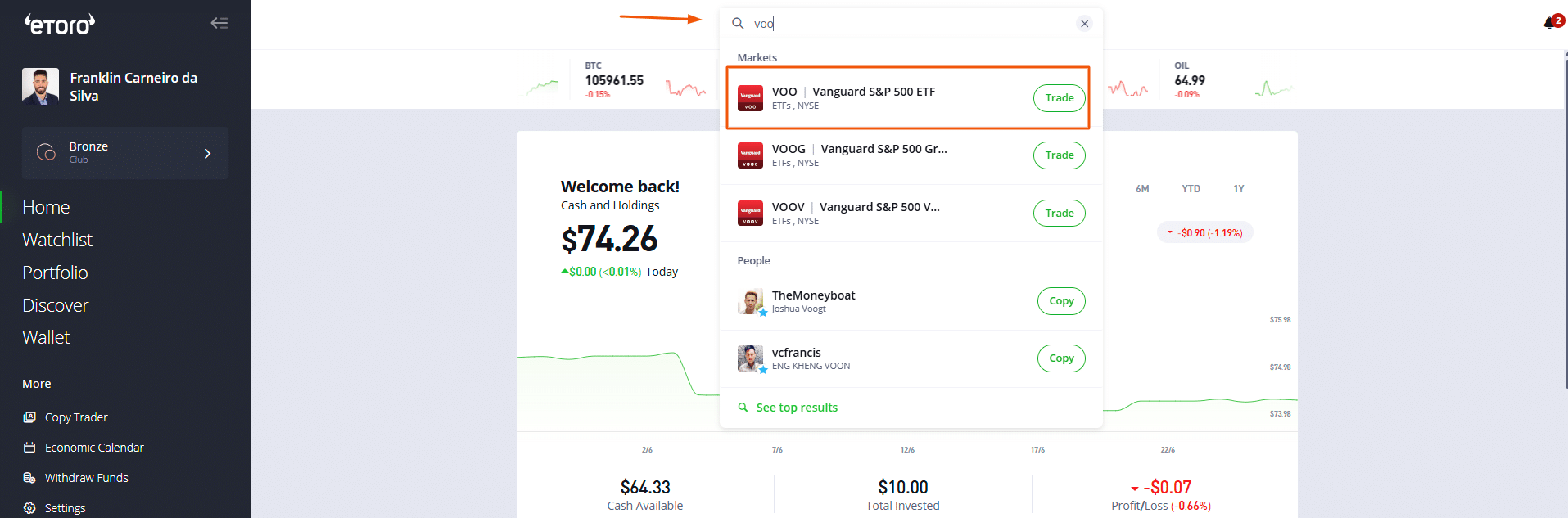
To buy VOO, you will log into your brokerage account, search for the ticker symbol “VOO,” and select the “Buy” option. You will typically face two primary types of orders:
-
Market Order: This executes the trade immediately at the current market price. This is the simplest method and is generally fine for VOO due to its high trading volume and narrow bid-ask spread.
-
Limit Order: This allows you to set a maximum price you are willing to pay. The trade will only execute if the price hits your target. This provides more control but may result in the order not being filled if the price moves upward quickly.
The Financial Advantages of Investing in VOO
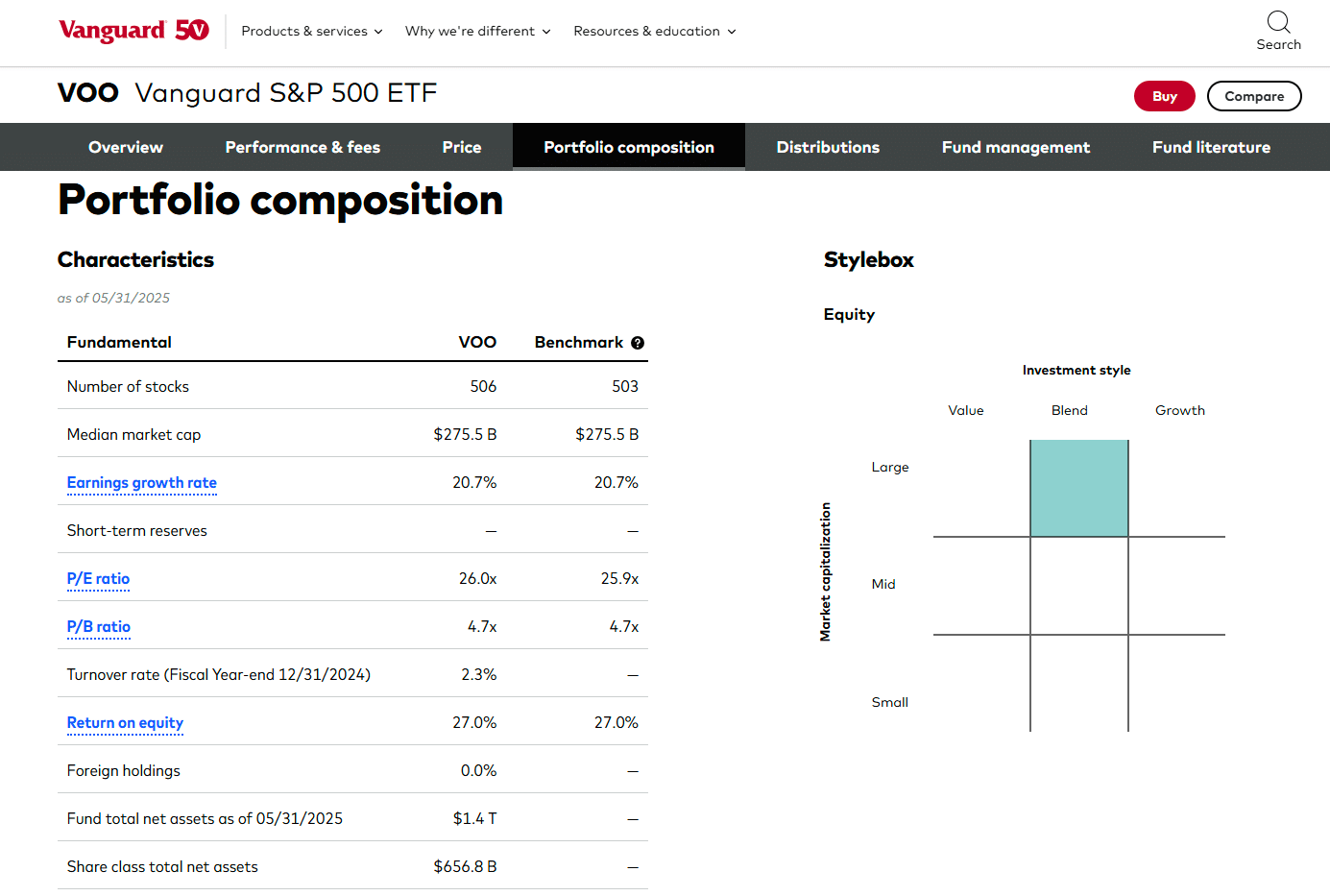
Why do financial advisors and institutional investors frequently point to VOO as a “gold standard” investment? The answer lies in its structural efficiency and its ability to outperform most actively managed funds over time.
Rock-Bottom Expense Ratios
One of the most compelling reasons to choose VOO is its expense ratio. As of recent filings, VOO carries an expense ratio of just 0.03%. This means that for every $10,000 you invest, Vanguard only charges you $3 per year to manage the fund. In contrast, many actively managed mutual funds charge 1% or more ($100 per $10,000). Over a 30-year period, this difference in fees can result in hundreds of thousands of dollars in lost gains due to the eroding power of high costs on compound interest.
Diversification and Risk Management
While VOO is 100% equities and therefore carries market risk, it mitigates “single-stock risk.” If one company in the S&P 500 goes bankrupt, it represents only a tiny fraction of the total fund. The index also self-cleans; as companies fail or shrink, they are removed from the index and replaced by rising, more successful enterprises. This ensures that VOO is always comprised of the current leaders of the American economy.
Dividend Yields and Compound Growth
In addition to capital appreciation (the stock price going up), VOO pays a quarterly dividend. The S&P 500 currently yields around 1.3% to 1.6% annually. While this may seem small, when these dividends are reinvested into more shares of VOO, they contribute significantly to the total return of the investment. Compound growth is the “eighth wonder of the world,” and VOO is one of the most reliable vehicles for capturing it.
Strategic Approaches to Long-Term Success
Simply buying VOO once is a good start, but the most successful investors employ specific strategies to maximize their returns and minimize their emotional stress during market downturns.
Implementing Dollar-Cost Averaging (DCA)
Instead of trying to “time the market” and waiting for a dip that may never come, many investors use Dollar-Cost Averaging. This involves investing a fixed amount of money at regular intervals (e.g., $500 every payday) regardless of the share price. When the price of VOO is high, your $500 buys fewer shares; when the price is low, your $500 buys more shares. Over time, this lowers your average cost per share and removes the psychological burden of trying to predict market movements.
Reinvesting Dividends Automatically (DRIP)
Most brokerages offer a Dividend Reinvestment Plan (DRIP). By enabling this feature, any dividends paid out by VOO are automatically used to purchase more fractional shares of the fund. This creates a feedback loop of growth where your shares produce dividends, which buy more shares, which then produce even more dividends. Over decades, DRIP can account for nearly half of the total return of the S&P 500.
Tax-Advantaged vs. Taxable Accounts
Where you hold your VOO shares matters for your bottom line. In a taxable brokerage account, you will owe taxes on the dividends received each year and capital gains taxes when you eventually sell. However, if you hold VOO in a Roth IRA, your dividends grow tax-free, and you will not owe a penny to the IRS when you withdraw the funds in retirement. Understanding the tax “location” of your assets is a key component of sophisticated personal finance management.
Risks and Considerations for the Modern Investor
No investment is without risk, and VOO is no exception. It is important to maintain a realistic perspective on what VOO can and cannot do for your portfolio.
Market Volatility and Sector Concentration
Because VOO tracks the S&P 500, it is subject to the full volatility of the stock market. In years like 2008 or 2022, the index can drop by 20% or more. Investors must have the stomach to stay invested during these periods. Furthermore, the S&P 500 has become increasingly concentrated in the Information Technology sector. If the tech industry faces a major systemic correction, VOO will be more heavily impacted than a more broadly diversified fund that includes small-cap or international stocks.
The Importance of a Long-Term Time Horizon
VOO is not a “get rich quick” scheme. It is a “get wealthy slowly” tool. The stock market is unpredictable in the short term—over any given one-year period, the odds of the market being up are roughly 75%. However, over a 20-year period, the historical probability of the S&P 500 delivering a positive return is near 100%. When investing in VOO, your greatest ally is time.
By selecting a reputable brokerage, automating your contributions, and keeping costs low through the Vanguard S&P 500 ETF, you are essentially betting on the continued growth and ingenuity of the American economy. For the vast majority of people looking to secure their financial future, a disciplined, long-term commitment to VOO is one of the most effective paths to financial independence.
aViewFromTheCave is a participant in the Amazon Services LLC Associates Program, an affiliate advertising program designed to provide a means for sites to earn advertising fees by advertising and linking to Amazon.com. Amazon, the Amazon logo, AmazonSupply, and the AmazonSupply logo are trademarks of Amazon.com, Inc. or its affiliates. As an Amazon Associate we earn affiliate commissions from qualifying purchases.