
The S&P 500 is often cited as the single most important barometer for the health of the United States economy. Comprising 500 of the largest, most successful publicly traded companies in the U.S., it offers investors a slice of corporate America’s collective powerhouse. Historically, the index has provided an average annual return of approximately 10% before inflation, making it the cornerstone of millions of retirement portfolios. However, for a beginner or even an intermediate investor, the question isn’t just “why” to invest, but “where” and “how” to actually gain exposure to these 500 giants.
Because you cannot “buy” the index itself—it is merely a mathematical list—you must invest through financial products that track it. Choosing the right platform and the right instrument can significantly impact your long-term wealth through fee structures, tax efficiencies, and ease of use.
The Best Platforms for S&P 500 Investing
When deciding where to house your S&P 500 investment, your choice of brokerage is paramount. The modern financial landscape is divided into three primary categories: legacy powerhouse brokerages, agile fintech apps, and automated robo-advisors.
Full-Service Legacy Brokerages
Fidelity, Vanguard, and Charles Schwab are the “Big Three” of the investing world. These institutions are ideal for investors who want a “forever home” for their money.
-
Vanguard: Founded by John Bogle, the father of index investing, Vanguard is unique because it is owned by its funds, which are in turn owned by the investors. This structure keeps fees exceptionally low. Vanguard’s S&P 500 ETF (VOO) and its mutual fund counterpart (VFIAX) are industry benchmarks for low costs.
-
Fidelity: Fidelity has made massive strides in attracting younger investors by offering “Zero” expense ratio funds. While they have a specific S&P 500 fund (FXAIX) with a microscopic fee, their platform is renowned for its research tools and high-quality customer service.
-
Charles Schwab: Schwab offers a highly intuitive user interface and a wide array of low-cost index products (such as SWPPX). They are particularly well-regarded for their 24/7 support and integrated banking services.
Modern Fintech Apps
If you prefer a mobile-first experience and are looking to start with smaller amounts of capital, fintech platforms like Robinhood, Public, and Stash have revolutionized accessibility.
-
Robinhood: Known for its sleek interface, Robinhood allows for fractional share investing. This means if an S&P 500 ETF is trading at $450 per share but you only have $5, you can still buy a tiny slice of the index.
-
Public.com: This platform adds a social layer to investing, allowing you to see what other investors are doing and providing deep context on why the S&P 500 is moving.
-
M1 Finance: This is a hybrid platform that allows you to create “pies.” You can set a slice of your pie to “S&P 500” and every time you deposit money, the app automatically distributes the funds to maintain your desired allocation.
Robo-Advisors
For those who want a completely hands-off approach, robo-advisors like Betterment and Wealthfront are excellent choices. You don’t necessarily go “shopping” for an S&P 500 fund here; instead, you tell the platform your risk tolerance, and it builds a portfolio for you. Almost every “Aggressive” or “Growth” portfolio in these apps uses an S&P 500 ETF as its primary engine.
Choosing Your Investment Instrument: ETFs vs. Index Funds
Once you have chosen a platform, you must decide which specific financial vehicle you will use to track the index. Most investors will choose between an Exchange-Traded Fund (ETF) and a Mutual Fund (Index Fund).
S&P 500 Exchange-Traded Funds (ETFs)
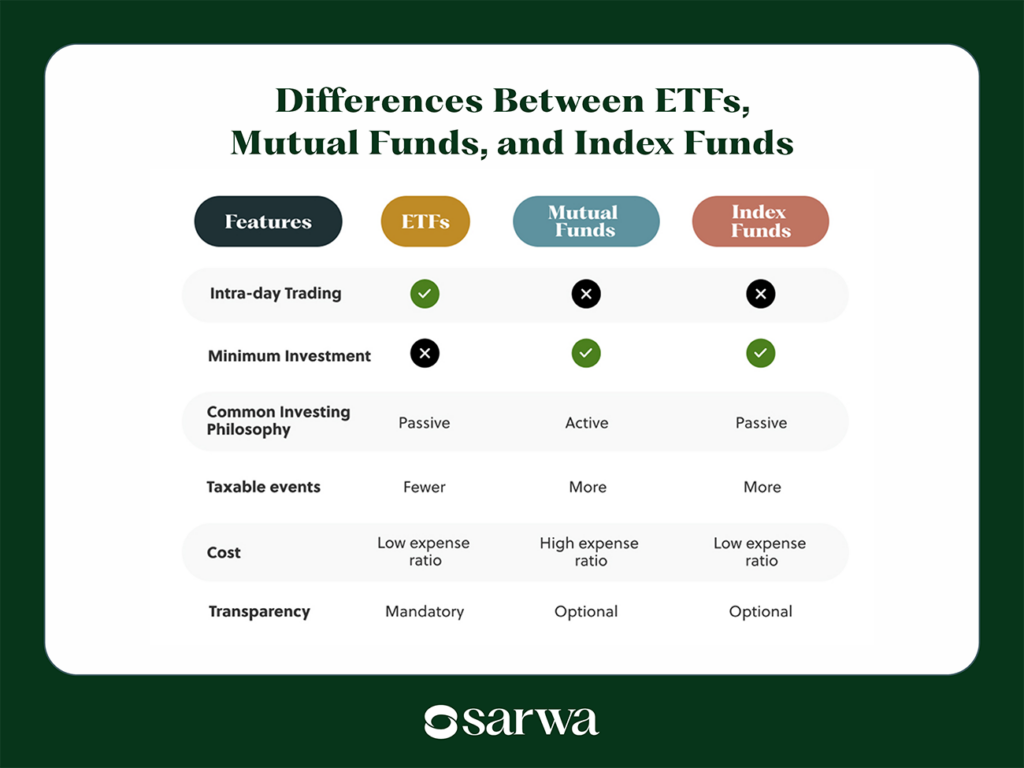
ETFs are the most popular way to track the S&P 500 today. They trade on an exchange just like a stock, meaning their price fluctuates throughout the day, and you can buy or sell them at any time during market hours.
-
VOO (Vanguard S&P 500 ETF): Known for its ultra-low expense ratio of 0.03%. For every $10,000 invested, you pay only $3 a year in management fees.
-
SPY (SPDR S&P 500 ETF Trust): The oldest and most liquid S&P 500 ETF. While its expense ratio is slightly higher (0.09%), it is the preferred choice for day traders and institutional investors due to its high trading volume.
-
IVV (iShares Core S&P 500 ETF): BlackRock’s offering, which competes directly with VOO on price and efficiency.
S&P 500 Mutual Funds
Traditional index mutual funds differ from ETFs in that they only price once a day after the market closes. They are often better suited for investors who want to set up automatic recurring investments.
-
FXAIX (Fidelity 500 Index Fund): This fund currently boasts one of the lowest expense ratios in the industry (0.015%).
-
VFIAX (Vanguard 500 Index Fund Admiral Shares): This is the “gold standard” of mutual funds, though it often requires a minimum initial investment (typically $3,000).
The Importance of Expense Ratios
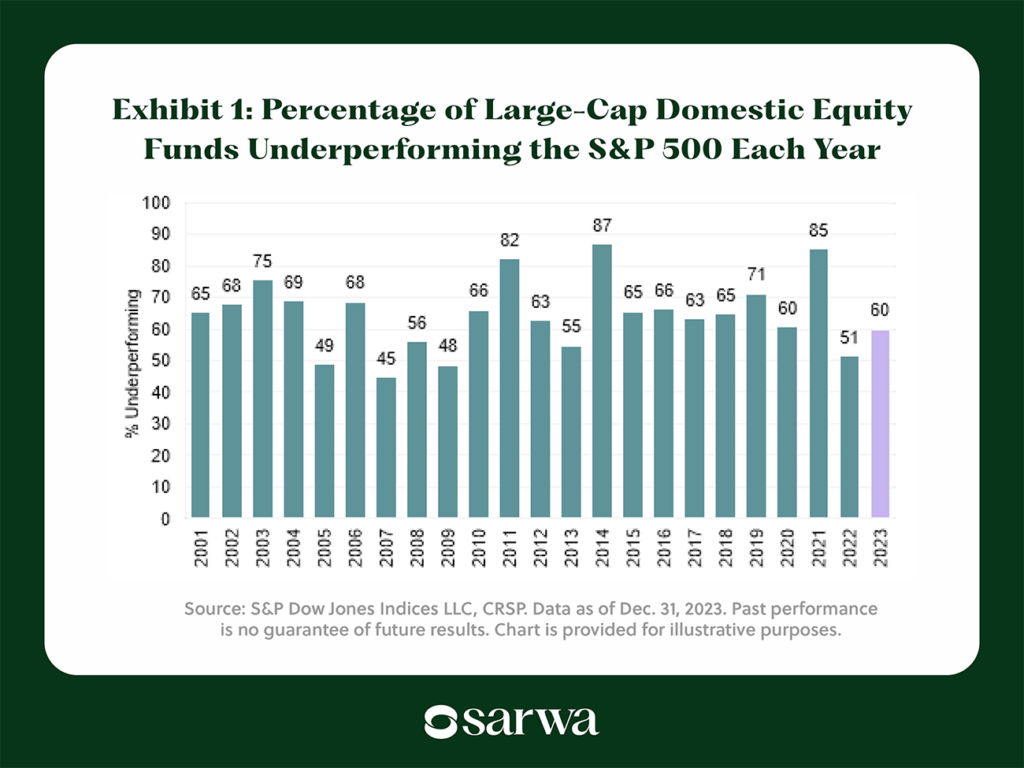
In the world of S&P 500 investing, the “product” is essentially a commodity. VOO, IVV, and SPY all hold the same companies in the same proportions. Therefore, the most significant differentiator is the expense ratio. Over a 30-year horizon, the difference between a 0.03% fee and a 0.75% fee can equate to tens of thousands of dollars in lost gains due to the erosion of compounding. Always look for “passive” funds rather than “actively managed” funds when seeking S&P 500 exposure.
Strategic Account Selection for Tax Efficiency
Where you invest also refers to the type of “bucket” or account you use. The tax implications of your S&P 500 investment can be just as impactful as the performance of the companies within the index.
Employer-Sponsored Plans: The 401(k) and 403(b)
For many, the first place to invest in the S&P 500 is through a workplace retirement plan. Most 401(k) providers offer at least one S&P 500 index fund. The primary advantage here is the “employer match”—free money that instantly doubles your investment return before the market even moves. Furthermore, these contributions are made with pre-tax dollars, lowering your taxable income for the year.
Individual Retirement Accounts (IRAs)
If you want more control than a 401(k) offers, or if you have already maximized your employer match, a Roth or Traditional IRA is the next logical step.
-
Roth IRA: You invest post-tax dollars, but your S&P 500 investment grows entirely tax-free. When you withdraw the money in retirement, you don’t owe the government a cent, regardless of how much the S&P 500 has grown.
-
Traditional IRA: This offers an immediate tax deduction on your contributions, but you will pay income tax on the withdrawals in the future.
Taxable Brokerage Accounts
If you have already hit your contribution limits for retirement accounts, a standard brokerage account (often called a “taxable account”) is where you should go. While you don’t get special tax breaks, these accounts offer the most flexibility. You can withdraw your money at any time without the 10% penalty associated with retirement accounts. For S&P 500 investors, ETFs are generally preferred in taxable accounts because they are more “tax-efficient” than mutual funds, generating fewer capital gains distributions.
Implementation Strategies: How to Actually Invest
Finding the platform and the fund is only half the battle. Successful S&P 500 investing requires a disciplined execution strategy.
Dollar-Cost Averaging (DCA)
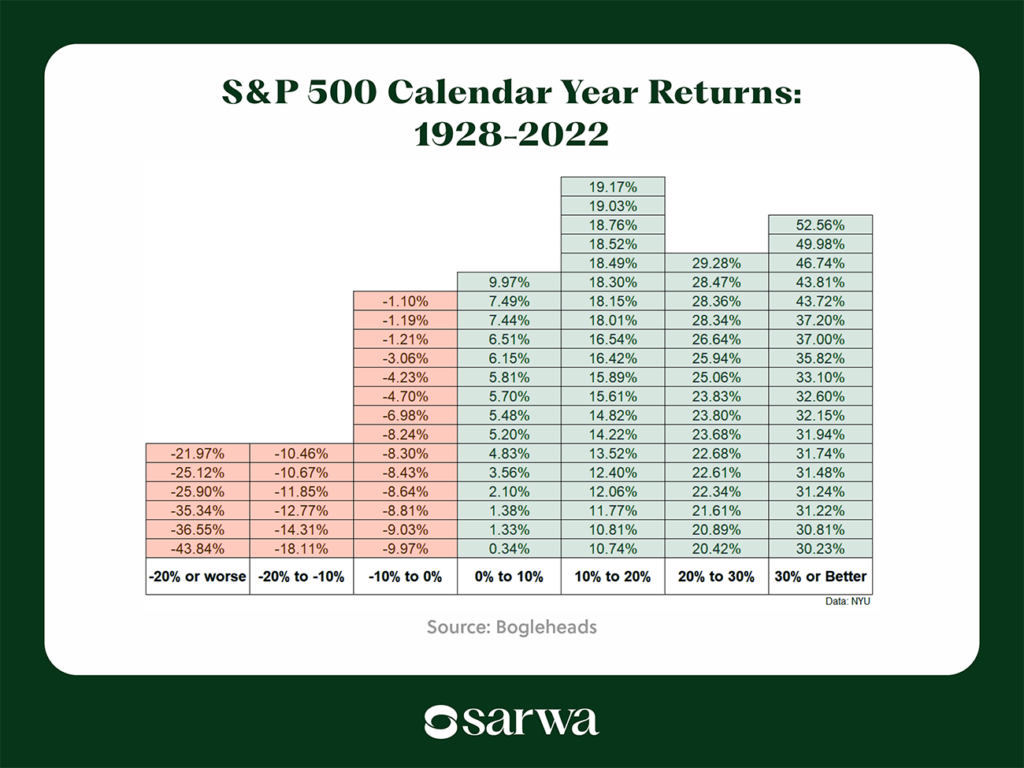
The S&P 500 is volatile. It can drop 10% or 20% in a matter of weeks. Many investors make the mistake of trying to “time the market,” waiting for a dip that may never come. Dollar-cost averaging is the practice of investing a fixed amount of money at regular intervals (e.g., $500 every month), regardless of the price. When the index is expensive, you buy fewer shares; when it is on sale, you buy more. Over time, this lowers your average cost per share and removes the emotional stress of market timing.
Reinvesting Dividends (DRIP)
The companies in the S&P 500 often pay dividends. While you can take this cash and spend it, the real wealth-building power of the S&P 500 comes from a Dividend Reinvestment Plan (DRIP). By automatically using those dividends to buy more shares of the index, you accelerate the process of compounding. Over long periods, reinvested dividends can account for nearly half of the total returns of the S&P 500.
The “Stay the Course” Philosophy
The S&P 500 has survived the Great Depression, the Dot-com bubble, the 2008 financial crisis, and a global pandemic. In every instance, it eventually recovered and reached new highs. The greatest risk to an S&P 500 investor isn’t market volatility; it is their own behavior. Selling during a downturn locks in losses. The most successful investors are those who view the S&P 500 as a 10, 20, or 30-year commitment. By choosing a low-cost platform, a tax-efficient account, and a disciplined contribution schedule, you position yourself to benefit from the long-term growth of the world’s most influential companies.
aViewFromTheCave is a participant in the Amazon Services LLC Associates Program, an affiliate advertising program designed to provide a means for sites to earn advertising fees by advertising and linking to Amazon.com. Amazon, the Amazon logo, AmazonSupply, and the AmazonSupply logo are trademarks of Amazon.com, Inc. or its affiliates. As an Amazon Associate we earn affiliate commissions from qualifying purchases.