
The S&P 500 is often cited as the definitive barometer of the American economy. When news anchors or financial analysts ask, “How is the market doing?” they are almost always referring to the Standard & Poor’s 500 Index. To understand what the S&P 500 is “right now” requires looking beyond a single ticker price or a daily percentage change. It requires an analysis of the companies that lead it, the macroeconomic forces that move it, and the psychological sentiment of the millions of investors who trade its components every day.
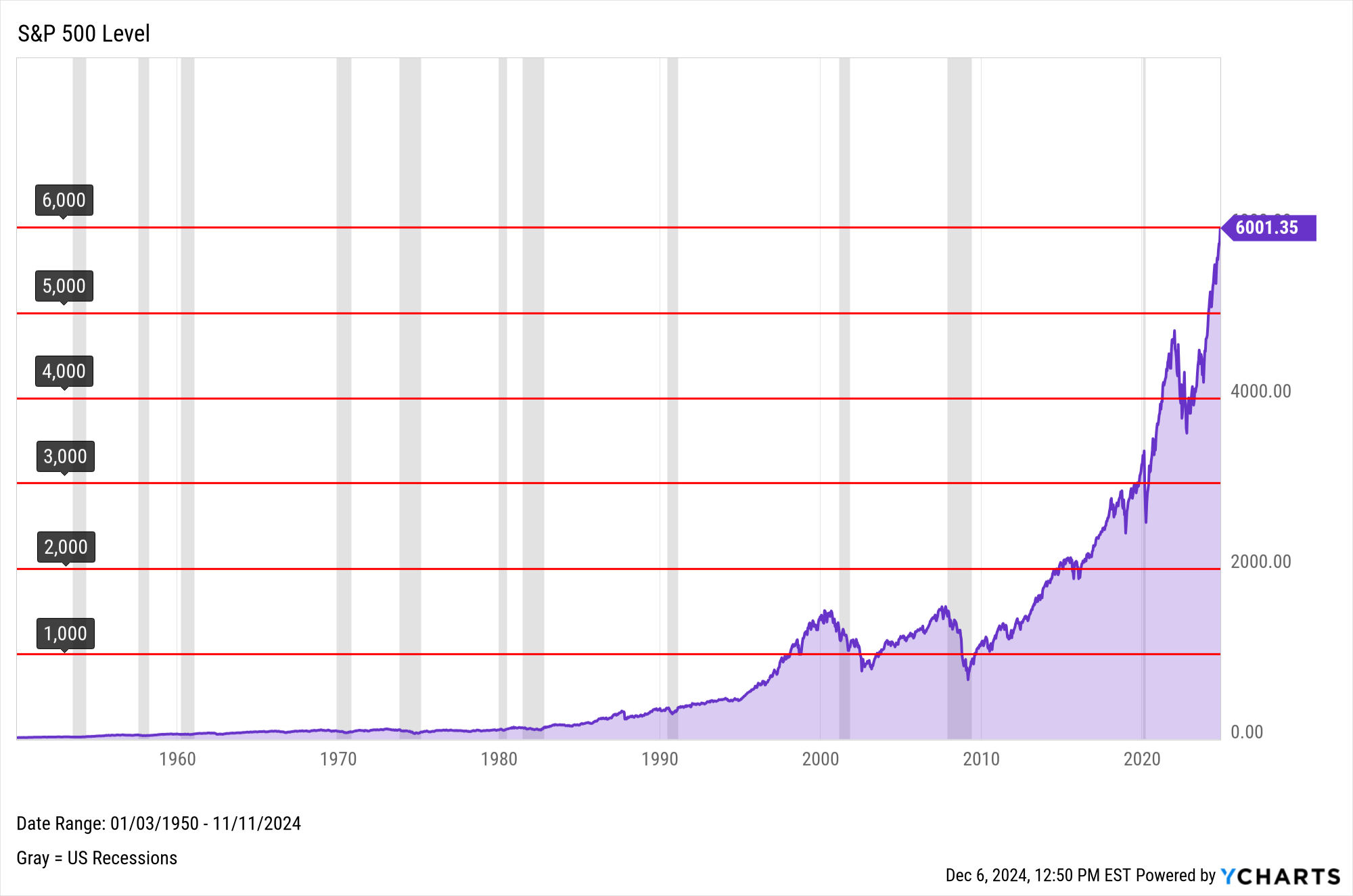
In the current financial landscape, the S&P 500 represents a unique intersection of traditional industrial power and the high-octane growth of the digital age. It is a market-capitalization-weighted index of 500 of the largest publicly traded companies in the United States, and its current state reflects the complexities of global trade, monetary policy, and technological evolution.
Understanding the Index: More Than Just a Number
To grasp what the S&P 500 is at this moment, one must understand its structural composition. Unlike a price-weighted index like the Dow Jones Industrial Average—where the stock price alone determines a company’s influence—the S&P 500 is weighted by market capitalization. This means that larger companies have a more significant impact on the index’s performance.
The Weighting Mechanism and Market Concentration
Right now, the S&P 500 is experiencing a period of historic concentration. A small handful of technology giants—often referred to as the “Magnificent Seven”—carry the weight of the entire index. When companies like Apple, Microsoft, Nvidia, and Alphabet move, the index moves with them, regardless of how the other 490 companies are performing.
This concentration has led to a “top-heavy” index. For investors, this means that “what the S&P 500 is right now” is effectively a bet on the continued dominance of Big Tech and Artificial Intelligence. If these sectors experience a pullback, the index can decline even if the broader economy remains stable. Conversely, during periods of tech euphoria, the S&P 500 can reach record highs even if mid-sized industrial or consumer companies are struggling.
Inclusion Criteria and Rebalancing
The S&P 500 is not a static list. It is managed by a committee at S&P Dow Jones Indices that selects companies based on specific criteria: a minimum market cap, high liquidity, a public float of at least 50% of shares, and positive earnings over the most recent four quarters.
“Right now,” the index is increasingly reflecting the shift toward a service- and software-oriented economy. Traditional sectors like energy and materials represent a much smaller portion of the index than they did thirty years ago. The modern S&P 500 is a living entity that sheds underperforming “dinosaur” companies and incorporates the leaders of the new economy, ensuring it remains the gold standard for equity performance measurement.
Current Market Sentiment and Economic Indicators
The value of the S&P 500 at any given moment is a reflection of the collective expectations of the future. It is a “leading indicator,” meaning the price today is based on what investors believe corporate earnings and economic conditions will be six to twelve months from now.
Inflation, Interest Rates, and the Federal Reserve
The most significant factor influencing the S&P 500 right now is the trajectory of interest rates. Because the index is heavily weighted toward growth stocks—particularly in the technology sector—it is highly sensitive to the Federal Reserve’s monetary policy.
When interest rates are high, the “discount rate” applied to future earnings increases, making high-growth companies less valuable in the present. Furthermore, high rates increase the cost of borrowing for the 500 companies in the index, which can squeeze profit margins. Currently, the market is in a state of constant tension, reacting to every piece of data regarding the Consumer Price Index (CPI) and employment figures, as these dictate whether the Fed will hike, hold, or cut rates.
Corporate Earnings and Profitability
At its core, a stock index is a collection of businesses. Therefore, the S&P 500 right now is a reflection of corporate health. During “earnings season,” when the constituent companies report their quarterly profits, the index often experiences heightened volatility.
Currently, many S&P 500 companies are navigating a “post-pandemic” reality where they must balance cooling consumer demand with increased operational costs. However, the largest companies in the index have shown remarkable resilience, maintaining high profit margins through cost-cutting and AI-driven efficiency gains. This resilience is what has supported the index’s valuation even in the face of economic uncertainty.
How to Interpret “Right Now”: Analyzing Market Valuation

When an investor asks what the S&P 500 is right now, they are often asking if the market is “expensive” or “cheap.” To answer this, we look at valuation metrics that compare the price of the index to the actual money the companies are making.
The Price-to-Earnings (P/E) Ratio
The most common metric is the P/E ratio. Historically, the S&P 500 has traded at a P/E ratio of approximately 15 to 18. When the ratio is significantly higher, as it often is during tech-driven bull markets, it suggests that investors are paying a premium for future growth.
“Right now,” the S&P 500 often trades at a forward P/E that exceeds historical averages. This is partly justified by the higher growth rates of modern tech companies compared to the industrial companies of the 20th century. However, a high P/E ratio also means the margin for error is slim. If earnings growth fails to meet the high expectations baked into current prices, the index can face sharp corrections.
Volatility and the VIX
Another way to view the S&P 500 right now is through the lens of the CBOE Volatility Index, or the VIX. Often called the “fear gauge,” the VIX measures the market’s expectation of 30-day volatility based on S&P 500 index options.
When the S&P 500 is trending steadily upward, the VIX is typically low, indicating investor complacency. When the index is dropping or reacting to geopolitical shocks, the VIX spikes. Understanding the S&P 500 right now requires checking the VIX to see if the current price action is driven by calm, rational accumulation or by emotional, panic-driven selling.
Investing Strategies for Today’s S&P 500
For the individual investor, the S&P 500 isn’t just an abstract number—it is the primary vehicle for building long-term wealth. Most retirement accounts, 401(k)s, and personal brokerage portfolios are anchored by this index.
The Rise of Index Funds and ETFs
You cannot “buy” the S&P 500 directly, as it is an index, not a stock. Instead, investors use exchange-traded funds (ETFs) like SPY (SPDR S&P 500 ETF Trust) or VOO (Vanguard S&P 500 ETF). These funds aim to replicate the performance of the index by holding the 500 constituent stocks in their exact proportions.
Right now, the trend toward “passive investing” is at an all-time high. Because it is incredibly difficult for professional fund managers to consistently beat the S&P 500 over long periods, more capital is flowing into these index-tracking products than ever before. This creates a self-reinforcing cycle: as more people buy S&P 500 ETFs, the funds must buy more shares of the underlying stocks, which can drive the index even higher.
Dollar-Cost Averaging in a High-Growth Environment
Given the volatility of the modern market, many investors utilize dollar-cost averaging (DCA). Rather than trying to time “what the S&P 500 is right now,” they invest a fixed amount of money at regular intervals. This strategy mitigates the risk of investing a large sum right before a market dip.
In the current climate, where the index is heavily influenced by rapid technological shifts and unpredictable Fed announcements, DCA allows investors to capture the long-term upward trajectory of the U.S. economy without needing to predict short-term fluctuations.
The Future Outlook: What the S&P 500 Signals for Long-Term Wealth
Looking ahead, the S&P 500 remains the most critical tool for financial planning and economic forecasting. Its current state tells a story of an economy in transition—moving away from traditional labor-intensive models toward a future defined by automation, data, and global connectivity.
The Role of Artificial Intelligence
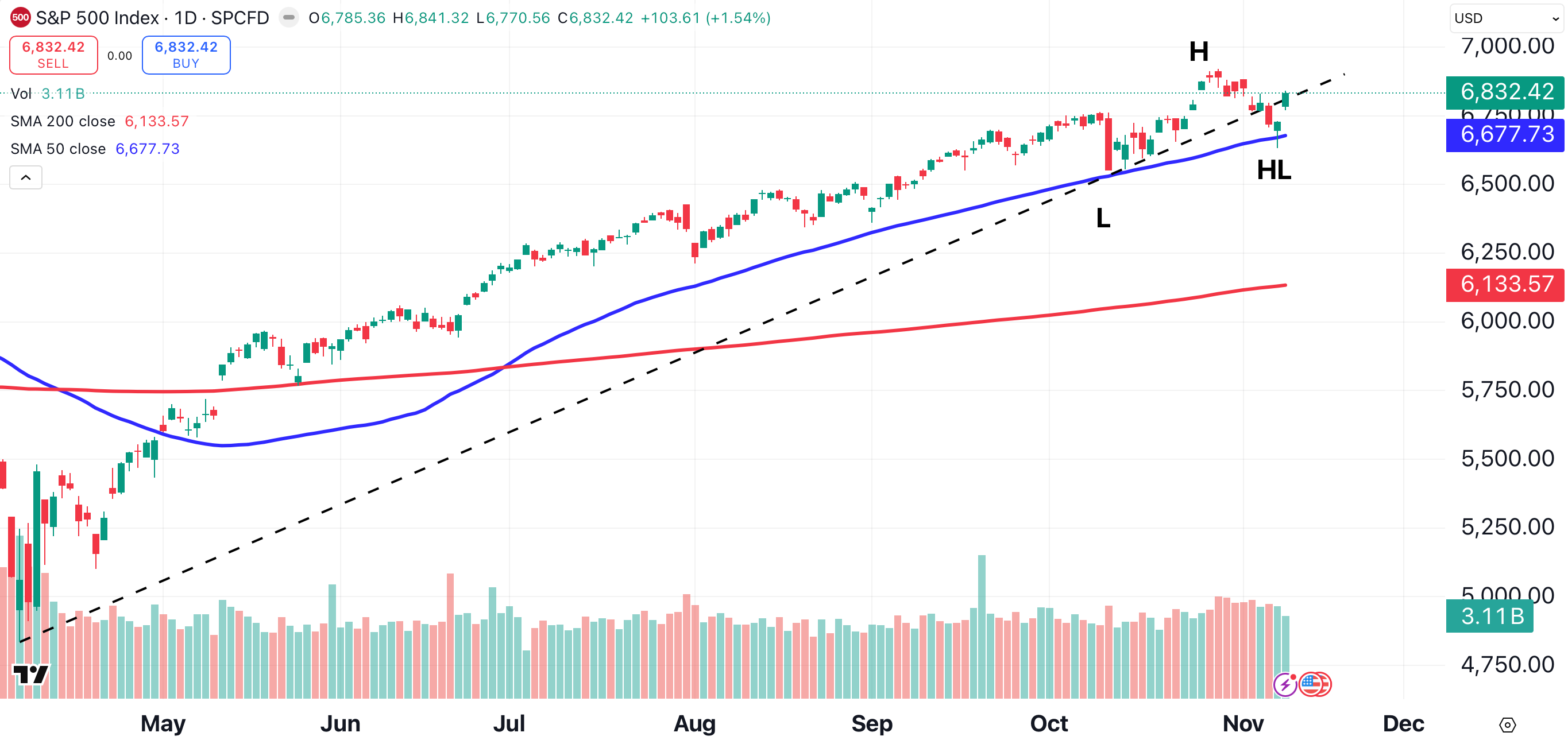
The S&P 500 right now is increasingly becoming an “AI Index.” The massive capital expenditures of companies like Microsoft and Meta into AI infrastructure are the primary drivers of recent index growth. The future of the S&P 500 depends largely on whether these massive investments translate into tangible productivity gains and corporate profits across all sectors, from healthcare to finance.
Global Interdependence
While the S&P 500 consists of U.S.-listed companies, they are global in nature. Roughly 40% of the revenue generated by S&P 500 companies comes from outside the United States. Therefore, the index right now is also a reflection of global stability. Changes in trade policy, foreign currency fluctuations, and international conflicts all ripple through the index.
In conclusion, “what the S&P 500 is right now” is a complex tapestry of corporate earnings, investor psychology, and macroeconomic policy. It is a weighted reflection of the world’s most powerful companies and a testament to the resilience of the American financial system. Whether it is navigating a period of high interest rates or surging on the back of technological innovation, the S&P 500 remains the ultimate scoreboard for the modern investor. For those looking to build wealth, it is not just a number to watch—it is the foundation of a disciplined investment strategy.
aViewFromTheCave is a participant in the Amazon Services LLC Associates Program, an affiliate advertising program designed to provide a means for sites to earn advertising fees by advertising and linking to Amazon.com. Amazon, the Amazon logo, AmazonSupply, and the AmazonSupply logo are trademarks of Amazon.com, Inc. or its affiliates. As an Amazon Associate we earn affiliate commissions from qualifying purchases.