
Navigating the world of digital brokerages has democratized access to the stock market, but for many investors, the most critical part of the journey isn’t buying assets—it’s knowing how to efficiently access their capital when they need it. Robinhood has streamlined the investing experience, yet the mechanics of moving money from a brokerage account back into a traditional bank account involve regulatory hurdles, settlement periods, and specific procedural steps that every investor must understand.
Managing your liquidity is a cornerstone of sound personal finance. Whether you are liquidating a position to cover an emergency expense, rebalancing your portfolio, or simply taking profits after a successful trade, understanding the nuances of how to take out money from Robinhood ensures that you aren’t caught off guard by unexpected delays or “frozen” funds.
Understanding the Mechanics of Robinhood Withdrawals
Before you initiate a transfer, it is essential to distinguish between the different types of balances within your Robinhood account. The app displays several figures, but not all of them represent money that is ready to be moved to your bank account.
Settlement Periods and the T+1 Rule
The most common reason investors find themselves unable to withdraw money immediately after selling a stock is the “settlement period.” In the United States, the Securities and Exchange Commission (SEC) regulates how long it takes for a trade to officially clear. As of 2024, the standard settlement cycle is T+1 (Trade Date plus one business day).
When you sell a stock or an ETF, the proceeds enter your account immediately as “Buying Power,” allowing you to purchase other securities. However, these funds are not “Withdrawable Cash” until the trade settles. If you sell a stock on Tuesday, the funds typically become withdrawable on Wednesday. It is important to note that weekends and stock market holidays do not count toward this settlement period.
Withdrawable Cash vs. Buying Power
Your “Buying Power” is the total amount of money available to purchase stocks, options, or crypto. This includes your settled cash plus any “Instant Deposits” Robinhood has fronted you. However, Robinhood does not allow you to withdraw money that was provided via Instant Deposit until the original transfer from your bank has fully cleared, which can take up to five business days.
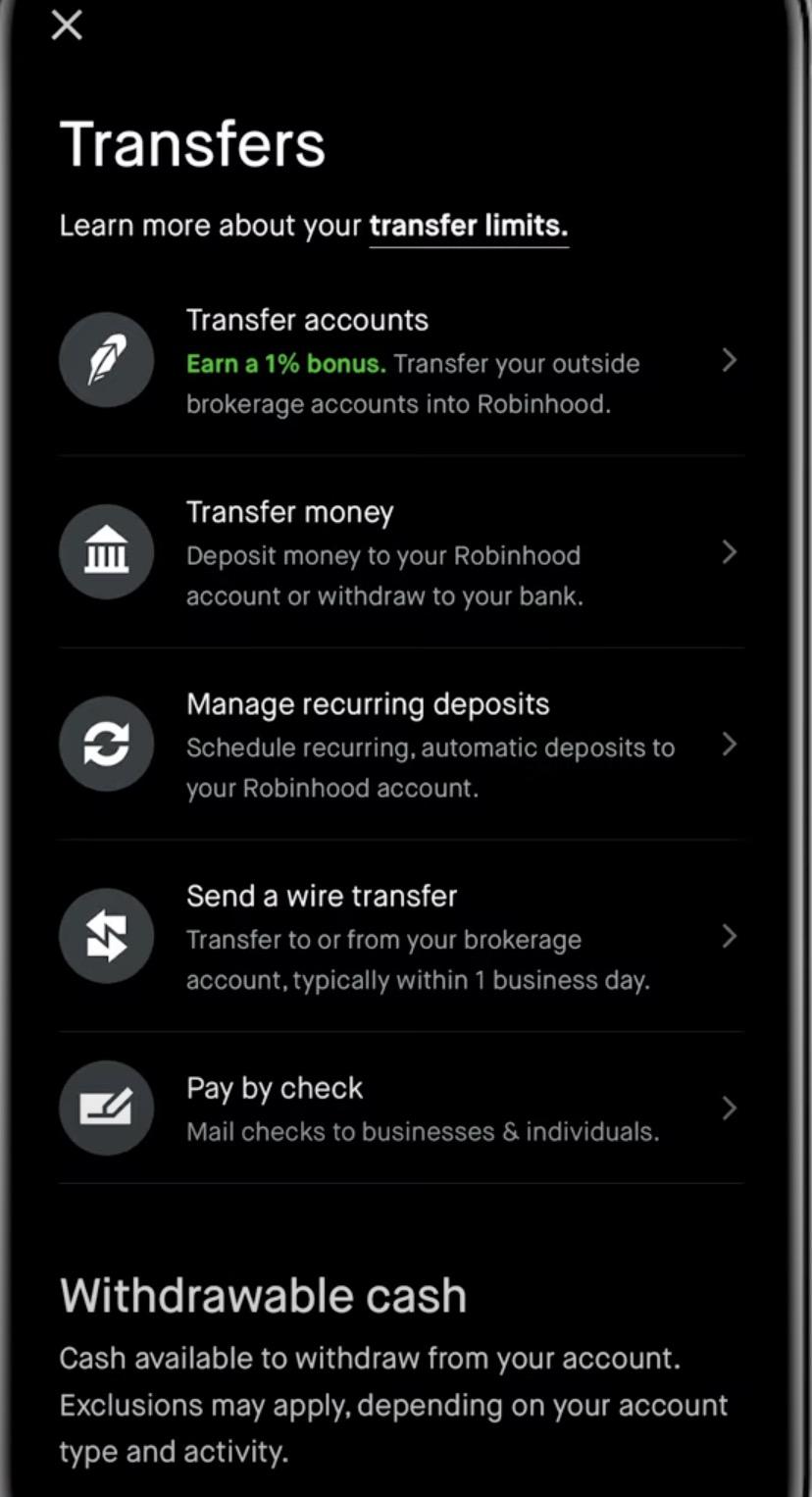
To check your actual withdrawable balance, you must navigate to the “Transfers” section of the app. This figure represents the cash that has fully cleared the settlement process and is no longer tied to pending bank deposits or recent sales.
Step-by-Step Guide to Withdrawing Funds
Robinhood offers multiple pathways to access your money, depending on whether you are looking for a traditional bank transfer or immediate access via a debit card.
Withdrawing to a Linked Bank Account
The most common method for moving money is an ACH (Automated Clearing House) transfer to your linked checking or savings account.
-
Navigate to the Profile Icon: Open the Robinhood app and tap the person icon in the bottom right corner.
-
Access the Menu: Tap the three horizontal lines (burger menu) or the “Settings” gear.
-
Select Transfers: Choose the “Transfers” option and then “Transfer Money.”
-
Enter Amount: Input the dollar amount you wish to withdraw, ensuring it does not exceed your “Withdrawable Cash” limit.
-
Confirm the Destination: Select the linked bank account where you want the funds sent.
-
Review and Submit: Double-check the details and swipe to confirm.
Standard ACH transfers typically take two to three business days to arrive in your bank account. This is a standard timeframe across the financial services industry.
Using the Robinhood Spending Account and Debit Card
For investors who require more fluid access to their cash, the Robinhood Spending Account provides a seamless bridge between investing and daily spending. If you have the Robinhood Cash Card, you do not necessarily need to “withdraw” money to an external bank to use it.
You can move funds from your brokerage account to your spending account instantly. Once the money is in your spending account, it is available for use via the physical or virtual debit card, or for withdrawal at an ATM. This bypasses the multi-day wait associated with ACH transfers, though the funds must still have cleared the T+1 settlement period before they can be moved into the spending account.
Instant Withdrawals to Debit Cards
Robinhood also offers an “Instant Withdrawal” feature for a small fee. This allows you to send funds directly to a linked, eligible external debit card rather than waiting for the ACH process. While ACH transfers are free, Instant Withdrawals usually incur a 1.5% fee (with a minimum and maximum cap). This is an excellent tool for emergency situations where liquidity is required within minutes rather than days.
Common Obstacles and Limitations

Even experienced investors occasionally encounter “Withdrawal Failed” messages or find their balance “Locked.” Understanding the regulatory and security frameworks in place can help you navigate these issues.
Withdrawal Limits and Security Holds
To comply with Anti-Money Laundering (AML) regulations, Robinhood imposes certain restrictions on where money can go after it is deposited. For example, if you deposit money from Bank A, you generally cannot withdraw those specific funds to Bank B for at least 60 days. This “anti-money laundering hold” is a standard industry practice designed to prevent the layering of funds across multiple institutions.
Additionally, there are daily withdrawal limits. While these limits are high enough for the average retail investor (often up to $50,000 per business day for ACH transfers), institutional-level traders or those liquidating significant positions may need to plan their withdrawals over several days.
Unsettled Funds from Recent Sales
As mentioned previously, the T+1 settlement rule is the primary culprit behind “missing” withdrawable funds. If you sell $10,000 worth of stock, you might see your “Account Value” stay the same, but your “Withdrawable Cash” will remain at its previous level until the next business day. It is a common mistake to attempt a withdrawal immediately after a sale, only to find the requested amount is unavailable.
Account Restrictions and Identity Verification
Occasionally, a withdrawal may be blocked due to account restrictions. This can happen if Robinhood requires updated identity verification (KYC – Know Your Customer) or if there is a “margin call” on your account. If you are using a Robinhood Gold account with margin enabled, you must maintain a certain level of equity in your account. Withdrawing too much cash could drop your equity below the required maintenance level, triggering a block on withdrawals until the margin balance is settled or more collateral is provided.
Tax Implications and Strategic Financial Planning
Taking money out of Robinhood is not just a technical process; it is a taxable event if those funds came from the sale of securities.
Capital Gains Taxes on Liquidated Assets
Whenever you sell an investment for more than you paid for it, you trigger a capital gain. If you have held the asset for more than a year, it is taxed at the more favorable long-term capital gains rate (0%, 15%, or 20% depending on your income). If you held it for a year or less, it is taxed as ordinary income.
Before withdrawing, it is wise to calculate your potential tax liability. If you withdraw the full amount of your sale proceeds without setting aside a portion for the IRS, you may face a significant bill come April. Professional investors often utilize “Tax Loss Harvesting”—selling losing positions to offset the gains from winners—to minimize the tax impact of liquidating funds for withdrawal.
Retirement Account Considerations (IRA Withdrawals)
If your funds are held within a Robinhood IRA (Individual Retirement Account), the rules for taking out money are much stricter. Withdrawing earnings from a Roth IRA before age 59½ can result in a 10% early withdrawal penalty plus income taxes. While you can always withdraw your contributions to a Roth IRA tax-free and penalty-free, the ordering rules can be complex. Taking money out of a retirement brokerage account should always be a last resort and ideally discussed with a tax professional.
Optimizing Your Cash Management Strategy
A sophisticated approach to personal finance involves more than just reacting to needs; it involves proactive cash management.
The Role of the Cash Sweep Program
For money that is sitting in your Robinhood account but not yet invested, the “Cash Sweep” program is a valuable tool. Robinhood partners with several banks to offer interest on uninvested cash. By opting into this program, your “Withdrawable Cash” actually earns a competitive APY (Annual Percentage Yield) while it sits idle. This allows your liquidity to remain productive, offsetting the effects of inflation while you wait for the right investment opportunity or prepare for a withdrawal.
Maintaining an Emergency Fund Outside the Brokerage
While Robinhood makes it easy to access your money, the “T+1” settlement and the potential for market volatility mean that a brokerage account should not be your primary emergency fund. If the market dips 20% on the same day you have a medical emergency, you would be forced to sell assets at a loss to access cash.
Financial experts generally recommend keeping three to six months of expenses in a high-yield savings account (HYSA) entirely separate from your trading platform. This ensures that when you do take money out of Robinhood, it is on your own terms—driven by profit-taking or strategic reallocation—rather than out of financial necessity during a market downturn.
By understanding the technical steps, regulatory constraints, and tax implications of withdrawing funds, you can transform your Robinhood account from a simple trading tool into a sophisticated component of your broader financial ecosystem. Accessing your capital should be the easiest part of your investing journey, provided you respect the rules of settlement and the principles of strategic liquidity.
aViewFromTheCave is a participant in the Amazon Services LLC Associates Program, an affiliate advertising program designed to provide a means for sites to earn advertising fees by advertising and linking to Amazon.com. Amazon, the Amazon logo, AmazonSupply, and the AmazonSupply logo are trademarks of Amazon.com, Inc. or its affiliates. As an Amazon Associate we earn affiliate commissions from qualifying purchases.