
The democratization of the financial markets has fundamentally shifted how individuals interact with wealth creation. Not long ago, trading stocks required a personal relationship with a floor broker, high commission fees, and significant capital. Today, the barrier to entry has vanished. With a smartphone and a modest amount of savings, anyone can participate in the global economy. However, the ease of access provided by online trading does not eliminate the complexities of the market. To trade stocks online successfully, one must navigate a landscape of digital brokerages, diverse account types, and sophisticated strategic frameworks.
Choosing the Right Online Brokerage Platform
The first and most critical step in your online trading journey is selecting a brokerage. This platform serves as your gateway to the stock exchanges, and the choice you make will influence your transaction costs, the tools at your disposal, and the overall security of your capital.
Fee Structures and Commissions
In the current competitive landscape, most major online brokers have moved toward a zero-commission model for standard stock and ETF (Exchange-Traded Fund) trades. While this is a significant advantage for the retail investor, “free” trading often comes with caveats. Some brokers generate revenue through payment for order flow (PFOF), which can occasionally affect the execution price of your trade. Beyond commissions, you should investigate secondary fees such as wire transfer charges, account maintenance fees, and interest rates on margin loans. For high-frequency traders, even small discrepancies in execution speed and cost can accumulate over time.
Platform Usability and Tools
Online brokerages generally fall into two categories: user-friendly mobile apps designed for beginners and robust desktop platforms tailored for active traders. If you are a long-term investor, a clean interface that allows for automated recurring investments might be your priority. Conversely, if you intend to engage in day trading or swing trading, you will require advanced charting software, real-time data feeds, and technical indicators like Bollinger Bands or Moving Average Convergence Divergence (MACD). Many top-tier brokers, such as Fidelity, Charles Schwab, or Interactive Brokers, offer tiered experiences that grow with the investor’s expertise.
Regulatory Security and Insurance
Security should never be an afterthought. Ensure that any brokerage you choose is a member of the Securities Investor Protection Corporation (SIPC) and the Financial Industry Regulatory Authority (FINRA). The SIPC protects customers of its members up to $500,000 (including $250,000 for claims for cash) if the brokerage firm fails. Additionally, look for platforms that offer multi-factor authentication (MFA) and encrypted data transmission to protect your financial information from cyber threats.
Understanding Different Types of Trading Accounts
Before you can place your first trade, you must decide which legal and tax “wrapper” your investments will sit inside. The type of account you choose has significant implications for how your gains are taxed and when you can access your money.
Standard Taxable Brokerage Accounts
A standard brokerage account offers the most flexibility. There are no limits on how much you can contribute annually, and you can withdraw your funds at any time without a tax penalty. However, you are liable for capital gains taxes on any profits realized during the year. Short-term capital gains (assets held for less than a year) are taxed at your ordinary income rate, while long-term capital gains (assets held for over a year) benefit from reduced tax rates.
Retirement Accounts (IRA and Roth IRA)
For those trading with a focus on long-term wealth, Individual Retirement Accounts (IRAs) offer powerful tax advantages. In a Traditional IRA, contributions may be tax-deductible, and taxes are deferred until you withdraw the money in retirement. In a Roth IRA, you contribute post-tax dollars, but all future growth and withdrawals are tax-free, provided certain conditions are met. The trade-off for these tax benefits is liquidity; withdrawing funds before age 59½ typically incurs a 10% penalty plus income taxes.
Cash vs. Margin Accounts
When opening an account, you will be asked to choose between a cash account and a margin account. In a cash account, you can only trade with the money you have deposited. A margin account allows you to borrow money from the broker to purchase securities, using your existing portfolio as collateral. While margin can amplify your gains, it also significantly increases your risk. If the value of your stocks drops below a certain level, the broker may issue a “margin call,” requiring you to deposit more cash or sell assets immediately to cover the loan.
Developing a Strategic Investment Plan
Trading online without a strategy is akin to gambling. To build sustainable wealth, you must move beyond “hot tips” and social media hype, focusing instead on proven methodologies for evaluating securities.
Fundamental vs. Technical Analysis
Investors generally use two primary lenses to evaluate stocks. Fundamental analysis involves looking at the intrinsic value of a company. You examine financial statements, revenue growth, debt-to-equity ratios, and the quality of the management team. The goal is to find “undervalued” companies that the market hasn’t fully appreciated yet.
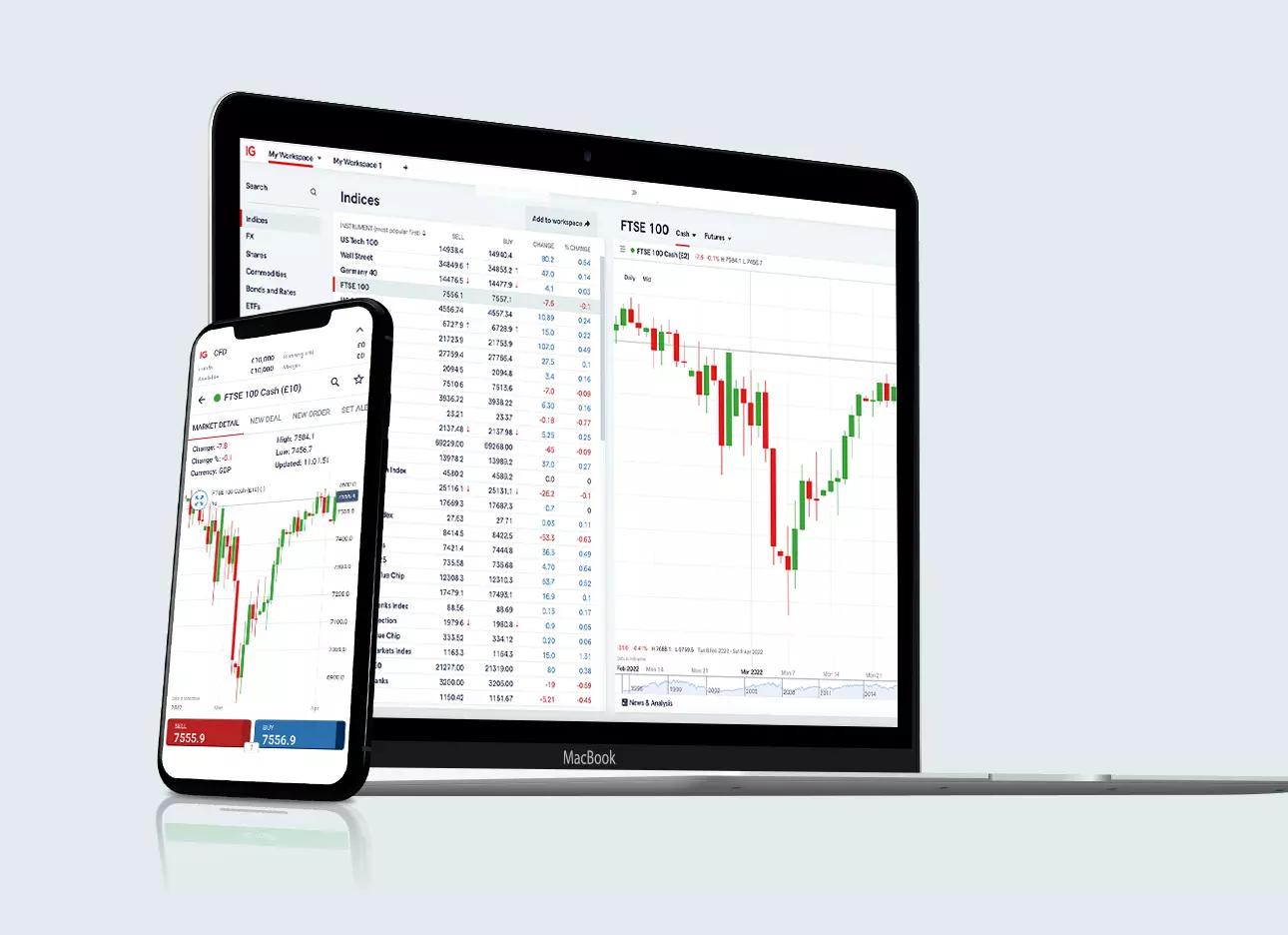
Technical analysis, on the other hand, ignores the company’s business model and focuses entirely on price action and volume. Technical traders look for patterns in stock charts, believing that historical price movements can predict future behavior. While fundamental analysis is typically suited for long-term “buy and hold” investors, technical analysis is the primary tool for short-term traders.
The Importance of Diversification
One of the most common mistakes new online traders make is “concentration risk”—putting too much capital into a single stock or sector. Diversification is the practice of spreading your investments across various industries, asset classes, and geographic regions. By holding a mix of technology, healthcare, energy, and consumer staples, you reduce the impact that a single company’s failure will have on your total portfolio. Many online traders achieve instant diversification by investing in Index Funds or ETFs, which bundle hundreds of different stocks into a single tradable ticker symbol.
Setting Risk Management Parameters
Successful trading is as much about avoiding losses as it is about making gains. You should never invest money that you cannot afford to lose, especially if you are trading individual stocks. A common rule of thumb is the “2% Rule,” which dictates that you should never risk more than 2% of your total account value on a single trade. Establishing an exit strategy before you enter a trade—knowing exactly at what price you will sell if the stock goes up (profit target) or down (stop-loss)—is essential for removing emotion from the decision-making process.
Executing Your First Online Trade
Once your account is funded and your strategy is set, the actual process of buying a stock is relatively straightforward. However, understanding the mechanics of an order can save you from unnecessary losses.
Market Orders vs. Limit Orders
When you click the “buy” button, you generally have two main options: a market order or a limit order. A market order instructs the broker to buy the stock immediately at the best available current price. This guarantees the trade will happen, but it does not guarantee the price. In volatile markets, the price you pay could be significantly higher than the last quoted price.
A limit order allows you to set a maximum price you are willing to pay. If the stock doesn’t hit that price, the trade won’t execute. While a limit order provides price protection, there is a risk that the stock will move away from you and you will miss the opportunity to buy. For most online traders, limit orders are the preferred method for maintaining control over entry points.
Monitoring Portfolio Performance
After executing a trade, the work shifts to portfolio management. Online brokerages provide dashboards that show your “unrealized” gains or losses in real-time. It is important to distinguish between daily fluctuations and changes in the underlying thesis of your investment. If you bought a stock because of its strong dividend yield and the company cuts its dividend, your thesis has changed, and it may be time to sell. If the stock price dropped simply because the entire market had a bad day, it might be an opportunity to buy more at a discount.
Navigating Market Volatility and Long-Term Growth
The digital nature of online trading creates an environment of constant stimulation. Real-time notifications and 24-hour news cycles can trigger emotional responses, leading to impulsive “panic selling” or “FOMO” (fear of missing out) buying.
Emotional Discipline and the Psychology of Trading
The most successful online traders are those who can remain clinical in the face of market volatility. The stock market is prone to cycles of euphoria and despair. Understanding that downturns are a natural part of the economic cycle allows you to stay invested during lean times. Historically, the stock market has trended upward over long periods, rewarding those with the patience to weather short-term storms.

Rebalancing and Compounding
Trading online is not a “set it and forget it” activity. Over time, some of your investments will grow faster than others, causing your portfolio to become unbalanced. Periodic rebalancing—selling a portion of your winners and buying more of your underperformers—ensures that you maintain your desired risk level. Furthermore, the power of compounding is the investor’s greatest ally. By reinvesting dividends and allowing your returns to generate their own returns, you can achieve exponential growth over decades.
In conclusion, trading stocks online is a powerful tool for financial empowerment. By choosing a secure broker, understanding the tax implications of your account, and adhering to a disciplined investment strategy, you can transition from a consumer in the economy to an owner. The key is to start small, educate yourself continuously, and focus on the long-term horizon rather than the noise of the daily ticker.
aViewFromTheCave is a participant in the Amazon Services LLC Associates Program, an affiliate advertising program designed to provide a means for sites to earn advertising fees by advertising and linking to Amazon.com. Amazon, the Amazon logo, AmazonSupply, and the AmazonSupply logo are trademarks of Amazon.com, Inc. or its affiliates. As an Amazon Associate we earn affiliate commissions from qualifying purchases.