
Insurance is often viewed as a mandatory burden—a monthly line item in a budget that provides no immediate gratification. However, from a personal finance perspective, insurance is one of the most critical tools for wealth preservation. Finding “cheap” insurance does not mean sacrificing quality or leaving yourself vulnerable to catastrophic loss; rather, it involves a sophisticated understanding of how risk is priced and how you can position yourself as a low-risk asset to insurers.
By applying the principles of financial optimization to your insurance search, you can significantly reduce your premiums while maintaining, or even enhancing, your safety net. This guide explores the multi-faceted approach required to navigate the insurance market effectively, ensuring you secure the lowest possible rates without compromising your long-term financial security.

Understanding the Underwriting Process: The Foundation of Lower Rates
To find the most affordable insurance, one must first understand how insurance companies arrive at their pricing. Underwriting is the process by which an insurer assesses the risk of insuring a person or asset. The lower the perceived risk, the lower the premium. By understanding the levers that move these numbers, you can take proactive steps to lower your costs.
The Role of Credit-Based Insurance Scores
In many jurisdictions, one of the most significant factors influencing your insurance premium is your credit-based insurance score. This is not the same as your standard FICO score used for loans, though it relies on much of the same data. Actuarial data suggests a strong correlation between credit management and risk management. Individuals who maintain high credit scores are statistically less likely to file claims.
To find cheaper insurance, you must prioritize your financial health. Paying down revolving debt, ensuring timely payments, and monitoring your credit report for inaccuracies can lead to a substantial decrease in your insurance premiums over time. When your credit score improves, it is essential to ask your current insurer to re-rate your policy, as they may not do so automatically.
Geographical Impact and Risk Pools
Insurance is essentially a collective pool of risk. Your premium is influenced by the claims history of your neighbors and the specific risks associated with your location. While you may not be able to move just to save on insurance, understanding geographical risk is vital when purchasing new property or relocating.
Areas prone to natural disasters, high crime rates, or even frequent traffic accidents will naturally command higher premiums. When shopping for insurance, compare how different providers weight these geographical risks. Some companies may have a smaller “appetite” for specific regions, leading to higher prices, while others may be looking to expand their footprint in that area and offer more competitive introductory rates.
Comparative Analysis: Navigating the Competitive Landscape
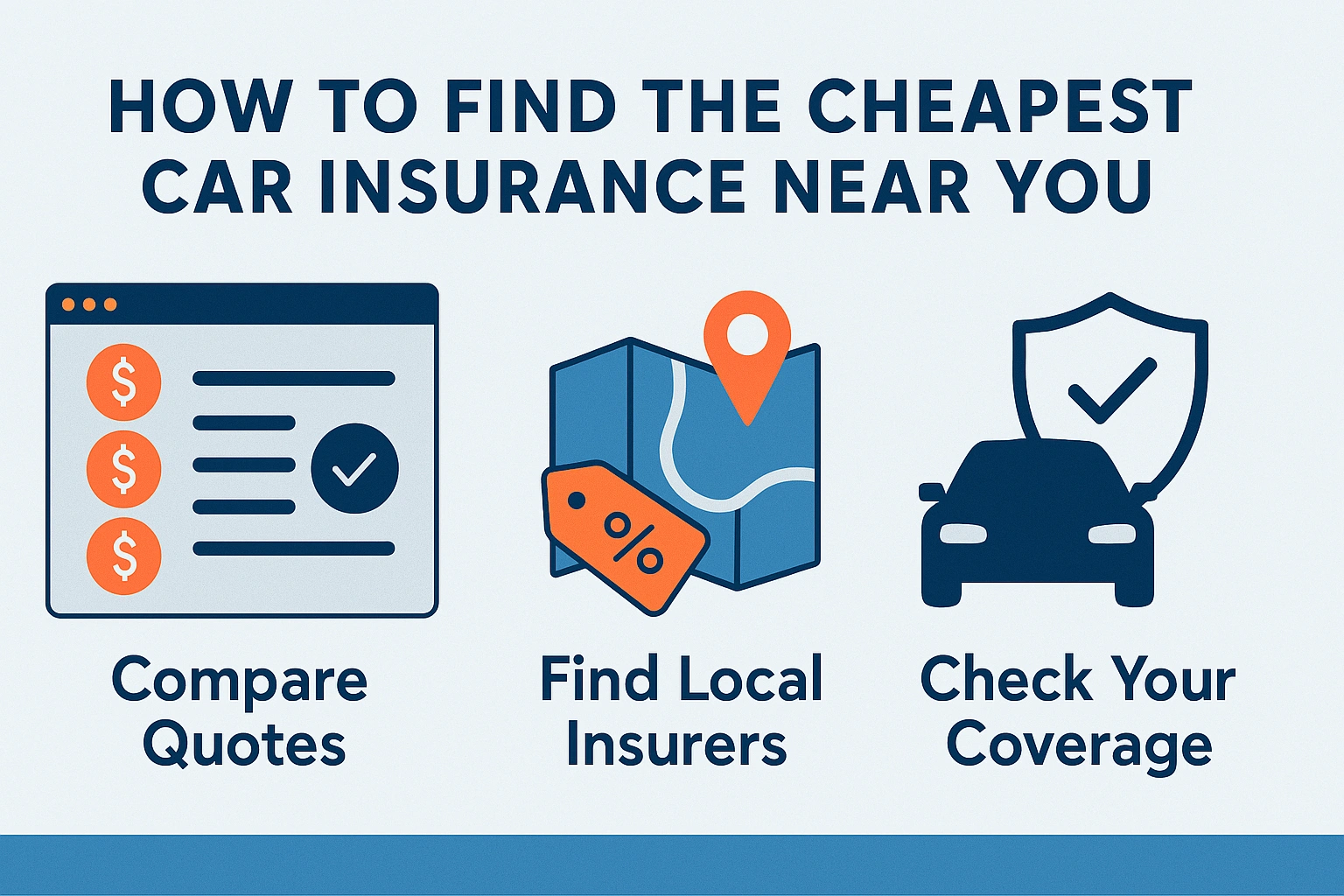
The insurance market is highly fragmented and intensely competitive. Prices for the exact same level of coverage can vary by hundreds, or even thousands, of dollars between providers. Finding cheap insurance requires a commitment to a rigorous comparative analysis.
Independent Agents vs. Direct Insurers
There are two primary ways to shop for insurance: through direct-to-consumer platforms and through independent agents. Direct insurers, such as Geico or Progressive, spend heavily on marketing to reach consumers directly. These can be excellent sources for competitive rates, particularly if your risk profile is straightforward.
However, independent agents represent multiple insurance companies and can provide a broader view of the market. They often have access to regional carriers or niche providers that do not advertise nationally. These smaller companies often provide lower rates because they have lower overhead costs. A comprehensive search for cheap insurance should involve getting quotes from both direct insurers and an independent agent who can shop across several different platforms simultaneously.
The Power of Annual Re-Quoting
Languishing in the same insurance policy for a decade is a recipe for overpaying. This is due to a phenomenon known as “price optimization.” Some insurers use data analytics to determine which customers are unlikely to switch providers regardless of price increases. If you have been with the same company for a long time, you may be paying a “loyalty tax.”
To find the cheapest insurance, you should adopt a habit of re-quoting your policies every 12 to 24 months. Even if you are satisfied with your current provider, knowing the market rate allows you to negotiate or switch if a competitor offers a significantly lower premium for the same coverage.
Strategic Structuring of Policy Limits and Deductibles
One of the most direct ways to lower insurance costs is to adjust the structure of the policy itself. This requires a calculated trade-off between monthly cash flow and out-of-pocket exposure.
The High-Deductible Strategy for Long-Term Wealth
The deductible is the amount you pay out of pocket before the insurance company begins to cover a loss. There is an inverse relationship between the deductible and the premium: the higher the deductible, the lower the premium.
For those focused on long-term wealth building, opting for a higher deductible is almost always the more cost-effective choice. By increasing a deductible from $500 to $1,500, a policyholder can often save 15% to 30% on their annual premium. If you take those savings and move them into a high-yield savings account or an emergency fund, you essentially “self-insure” for the smaller losses while the insurance policy protects you against the large, devastating ones. Over a several-year period, the premium savings usually far exceed the cost of the higher deductible.
Aligning Coverage with Asset Value
As assets age, their insurance needs change. A common financial mistake is over-insuring an asset that has depreciated. For example, if you are driving a vehicle that is over ten years old and has a low market value, the cost of “collision” and “comprehensive” coverage may no longer be justified.
If the annual cost of these coverages plus the deductible approaches the total value of the car, you are effectively paying for a benefit you will never fully realize. In this scenario, dropping down to “liability-only” coverage can slash your insurance bill. Similarly, in homeowners insurance, ensure that you are insured for the replacement cost of the structure, not the market value of the land and home combined, as the land itself cannot burn down or be stolen.
Leveraging Discounts and Hidden Incentives
Insurance companies offer a plethora of discounts that are often not applied unless the policyholder specifically asks for them. These discounts are designed to reward behaviors that reduce the likelihood of a claim.
Bundling and Multi-Policy Optimization
“Bundling” is perhaps the most well-known discount in the industry. By placing your homeowners, auto, and umbrella policies with the same carrier, you can often save 10% to 25% across all policies. This is a win-win: the insurer gains a larger “share of wallet” and higher customer retention, while you receive a lower overall rate.
However, a savvy consumer should always verify the math. Occasionally, buying separate policies from different specialized carriers can still be cheaper than a bundled package from a single carrier. Always compare the total bottom-line cost of the bundle versus the sum of individual “best-in-class” policies.
Affinity Groups and Professional Discounts
Insurers often provide discounted rates to members of specific organizations, alumni associations, or professional groups. These are known as affinity discounts. If you are an engineer, a teacher, a veteran, or a member of a large corporate employee group, you may be eligible for a significant reduction in premiums. These discounts are based on the statistical reality that certain professional groups exhibit lower-risk behaviors. Always provide your employer and educational background when seeking a quote to ensure these specialized tiers are applied.
Technology and Behavioral Influence on Premiums
The emergence of “InsurTech” has introduced new ways to find cheap insurance by proving your individual risk level through data, rather than being grouped into a broad demographic category.
Telematics and Usage-Based Insurance (UBI)
Telematics involves using a smartphone app or a plug-in device for your vehicle to track driving habits—such as braking intensity, speed, and time of day. If you are a safe driver who does not commute during high-risk hours, usage-based insurance can offer some of the cheapest rates available.
For low-mileage drivers, particularly those who work from home, “pay-per-mile” insurance models can result in dramatic savings. In these models, the base rate is very low, and you are charged a few cents for every mile driven. This aligns your insurance costs directly with your actual usage, removing the “subsidization” of high-mileage drivers that occurs in traditional flat-rate policies.

Loss Prevention and Home Fortification
In the realm of homeowners insurance, making physical improvements to your property can lead to permanent premium reductions. Installing smart home technology, such as leak detection systems that automatically shut off water or monitored fire and burglar alarms, reduces the risk of expensive claims.
In coastal or high-wind areas, reinforcing a roof or installing impact-resistant windows can trigger “wind mitigation” credits. These investments not only protect your asset but also pay for themselves over time through reduced insurance expenditures. When you make an upgrade to your home, notify your insurance carrier immediately to see if a new discount can be applied to your policy.
Ultimately, finding cheap insurance is not about finding the “cheapest” company, but about becoming the most “insurable” individual. By managing your credit, shopping the market regularly, strategically selecting your deductibles, and leveraging every available discount, you can turn insurance from an unpredictable expense into a controlled and optimized component of your broader financial strategy.
aViewFromTheCave is a participant in the Amazon Services LLC Associates Program, an affiliate advertising program designed to provide a means for sites to earn advertising fees by advertising and linking to Amazon.com. Amazon, the Amazon logo, AmazonSupply, and the AmazonSupply logo are trademarks of Amazon.com, Inc. or its affiliates. As an Amazon Associate we earn affiliate commissions from qualifying purchases.