
The question of how much PLTR stock is worth transcends a simple daily price quote found on a brokerage app. For investors, analysts, and market spectators, the valuation of Palantir Technologies Inc. represents one of the most polarizing and fascinating case studies in the modern equity market. Since its direct listing on the New York Stock Exchange in September 2020, Palantir has evolved from a secretive, government-focused data firm into a cornerstone of the enterprise artificial intelligence (AI) revolution. Understanding the “how much” of PLTR requires a deep dive into its financial fundamentals, its shift toward commercial profitability, and the psychological sentiment that drives its often-volatile price action.

Understanding Palantir’s Current Market Position
To determine the value of PLTR stock, one must first look at its current standing within the broader market landscape. Unlike traditional software companies that may trade purely on revenue multiples, Palantir occupies a unique niche that combines big data analytics, defense contracting, and cutting-edge generative AI. This multi-faceted identity means its stock price is influenced by a diverse array of catalysts, ranging from geopolitical tensions to corporate digital transformation trends.
The Dynamics of Share Pricing and Market Cap
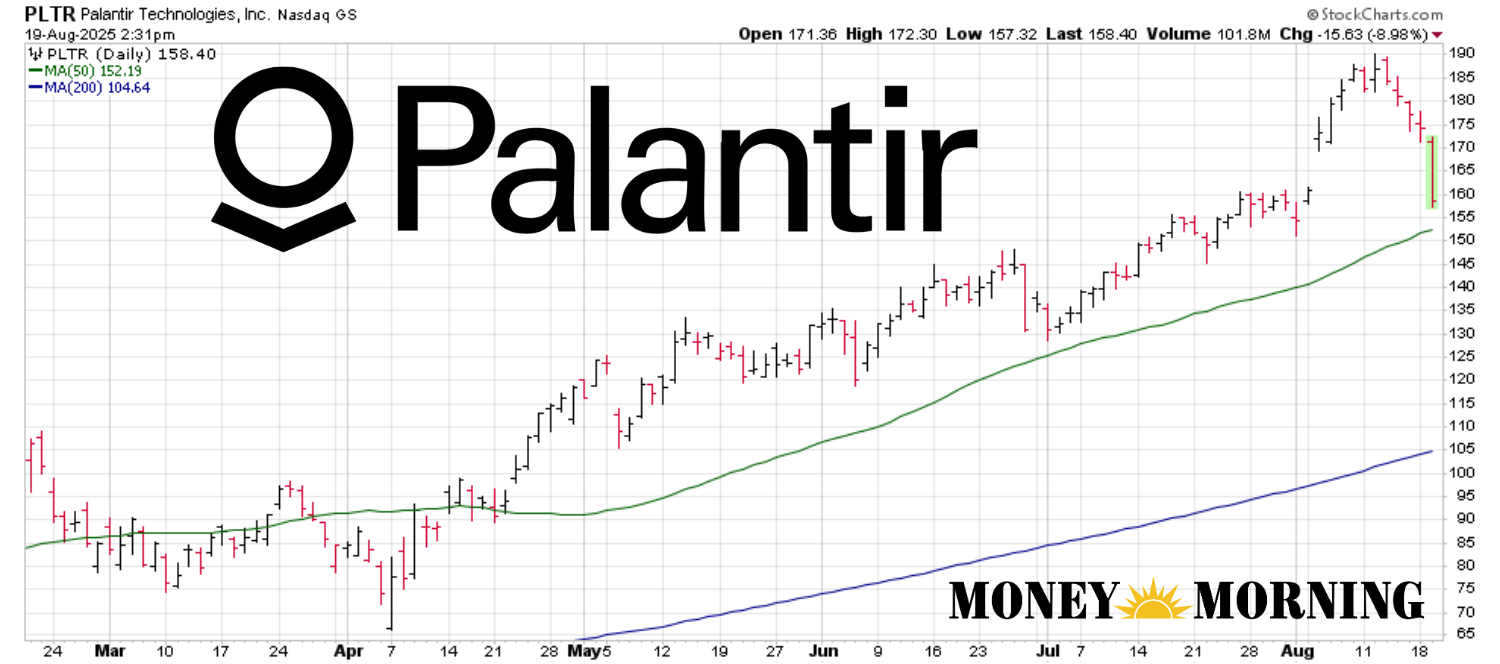
The nominal price of a single share of PLTR is only one part of the equation. To understand the true cost of the company, investors look at the market capitalization—the total dollar market value of all outstanding shares. Palantir’s market cap has seen significant swings, reflecting the market’s changing appetite for growth stocks. When the stock trades at higher price levels, it often signals a “risk-on” environment where investors are willing to pay a premium for future earnings potential.
The price of PLTR is also heavily influenced by its float and institutional ownership. Initially viewed as a “retail favorite” or a “meme stock” during the 2021 market frenzy, the ownership structure has gradually shifted. Today, an increasing number of institutional investors—pension funds, hedge funds, and mutual funds—have built significant positions. This institutional backing typically provides a level of price support, as these entities tend to have longer-term investment horizons compared to day traders.
Inclusion in the S&P 500
A pivotal moment in the valuation of PLTR occurred with its inclusion in the S&P 500 index. This milestone served as a formal validation of the company’s financial maturity. Inclusion in the index requires a company to report positive GAAP (Generally Accepted Accounting Principles) earnings over several consecutive quarters. For Palantir, this achievement silenced many critics who argued the company was a “black box” that could never achieve sustainable profitability. The structural demand created by index-tracking funds—which must buy the stock regardless of price—has added a new layer of stability and upward pressure on the stock’s valuation.
The Fundamental Drivers of PLTR’s Valuation
In the world of investing, a stock’s price is theoretically the present value of all its future cash flows. For Palantir, those future cash flows are being redefined by a massive pivot in its business model. While the company started as a tool for the intelligence community, its current valuation is increasingly tied to its success in the private sector.
Revenue Growth and the AIP Revolution
The most significant driver of PLTR’s stock price in the current era is the Artificial Intelligence Platform (AIP). In early 2023, Palantir launched AIP to allow organizations to bring the power of large language models (LLMs) to their private networks and operational data. The market response was unprecedented. By implementing “bootcamps”—intensive, hands-on sessions where potential clients can build functional workflows in days rather than months—Palantir drastically shortened its sales cycle.
Investors track “commercial revenue growth” as a primary metric for determining if the stock is undervalued or overvalued. When Palantir reports triple-digit growth in its U.S. commercial customer count, the stock often reacts positively, as this suggests a massive “land and expand” opportunity. The ability to convert a pilot program into a multi-million dollar enterprise contract is the engine that justifies a high price-to-earnings (P/E) ratio.
Government Sector Stability
While the commercial side provides the growth “alpha,” the government sector provides the “beta” or the foundation. Palantir’s long-standing relationships with the U.S. Department of Defense, the NHS in the UK, and various intelligence agencies provide a recurring revenue stream that is relatively insulated from economic downturns.
Contract wins, such as the Army’s TITAN program, act as major price catalysts. These contracts are often multi-year and worth hundreds of millions of dollars. When the market sees Palantir securing these “sticky” government deals, it de-risks the investment thesis, allowing the stock to maintain a higher valuation floor. The integration of AI into modern warfare and logistics ensures that Palantir remains a critical infrastructure provider for Western allies, a factor that many investors weigh heavily when deciding how much to pay for the stock.
Margin Expansion and Profitability
For years, the primary bear case against PLTR was its high stock-based compensation (SBC), which diluted shareholders and ate into profits. However, the company’s recent financial reports have shown a disciplined trend toward reducing SBC as a percentage of revenue. As Palantir scales, its software-heavy model allows for high gross margins. Once the initial infrastructure is built for a client, the cost of maintaining that client is relatively low, leading to significant operating leverage. This transition from a high-burn tech firm to a high-margin cash flow machine is a primary reason why the stock’s “fair value” has been upwardly revised by many Wall Street analysts.
Investment Thesis: Why the Price Fluctuates
Investing in PLTR is not for the faint of heart. The stock is known for its high beta, meaning it tends to move more than the overall market. Understanding why the price fluctuates is key to determining an appropriate entry or exit point.
Volatility in Growth Stocks and Interest Rates
As a high-growth technology company, PLTR is sensitive to the macroeconomic environment, particularly interest rates. When interest rates rise, the “discount rate” applied to future earnings also rises, which can compress the valuation multiples of growth stocks. Conversely, in a stable or falling rate environment, investors are more willing to pay a high multiple for Palantir’s future growth. This macro-sensitivity explains why the stock might drop on a day when there is no company-specific news, but rather a change in Federal Reserve policy or an uptick in Treasury yields.
The Power of Sentiment and “The Palantir Cult”
Few stocks command as much social media attention and “retail fervor” as Palantir. CEO Alex Karp’s unconventional leadership style and the company’s outspoken stance on Western values have created a dedicated following. While this enthusiasm can drive the price to irrational heights during bull runs, it can also lead to sharp corrections when the hype cools. Professional investors often look at “sentiment indicators” and short interest to gauge whether the current price reflects the company’s actual value or merely the excitement of the crowd.
Risk Assessment and Long-Term Outlook
No analysis of a stock’s price is complete without considering the risks that could cause a devaluation. For Palantir, the risks are as unique as its software.
Valuation Multiples: Is it Too Expensive?
By traditional metrics, PLTR often looks “expensive.” Its Price-to-Sales (P/S) and Price-to-Earnings (P/E) ratios are frequently higher than the industry average for software-as-a-service (SaaS) companies. Critics argue that the market has already priced in several years of perfect execution, leaving little room for error. If Palantir were to miss a revenue target or show a slowdown in customer acquisition, the stock could face a significant “multiple contraction,” where the price drops even if the company remains profitable.
The Competitive Landscape
While Palantir’s Gotham and Foundry platforms are highly specialized, the company does face competition. Tech giants like Microsoft (Azure), Amazon (AWS), and Google (GCP) are all racing to provide enterprise AI solutions. Additionally, specialized data firms like Snowflake and Databricks compete for pieces of the enterprise data stack. Palantir’s “moat”—its competitive advantage—lies in its ability to integrate disparate data sources and provide an “operating system” for the enterprise, rather than just a storage solution. However, if competitors manage to offer simpler, cheaper alternatives, Palantir’s pricing power and stock valuation could suffer.

The Path Forward
The question of “how much is PLTR stock” is ultimately a question of belief in the future of decentralized, data-driven decision-making. If Palantir becomes the standard “ontology” for the modern world—where every major corporation and government entity runs its operations through Palantir software—then the current market cap may eventually look small.
As the company continues to demonstrate GAAP profitability and aggressive commercial growth, the debate over its value will likely shift from “if” it is a viable business to “how large” its dominance will become. For the individual investor, the price of PLTR is a reflection of the market’s real-time consensus on that very question. Whether viewed as an AI powerhouse or a specialized data firm, Palantir remains one of the most significant barometers for the health and direction of the technology and finance sectors combined.
aViewFromTheCave is a participant in the Amazon Services LLC Associates Program, an affiliate advertising program designed to provide a means for sites to earn advertising fees by advertising and linking to Amazon.com. Amazon, the Amazon logo, AmazonSupply, and the AmazonSupply logo are trademarks of Amazon.com, Inc. or its affiliates. As an Amazon Associate we earn affiliate commissions from qualifying purchases.