
The digital landscape has evolved from a speculative frontier into a mature, multi-trillion-dollar economy. However, the discourse surrounding “making money online” remains saturated with the remnants of “get-rich-quick” schemes and unsustainable “hacks.” To truly make money online in the current climate requires moving past the noise and understanding the fundamental laws of value exchange. Success in the digital space is not a result of finding a secret loophole; it is the result of building a legitimate business, leveraging scalable systems, and providing genuine value to a specific audience.
The Shift from “Making Money” to Building a Digital Asset
The most significant hurdle for beginners is the mindset of chasing a “side hustle” rather than building a business. A side hustle often implies trading time for a linear income—such as data entry or low-level gig work. While these provide immediate cash flow, they rarely lead to true wealth. To build a sustainable income, one must focus on creating digital assets.

A digital asset can be a content platform, a software solution, a specialized service, or a proprietary brand. These assets share a common trait: they decouple time from income. When you create an asset, you are building something that can generate revenue while you sleep, travel, or focus on other projects. This transition from labor-intensive work to asset-based income is the core requirement for long-term financial success online.
Building a High-Value Skill Set as Your Foundation
Before any digital business can thrive, the individual behind it must possess high-value skills. In the physical world, laborers are paid for their time, while specialists are paid for their results. The online world amplifies this discrepancy. To command high rates and build a defensible career, you must focus on skills that have a direct impact on a business’s bottom line.
Identifying Market-Driven Skills
High-value skills generally fall into three categories: sales and marketing, technical development, and specialized creative output. Skills such as direct-response copywriting, media buying (running paid ads), and search engine optimization (SEO) are consistently in high demand because they directly generate revenue for clients. On the technical side, full-stack development, data analysis, and AI implementation help businesses optimize their operations and scale.
The key to choosing a skill is to look for “high-leverage” opportunities. For instance, a graphic designer who creates social media posts is a commodity. A designer who specializes in high-conversion landing pages for e-commerce brands is a strategic partner. The latter can charge significantly more because their work is tied to a measurable return on investment (ROI).
The Power of the “Skill Stack”
While being a specialist is valuable, the most successful digital entrepreneurs utilize a “skill stack.” This is the combination of two or more complementary skills that make you uniquely valuable. For example, a software developer who also understands marketing can build their own products (SaaS) and sell them effectively. A financial analyst who understands video production can build a massive audience on YouTube. By combining technical proficiency with the ability to communicate and sell, you remove the ceiling on your earning potential.
Scalable Business Models: Content and Products
Once a skill set is established, the next step is to choose a vehicle for that skill. The internet allows for near-infinite scalability, meaning the cost of serving the 1,000th customer is often negligible compared to the first. Two of the most effective ways to leverage this are content creation and digital products.
Leveraging the Creator Economy
The “creator economy” is often misunderstood as simply being an “influencer.” In reality, it is a sophisticated business model centered on audience trust. By consistently producing high-quality content—whether through a newsletter, a podcast, or a specialized blog—you build an audience of people who value your perspective.
Monetization in the creator economy should be viewed as a pyramid. At the base is advertising revenue (Sponsorships, YouTube AdSense). While these are passive, they require massive volume. The middle of the pyramid consists of affiliate marketing, where you earn a commission for recommending products you use. The top of the pyramid—and the most lucrative—is selling your own products or services. This allows you to capture 100% of the margin and maintain control over the customer experience.
Digital Products and Intellectual Property
Digital products, such as online courses, eBooks, templates, and software-as-a-service (SaaS), represent the pinnacle of online income. They have zero manufacturing costs and zero shipping costs. Once the initial investment of time or capital is made to create the product, the profit margins are incredibly high.
The secret to a successful digital product is solving a specific, painful problem. A general course on “How to be Happy” is difficult to sell. A specific course on “How to Negotiate a $20,000 Raise in the Tech Industry” is highly valuable. The more specific the problem and the more tangible the result, the more you can charge.
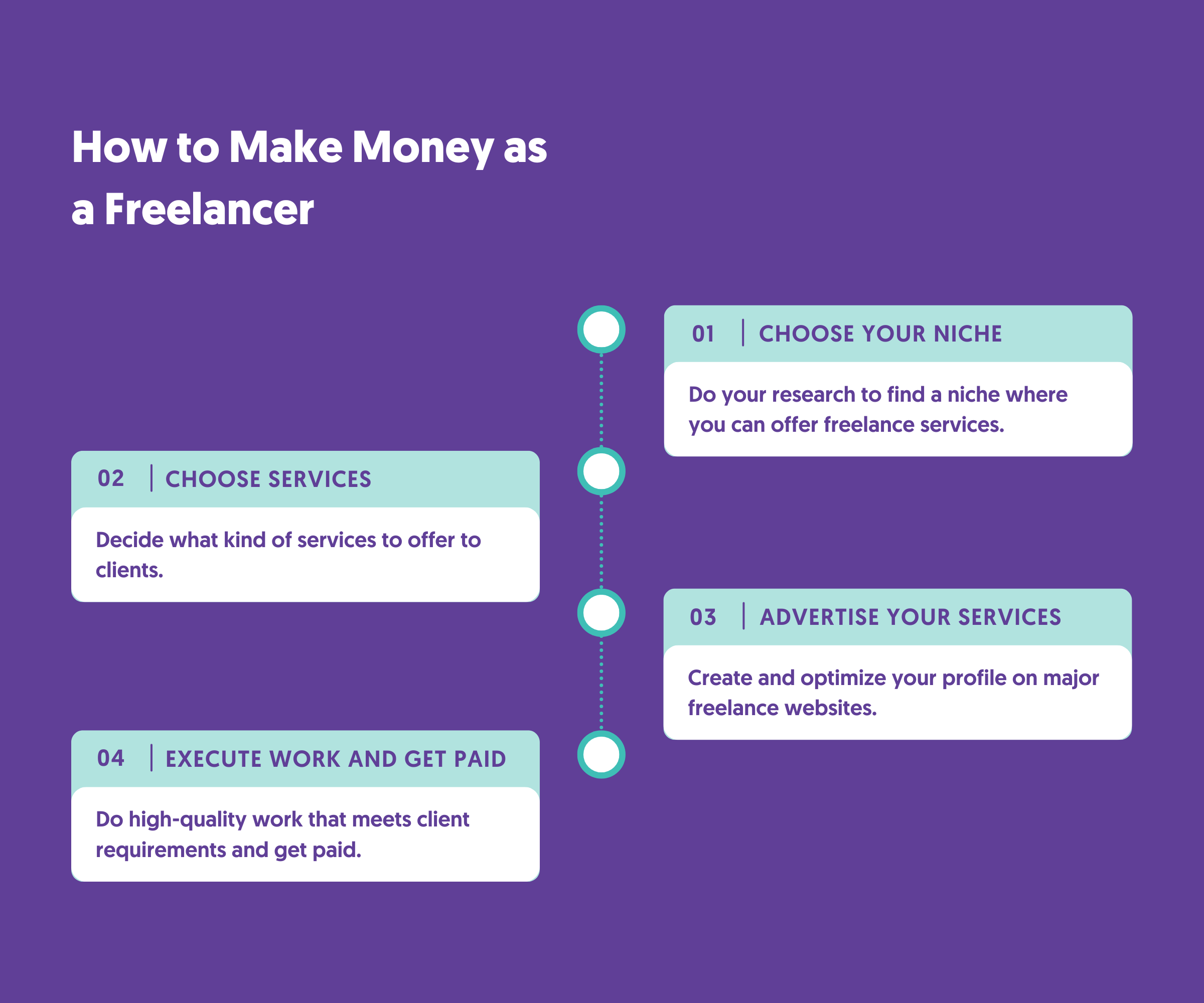
Service-Based Excellence: High-Ticket Freelancing and Consulting
For those who want to start making money quickly, the service-based model is the most direct path. Unlike building an audience or developing a software product, which can take months or years to monetize, services can generate revenue the moment you sign your first client.
Mastering Client Acquisition
The primary challenge in freelancing is the “feast or famine” cycle. To truly make money online as a service provider, you must move away from general marketplaces like Upwork or Fiverr, where price is the primary differentiator. Instead, you must build a personal brand and a lead generation system.
This involves “outbound” efforts (reaching out to prospective clients via LinkedIn or email) and “inbound” efforts (publishing content that proves your expertise). By positioning yourself as a consultant rather than a “hired gun,” you shift the conversation from “How much do you cost?” to “What is the value of the problem you are solving?” High-ticket consulting often involves charging based on the value delivered, which can lead to five- or six-figure contracts for a single project.
Productizing Your Service
The ultimate evolution of a service business is “productization.” This involves taking a bespoke service and turning it into a standardized package with a fixed price and a fixed delivery timeline. For example, instead of offering “general marketing services,” you offer a “30-day Lead Generation Sprint.” Productization allows you to streamline your operations, hire others to perform the tasks, and scale your income without linearly increasing your workload.
E-commerce and the Evolution of Digital Retail
E-commerce remains one of the most reliable ways to make money online, but the strategies that worked five years ago have changed. Traditional dropshipping, where an entrepreneur acts as a middleman for low-quality products with long shipping times, is largely a race to the bottom. To succeed today, you must focus on brand equity and logistics.
Moving Beyond Arbitrage to Brand Building
Successful e-commerce entrepreneurs now focus on “Private Labeling” or “Direct-to-Consumer” (DTC) brands. This involves identifying a gap in the market, sourcing or manufacturing a product that fills that gap, and branding it as your own. By owning the brand, you control the customer data, the packaging, and the long-term reputation of the business. This creates an exit-ready asset that can eventually be sold for a multiple of its annual profit.
The Role of Niche Marketplaces
While building your own website on platforms like Shopify is essential for brand control, leveraging existing marketplaces like Amazon (via FBA – Fulfillment by Amazon) or Etsy can provide a massive head start. These platforms already have the trust and the traffic. The key is to use these platforms as a launchpad to build a customer base that you eventually migrate to your own ecosystem, where margins are higher and you aren’t subject to the whims of a third-party algorithm.
Financial Discipline and Reinvestment
The final, and perhaps most overlooked, aspect of truly making money online is what you do with the money once you earn it. Many digital entrepreneurs fall into the trap of increasing their lifestyle expenses at the same rate as their income.
Reinvesting for Compounded Growth
The most successful online earners view their initial profits as “seed capital.” They reinvest in their business by hiring virtual assistants, purchasing better software, or increasing their advertising spend. This reinvestment accelerates growth and creates a competitive moat.
Furthermore, true wealth is built by moving profits from the volatile world of online business into more stable investment vehicles. This might include dividend-paying stocks, real estate, or index funds. By taking the high-margin profits from a digital business and placing them into long-term investments, you transform “online income” into “generational wealth.”
The Reality of Longevity
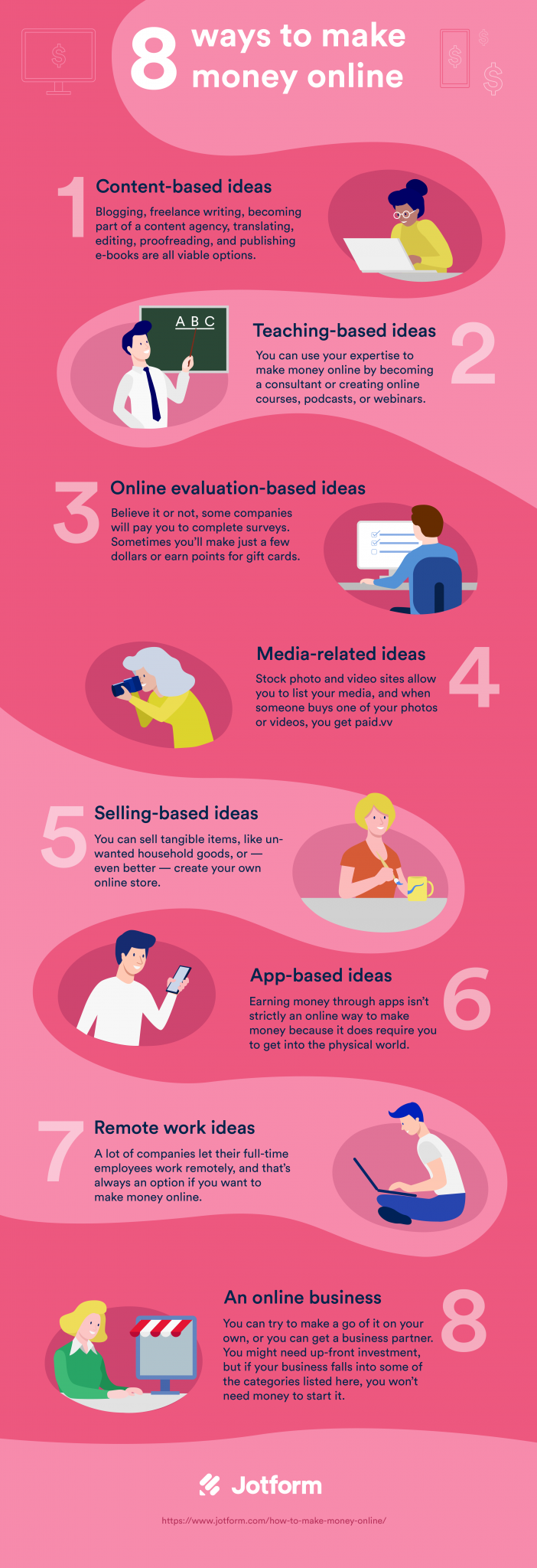
Making money online is not about finding a magic button; it is about discipline, adaptability, and the relentless pursuit of value. The internet provides the infrastructure, but the individual must provide the strategy. By focusing on high-value skills, building scalable assets, and maintaining financial rigour, anyone can navigate the digital economy and achieve true financial independence. The goal is not just to make money today, but to build a system that ensures financial security for years to come.
aViewFromTheCave is a participant in the Amazon Services LLC Associates Program, an affiliate advertising program designed to provide a means for sites to earn advertising fees by advertising and linking to Amazon.com. Amazon, the Amazon logo, AmazonSupply, and the AmazonSupply logo are trademarks of Amazon.com, Inc. or its affiliates. As an Amazon Associate we earn affiliate commissions from qualifying purchases.