
Passive income is often described as the “holy grail” of personal finance. It represents a shift from trading time for money to making money work for you. In a traditional employment model, your earning potential is strictly limited by the number of hours you can work. Passive income breaks this linear relationship, allowing you to generate revenue regardless of your physical presence or daily labor. However, the term “passive” is frequently misunderstood; it does not mean “no effort.” Instead, it requires a significant upfront investment of either time or capital to create an engine that produces recurring cash flow.

To build a sustainable passive income portfolio, one must navigate various asset classes, risk profiles, and tax implications. Whether you are looking to supplement your current salary or build a foundation for early retirement, the following strategies provide a comprehensive roadmap for capital allocation in the pursuit of financial independence.
The Fundamentals of Passive Income Investing
Before diving into specific assets, it is crucial to understand the mechanics of how passive income is generated. Successful passive investing is built on three pillars: capital preservation, yield, and growth.
Active vs. Passive Income
Active income is the result of your direct labor—wages, tips, and commissions. Passive income, as defined by the IRS and financial theorists, generally comes from two sources: rental activities or businesses in which you do not materially participate. In a broader sense, it includes interest, dividends, and royalties. The goal of the passive investor is to transition as much active income as possible into income-producing assets.
The Power of Compounding
The most potent tool in the investor’s arsenal is time. Compounding occurs when the returns on your investments are reinvested to generate their own earnings. Over decades, this creates an exponential growth curve. For passive income seekers, this means reinvesting dividends or rental profits back into the portfolio during the “accumulation phase” to accelerate the “distribution phase” later in life.
Risk Management and Diversification
Passive income is not guaranteed. Companies can cut dividends, tenants can vacate properties, and markets can fluctuate. Diversification across different asset classes—equities, real estate, and fixed income—is the primary defense against systemic risk. A well-constructed portfolio ensures that a failure in one sector does not jeopardize your entire cash flow.
High-Yield Income Streams through Stock Markets
The equity market remains one of the most accessible vehicles for generating passive income. With low barriers to entry and high liquidity, it allows individuals to own pieces of the world’s most profitable companies.
Dividend Growth Investing
Dividend growth investing involves purchasing shares in companies that have a consistent track record of increasing their dividend payouts annually. These companies, often referred to as “Dividend Aristocrats” (those in the S&P 500 that have increased dividends for 25+ consecutive years), offer a dual benefit: a steady stream of cash and the potential for capital appreciation.
When evaluating dividend stocks, investors look at the “Dividend Yield” (the annual dividend payment divided by the stock price) and the “Payout Ratio” (the percentage of earnings paid out as dividends). A sustainable payout ratio is typically below 60%, ensuring the company retains enough capital to reinvest in its own growth.
Real Estate Investment Trusts (REITs)
For those who want exposure to real estate without the headaches of property management, REITs are an essential tool. A REIT is a company that owns, operates, or finances income-producing real estate. By law, REITs must distribute at least 90% of their taxable income to shareholders in the form of dividends. This structure makes them high-yield vehicles by design. Investors can choose from specialized REITs focusing on data centers, healthcare facilities, retail malls, or residential apartments.
Index Funds and ETFs
For the “set-it-and-forget-it” investor, Dividend Exchange-Traded Funds (ETFs) provide instant diversification. Funds like the Vanguard Dividend Appreciation ETF (VIG) or the Schwab US Dividend Equity ETF (SCHD) basket hundreds of high-performing dividend stocks into a single tradable security. This reduces the risk associated with individual stock picking while maintaining a steady yield.
Real Estate and Alternative Assets
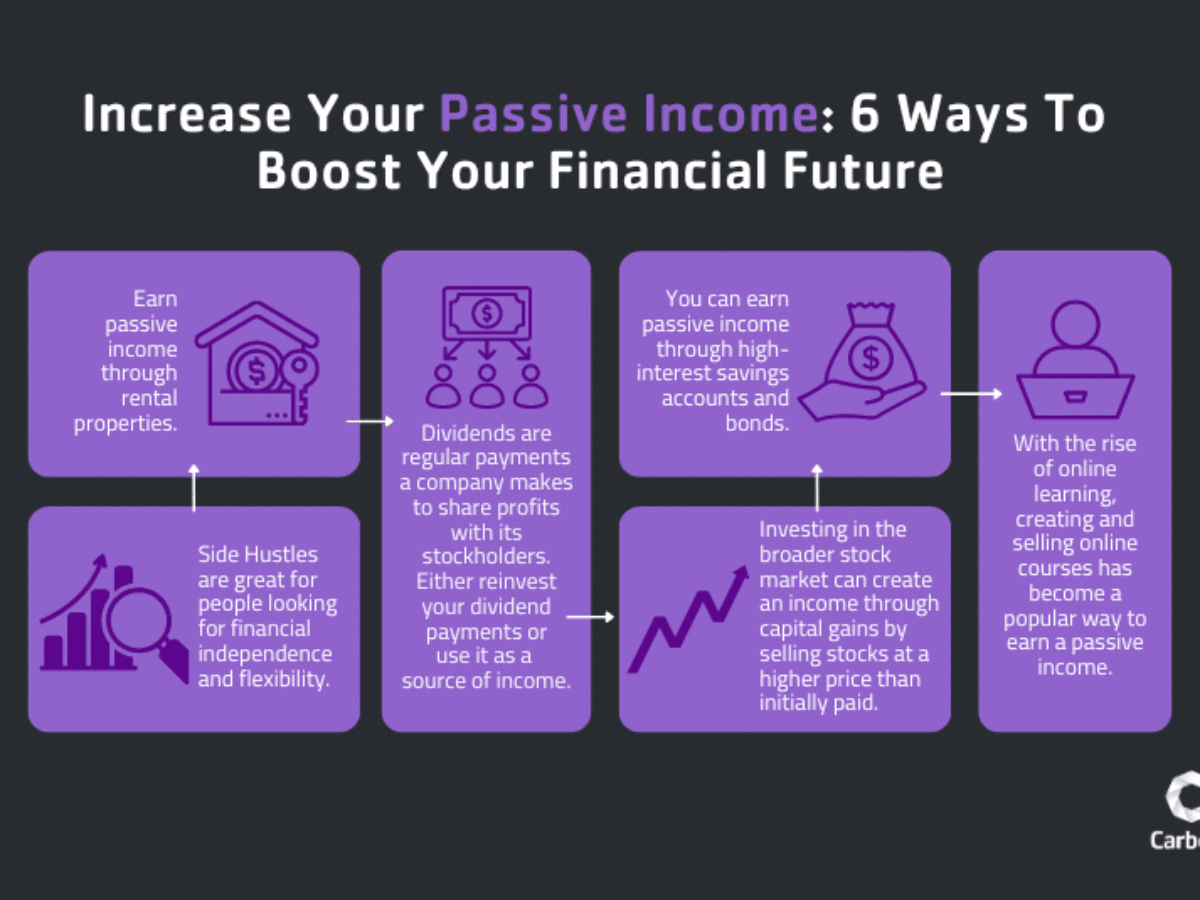
Real estate has long been the cornerstone of wealth creation. Unlike stocks, real estate is a tangible asset that offers significant tax advantages and the ability to use leverage (borrowed capital) to increase returns.
Physical Rental Properties
Direct ownership of residential or commercial property provides monthly rental income and long-term appreciation. The “passive” nature of this investment depends largely on the use of a professional property management company. While the management fee (typically 8-12% of gross rent) eats into margins, it removes the investor from the day-to-day operations of maintenance and tenant relations.
Key metrics for rental properties include the “Cap Rate” (Capitalization Rate) and “Cash-on-Cash Return.” A successful real estate investor focuses on “positive cash flow”—the amount of money left over after the mortgage, taxes, insurance, and maintenance reserves are paid.
Crowdfunded Real Estate
Technological shifts have democratized real estate investing through crowdfunding platforms. These platforms allow individuals to pool their money to invest in large-scale commercial developments or portfolios of residential homes with as little as $500 to $1,000. It offers a truly passive experience, as the platform handles all acquisitions, renovations, and management, distributing profits to investors quarterly.
Peer-to-Peer (P2P) Lending
P2P lending platforms allow you to act as the bank. You lend your capital to individuals or small business owners in exchange for interest payments. While higher-risk than a savings account, P2P lending can offer significantly higher returns. To mitigate risk, investors typically “fractionalize” their investment, spreading $5,000 across 200 different loans of $25 each. If a few borrowers default, the interest from the remaining loans generally covers the loss and provides a net profit.
Digital Assets and Intellectual Property
In the modern economy, passive income is not limited to financial or physical assets. Digital assets have become highly scalable ways to generate recurring revenue with low overhead costs.
Content Monetization and Licensing
Creating intellectual property—such as books, online courses, or stock photography—requires a massive upfront time investment. However, once the asset is created, it can be sold indefinitely. A well-written e-book or a comprehensive digital course on a platform like Udemy can generate sales for years. Similarly, licensing music or photography to stock sites creates a “royalty” stream that flows every time someone uses your work.
Automated Business Models
The rise of “Micro-SaaS” (Software as a Service) and affiliate marketing provides another avenue. An affiliate website that provides high-quality reviews and helpful content can earn commissions on sales redirected to third-party retailers. Once the content is ranked in search engines, it generates traffic and revenue with minimal ongoing maintenance. The key here is “evergreen” content—information that remains relevant and valuable to readers over a long period.
Building Your Passive Income Roadmap
Transitioning from a traditional earner to a passive income investor requires a disciplined strategy. It is rarely a quick process; rather, it is a gradual construction of multiple “income silos.”
Setting Realistic Goals
The first step is determining your “freedom number”—the amount of monthly passive income required to cover your essential living expenses. For most, this begins with a “bridge” goal, such as earning enough passive income to pay for a utility bill, then a car payment, and eventually a mortgage. Breaking the total goal into these smaller milestones prevents burnout and provides a sense of tangible progress.
Tax Strategy and Optimization
Passive income is taxed differently depending on its source. Qualified dividends are often taxed at lower capital gains rates, while rental income allows for “depreciation” deductions that can shield much of the cash flow from taxes. Utilizing tax-advantaged accounts like IRAs or 401(k)s can also significantly impact the long-term size of your portfolio by deferring or eliminating taxes on growth.

The Reinvestment Cycle
In the early stages of building passive income, the most important action you can take is to avoid spending the income generated. By funneling dividends and rental profits back into new assets, you trigger the “snowball effect.” As the portfolio grows, the income it generates becomes large enough to purchase more assets on its own, eventually reaching a point of self-sustenance where your initial capital contributions are no longer necessary.
Achieving a life funded by passive income is not about avoiding work; it is about having the autonomy to choose the work you do. By diversifying across equities, real estate, and digital assets, and by maintaining a long-term perspective, any disciplined investor can build a financial engine that provides security and freedom for decades to come.
aViewFromTheCave is a participant in the Amazon Services LLC Associates Program, an affiliate advertising program designed to provide a means for sites to earn advertising fees by advertising and linking to Amazon.com. Amazon, the Amazon logo, AmazonSupply, and the AmazonSupply logo are trademarks of Amazon.com, Inc. or its affiliates. As an Amazon Associate we earn affiliate commissions from qualifying purchases.