
The intersection of individual wealth and corporate equity has rarely been as scrutinized as it is in the case of Elon Musk and Tesla, Inc. As the architect of the modern electric vehicle (EV) industry, Musk’s financial stake in Tesla is not merely a measure of his personal net worth; it is a barometer for investor confidence and a pivotal factor in the company’s strategic direction. For investors, financial analysts, and market observers, understanding the precise mechanics of Musk’s ownership requires navigating a complex landscape of common stock, performance-based options, and the fallout of massive acquisitions in the social media sphere.
The Current State of Musk’s Equity Holdings
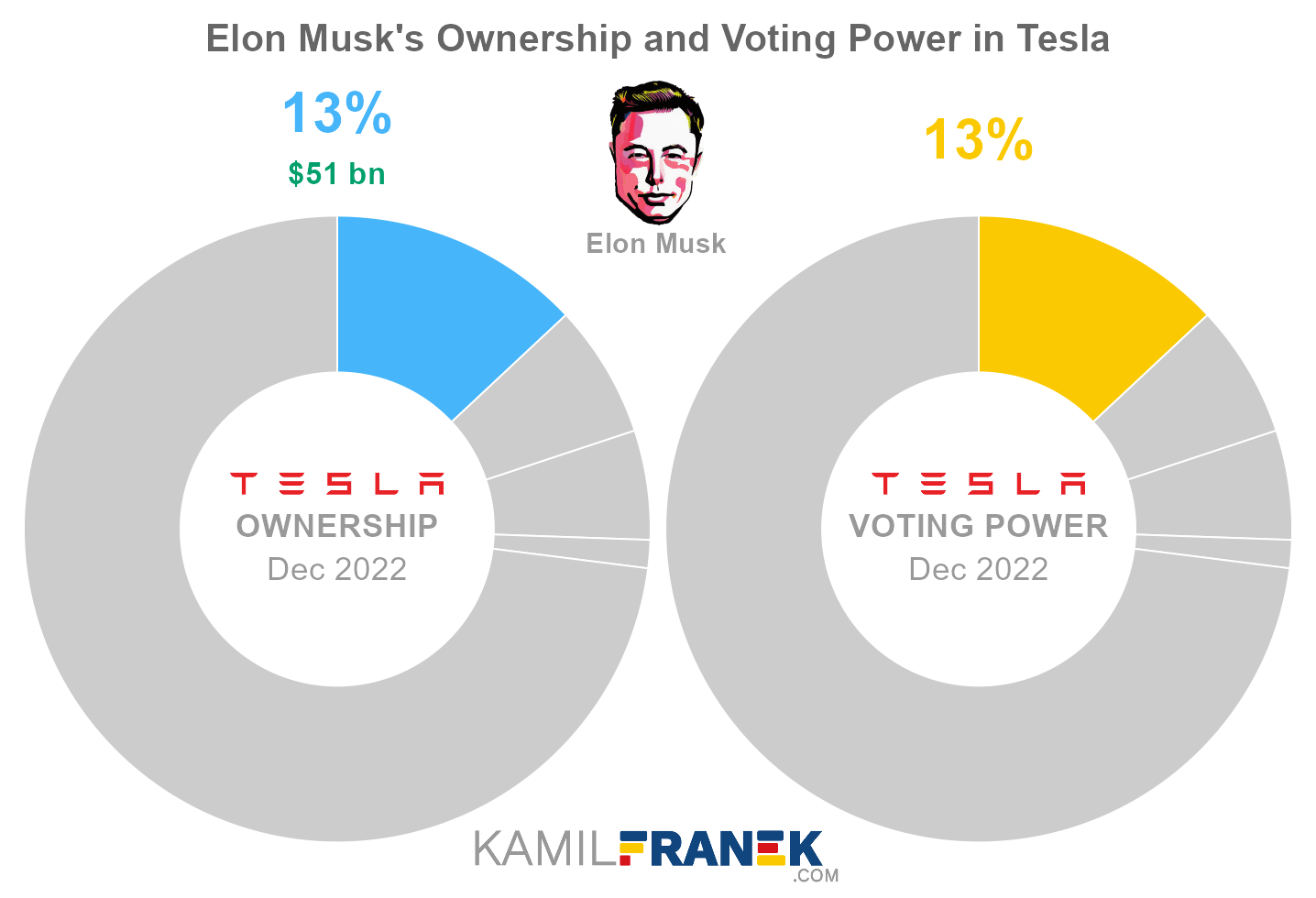
As of mid-2024, Elon Musk’s ownership in Tesla stands at a critical juncture, characterized by a significant base of common stock and a larger “theoretical” stake tied to historical compensation packages. Currently, Musk owns approximately 13% of Tesla’s outstanding common stock. This figure represents the shares he directly holds, which have fluctuated over the last few years due to high-profile sell-offs and the exercise of expiring options.
However, the “13%” figure only tells part of the story. To understand Musk’s true influence and financial interest, one must look at his total voting power and the potential for dilution or expansion through stock options. In 2018, Tesla shareholders approved a CEO performance award that was, at the time, the largest corporate pay package in history. This package consisted of 12 tranches of stock options that would vest as Tesla hit specific market capitalization and operational milestones.
While a Delaware judge initially voided this $56 billion pay package in early 2024, Tesla’s shareholders moved to re-ratify the agreement in June 2024. If the options from this package are fully included and exercised, Musk’s effective ownership stake rises significantly, moving closer to 20.5%. This distinction between “common stock owned” and “fully diluted ownership” is essential for anyone analyzing Tesla’s capital structure. For the retail investor, the 13% floor provides the baseline of his skin in the game, while the 20% ceiling represents the level of control Musk believes is necessary to steer the company toward an AI-driven future.
The Impact of the Twitter (X) Acquisition
A pivotal moment in the history of Musk’s Tesla ownership occurred in 2022. To fund the $44 billion acquisition of Twitter (now X), Musk sold billions of dollars worth of Tesla shares. Before these sales, his stake in Tesla was notably higher, hovering around 17% of common stock.
These sales created a temporary rift between Musk and some of Tesla’s institutional investors. From a financial perspective, the liquidation of shares by a founder often signals a “top” in the market or a shift in focus. However, Musk maintained that the sales were a necessary liquidity event to facilitate his vision for X. For Tesla’s stock price, this period was marked by high volatility, illustrating how sensitive the company’s valuation is to the individual financial maneuvers of its CEO.
Corporate Governance and the 25% Threshold
In early 2024, Musk sparked a debate within the financial community by stating that he would be “uncomfortable” growing Tesla to be a leader in artificial intelligence and robotics without having approximately 25% voting control. This statement highlights the tension between a founder’s desire for autonomy and the institutional demand for traditional corporate governance.
From a business finance perspective, the 25% threshold is significant. It is not quite a majority stake, but it is enough to make it nearly impossible for a hostile takeover to succeed and gives the holder substantial influence over board appointments and strategic pivots. Musk’s argument is that without a high enough stake, he is vulnerable to “takeover by dubious interests” who might prioritize short-term profits over the long-term, high-risk development of technologies like Optimus (Tesla’s humanoid robot) and Full Self-Driving (FSD).
Institutional vs. Individual Control
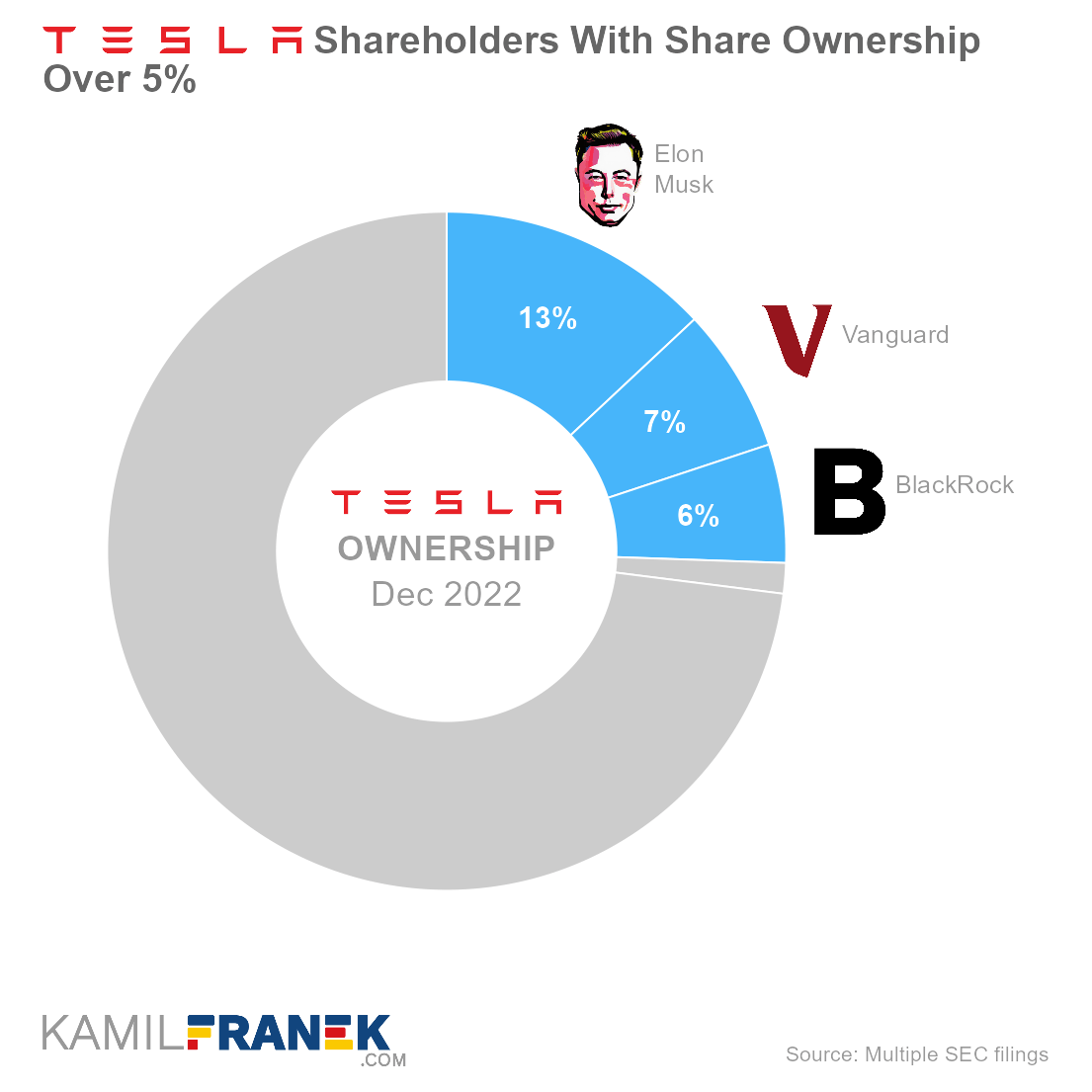
Tesla’s ownership structure is a mix of Musk’s massive individual stake and heavy institutional involvement. Major asset managers like Vanguard, BlackRock, and State Street hold significant percentages of the company, often totaling more than 15% combined.
When Musk advocates for a 25% stake, he is essentially asking for a realignment of the company’s capital structure. For investors, this poses a fundamental question: is the “Musk Premium”—the added value his leadership brings to the stock—worth the dilution of other shareholders to grant him higher ownership? Many argue that Tesla’s valuation, which often exceeds the combined value of several of the world’s largest automakers, is predicated entirely on Musk’s presence. Therefore, the financial risk of him “taking his talents elsewhere” outweighs the cost of equity dilution.
The Financial Mechanics of the 2018 CEO Performance Award
To understand how Musk’s ownership might reach that 25% goal, one must analyze the 2018 CEO Performance Award. This was not a traditional salary-plus-bonus structure. Instead, it was a “double-trigger” plan: Tesla had to hit a market cap milestone (starting at $100 billion and moving up to $650 billion) and either a revenue or EBITDA (Earnings Before Interest, Taxes, Depreciation, and Amortization) milestone.
The Mathematical Reality of Dilution
When Musk exercises these options, Tesla must issue new shares. In the world of business finance, this is known as dilution. While the issuance of new shares increases the total number of shares outstanding—thereby slightly reducing the “slice of the pie” owned by other shareholders—the logic behind the 2018 plan was that the “pie” would grow so large that shareholders wouldn’t mind a slightly smaller percentage of a much more valuable company.
At the time the plan was conceived, Tesla was struggling with the “production hell” of the Model 3. The company’s market cap was a fraction of what it is today. By hitting all 12 tranches of the plan, Musk oversaw a wealth creation event for shareholders that is virtually unparalleled in the history of the S&P 500. This is why, despite legal challenges in Delaware, a majority of retail and institutional investors voted to re-approve the package in 2024. They viewed it as a fair trade: Musk gets more of the company, and the shareholders get a massive return on their investment.
Why Musk’s Ownership Percentage Matters to Investors
For the individual investor or the financial analyst, Musk’s ownership percentage is more than just a trivia point; it is a critical metric for assessing “key man risk.” Tesla is uniquely tied to the persona and perceived genius of its CEO.
Skin in the Game and Alignment of Interests
One of the core tenets of value investing is looking for companies where management’s interests are aligned with those of the shareholders. With a 13% to 20% stake, Musk’s personal fortune is inextricably linked to the performance of Tesla stock. Unlike many CEOs of Fortune 500 companies who receive large cash salaries and bonuses regardless of stock performance, the vast majority of Musk’s wealth is “paper wealth” tied to Tesla’s equity.
This alignment ensures that Musk is incentivized to drive the stock price higher. However, it also introduces a level of volatility. Because Musk uses his Tesla shares as collateral for loans (margin lending) to fund other ventures like SpaceX or Boring Company, a significant drop in Tesla’s stock price could theoretically trigger “margin calls,” forcing him to sell more shares and creating a downward spiral. While this remains a tail risk, it is a factor that financial institutions monitor closely.
The “Musk Premium” and Market Valuation
Tesla consistently trades at a price-to-earnings (P/E) ratio that is significantly higher than traditional automotive companies like Ford or General Motors. This premium is largely attributed to Tesla being viewed as a tech and AI company rather than a car manufacturer. Musk’s ownership stake acts as a psychological anchor for this valuation. As long as he remains the largest individual shareholder, the market continues to price in his future innovations. If his stake were to drop significantly—either through further sales to fund other projects or through a failure to secure the 25% control he desires—the “Musk Premium” could erode, leading to a fundamental revaluation of the company.

The Future of Musk’s Stake: AI and Beyond
Looking forward, the percentage of Tesla owned by Elon Musk will likely remain a moving target. The ongoing legal debates regarding corporate jurisdiction—specifically Tesla’s move from Delaware to Texas—will play a role in how his compensation and equity are treated.
If Musk successfully secures a path toward 25% voting power, it will likely come through a combination of new equity grants and the potential creation of a dual-class share structure, similar to those used by Meta (Facebook) or Alphabet (Google). In those companies, founders hold special shares with super-voting rights, allowing them to maintain control even if their economic interest is lower. Tesla, however, has traditionally maintained a “one share, one vote” policy, making Musk’s quest for 25% through direct ownership a unique challenge in corporate finance.
In conclusion, while Elon Musk currently owns roughly 13% of Tesla’s common stock, his influence and potential future stake are far greater. Through vested options and his strategic demands for AI governance, his “effective” ownership sits closer to 20%. For the financial world, these percentages are a reflection of the trust—and the risk—invested in one of the most polarizing and successful entrepreneurs of the 21st century. As Tesla transitions from a pure-play EV maker to an AI and robotics powerhouse, the battle over these percentage points will define the next decade of the company’s financial narrative.
aViewFromTheCave is a participant in the Amazon Services LLC Associates Program, an affiliate advertising program designed to provide a means for sites to earn advertising fees by advertising and linking to Amazon.com. Amazon, the Amazon logo, AmazonSupply, and the AmazonSupply logo are trademarks of Amazon.com, Inc. or its affiliates. As an Amazon Associate we earn affiliate commissions from qualifying purchases.