
The valuation of Tesla, Inc. (TSLA) remains one of the most debated topics in the history of the modern financial markets. To some, it is a drastically overvalued car manufacturer trading at multiples that defy the gravity of industrial reality. To others, it is a category-defining robotics and artificial intelligence powerhouse that happens to distribute its software via four wheels. Understanding the value of Tesla requires a departure from traditional automotive valuation metrics and a deep dive into capital structures, software margins, and the future of energy.
For the value investor, Tesla presents a conundrum. For the growth investor, it represents a generational opportunity. To determine the true value of the company, one must look past the volatility of the ticker symbol and analyze the underlying financial engines that drive its market capitalization.

Deconstructing the Financial Engine: Fundamentals and Margins
At its core, the value of any business is the present value of its future cash flows. Tesla’s ability to generate these cash flows has undergone a radical transformation since its early days of capital fragility. Today, the company operates with one of the strongest balance sheets in the industrial sector, characterized by high liquidity and relatively low debt.
Revenue Composition and Automotive Margins
Traditionally, automotive manufacturers operate on razor-thin margins, often struggling to exceed 10% in gross profitability. Tesla’s historical ability to push automotive gross margins into the mid-20% range—even excluding regulatory credits—was the primary catalyst for its massive valuation surge in the early 2020s. However, as the electric vehicle (EV) market has matured and competition has intensified, particularly from Chinese manufacturers and legacy European brands, these margins have come under pressure.
From a business finance perspective, the value of Tesla is intrinsically linked to its “cost of goods sold” (COGS) advantage. Through innovations like large-scale castings (Gigapress), vertical integration of battery chemistry, and a direct-to-consumer sales model that bypasses the traditional dealership network, Tesla maintains a structural cost advantage. Investors monitor these margins closely; a 1% shift in gross margin can represent billions of dollars in projected earnings power over a decade.
Free Cash Flow and Capital Allocation
Tesla’s valuation is also bolstered by its capital efficiency. Unlike legacy automakers that must manage billions in pension liabilities and outdated factory tooling, Tesla’s capital expenditures are directed toward high-growth infrastructure: Gigafactories, the Supercharger network, and AI training clusters.
The company’s ability to fund its expansion through operating cash flow rather than dilutive secondary offerings or high-interest debt has derisked the investment profile. For a financial analyst, the “value” here lies in the low cost of capital. Tesla’s brand equity allows it to attract talent and capital at rates that its competitors cannot match, creating a moat that is as much financial as it is technological.
Beyond the Chassis: The Valuation of Future Ecosystems
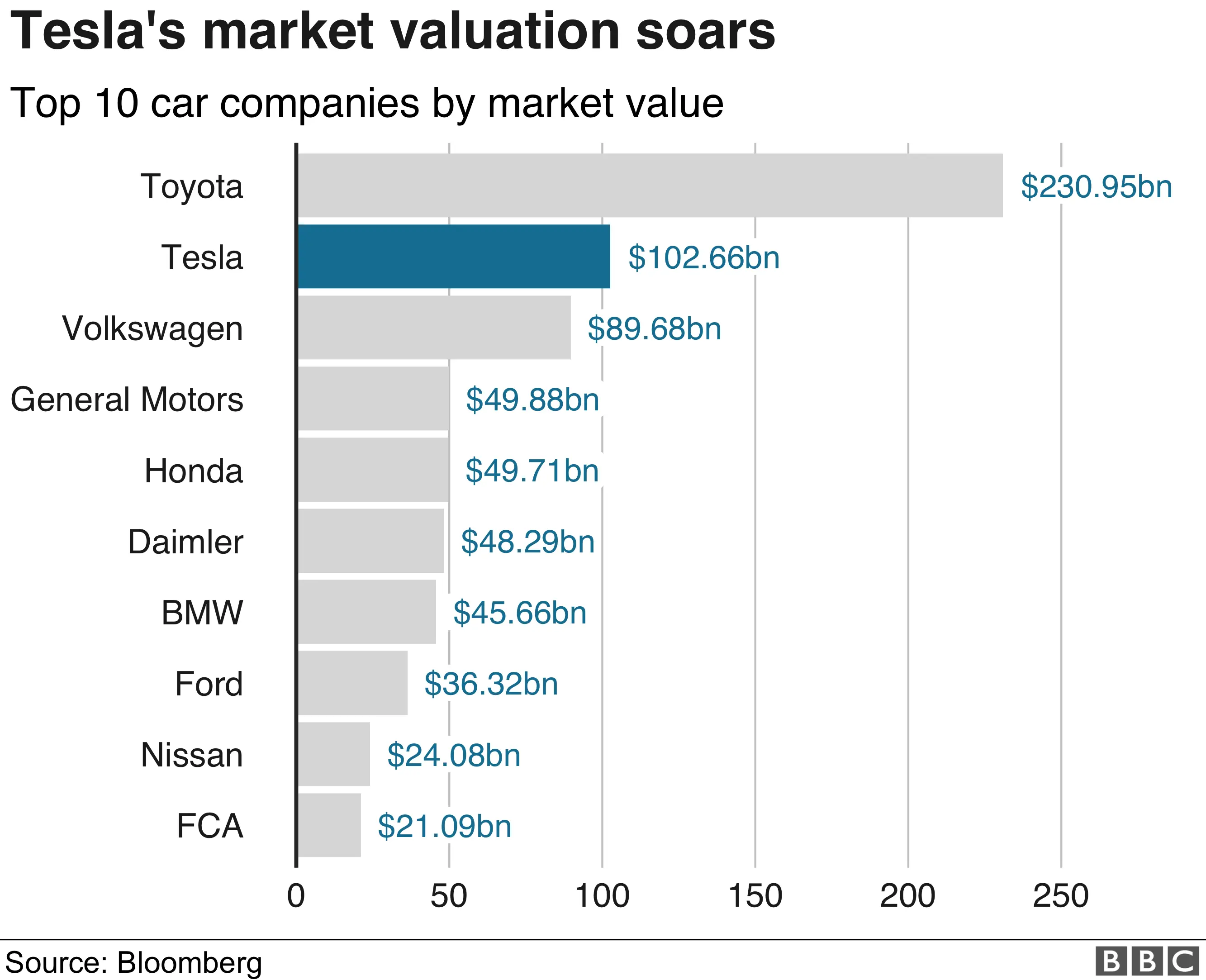
If Tesla were valued strictly as a car company, its market cap would likely align more closely with firms like Toyota or Volkswagen, which produce millions more vehicles annually. The “Tesla Premium” is derived from the market’s belief that the company is building a multifaceted software and energy ecosystem.
AI, Full Self-Driving (FSD), and the SaaS Model
The most significant driver of Tesla’s long-term financial value is the transition from a hardware-based revenue model to a software-as-a-service (SaaS) model. Full Self-Driving (FSD) software represents a high-margin recurring revenue stream that carries software-like gross margins—upwards of 80% to 90%.
Investors utilizing a Discounted Cash Flow (DCF) model often apply different multiples to these revenue streams. While a car sale is a one-time transaction, an FSD subscription or a future Robotaxi fleet represents a continuous stream of income with low incremental costs. If Tesla successfully solves Level 4 or Level 5 autonomy, the value of the company would no longer be tied to how many cars it can build, but to how many miles it can monetize. This shift from “units sold” to “miles driven” is the cornerstone of the bull case for Tesla’s trillion-dollar valuation potential.
Energy Generation and Storage: The Sleeping Giant
Often overshadowed by vehicle delivery numbers, Tesla Energy is a rapidly growing segment that contributes significantly to the company’s enterprise value. The Megapack and Powerwall products address the global transition toward renewable energy and grid stability.
From an investing standpoint, the energy sector offers a different cyclical profile than the automotive market. Utility-scale energy storage is a massive, untapped market with long-term contracts and predictable revenue. As the world shifts toward decentralized energy grids, Tesla’s software (Opticaster and Autobidder) allows it to act as a virtual power plant operator. Financial models that ignore the energy segment fail to capture a business unit that is growing at a triple-digit percentage rate in terms of megawatt-hours deployed.
Comparative Analysis: Auto Manufacturer or Silicon Valley Giant?
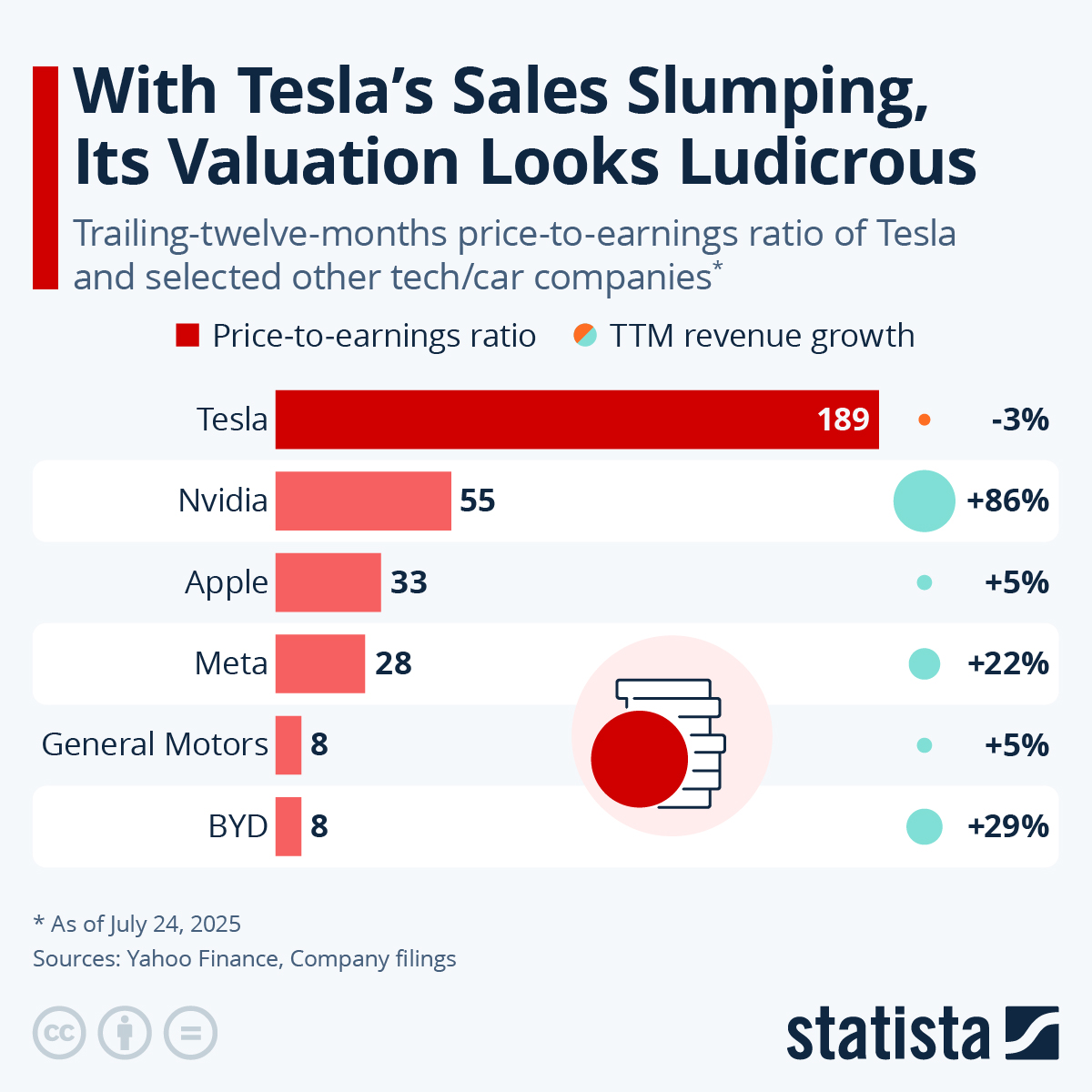
One of the greatest challenges in valuing Tesla is choosing the right peer group. Is it a peer to Ford and General Motors, or should it be grouped with Apple, Nvidia, and Alphabet?
The Disconnect in P/E Ratios
The Price-to-Earnings (P/E) ratio of Tesla has historically fluctuated between 40x and over 200x, while legacy auto companies often trade between 5x and 10x. This disconnect suggests that the market is not pricing Tesla based on its current earnings, but on its “terminal value”—the value of the company at the end of a high-growth period.
The premium is justified by Tesla’s vertical integration. While a traditional automaker buys parts from thousands of suppliers, Tesla designs its own chips, writes its own code, and builds its own batteries. In financial terms, this reduces “leakage”—the profits that would otherwise go to suppliers stay within Tesla’s ecosystem. This efficiency warrants a higher multiple because every dollar of revenue generates a higher potential return on invested capital (ROIC).
Disruption as a Premium
In the world of finance, disruption carries a specific value. Tesla has forced the entire global transportation industry to pivot. This “first-mover advantage” has allowed Tesla to capture the highest-value segment of the EV market: the early adopters and tech-focused luxury buyers. Even as the market reaches mass-market saturation, Tesla’s brand remains the “standard” for EVs, much like the iPhone became the standard for smartphones. The value of this brand equity is intangible but massive, lowering customer acquisition costs and allowing for premium pricing power.
Navigating the Macro and Micro Risks
No objective valuation of Tesla is complete without accounting for the significant risks that could compress its multiples. The company operates in a high-beta environment, meaning its stock price is often more volatile than the broader market.
Competitive Saturation and Pricing Wars
As more competitors enter the EV space, Tesla has had to engage in aggressive price cutting to maintain market share. From a business finance perspective, this is a double-edged sword. While it keeps the volume high and saturates the market with Tesla hardware (which can later be monetized via software), it hurts short-term margins and net income. If the “EV transition” slows down due to infrastructure hurdles or shifting consumer preferences toward hybrids, Tesla’s valuation may face a downward “re-rating” to align more closely with industrial averages.
Geopolitical and Key Man Risks
Tesla’s heavy reliance on China—both as a manufacturing hub (Giga Shanghai) and a primary market—introduces geopolitical risk. Trade tensions or regulatory shifts in the Chinese market could have an outsized impact on Tesla’s bottom line.
Furthermore, “Key Man” risk is a significant factor in Tesla’s valuation. Elon Musk’s leadership is seen by many investors as inseparable from the company’s value. His involvement in other ventures (X, SpaceX, xAI) and his public persona create a level of brand volatility that traditional institutional investors often find difficult to model. Any perceived distraction or departure could result in an immediate “risk premium” being applied to the stock, lowering its valuation.
Strategic Outlook for the Long-Term Investor
To determine the value of Tesla today, an investor must weigh the certainty of its current automotive business against the speculative potential of its AI and robotics future.
The value of Tesla is not a static number found on a balance sheet; it is a dynamic calculation of the probability of several “moonshot” projects succeeding. If the Robotaxi network becomes a reality, the current valuation may look like a bargain. If Tesla remains primarily a premium car manufacturer with a side business in batteries, the valuation may be due for a significant correction.
Ultimately, the value of Tesla lies in its role as a hedge against the legacy economy. It is a bet on the total electrification of transport, the autonomy of labor through robotics (Optimus), and the decentralization of the energy grid. For the sophisticated investor, Tesla represents more than just a stock; it is a complex financial instrument that tracks the pace of global technological disruption. Whether one views it as a bubble or a powerhouse, Tesla’s financial footprint has redefined how we value innovation in the 21st century.
aViewFromTheCave is a participant in the Amazon Services LLC Associates Program, an affiliate advertising program designed to provide a means for sites to earn advertising fees by advertising and linking to Amazon.com. Amazon, the Amazon logo, AmazonSupply, and the AmazonSupply logo are trademarks of Amazon.com, Inc. or its affiliates. As an Amazon Associate we earn affiliate commissions from qualifying purchases.