
Tesla (TSLA) remains one of the most polarized and scrutinized assets in the global financial markets. For investors, the question of how Tesla stocks are doing is rarely met with a simple answer. Its performance is a complex tapestry woven from automotive delivery numbers, advancements in artificial intelligence, geopolitical tensions, and the idiosyncratic leadership of Elon Musk. To understand the current state of Tesla’s stock, one must look beyond the daily price fluctuations and examine the underlying financial metrics, competitive positioning, and the long-term growth catalysts that define its valuation.
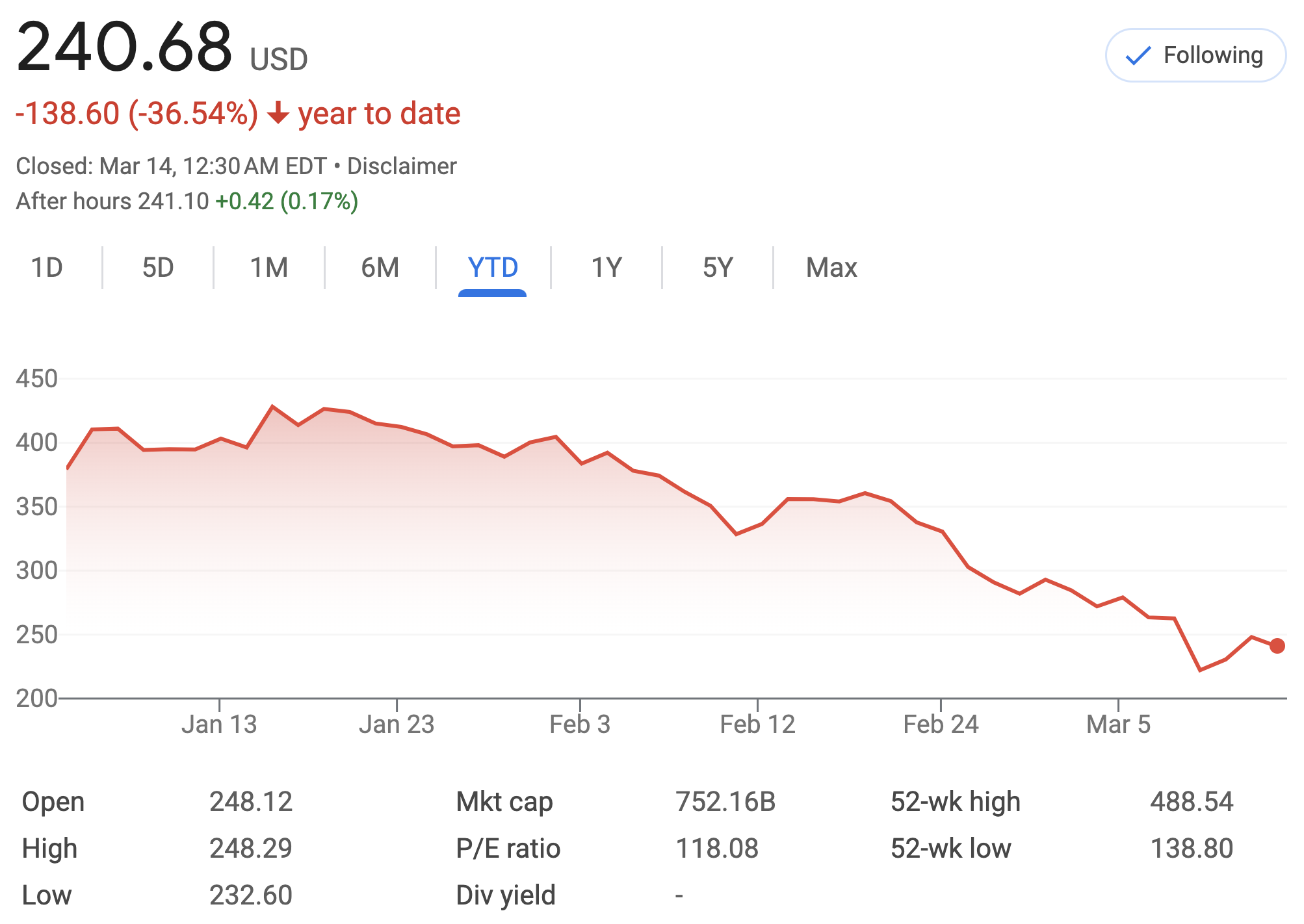
Currently, Tesla is navigating a transitional phase. After years of hyper-growth that saw the company’s valuation soar past the trillion-dollar mark, the stock has entered a period of heightened volatility. Investors are grappling with a fundamental shift in the company’s narrative: is Tesla a maturing car manufacturer facing cyclical headwinds, or is it a high-growth technology powerhouse on the verge of an AI revolution? The answer to this question determines whether its current stock price represents a premium overvaluation or a generational buying opportunity.
Analyzing Current Market Performance and Price Action
Tesla’s stock performance in the recent fiscal periods has been characterized by a battle between “bull” and “bear” narratives. While the broader indices like the S&P 500 and Nasdaq-100 have occasionally hit record highs driven by the semiconductor boom, Tesla has often charted a more erratic path. This decoupling from the general tech rally suggests that investors are increasingly judging Tesla on its own idiosyncratic merits rather than riding the wave of general market optimism.
Historical Context vs. Present Reality
To understand where Tesla is now, we must look at where it has been. The parabolic rise of 2020 and 2021 was fueled by a unique confluence of low interest rates, a sudden global shift toward ESG (Environmental, Social, and Governance) investing, and Tesla’s undisputed lead in the EV market. However, as the Federal Reserve pivoted toward a higher-interest-rate environment to combat inflation, the “discounted cash flow” models for growth stocks like Tesla were recalibrated. Higher rates make future earnings less valuable in today’s dollars, putting downward pressure on the stock’s P/E (Price-to-Earnings) multiple.
The Impact of Quarterly Earnings and Deliveries
Quarterly delivery reports remain the single most significant short-term mover for TSLA stock. In recent quarters, Tesla has faced a “delivery vs. expectations” gap. As production capacity at Gigafactory Berlin and Gigafactory Texas has scaled up, the challenge has shifted from supply to demand. Investors closely monitor these figures not just for the total volume, but for what they reveal about consumer appetite in a world where credit is more expensive and competition is fiercer. When Tesla meets or exceeds these targets, the stock often sees a relief rally; when it misses, the market quickly questions the company’s 50% compound annual growth rate (CAGR) long-term guidance.
The Core Financials: Margins, Revenue, and Growth
For value-conscious investors, the most concerning trend in Tesla’s recent performance has been the compression of its industry-leading margins. Historically, Tesla enjoyed gross margins that looked more like a software company’s than an automaker’s. However, a series of aggressive price cuts across its vehicle lineup—intended to stimulate demand and defend market share—has eaten into those margins.
The Shift from High Margins to Market Share
The “price war” initiated by Tesla in early 2023 was a double-edged sword. On one hand, it showcased Tesla’s cost-efficiency advantage; it could lower prices and still remain profitable while many of its competitors were losing money on every EV sold. On the other hand, the stock market reacted nervously to the shrinking operating margins. Investors who bought into Tesla as a high-margin luxury brand are now reconciling with a company that is willing to sacrifice short-term profitability to achieve massive scale. This strategy is rooted in the belief that a larger fleet of Tesla vehicles on the road today will lead to high-margin recurring revenue from software updates and autonomous driving features tomorrow.
Revenue Streams Beyond the Vehicle
Tesla’s financial health is increasingly diversified. While automotive sales still account for the lion’s share of revenue, the growth of the Energy Generation and Storage segment has become a bright spot for the stock. Deployments of Megapacks and Powerwalls have seen triple-digit year-over-year growth in some quarters, providing a much-needed hedge against automotive cyclicality. Furthermore, Services and Other revenue—which includes supercharging, insurance, and out-of-warranty repairs—is becoming a multibillion-dollar business in its own right. Investors are watching to see if these segments can scale fast enough to offset the margin pressure in the car business.
Emerging Catalysts and the “AI-First” Narrative

Perhaps the most significant factor influencing Tesla’s stock today is its transition from a car company to an AI and robotics company. This is the “alpha” that many long-term institutional investors are betting on. The valuation of Tesla at several hundred billion dollars cannot be justified by car sales alone; it requires the successful execution of its AI roadmap.
Full Self-Driving (FSD) and the Robotaxi Vision
The development of Full Self-Driving (FSD) software is the ultimate “wildcard” for Tesla stock. Elon Musk has frequently stated that the value of Tesla is tied almost entirely to autonomy. From a financial perspective, FSD represents a high-margin software product that can be sold as a subscription or a one-time purchase. If Tesla successfully solves Level 5 autonomy, it could launch a “Robotaxi” fleet, transforming the company into a transportation-as-a-service (TaaS) provider. Recent updates to the FSD software, utilizing end-to-end neural networks, have revitalized investor interest, though regulatory hurdles and technical challenges remain significant risks.
Tesla Energy and the Battery Storage Boom
Tesla Energy is often the “forgotten” segment in stock analyses, yet it carries immense potential. As the world shifts toward renewable energy, the need for large-scale battery storage is exploding. Tesla’s Megapack is positioned as a leader in this space. For the stock, this represents a stable, B2B revenue stream with long-term contracts that are less sensitive to the whims of individual consumers than car sales are. Analysts are increasingly including the energy business as a separate valuation component in their “sum-of-the-parts” models for TSLA.
Optimus and the Long-Term Robotics Play
The introduction of Optimus, Tesla’s humanoid robot, has added another layer to the stock’s speculative value. While still in the early prototype stages, the goal is for Optimus to perform repetitive tasks in Tesla’s own factories before being sold to the wider market. For the stock market, Optimus represents an “option” on the future of labor. While it currently contributes zero to the bottom line, any progress in robotics capability often triggers a speculative surge in the stock price, as it expands Tesla’s total addressable market (TAM) to a nearly infinite degree.
Navigating Global Risks and Macroeconomic Headwinds
No analysis of Tesla stock is complete without addressing the external pressures that threaten its trajectory. Tesla operates in a highly capital-intensive industry that is sensitive to geopolitical shifts and macroeconomic cycles.
The China Challenge and Global Competition
China is both Tesla’s greatest manufacturing hub and its most competitive market. Local players like BYD, Xiaomi, and Li Auto have rapidly innovated, offering high-quality EVs at lower price points. Tesla’s ability to maintain its market share in China is vital for its stock performance. Any sign of weakening demand in the Chinese market, or increased protectionist tariffs from European or American regulators, can lead to immediate sell-offs. The stock is currently caught in the crossfire of the broader U.S.-China trade tensions, making it a proxy for the health of global trade.
Interest Rates and Consumer Demand
Because most vehicles are purchased on credit, Tesla’s stock is highly sensitive to the Federal Reserve’s interest rate policy. High rates increase the monthly payment for consumers, effectively raising the price of the car even if Tesla keeps the sticker price flat. This has forced Tesla to offer financing incentives, which further pressures margins. Investors are looking for signs of a “pivot” or a series of rate cuts, which would likely act as a powerful tailwind for the stock by making EVs more affordable for the average buyer.

Conclusion: The Investor’s Outlook for Tesla
In summary, Tesla stocks are currently in a state of “re-valuation.” The market is moving away from valuing Tesla purely on the volume of cars delivered and is starting to demand proof of its AI and software potential. For the short-term trader, Tesla remains a high-beta stock that offers significant opportunities for profit—and loss—based on headline news and technical levels. For the long-term investor, the stock represents a bet on the future of autonomous transport and the electrification of the global economy.
The “bull case” rests on the belief that Tesla’s lead in data collection and AI training will eventually result in a monopoly-like position in autonomous driving. The “bear case” argues that Tesla is losing its first-mover advantage in the EV space and that its valuation is untethered from the reality of its automotive margins. As Tesla continues to iterate on its technology and expand its global footprint, its stock will undoubtedly remain one of the most volatile and debated instruments in the financial world. Whether it is “doing well” or “doing poorly” depends entirely on the time horizon of the person asking the question. In the world of Tesla investing, the only certainty is that the road ahead will be anything but a straight line.
aViewFromTheCave is a participant in the Amazon Services LLC Associates Program, an affiliate advertising program designed to provide a means for sites to earn advertising fees by advertising and linking to Amazon.com. Amazon, the Amazon logo, AmazonSupply, and the AmazonSupply logo are trademarks of Amazon.com, Inc. or its affiliates. As an Amazon Associate we earn affiliate commissions from qualifying purchases.