
Tesla, Inc. (ticker: TSLA) is perhaps the most debated and scrutinized equity in the modern financial markets. For some, it represents the vanguard of a green energy revolution; for others, it is a speculative bubble fueled by the cult of personality surrounding its CEO, Elon Musk. To understand what Tesla stock is, one must look beyond the vehicles seen on the road. Investing in Tesla is not merely a bet on a car company; it is an investment in a vertically integrated energy ecosystem, an artificial intelligence powerhouse, and a disruptive force in global manufacturing.

As of the current market cycle, Tesla remains a cornerstone of the S&P 500 and a favorite among both retail investors and institutional hedge funds. Its movement often dictates the sentiment of the broader tech and growth sectors. However, the complexity of its valuation—which frequently eclipses the combined market caps of several legacy automakers—requires a deep dive into its fundamentals, its growth drivers, and the unique risks associated with its ambitious roadmap.
Understanding TSLA: More Than Just an Automaker
The most common mistake novice investors make is valuing Tesla using the same metrics applied to Ford, General Motors, or Toyota. While the majority of Tesla’s current revenue is derived from the sale of electric vehicles (EVs), the market awards the stock a “tech multiple” rather than an “auto multiple.” This is due to the company’s diversified revenue streams and its high-margin software aspirations.
The Market Cap and Valuation Puzzle
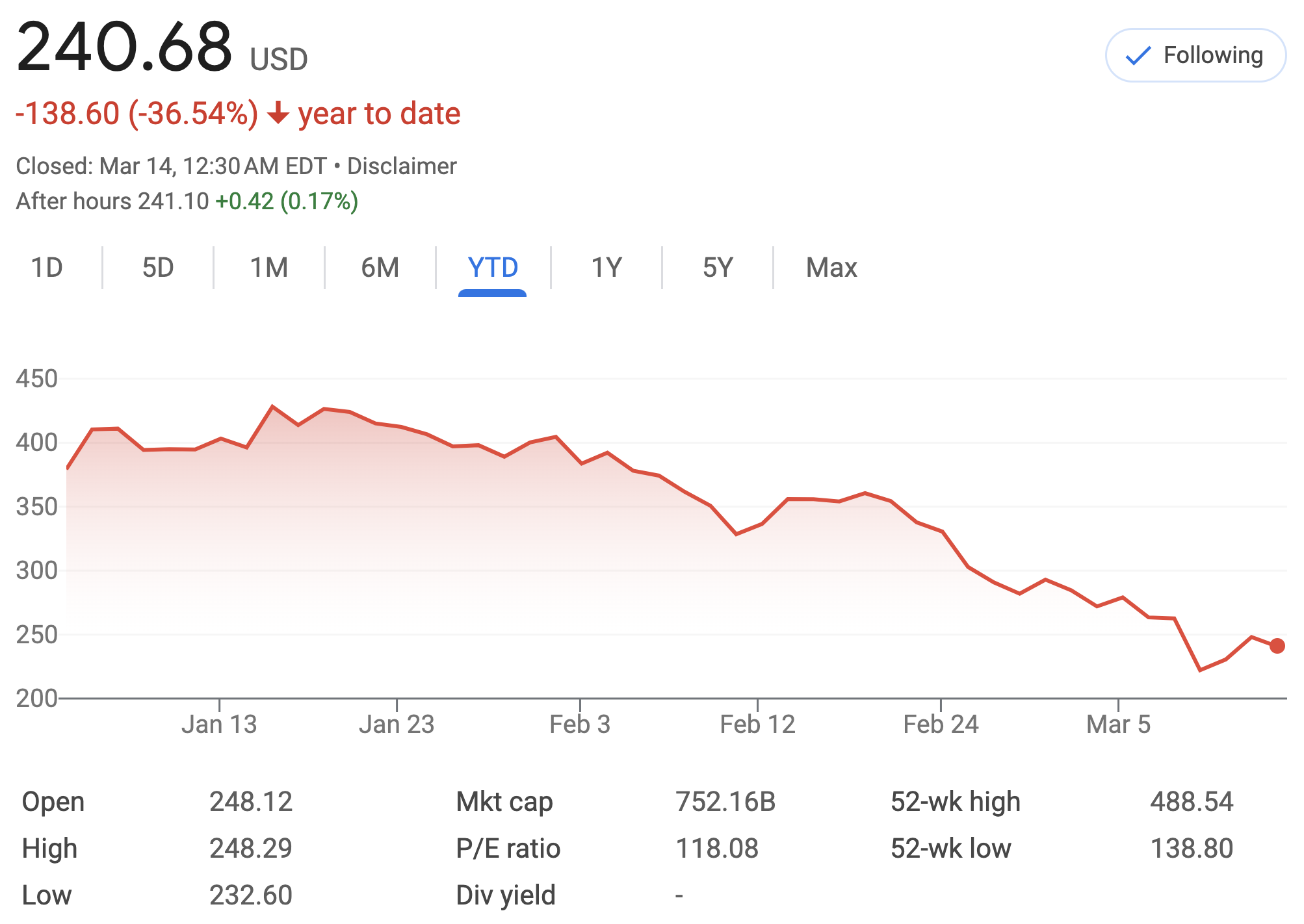
Tesla’s price-to-earnings (P/E) ratio has historically hovered at levels that would seem astronomical for a traditional manufacturer. This valuation is built on the expectation of exponential growth. Investors are paying a premium today for the profits they expect Tesla to generate five or ten years down the line. Unlike legacy automakers that deal with high debt and low margins, Tesla has maintained a relatively clean balance sheet and has achieved industry-leading operating margins during its peak growth phases. The stock is essentially a high-growth vehicle that captures the transition from internal combustion engines (ICE) to sustainable energy.
Revenue Streams: Energy, Software, and Services
What sets Tesla stock apart is its “Energy” segment. This includes the production and installation of solar roofs and massive energy storage solutions like the Powerwall for homes and the Megapack for utilities. As the global power grid shifts toward renewables, Tesla’s role as an energy storage provider could eventually rival its automotive business in terms of total addressable market (TAM).
Furthermore, Tesla’s software-as-a-service (SaaS) model is a critical component of its bull case. The company sells “Full Self-Driving” (FSD) packages, which represent high-margin recurring revenue. If Tesla successfully transitions to a “Robotaxi” fleet model, the financial profile of the company would shift from a hardware manufacturer to a high-margin service provider, fundamentally altering the stock’s intrinsic value.
Key Drivers of Tesla’s Stock Performance
Stock prices are moved by catalysts, and Tesla has no shortage of them. Understanding what drives the ticker is essential for any investor looking to time their entry or manage their portfolio risk.
Production Capacity and Gigafactories
The heartbeat of Tesla’s stock is its delivery numbers. Every quarter, the market holds its breath for the release of production and delivery figures. Tesla’s ability to scale is tied to its “Gigafactories” in Fremont, Austin, Berlin, and Shanghai. The efficiency of these plants is a marvel of modern engineering, utilizing “Giga Press” casting to reduce parts and labor costs. When Tesla announces a new factory or the expansion of an existing one, the stock often reacts positively, as it signals an increase in the company’s ability to meet global demand and capture market share.
Full Self-Driving (FSD) and AI Integration
Elon Musk has famously stated that the value of Tesla is primarily tied to autonomy. Tesla stock is, in many ways, a massive bet on artificial intelligence. The company’s Dojo supercomputer, designed to train neural networks for autonomous driving, positions Tesla as an AI company. The accumulation of billions of miles of real-world driving data gives Tesla a competitive “moat” that traditional automakers struggle to replicate. Every update to the FSD software is tracked by investors as a milestone toward a future of autonomous transportation that could unlock trillions in value.
The Influence of Corporate Governance and Leadership
It is impossible to discuss Tesla stock without mentioning Elon Musk. His leadership is both a primary driver of the company’s success and a source of significant volatility. Musk’s visionary approach has propelled Tesla to heights few thought possible, but his extracurricular activities—such as the acquisition of X (formerly Twitter) and his involvement in political discourse—often create “headline risk.” Investors in TSLA must be prepared for the stock to move not just on financial data, but on the public statements and perceived stability of its CEO.
Analyzing the Financials: Earnings, Margins, and Growth
To evaluate “what’s Tesla stock” from a fundamental perspective, one must look at the income statement and balance sheet. Tesla’s financial health has evolved significantly from the “production hell” days of the Model 3 ramp-up.
Operating Margins vs. Traditional OEMs
For several years, Tesla boasted gross margins that were the envy of the automotive world, sometimes exceeding 25%. This was achieved through massive scale and the absence of a traditional dealership network, allowing Tesla to sell directly to consumers. However, as competition has increased and interest rates have risen, Tesla has utilized price cuts to maintain volume. This strategy has pressured margins, leading to healthy debate among analysts. Long-term investors look for signs that Tesla can offset lower vehicle margins with increased software sales and energy storage profits.
Cash Flow and Balance Sheet Strength
Tesla currently sits on a formidable mountain of cash and cash equivalents. This liquidity provides a safety net during economic downturns and allows the company to self-fund its massive capital expenditures (CapEx). Unlike many of its “EV startup” competitors who struggle with high burn rates, Tesla is a cash-flow-positive entity. This financial stability has earned the company investment-grade ratings from major credit agencies, making the stock a more stable core holding than it was five years ago.
Risks and Challenges for Investors
High rewards rarely come without high risks. Tesla stock is notoriously volatile, often experiencing double-digit percentage swings in a single week.
Competitive Pressure from China and Legacy Auto
The “EV gold rush” is no longer a one-company race. In China, manufacturers like BYD have emerged as formidable rivals, offering high-quality electric vehicles at lower price points. Meanwhile, European and American legacy brands are pouring billions into their own electric transitions. While Tesla still holds a significant brand advantage, its market share is naturally being diluted as the industry matures. The stock’s future performance depends on Tesla’s ability to innovate faster than its competitors can copy its business model.
Regulatory Hurdles and Safety Scrutiny
As a pioneer in autonomous technology, Tesla is frequently in the crosshairs of regulators like the NHTSA. Investigations into Autopilot and FSD safety can lead to recalls—often resolved via over-the-air software updates—and negative press. Furthermore, geopolitical tensions between the US and China pose a risk, as a significant portion of Tesla’s production and sales occur within the Chinese market. Any disruption in trade relations could have an immediate impact on TSLA’s bottom line.
Strategic Outlook: Is TSLA Right for Your Portfolio?
When asking “what’s Tesla stock,” the ultimate answer depends on an investor’s timeframe and risk tolerance. It is rarely a “set it and forget it” investment in the traditional sense; it requires active monitoring of tech trends and macroeconomic shifts.
Long-term Growth Prospects vs. Short-term Headwinds
The bull case for Tesla is centered on the total electrification of the global transport fleet and the transition to a decentralized energy grid. If Tesla maintains its lead in battery technology and achieves true Level 5 autonomy, the current stock price may eventually look like a bargain. Conversely, the bear case suggests that as EVs become a commodity, Tesla will eventually be forced to trade at a valuation more in line with a standard manufacturing company, implying a significant downside from its historical highs.
Investing Strategies: DCA and Risk Management
For many, the best way to approach Tesla stock is through Dollar Cost Averaging (DCA). Given its volatility, trying to “time the bottom” is a difficult task even for professional traders. By investing a fixed amount at regular intervals, investors can mitigate the risk of buying at a temporary peak. Additionally, due to its high beta (a measure of volatility relative to the market), Tesla is often used by sophisticated investors as a way to gain “alpha” or outsized returns, though this requires a stomach for significant paper losses during market corrections.
In conclusion, Tesla stock is a multifaceted financial instrument. It is a proxy for the future of transportation, a gauge for the health of the tech sector, and a testament to how disruptive innovation can reshape global markets. Whether one views it as an overvalued car company or the most important tech firm of the 21st century, TSLA remains an essential study for anyone looking to understand the intersection of money, innovation, and the global energy transition.
aViewFromTheCave is a participant in the Amazon Services LLC Associates Program, an affiliate advertising program designed to provide a means for sites to earn advertising fees by advertising and linking to Amazon.com. Amazon, the Amazon logo, AmazonSupply, and the AmazonSupply logo are trademarks of Amazon.com, Inc. or its affiliates. As an Amazon Associate we earn affiliate commissions from qualifying purchases.