
The digital transformation of the hospitality industry has turned the simple question of “where can I book a hotel” into a complex exploration of software architecture, data aggregation, and artificial intelligence. In the early days of the internet, booking a room required a direct phone call or a visit to a physical travel agency. Today, a global network of interconnected systems allows travelers to secure accommodations across the globe in milliseconds. To understand where to book, one must first understand the technological infrastructure that powers the modern travel economy, from Online Travel Agencies (OTAs) and meta-search engines to the emerging frontier of direct-to-consumer SaaS platforms.

The Architecture of Online Travel Agencies (OTAs)
The most common answer to where to book a hotel lies within the massive infrastructure of Online Travel Agencies (OTAs) like Booking Holdings and Expedia Group. These are not merely websites; they are sophisticated data hubs that manage millions of transactions through complex API integrations.
Global Distribution Systems (GDS) and API Integration
At the core of the OTA model is the Global Distribution System. Originally developed for the airline industry, GDS platforms like Amadeus, Sabre, and Travelport serve as the backbone of the travel tech world. When you search for a hotel on an OTA, the site sends out requests via APIs to these massive databases to pull real-time inventory, pricing, and availability.
The technical challenge for OTAs is “latency.” Ensuring that the price shown on the search results page matches the price at the final checkout requires high-speed data synchronization. If the synchronization lags, the user experiences “price jump” errors, which lead to high bounce rates. Leading OTAs invest billions into cloud computing and edge delivery networks to ensure that their data feeds remain accurate and lightning-fast across different geographic regions.
The Merchant vs. Agency Model Algorithms
OTAs typically operate on two distinct technical frameworks: the Merchant Model and the Agency Model. In the Merchant Model, the OTA “buys” rooms at a wholesale rate and resells them to the user. This requires robust financial software to manage currency conversions and tax calculations across borders.
In the Agency Model, the OTA acts as a facilitator, and the transaction happens directly between the user and the hotel. The tech stack here focuses on secure data transmission, ensuring that sensitive payment information is passed through PCI-compliant gateways. From a user perspective, the choice of where to book often depends on which model offers the best “bundle” logic—algorithms that calculate discounts when a hotel is booked alongside a flight or car rental.
Meta-Search Engines and the Data Aggregation Layer
For those looking for the broadest possible view of the market, meta-search engines like Google Travel, Trivago, and Kayak represent the next layer of the travel tech stack. These platforms do not usually sell the hotel room themselves; instead, they serve as a massive aggregation layer that crawls the web for the best prices.
Web Scraping and Real-Time Indexing
Meta-search engines utilize advanced web scraping and indexing technologies to pull data from hundreds of OTAs and direct hotel websites simultaneously. This is a significant technical feat, as every website has a different data structure. To provide a unified user experience, meta-search engines use “data normalization” processes. This involves taking disparate data points—such as “king bed,” “luxury suite,” or “breakfast included”—and translating them into a standardized format that allows for side-by-side comparison.
The Dominance of Google Travel and SEO Tech
Google has fundamentally shifted the booking landscape by integrating hotel search directly into its search engine and maps. By leveraging its vast Knowledge Graph, Google can provide users with hotel information based on their previous search history, location data, and even emails (via flight confirmations). For the hotel industry, this means that “where to book” is increasingly determined by which platform wins the search engine results page (SERP) through technical SEO and high-performance ad-bidding algorithms.
AI and Machine Learning: Personalizing the Booking Experience
The question of where to book a hotel is increasingly being answered by artificial intelligence. Modern platforms are moving away from static search results toward hyper-personalized recommendations powered by machine learning (ML) models.

Predictive Pricing and Demand Forecasting
One of the most valuable tools for the modern traveler is predictive pricing. Platforms like Hopper use deep learning algorithms to analyze trillions of historical data points to predict whether the price of a hotel room will rise or fall in the coming weeks. This tech provides “buy” or “wait” recommendations, effectively acting as a financial advisor for travel. These models take into account seasonality, global events, weather patterns, and even local social media trends to forecast demand with high accuracy.
Conversational AI and Virtual Assistants
Natural Language Processing (NLP) has enabled a new generation of booking tools: chatbots and virtual assistants. Whether through a dedicated app or a platform like WhatsApp or Slack, conversational AI allows users to book hotels using natural language. The tech behind this involves “intent recognition,” where the AI identifies the specific parameters of a request (location, budget, dates) and queries the backend database to return the most relevant options. This reduces the friction of the traditional “search and filter” interface, making the booking process more intuitive.
Direct Booking Tech: The Rise of Hotel SaaS
In response to the high commissions charged by OTAs, the hotel industry has invested heavily in “Direct Booking” technology. This has created a new niche of software-as-a-service (SaaS) tools designed to give hotels the same technical capabilities as the giant aggregators.
Central Reservation Systems (CRS) and Property Management Systems (PMS)
For a hotel to accept a direct booking, it needs a robust Central Reservation System (CRS). This software manages the hotel’s room inventory across all distribution channels. Modern CRS platforms are cloud-native and integrate directly with the hotel’s Property Management System (PMS), which handles the day-to-day operations like check-ins and housekeeping. The “Direct Booking Engine” is the user-facing part of this stack, optimized for conversion through A/B testing and mobile-first design.
Loyalty Program Integration and CRM
The primary driver for booking directly is often the loyalty program. Hotels use sophisticated Customer Relationship Management (CRM) software to track guest preferences and reward them with points or exclusive tech-enabled perks (like digital room keys). These systems use data analytics to segment customers and send targeted “book direct” offers. The technology ensures that the perceived value of booking direct—through upgrades or late check-outs—is communicated effectively to the user at the moment of decision.
The Future of Booking: Blockchain and Decentralization
As we look toward the future of where to book a hotel, the tech conversation is shifting toward blockchain and decentralized distribution. These technologies aim to solve some of the persistent issues in the travel industry, such as high intermediary fees and fragmented data.
Smart Contracts and Transparent Transactions
Blockchain technology allows for the creation of “smart contracts” between a traveler and a hotel. This eliminates the need for a middleman to verify the transaction. In a decentralized booking ecosystem, the hotel’s inventory is placed on a public ledger, and the booking is executed automatically once the payment conditions are met. This could potentially lower costs for consumers by removing the 15-30% commission typically taken by OTAs.
Digital Identity and Frictionless Travel
The integration of Self-Sovereign Identity (SSI) tech could also revolutionize the booking process. Currently, booking a hotel requires repeatedly entering personal and payment information across different platforms. In a blockchain-enabled future, a traveler could hold a secure digital ID on their device. When booking a hotel, they would simply grant the platform temporary access to the necessary data, ensuring privacy and reducing the risk of data breaches. This “one-click” environment would make the question of where to book less about who has your data and more about who offers the best service.
Mobile-First Booking and the App Economy
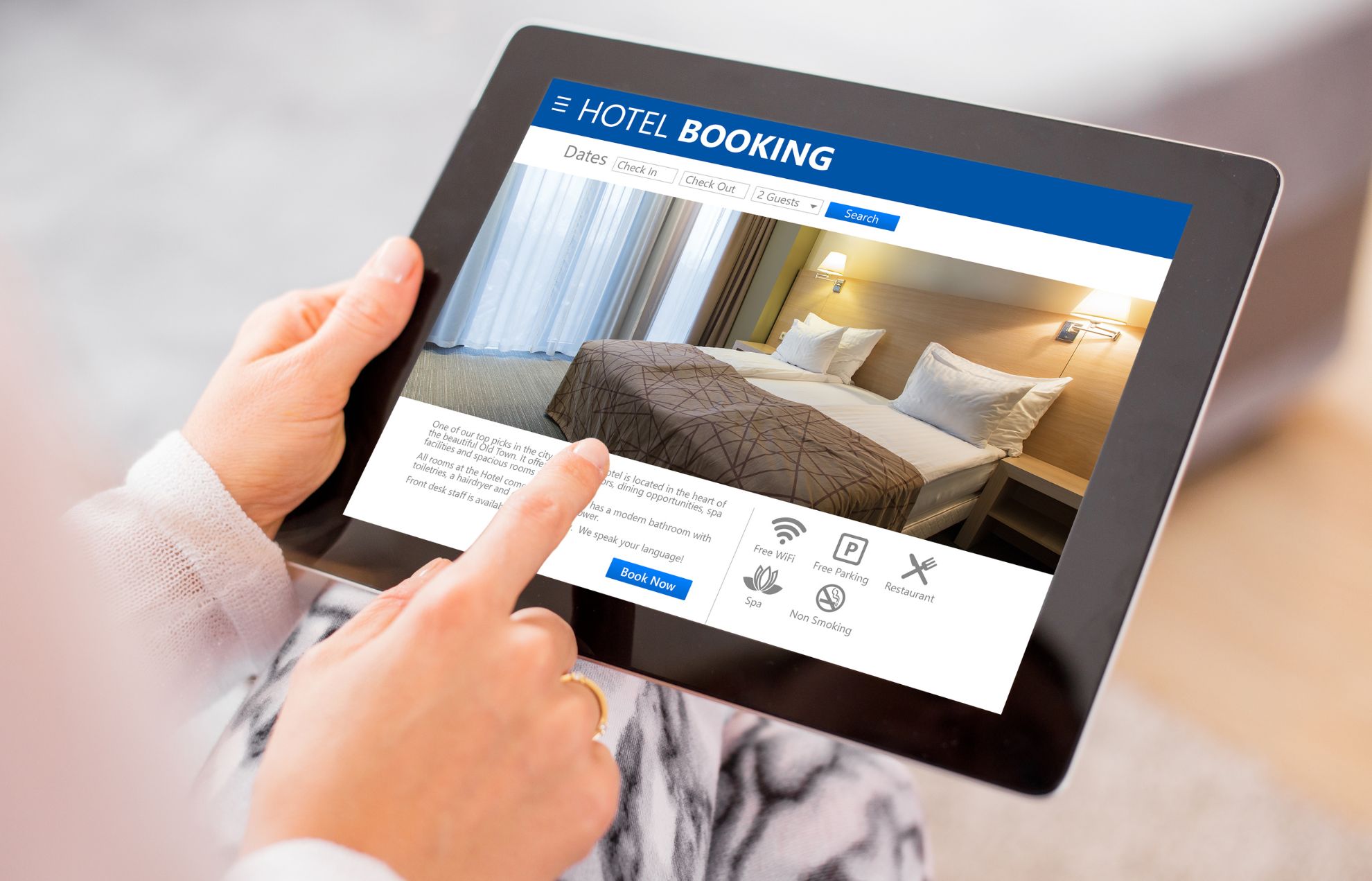
Finally, the hardware we use has dictated the evolution of booking software. With over 70% of travelers researching their trips on mobile devices, the “where” has transitioned from the desktop to the palm of the hand.
Geo-Fencing and Last-Minute Inventory
Mobile booking apps utilize GPS and geo-fencing technology to offer “hyper-local” deals. Apps like HotelTonight pioneered the “last-minute” booking niche by using algorithms that help hotels offload unsold inventory to users who are physically near the property. This relies on real-time data processing and push notification engines that can alert a user to a deal exactly when they are most likely to need it.
Integrated Ecosystems and Super Apps
In many parts of the world, particularly in Asia, the question of where to book a hotel is answered by “Super Apps” like WeChat or Grab. These platforms integrate hotel booking within a much larger ecosystem of services, including messaging, ride-hailing, and digital payments. The technical integration required for a Super App is immense, involving a “mini-program” architecture where third-party developers can build simplified versions of their booking engines directly into the host app. This provides a frictionless user experience where the transition from chatting with a friend to booking a hotel room is seamless.
The landscape of hotel booking is a testament to the power of technological innovation. Whether through the massive data-crunching capabilities of OTAs, the transparency of meta-search, the personalization of AI, or the security of direct-booking SaaS, the modern traveler is supported by a global, invisible web of code. Choosing where to book is no longer just about finding a bed; it is about choosing which technology stack offers the most efficiency, value, and security.
aViewFromTheCave is a participant in the Amazon Services LLC Associates Program, an affiliate advertising program designed to provide a means for sites to earn advertising fees by advertising and linking to Amazon.com. Amazon, the Amazon logo, AmazonSupply, and the AmazonSupply logo are trademarks of Amazon.com, Inc. or its affiliates. As an Amazon Associate we earn affiliate commissions from qualifying purchases.