
The human fascination with what lies beyond the veil of our understanding is as ancient as consciousness itself. For centuries, the séance represented a pivotal, albeit controversial, attempt to breach this barrier, offering a structured environment for the living to purportedly communicate with the deceased or unseen entities. While historically steeped in spiritualism, ritual, and a profound leap of faith, the very essence of a séance—the quest for connection and information from beyond conventional means—has found a new, electrifying, and often challenging frontier in the digital age. This article delves into the historical context of the séance as a pre-digital communication protocol, then explores how contemporary technology, from AI to VR, is both mimicking and redefining humanity’s timeless desire to bridge the ultimate divide.

The Historical Séance: A Pre-Digital Communication Protocol
Before the advent of the internet, smartphones, or even radio, humanity sought sophisticated “protocols” to communicate across vast distances, both physical and metaphysical. The séance emerged as one such protocol for the latter, representing a complex human-powered interface designed to tap into perceived supernatural channels.
Origins and Evolution of the Traditional Séance
The concept of communicating with the dead has roots in various cultures and ancient practices, from shamanism to necromancy. However, the modern séance, as we often picture it, gained significant traction in the mid-19th century with the rise of Spiritualism. Originating in the United States and rapidly spreading to Europe, Spiritualism posited that the dead exist and can communicate with the living, often through a specially gifted individual known as a medium.
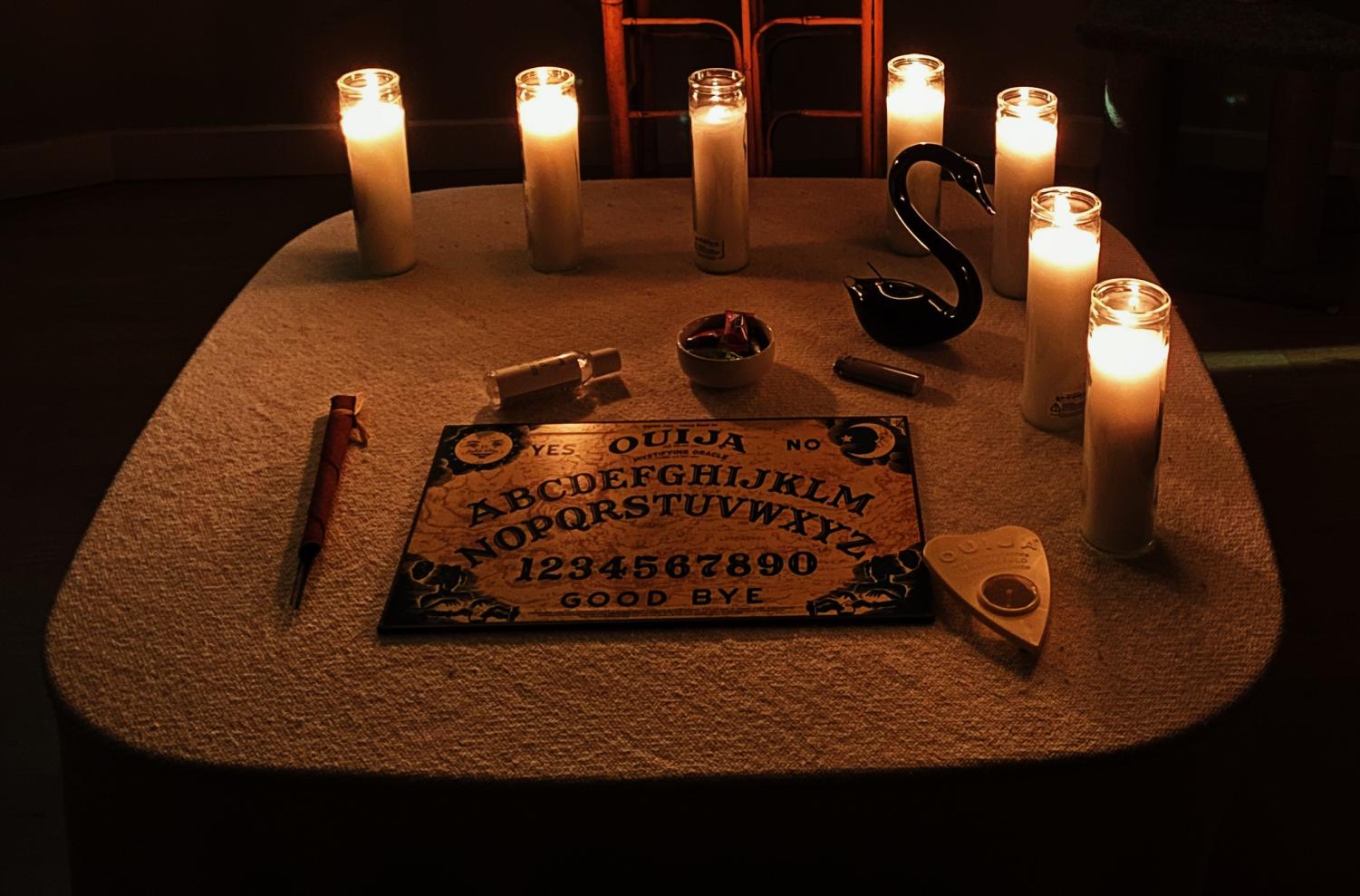
A traditional séance typically involved a group of people gathering in a darkened room, often holding hands around a table. The medium would enter a trance-like state, acting as a conduit for spirits. Communication methods varied wildly, from “table-tipping” (where the table would reportedly move or rap out messages) and “automatic writing” (where the medium’s hand would write messages seemingly without conscious control) to direct voice communication (where spirits would purportedly speak through the medium or via independent voices). These practices, though analog, represented an early form of “information retrieval” from an “unseen network,” relying on human intuition, belief, and sometimes elaborate trickery to function. In an era before advanced telecommunications, the séance offered a uniquely personal and immediate—if speculative—channel to what was conceived as the ultimate long-distance connection.
The Allure of the Unknown in the Analog Age
The popularity of séances during the 19th and early 20th centuries can be attributed to a confluence of societal factors. High mortality rates, particularly among children, meant widespread grief and a desperate desire for reassurance that loved ones continued to exist. The scientific advancements of the era, while impressive, had not yet fully demystified the natural world, leaving ample room for belief in unseen forces and the paranormal. Séances offered a tangible, albeit unverified, hope for solace and continuation. They provided a communal experience, a shared exploration of the unknown, and a powerful narrative that transcended the limitations of physical existence. Much like early telegraphy promised to shrink geographical distances, the séance promised to shrink the metaphysical distance between life and death, offering a compelling narrative that appealed deeply to the human psyche in an analog world grappling with profound existential questions.
Digital Echoes: Technology’s Quest for Post-Mortem Connection
Today, the underlying human impulse to connect with the departed persists, but the tools and methodologies have evolved dramatically. Technology, particularly artificial intelligence and immersive digital environments, is now venturing into realms once exclusively occupied by mediums and spiritualists, offering new, often unsettling, ways to interact with echoes of the deceased.
AI and Digital Legacies: The Virtual Afterlife
One of the most profound intersections of technology and the séance concept lies in the emergence of AI-powered “grief bots” or “digital clones.” Leveraging vast amounts of personal data—emails, text messages, social media posts, voice recordings—AI algorithms can be trained to mimic the communication style, personality, and even vocal intonation of a deceased individual. Companies are developing services that allow users to “converse” with a digital representation of their loved ones. This goes beyond simple chatbots; some aim to create fully interactive avatars that can recall memories, offer advice, and engage in seemingly spontaneous dialogue, effectively creating a virtual afterlife for digital footprints.
This technological marvel raises critical ethical questions. While offering immense comfort to some, particularly in the initial stages of grief, it also risks perpetuating the grieving process indefinitely or distorting the memory of the deceased. The concept of a “digital spirit” is emerging, challenging our understanding of what constitutes a person’s presence and legacy. Furthermore, issues of data privacy become paramount: who owns this digital persona? Can a deceased individual’s data be used to create such a clone without explicit prior consent? The idea of a loved one’s digital essence being commercialized or misused poses significant ethical quandaries that are currently being debated.
Virtual Reality and Augmented Reality Séances
Beyond AI chatbots, immersive technologies like Virtual Reality (VR) and Augmented Reality (AR) are being explored as platforms to create simulated interactions with the departed. VR environments can reconstruct specific places or moments, allowing users to “revisit” deceased loved ones in digital form. Imagine donning a VR headset and walking through a digitally recreated memory, perhaps having a conversation with a 3D avatar of a grandparent, animated and voiced by AI. Some applications aim for therapeutic purposes, offering a controlled environment for grief processing.

AR, on the other hand, could overlay digital images or “ghosts” onto the real world, creating an experience akin to a personalized apparition. While these technologies do not claim to literally connect with spirits, they provide incredibly powerful simulations that can evoke strong emotional responses. The “digital séance” here is not about summoning a spirit, but about digitally recreating an experience of presence. The psychological impact can be profound, potentially aiding in healing or, conversely, blurring the lines between reality and simulation in ways that could be detrimental. The ability to create such convincing simulations demands careful consideration of their psychological effects and ethical deployment, ensuring they serve genuine human needs rather than exploit vulnerability.
Gadgets and Apps: Modern Tools for the Paranormal Investigator
The desire to detect and communicate with the unseen isn’t limited to advanced AI and VR. The more immediate, hands-on quest for evidence of paranormal activity has also embraced technology, leading to a host of gadgets and apps that function as modern-day tools for the “ghost hunter.”
EMF Detectors and Ghost Boxes: Scientific Tools or Pseudoscience?
Traditional paranormal investigations often rely on a suite of electronic gadgets, many of which claim scientific grounding. Electromagnetic Field (EMF) detectors, for instance, measure fluctuations in electromagnetic fields, with the hypothesis that spirits might emit or manipulate these fields. While EMF detectors are legitimate scientific instruments, their application in detecting ghosts remains controversial due to a lack of empirical evidence linking EMF fluctuations directly to supernatural entities. Similarly, “ghost boxes” or “spirit boxes” are devices that rapidly scan through radio frequencies, producing a cacophony of white noise and snippets of speech. Proponents believe that spirits can manipulate these audio fragments to form coherent messages.
From a technological perspective, these devices are fascinating. EMF detectors utilize sensors to pick up minute changes in electrical fields, and spirit boxes employ advanced radio-scanning techniques. However, their use in paranormal investigations often steps into the realm of pseudoscience. The human mind is adept at finding patterns in randomness (apophenia), and the desire to believe can lead to subjective interpretations of ambiguous data. Yet, the appeal of these gadgets lies in their ability to provide a tangible, technological interface to an intangible mystery, offering users a sense of active participation in the quest for the unknown.
AI-Powered Paranormal Apps: Algorithmic Anomalies?
The proliferation of smartphones has led to an explosion of “paranormal detector” apps. These applications often claim to use a phone’s built-in sensors (magnetometer, microphone, accelerometer) to detect spiritual energy, or even to generate “spirit messages” through sophisticated algorithms. Some apps utilize complex statistical models or random number generators, presenting seemingly coherent words or phrases that users interpret as communications from the other side. Others might manipulate audio inputs, looking for patterns or anomalies that are then presented as evidence of an ethereal voice.
While many of these apps are created for entertainment, their underlying technology, however rudimentary in comparison to sophisticated AI, still leverages principles of data collection and algorithmic interpretation. The allure is undeniable: the power to detect or communicate with spirits, previously requiring a medium, is now supposedly contained within one’s pocket. From a tech perspective, these apps showcase how readily accessible sensors and basic programming can be repackaged to tap into ancient human curiosities, highlighting the fine line between playful exploration and potential self-deception enabled by technology.
Digital Security and the Ethics of the “Digital Beyond”
As technology increasingly enables us to interact with digital echoes of the deceased, critical questions surrounding data ownership, privacy, and the ethical implications of creating a “digital beyond” come sharply into focus. The modern “séance” necessitates a strong consideration of digital security and digital ethics.
Protecting Your Digital Self: Ensuring a Secure Digital Legacy
In a world where our lives are inextricably linked to our digital footprints, ensuring a secure digital legacy is paramount. The very data that fuels AI-driven grief bots and virtual personas—our emails, social media posts, cloud documents, and voice recordings—must be managed responsibly, both during our lives and after our passing. Digital estate planning has become as crucial as traditional wills. This involves documenting digital assets, managing passwords, specifying who should have access to what information, and outlining desires for how one’s digital presence should be handled post-mortem. Without clear instructions and robust digital security measures, an individual’s digital identity can be vulnerable to misuse, or their legacy can be shaped in ways they never intended. Just as a traditional séance risked misrepresentation by a fraudulent medium, the digital séance risks misrepresentation through unauthorized data access or algorithmic interpretation.
The Ethical Quandaries of AI-Driven Immortality
The ability to create highly convincing AI clones of deceased individuals presents a profound ethical quandary. While offering a unique form of remembrance, it can also raise significant psychological challenges. Is it healthy to engage in ongoing “conversations” with a digital ghost? Could it hinder the natural grieving process by preventing acceptance and closure? There are concerns about potential misrepresentation: an AI trained on a limited dataset might not accurately reflect the full complexity of a person’s character, potentially creating a distorted or idealized version. Furthermore, the commercialization of such technologies raises questions about exploiting vulnerability. Who benefits financially from this “digital immortality,” and what protections are in place for the grieving individuals using these services? The “digital séance” is no longer just about belief; it’s about technology’s power to shape perception, emotion, and our very understanding of life and death, demanding a rigorous ethical framework to guide its development and deployment.
Conclusion
From the darkened parlors of the 19th century to the illuminated screens of the 21st, humanity’s quest to understand and connect with what lies beyond remains a powerful, driving force. The traditional séance, with its mediums and rituals, represented an analog communication protocol for the unseen. Today, while we may not “summon” spirits in the same way, our technology – particularly AI, VR, and a host of sophisticated apps – is crafting new, complex, and often controversial methods to interact with the echoes of those who have passed. These digital “séances” compel us to redefine communication, presence, and even immortality, urging a deeper conversation about ethics, data security, and the profound psychological impacts of bridging the ultimate veil with circuits and code. As technology advances, it continues to illuminate ancient human questions, albeit with entirely new tools and challenges.
aViewFromTheCave is a participant in the Amazon Services LLC Associates Program, an affiliate advertising program designed to provide a means for sites to earn advertising fees by advertising and linking to Amazon.com. Amazon, the Amazon logo, AmazonSupply, and the AmazonSupply logo are trademarks of Amazon.com, Inc. or its affiliates. As an Amazon Associate we earn affiliate commissions from qualifying purchases.