
For the self-employed, freelancers, small business owners, and those with significant investment income, the traditional April 15th tax deadline is only one part of a much larger financial puzzle. The United States tax system operates on a “pay-as-you-go” philosophy. This means that if the government isn’t collecting taxes from your paycheck via an employer throughout the year, it expects you to send those payments yourself on a quarterly basis.
Navigating where and how to send these payments is critical for maintaining healthy business finances and avoiding the sting of underpayment penalties. Missing a deadline or sending a payment to the wrong department can lead to bureaucratic headaches that take months to resolve. This guide provides an in-depth look at the various channels available for submitting your quarterly estimated tax payments, ensuring your professional financial standing remains secure.
The Digital Fast Lane: Electronic Payment Options
In the modern financial era, the Internal Revenue Service (IRS) heavily incentivizes electronic payments. They are faster, more secure, and provide an immediate digital paper trail that is invaluable during an audit or a simple accounting reconciliation.
IRS Direct Pay
For individual taxpayers, including sole proprietors and partners in a firm, IRS Direct Pay is often the most efficient method. This service allows you to pay your estimated tax directly from your checking or savings account without any processing fees.
One of the primary benefits of Direct Pay is that it does not require registration. You simply verify your identity using information from a previous year’s tax return. When using this tool, you must specifically select “Estimated Tax” as your reason for payment and “1040-ES” as the form. Once the transaction is complete, you receive a confirmation number. It is a best practice to print or save this confirmation as a PDF immediately, as the IRS system does not automatically email receipts for security reasons.
The Electronic Federal Tax Payment System (EFTPS)
While Direct Pay is excellent for quick, individual transactions, the Electronic Federal Tax Payment System (EFTPS) is the gold standard for business owners and high-net-worth individuals who want more control over their tax planning. EFTPS is a free service provided by the Department of the Treasury.
Unlike Direct Pay, EFTPS requires an enrollment process. After you sign up, the IRS mails a PIN to your registered address, a process that can take five to ten business days. Once enrolled, you can schedule payments up to 365 days in advance. This is a powerful tool for financial management; you can log in at the start of the year and schedule all four quarterly payments based on your projected income, ensuring you never miss a deadline due to a busy schedule.
Digital Wallets and Credit Cards
The IRS also allows for payments via debit cards, credit cards, and digital wallets like PayPal or Click to Pay. These payments are processed through third-party service providers. While this offers convenience and the potential to earn credit card rewards, it comes with a caveat: convenience fees.
These fees are typically a flat rate for debit cards and a percentage (ranging from 1.82% to 1.98%) for credit cards. For a large quarterly payment, these fees can add up to hundreds of dollars. From a professional finance perspective, this method is usually only recommended if you are facing a liquidity crunch and need to float the payment on credit, or if your credit card rewards significantly outweigh the processing fee.
The Traditional Approach: Mailing Your Payment
Despite the push toward digitalization, many taxpayers prefer the tangible nature of a paper check and a physical voucher. If you choose to mail your quarterly tax payment, you must follow specific protocols to ensure the funds are credited to your account correctly.
Utilizing Form 1040-ES Vouchers
To mail a payment, you must use Form 1040-ES, Estimated Tax for Individuals. This form includes four tear-off vouchers (Voucher 1 through Voucher 4), each corresponding to one of the four payment periods.
When filling out your check or money order, it must be made payable to the “United States Treasury.” Do not send cash. On the memo line, you should clearly write your Social Security Number (or Employer Identification Number), the tax year, and “Form 1040-ES.” This ensures that if the check is separated from your voucher during processing, the IRS can still identify which account the funds belong to.
Finding the Correct Mailing Address
The mailing address for quarterly payments is not a single national center. Instead, the IRS uses different processing centers based on where you live and whether or not you are enclosing a payment. These addresses can change periodically, so it is vital to check the instructions on the most recent version of Form 1040-ES found on the IRS website.
Typically, residents of states like California or New York will send their payments to different Internal Revenue Service centers than those living in Texas or Florida. Using the wrong address can result in a delay that might trigger a late payment penalty, even if the check was postmarked on time.
The Importance of Certified Mail

If you are sending a significant amount of money through the mail, relying on standard postage is a risk. Professional financial management dictates using “Certified Mail with Return Receipt Requested” from the United States Postal Service. This provides you with legal proof of the date the payment was sent and a signature confirming it was received by the IRS. In the event of a dispute regarding a late payment, this receipt is your primary defense.
Managing State-Level Quarterly Payments
Most discussions regarding quarterly taxes focus on the federal level, but state obligations are equally important. If you live in a state with an income tax, you likely owe quarterly installments to your state’s Department of Revenue as well.
State-Specific Portals and Requirements
Each state has its own set of rules, thresholds, and payment portals. For instance, California’s Franchise Tax Board (FTB) and New York’s Department of Taxation and Finance have robust online systems similar to the federal EFTPS.
It is important to note that state deadlines usually align with federal deadlines, but there are exceptions. Some states may have different thresholds for who is required to pay. For example, while the federal government requires payments if you expect to owe $1,000 or more, a state might set that threshold at $500. You must visit your specific state’s official government website to confirm their “Where to Pay” instructions.
Coordinating Federal and State Cash Flow
From a business finance perspective, you must account for both federal and state outflows simultaneously. A common mistake among new entrepreneurs is calculating their federal liability and forgetting to set aside an additional 5% to 10% for state taxes. When you determine your quarterly payment amount, always calculate both figures and treat them as a single “tax day” event to ensure your cash flow remains stable.
Strategies for Determining How Much to Send
Knowing where to send your payment is only half the battle; knowing how much to send is what protects your capital. Overpaying results in an interest-free loan to the government, while underpaying results in penalties.
The Safe Harbor Rule
The “Safe Harbor” rule is the most effective way to avoid underpayment penalties. Generally, the IRS will not penalize you if you pay at least 90% of the tax you owe for the current year, or 100% of the tax shown on your return for the prior year, whichever is smaller. For high-income earners (those with an Adjusted Gross Income over $150,000), the prior-year requirement increases to 110%.
By paying based on your previous year’s tax liability, you create a predictable payment schedule. This is particularly useful for those with fluctuating income, as it provides a “safe” floor for payments regardless of how much more you earn in the current year.
Real-Time Accounting and Modern Tools
In the age of fintech, relying solely on last year’s data can be inefficient. Many modern accounting software tools provide real-time tax estimations based on your current profit and loss statements. By integrating your bank accounts with these platforms, you can see a running tally of what you likely owe. This allows for “lumpy” payments—sending more in a high-revenue quarter and less in a slow quarter—which can help balance your business’s operating capital throughout the fiscal year.
Maintaining Organization and Record Keeping
The final component of successfully managing quarterly payments is rigorous record keeping. Because these payments are made throughout the year, they are easily forgotten when the final tax return is prepared in April.
Creating a Tax Payment Ledger
Maintain a dedicated ledger (or a tab in your business spreadsheet) that records every quarterly payment. Each entry should include:
-
The date paid.
-
The amount.
-
The payment method (e.g., Direct Pay, Check #1234, EFTPS).
-
The confirmation number or tracking number.
When you eventually file your annual return, you will need to report the total amount of estimated payments made during the year. If your records do not match the IRS’s records, it will trigger an inquiry and delay your refund or increase your balance due.
Integrating Payments into Financial Calendars
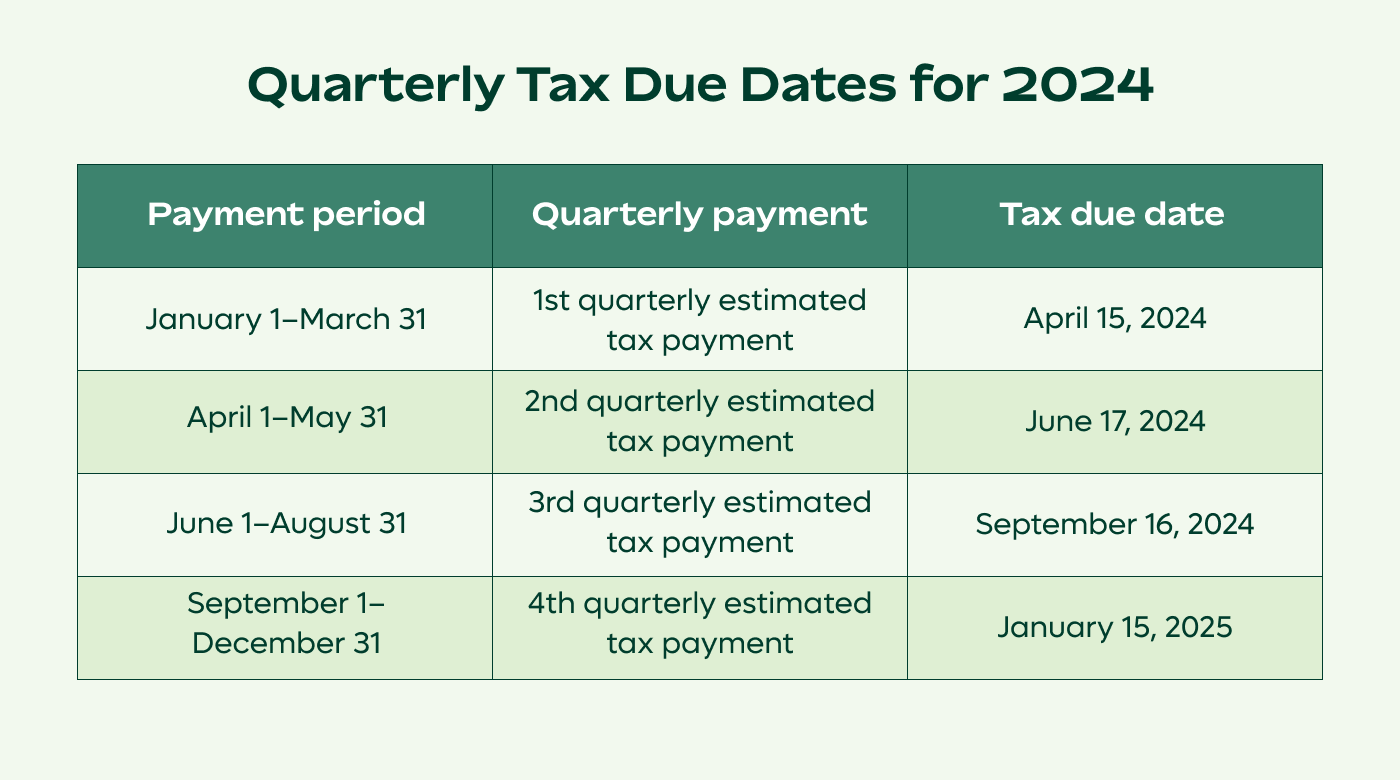
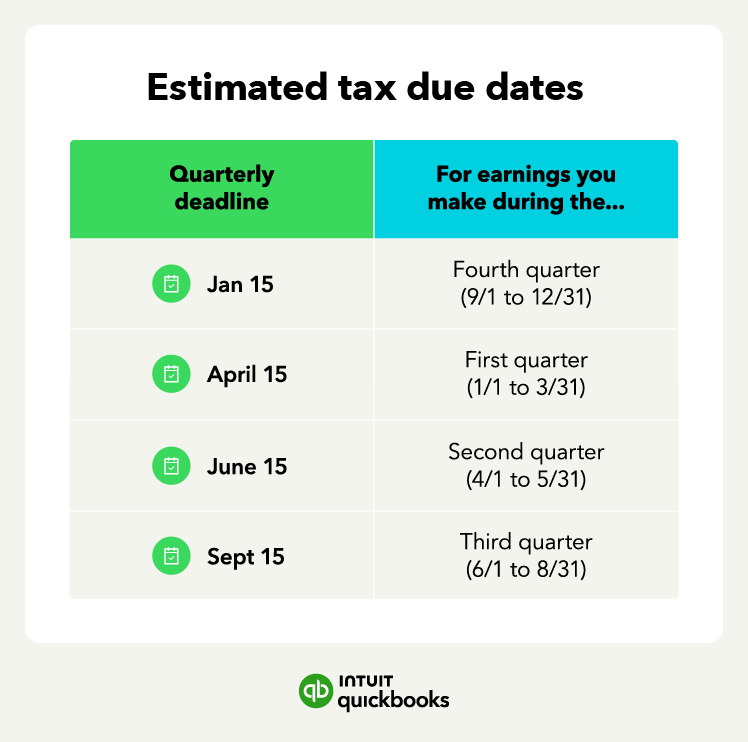
Quarterly tax deadlines do not always fall on the exact “quarter” marks. The standard deadlines are April 15, June 15, September 15, and January 15 of the following year. Because these dates can be erratic (the gap between Q1 and Q2 is only two months, while Q3 and Q4 are four months apart), it is vital to integrate these into your professional calendar with reminders set at least two weeks in advance. This lead time allows you to review your quarterly earnings, calculate the necessary payment, and ensure the funds are positioned in the correct account for withdrawal.
By treating quarterly tax payments as a standard operational procedure rather than a surprise obligation, you solidify your financial foundation. Whether you choose the digital speed of IRS Direct Pay or the verified security of certified mail, the key is consistency, accuracy, and proactive planning.
aViewFromTheCave is a participant in the Amazon Services LLC Associates Program, an affiliate advertising program designed to provide a means for sites to earn advertising fees by advertising and linking to Amazon.com. Amazon, the Amazon logo, AmazonSupply, and the AmazonSupply logo are trademarks of Amazon.com, Inc. or its affiliates. As an Amazon Associate we earn affiliate commissions from qualifying purchases.