
The landscape of personal finance has undergone a radical transformation over the last decade. As we move further away from the era of paper checks and snail-mailed ledgers, the demand for streamlined, secure, and instantaneous financial tools has skyrocketed. In response to this digital shift, the Internal Revenue Service (IRS) developed IRS Direct Pay—a specialized online application designed to allow individual taxpayers to pay their tax obligations directly from their checking or savings accounts. For anyone managing a modern financial portfolio, understanding the nuances of this tool is essential for maintaining tax compliance while optimizing cash flow management.

The Evolution of Tax Compliance: Understanding IRS Direct Pay
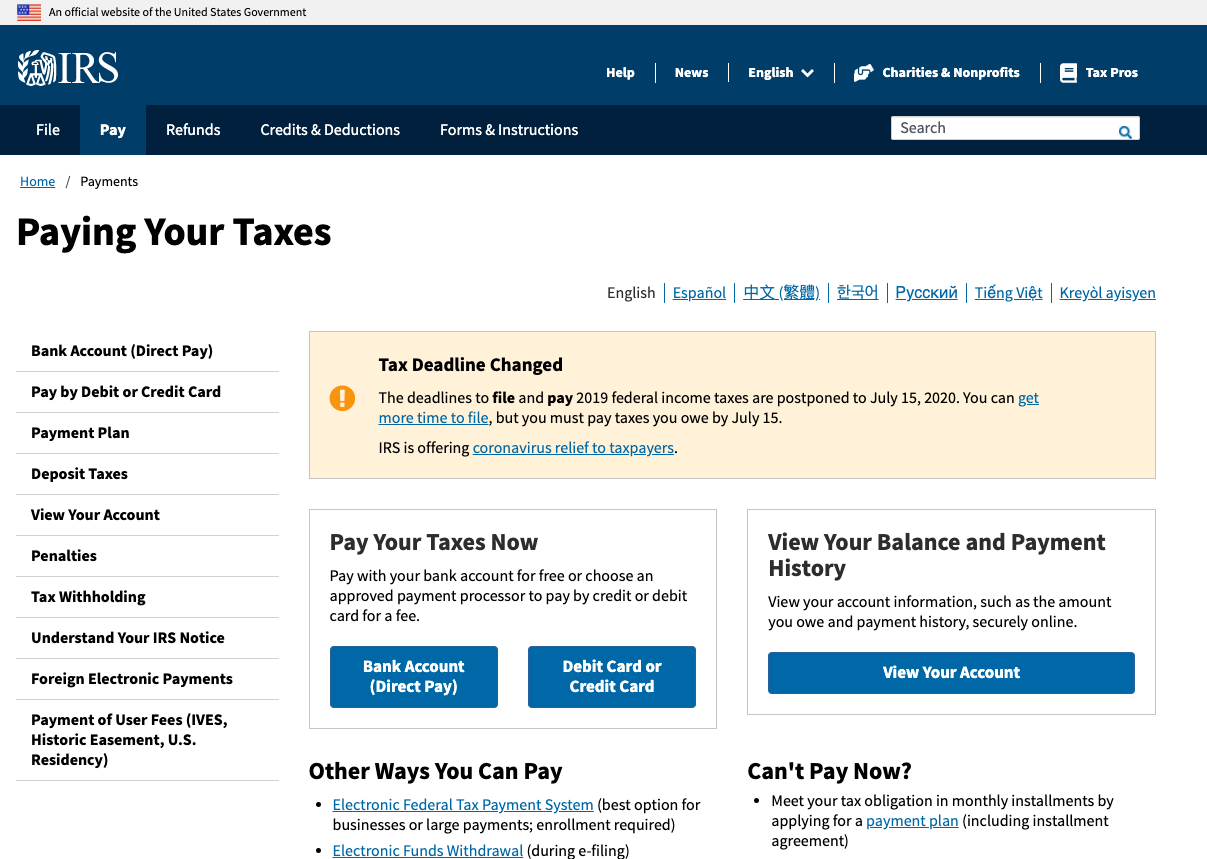
For decades, paying federal taxes was a cumbersome process involving physical vouchers, handwritten checks, and the inherent anxiety of the United States Postal Service’s delivery schedule. IRS Direct Pay represents the government’s pivot toward a digital-first financial infrastructure. It is a free service that facilitates the transfer of funds from a personal bank account to the U.S. Treasury to cover individual tax liabilities.
Unlike other electronic payment systems that might cater to businesses or require complex registration processes, Direct Pay is specifically tailored for the individual taxpayer. It bypasses the need for the Electronic Federal Tax Payment System (EFTPS) registration for simple transactions, offering a “guest” style checkout for one of life’s most certain obligations.
The Shift Toward Digital Financial Management
The primary objective of Direct Pay is to reduce the friction associated with tax season. In the context of personal finance, “friction” refers to any obstacle that prevents a user from completing a necessary financial task. By providing a platform that requires no username, password, or account setup, the IRS has aligned itself with modern fintech trends that prioritize user experience and accessibility. This tool is particularly vital for those who manage their own finances without the constant oversight of a dedicated CPA, providing a clear, guided path to settlement.
How the System Works
At its core, Direct Pay is an Automated Clearing House (ACH) debit system. When a taxpayer initiates a payment, they are authorizing the IRS to “pull” a specific amount of money from their designated bank account. This is a critical distinction from a “push” payment, where a user sends money through a third-party app. Because it is a direct link between the taxpayer’s bank and the Treasury, the transaction is processed with high levels of security and speed, typically reflecting on tax records within 48 hours, even though the confirmation is immediate.
Strategic Advantages of Utilizing Direct Pay in Personal Finance
In the realm of financial planning, the method of payment is often just as important as the amount paid. Direct Pay offers several strategic benefits that can help individuals better manage their liquid assets and maintain a cleaner financial trail.
Cost-Efficiency and Zero Fees
One of the most significant advantages of Direct Pay is that it is entirely free. Other digital payment methods, such as using a credit or debit card through a third-party processor, carry convenience fees that usually range from 1.87% to nearly 4%. On a $10,000 tax bill, that equates to a $200 loss purely for the “convenience” of using a card. For the savvy investor or budget-conscious household, using Direct Pay ensures that 100% of the funds go toward the tax liability rather than being siphoned off by processing intermediaries.
Security and Data Protection
In an era where digital security is paramount, Direct Pay utilizes high-level encryption and multi-step identity verification. Because the system does not require you to create a permanent account with a stored password, there is no “vault” for hackers to breach to steal your credentials. Each payment session is unique. Furthermore, by using Direct Pay, taxpayers avoid the risks associated with mailing checks, which are susceptible to mail theft and “check washing” fraud—a growing concern in domestic financial security.
Immediate Confirmation and Tracking
When you mail a check, you are often left in a state of financial limbo, waiting for the check to clear and for the IRS to update its records. Direct Pay provides an immediate confirmation number once the transaction is submitted. This number is a vital piece of financial documentation that serves as a receipt of intent. For individuals who are applying for mortgages or other large loans, having immediate, verifiable proof of tax payment can be a crucial component of the underwriting process.
A Comprehensive Guide to the IRS Direct Pay Process

Navigating the Direct Pay portal is relatively straightforward, but it requires precision. A single error in the information provided can lead to a rejected payment or, worse, the payment being applied to the wrong tax year.
Selecting Your Payment Type and Reason
The first step in the process is selecting the “Reason for Payment.” The system provides a dropdown menu including options like “Estimated Tax,” “1040 Series,” “Extension,” and “Amended Return.” Selecting the correct reason is vital for the IRS’s automated systems to credit the payment correctly. For example, if you are paying quarterly taxes as a freelancer or independent contractor, you must select “Estimated Tax.” If you are paying a balance due from your annual filing, you would select “Tax Return or Notice.”
The Identity Verification Step
Because Direct Pay does not use a login system, it verifies your identity using historical data. You will be asked to provide information from a previous year’s tax return (going back up to five or six years). This includes your Social Security Number (SSN) or Individual Taxpayer Identification Number (ITIN), filing status, and address as it appeared on that specific year’s return. This “lookback” mechanism ensures that only the rightful taxpayer can authorize a debit from their account.
Executing the Transaction
After identity verification, you enter the specific payment amount and your bank account information (routing and account numbers). A key feature here is the ability to schedule payments. You can set a payment to occur up to 30 days in advance. This is a powerful tool for cash flow management, allowing you to authorize a payment when you have the funds available but scheduling the actual withdrawal to coincide with your financial calendar or the tax deadline.
Navigating Limitations and Ensuring Financial Accuracy
While Direct Pay is a robust tool, it is not without its limitations. Understanding these constraints is essential for avoiding penalties and ensuring that your broader financial strategy remains intact.
Individual vs. Business Constraints
Direct Pay is strictly for individuals. It cannot be used to pay business taxes (such as employment taxes or corporate income taxes). Small business owners who operate as an LLC or S-Corp must often use the EFTPS system for their corporate obligations, while using Direct Pay for their personal 1040-related taxes. Confusing these two can lead to significant administrative headaches and potential late-payment penalties for the business entity.
Daily Limits and Timing
There is a limit to how much can be paid in a single transaction via Direct Pay. Generally, the system allows for a maximum of two payments per day and a transaction limit of $10 million (a figure that, while high, is relevant for ultra-high-net-worth individuals or those liquidating massive assets). More importantly, the system has “down times” for maintenance, usually late at night or on weekends. Waiting until 11:59 PM on April 15th to use the system is a risky financial move; the best practice is to initiate the payment at least 24 to 48 hours before the deadline to account for any bank-side delays.
Record Keeping for Tax Strategy
A common mistake in personal finance is failing to integrate digital receipts into a permanent record-keeping system. Direct Pay allows you to print or email a confirmation page. This document should be saved digitally and physically alongside your tax returns. In the event of an audit or a discrepancy notice from the IRS, this confirmation number is your primary defense. It proves not just that you paid, but when you paid and which tax year the funds were intended for.
Integrating Direct Pay into a Modern Financial Strategy
The use of IRS Direct Pay should not be an isolated event but rather a component of a holistic financial management plan. By leveraging the predictability and speed of this tool, individuals can maintain better control over their liquidity.
Managing Cash Flow with High-Yield Accounts
In a high-interest-rate environment, the timing of tax payments can actually yield financial gains. By using Direct Pay’s scheduling feature, you can keep your tax money in a high-yield savings account (HYSA) or a money market fund until the very last day of the deadline. This allows you to earn interest on those funds for as long as possible before they are transferred to the Treasury. Over a lifetime of tax payments, this “micro-optimization” of cash flow can result in thousands of dollars in earned interest.
Reducing Financial Anxiety and Procrastination
One of the greatest hurdles in personal finance is the psychological weight of unpaid debt. The “guest” nature of Direct Pay allows for “micro-payments.” If you find yourself with an unexpected windfall or a particularly profitable month as a freelancer, you can hop onto the portal and make a $500 payment toward your year-end liability in less than five minutes. This proactive approach reduces the “tax bill shock” in April and fosters a more disciplined relationship with one’s finances.
Ultimately, IRS Direct Pay is more than just a payment portal; it is a bridge between the taxpayer and a more efficient, transparent financial future. By eliminating fees, ensuring high-level security, and providing an intuitive user interface, it empowers individuals to take charge of their tax obligations with the same sophistication they apply to their investment portfolios and daily banking. In the modern era of finance, tools that provide both speed and peace of mind are invaluable, and Direct Pay stands as a cornerstone of that digital evolution.
aViewFromTheCave is a participant in the Amazon Services LLC Associates Program, an affiliate advertising program designed to provide a means for sites to earn advertising fees by advertising and linking to Amazon.com. Amazon, the Amazon logo, AmazonSupply, and the AmazonSupply logo are trademarks of Amazon.com, Inc. or its affiliates. As an Amazon Associate we earn affiliate commissions from qualifying purchases.