
In the evolving landscape of personal finance, the efficiency with which a consumer manages their monthly liabilities often dictates their overall financial health. Bank of America Bill Pay is a specialized digital service integrated within the bank’s online and mobile banking platforms, designed to streamline the process of disbursing funds to creditors, service providers, and even individuals. At its core, it is a centralized hub for cash flow management, allowing users to move away from the fragmented and often risky practice of mailing physical checks or managing dozens of different login credentials for various utility and credit card portals.
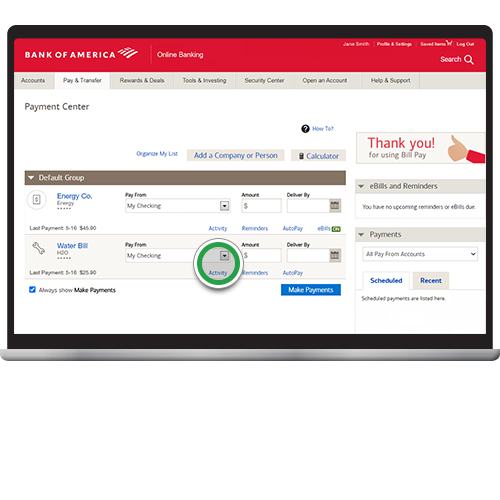
By leveraging this tool, account holders can exercise granular control over their outgoing capital. Rather than reacting to invoices as they arrive in the mail, users can proactively schedule, automate, and track every dollar that leaves their checking or savings accounts. For the modern investor or budget-conscious professional, understanding the mechanics and strategic advantages of this service is essential for maintaining liquidity and safeguarding one’s credit profile.
Understanding the Mechanics of Online Bill Pay
The primary function of Bank of America Bill Pay is to act as a digital intermediary between your bank account and your service providers. When you use the service, you are essentially instructing the bank to send funds on your behalf. The platform is robust enough to handle two distinct types of transactions: electronic transfers and paper checks.
How the Payment Logic Operates
When you add a payee—such as a major utility company or a national credit card issuer—the system first attempts to establish a secure electronic connection. Most large corporations are part of an extensive electronic network, allowing Bank of America to transfer funds almost instantaneously or within one to two business days. However, the service is not limited to large entities. If you need to pay a local landlord or a private contractor who does not accept electronic transfers, the bank will print and mail a physical check on your behalf.
This hybrid approach ensures that the user can manage 100% of their financial obligations from a single dashboard. From a personal finance perspective, this eliminates the “checkbook friction”—the need to keep stamps, envelopes, and physical ledgers—while providing a digital audit trail that is far more reliable than a manual checkbook.
The Difference Between Recurring and One-Time Payments
Strategic financial planning often requires a mix of automation and manual oversight. Bank of America Bill Pay accommodates both. One-time payments are ideal for variable expenses, such as a medical bill or a one-off service fee. Recurring payments, conversely, are the cornerstone of a “set-and-forget” financial strategy. By automating fixed costs—like mortgage payments, car loans, or insurance premiums—users ensure they never miss a due date. This consistency is a critical factor in maintaining a high credit score, as payment history typically accounts for 35% of a FICO score.
Key Features and Strategic Benefits for Personal Finance
Beyond the basic convenience of digital transfers, Bank of America Bill Pay offers several sophisticated features that enhance a user’s ability to manage their wealth and protect their assets.
Centralized Cash Flow Management
One of the greatest challenges in personal finance is “financial fragmentation”—having data spread across multiple platforms. When you pay bills through individual vendor websites, your financial data is scattered. By centralizing these transactions through Bank of America, you create a single source of truth for your monthly expenditures. This makes it significantly easier to review historical spending patterns, export data for tax preparation, and monitor your remaining balance in real-time before the next billing cycle begins.
The “eBills” Advantage
A standout feature within the platform is the eBill functionality. An eBill is an electronic version of your paper statement that comes directly into your Bank of America Bill Pay account. Instead of waiting for a PDF in your email or a letter in your mailbox, the bill arrives within the banking portal, showing the amount due, the due date, and the minimum payment.
From a strategic standpoint, eBills allow for “smart automation.” You can set rules to pay the bill automatically only if it is under a certain amount, or to pay the minimum balance versus the full balance. This layer of logic helps prevent overdrafts while ensuring that essential services are never interrupted.
Security and Fraud Prevention
Security is a paramount concern in online income and business finance management. Using a centralized bill pay service is inherently more secure than providing your debit card or bank account routing numbers to multiple third-party websites. Every time you enter your financial information into a new vendor’s portal, you increase your “attack surface” for potential data breaches.
By using Bank of America Bill Pay, you keep your sensitive banking details contained within the bank’s high-security environment. The bank handles the disbursement, and in many cases, the payee never sees your actual account number. Furthermore, the service is backed by a Fraud Protection Guarantee, which ensures that if a payment is misdirected or an unauthorized transaction occurs, the bank provides a specific level of liability protection that individual vendors might not offer.
Setting Up and Navigating the Interface for Maximum Efficiency

For those looking to optimize their side hustles or small business finances, the setup process for Bill Pay is a foundational step in establishing a professional financial workflow.
Adding Payees and Organizing Obligations
The first step in leveraging the tool is the creation of a “Payee List.” Bank of America’s system contains a vast database of pre-verified companies. When you type in a name like “Comcast” or “State Farm,” the system often recognizes the entity and automatically fills in the necessary remittance addresses. For private individuals, you simply need their name and mailing address.
Organizationally, it is wise to categorize these payees. By grouping them into “Fixed Needs” (rent, utilities) and “Variable Wants” (subscription services, club memberships), you can better visualize where your capital is being deployed each month.
Managing Delivery Timelines and Lead Times
A common mistake in digital finance is failing to account for “lead time.” While many payments are electronic and settle within 24 hours, others—specifically paper checks—require several days for the postal service and the recipient’s processing department.
Bank of America Bill Pay simplifies this by providing a “Deliver By” date. Instead of asking the user when they want the money to leave their account, the system asks when the money should arrive at the destination. The bank’s software then back-calculates the necessary send date. This nuance is vital for avoiding late fees and maintaining a positive relationship with creditors.
Integrating Bill Pay into Your Broader Wealth Strategy
To view Bank of America Bill Pay as merely a “utility” is to miss its potential as a wealth-building tool. When integrated correctly, it serves as a mechanism for disciplined saving and investment.
Optimizing Credit Scores and Financial Reputation
As previously mentioned, payment history is the most significant component of your credit profile. By using the scheduling feature, you effectively eliminate the “human error” variable. For individuals rebuilding their credit or young professionals establishing their first lines of credit, the ability to schedule payments to arrive two days before the actual deadline provides a safety margin that can save thousands of dollars in interest over a lifetime by maintaining a prime credit tier.
Cash Flow Forecasting
Sophisticated personal finance management requires looking forward, not just backward. The Bill Pay dashboard allows users to see scheduled outflows for the next 30, 60, or 90 days. This “forward-looking” view is essential for those who manage variable income, such as freelancers or commission-based sales professionals. By seeing exactly how much capital is spoken for in the coming weeks, you can make more informed decisions about discretionary spending or when to move excess cash into high-yield savings or brokerage accounts.
Tax Preparation and Expense Tracking
For those who operate side businesses or manage rental properties, Bank of America Bill Pay acts as a rudimentary accounting system. Because every payment is categorized and searchable, at the end of the fiscal year, you can easily pull a report of all “Repairs,” “Utilities,” or “Professional Fees” paid throughout the year. This significantly reduces the administrative burden of tax season and ensures that no deductible expenses are overlooked.
Common Questions and Troubleshooting for Financial Clarity
Even with a streamlined system, users often have questions regarding the nuances of fund movement and the bank’s obligations.
The Delivery Guarantee
One of the most reassuring aspects of the service is the Bill Pay Payment Guarantee. If a payment is scheduled correctly according to the bank’s guidelines and it still arrives late, Bank of America will often cover any associated late fees (subject to certain terms and conditions). This level of institutional accountability is something you rarely find when manually mailing checks or using third-party fintech apps that lack the capital backing of a major national bank.
Understanding When Funds Are Withdrawn
A point of confusion for many is the timing of the withdrawal. For electronic payments, funds are typically withdrawn from your account on the “Deliver By” date. For paper checks, however, the timing can vary. In some instances, the funds are withdrawn when the check is printed; in others, the funds remain in your account until the recipient actually cashes the check. Understanding these nuances is critical for maintaining an accurate “available balance” and avoiding unintended overdrafts.
What Happens if a Payment Fails?
In the rare event that a payment cannot be delivered—perhaps due to an incorrect account number or a change in the payee’s address—the funds are typically returned to the user’s account. The system provides notifications and alerts to keep the user informed of the payment status. This feedback loop is essential for digital security and financial oversight, ensuring that no “lost” checks remain in limbo.
By utilizing Bank of America Bill Pay, consumers are doing more than just paying bills; they are adopting a disciplined, secure, and highly organized approach to capital management. In an era where financial complexity is increasing, the ability to simplify, automate, and centralize one’s financial obligations is a significant competitive advantage in the pursuit of long-term wealth and stability.
aViewFromTheCave is a participant in the Amazon Services LLC Associates Program, an affiliate advertising program designed to provide a means for sites to earn advertising fees by advertising and linking to Amazon.com. Amazon, the Amazon logo, AmazonSupply, and the AmazonSupply logo are trademarks of Amazon.com, Inc. or its affiliates. As an Amazon Associate we earn affiliate commissions from qualifying purchases.