
In the vast and intricate landscape of technology, where innovation constantly pushes the boundaries of what’s possible, fundamental geometric shapes often serve as the unspoken bedrock. Among these, the square prism stands out as a deceptively simple yet profoundly versatile form. Far from being a mere academic curiosity, this three-dimensional object is a cornerstone in countless technological applications, from the sophisticated algorithms powering 3D modeling software to the tangible design of cutting-edge gadgets and architectural marvels. Understanding what a square prism is, particularly through a technological lens, reveals its critical role in digital design, manufacturing, computer graphics, and beyond.
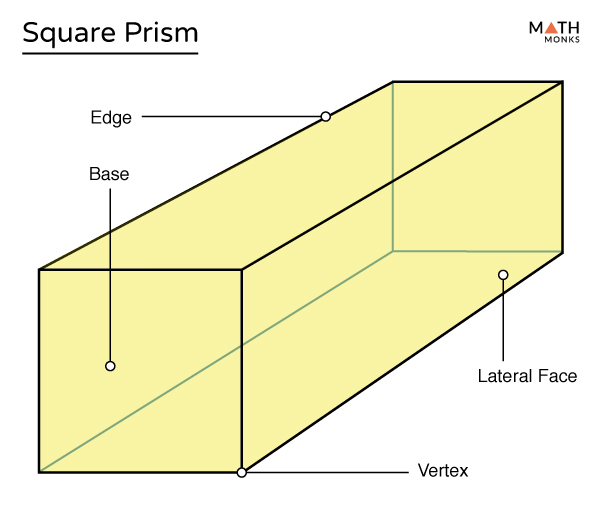
At its core, a square prism is a polyhedron defined by two parallel and congruent square bases connected by four rectangular faces. Imagine a perfect cube, then stretch or compress it along one axis; the result is often a square prism. Its inherent regularity, predictable symmetry, and straightforward properties make it an ideal primitive shape for computational processes. In a digital environment, where every object is ultimately broken down into mathematical descriptions, the square prism offers a perfect balance of geometric simplicity and functional utility, making it an indispensable element in the toolkit of designers, engineers, and developers across the tech spectrum.
The Foundational Geometry in Digital Space
Before any complex virtual world can be rendered or a new device enclosure can be prototyped, its constituent elements must be digitally defined. The square prism, with its clear geometric rules, is particularly well-suited for this initial stage of digital representation. Its simplicity belies its power as a fundamental building block, akin to pixels for images or bits for data.
Defining the Square Prism: A Digital Perspective
From a computational standpoint, a square prism can be precisely defined by a minimal set of parameters, making it efficient to store, transmit, and process. Unlike organic or irregular shapes that might require extensive tessellation into numerous polygons, a square prism can be described simply by its base dimensions (length and width, which are equal for a square) and its height. Its eight vertices can be easily calculated based on a starting point and these three measurements, and its twelve edges and six faces naturally follow.
This parametric definition is crucial in software development. For instance, in a graphics engine, a developer doesn’t need to manually define each vertex and face of a square prism every time; they can simply call a function createSquarePrism(width, height, depth) which then programmatically constructs the object. This abstraction significantly streamlines the creation of complex digital environments and models, allowing designers to focus on higher-level creative tasks rather than low-level geometric definitions. Furthermore, its axis-aligned nature, when oriented simply, makes collision detection, bounding box calculations, and space partitioning algorithms significantly more efficient, which are critical for performance in interactive applications like video games or simulations.
Key Attributes and Computational Representation
The attributes of a square prism—its vertices, edges, and faces—are not just theoretical concepts in the digital realm; they are tangible data points that software manipulates. Each vertex is a coordinate in a 3D space (X, Y, Z), each edge is a line segment connecting two vertices, and each face is a planar polygon (in this case, either a square or a rectangle) defined by a set of edges.
The computational representation of a square prism typically involves storing these coordinates and their topological relationships. For example, a common method is a “mesh” representation, where vertices are listed, and then faces are defined by referencing those vertex indices. For a square prism, this mesh is remarkably small and simple. This lean data footprint is a significant advantage in resource-constrained environments, such as mobile applications or embedded systems, where efficient memory usage and rapid rendering are paramount. Moreover, properties like volume and surface area, which are critical for engineering and manufacturing, can be calculated with simple formulas based on its defining dimensions, making simulations and analyses computationally inexpensive.
Modeling and Manipulation in CAD and 3D Software
The practical application of square prisms truly shines within Computer-Aided Design (CAD) and various 3D modeling software packages. These tools leverage the geometric simplicity and predictability of the square prism to enable designers and engineers to create, refine, and analyze complex objects with remarkable precision and efficiency.
Creating Square Prisms in Design Tools
In virtually any CAD software (e.g., AutoCAD, SolidWorks, Fusion 360) or 3D modeling application (e.g., Blender, Maya, SketchUp), creating a square prism is often one of the most basic operations. Users can typically draw a square on a plane and then “extrude” it to a specified height, or directly invoke a “primitive” shape command that generates a square prism based on user-input dimensions. This intuitive creation process is fundamental to digital design, serving as the starting point for countless projects.
Beyond simple creation, these tools allow for extensive manipulation of square prisms. They can be scaled, rotated, translated, skewed, and combined with other shapes using boolean operations (union, subtract, intersect) to form highly intricate models. For instance, to design a smartphone, an engineer might start with a large square prism for the main body, subtract smaller square prisms for button cutouts, and add other geometric primitives for camera lenses and ports. The precision afforded by digital tools ensures that these manipulations are exact, allowing for designs that meet strict engineering tolerances.
Parametric Design and Modularity
One of the most powerful aspects of working with square prisms in modern tech is their suitability for parametric design and modularity. Parametric design allows designers to define objects not just by their fixed dimensions, but by relationships and parameters that can be easily changed. For a square prism, this means its width, depth, and height can be linked to variables, allowing for rapid iteration and design changes. Imagine designing a series of electronic enclosures; by adjusting just one or two parameters, a single square prism model can generate dozens of variations instantly, rather than redrawing each one from scratch.
This modular approach extends to the assembly of components. Square prisms, due to their straight edges and right angles, fit together seamlessly. This characteristic is invaluable in designing everything from data center racks to modular robot components. In software, this translates to creating reusable components or “assets” that can be easily snapped together, greatly accelerating the design and development process for complex systems, whether physical or virtual.
Real-World Applications in Tech and Product Design
The theoretical elegance of the square prism translates directly into practical utility in a myriad of technological and product design contexts. Its form factor is often an optimal choice for function, manufacturing, and user interaction.

From Gadget Enclosures to Architectural Visualization
Consider the ubiquity of square prism forms in everyday technology. Most smartphones, tablets, external hard drives, power banks, and even computer towers are essentially refined square prisms. This form factor is not arbitrary; it maximizes internal volume for components while providing a robust, ergonomic, and easy-to-manufacture exterior. The flat surfaces are ideal for screens, button placement, and efficient cooling, while the straight edges simplify assembly and modularity. In the realm of network hardware, servers and switches are almost exclusively square prisms, designed to stack efficiently within standard rack units.
Beyond consumer electronics, square prisms are fundamental to architectural visualization and Building Information Modeling (BIM). Architects use digital square prisms to represent rooms, columns, beams, and entire building masses. These digital models allow for virtual walkthroughs, light simulations, and structural analysis long before physical construction begins. The geometric simplicity facilitates rapid prototyping and conceptual design, allowing stakeholders to visualize and iterate on designs quickly.
Packaging, Prototyping, and Manufacturing
The square prism’s influence also extends into the logistics and production phases of technology. Product packaging, especially for electronics, often adopts a square or rectangular prism shape. This is driven by efficiency in shipping and storage: square prisms pack together without wasted space, optimizing pallet utilization and reducing transportation costs.
In prototyping, 3D printing often begins with primitive shapes. A square prism is a common starting point for additive manufacturing, providing a stable base or a core component that can be modified. Engineers can quickly print test enclosures or structural elements based on square prism designs to evaluate form, fit, and function before committing to mass production. Furthermore, subtractive manufacturing processes, like CNC milling, often begin with a block of raw material, which is essentially a solid square prism, from which the final complex shape is carved. The precision of modern manufacturing tools, guided by digital CAD models of square prisms, ensures that parts are produced to exacting specifications.
Square Prisms in Computer Graphics and Immersive Experiences
For those who explore virtual realms, whether in video games, simulations, or augmented reality, square prisms are silent workhorses, underpinning much of what users experience. They are crucial for both visual fidelity and computational efficiency.
Building Blocks for Virtual Worlds
In computer graphics, square prisms, along with cubes and rectangular prisms, are known as “primitives.” These are the most basic 3D shapes that graphics engines can render very quickly. Game environments, architectural visualizations, and animated scenes are often constructed by assembling and modifying thousands or millions of these primitives. While a designer might create a highly detailed, organic-looking character, the underlying environment, level geometry, and even internal collision meshes often leverage square prisms. For instance, a building in a video game might appear complex, but its foundational structure, rooms, and corridors are often modeled as a collection of square prisms for simplicity and performance.
These shapes are also fundamental for creating “voxels” (volumetric pixels), which are 3D equivalents of 2D pixels. Voxel-based games or simulations often use small cubes or square prisms as their basic building blocks, allowing for destructible environments and procedural generation of complex landscapes.
Optimizing Performance with Primitive Shapes
The efficiency of square prisms is particularly valuable for optimizing performance in real-time graphics. Graphics engines frequently use “bounding boxes” for objects, which are typically axis-aligned square or rectangular prisms that completely enclose a more complex object. These bounding boxes are used for fast collision detection, frustum culling (determining if an object is visible on screen), and level-of-detail (LOD) calculations. If a complex object’s bounding box is not in view or not colliding with anything, the engine can skip complex calculations for the detailed mesh, saving precious computational cycles.
Moreover, square prisms are often used for light volumes, shadow calculations, and other volumetric effects. Their predictable geometry makes it easier and faster for rendering algorithms to determine how light interacts with the scene, contributing to realistic lighting and shadows without excessive computational overhead. In the pursuit of photorealism and immersive experiences, the humble square prism provides a crucial balance between geometric simplicity and the complex demands of real-time rendering.
Future Trends and Advanced Uses
As technology continues to advance, the application of square prisms will also evolve, particularly with the rise of AI and new immersive technologies.
AI-Driven Design and Generative Geometry
The simplicity and mathematical tractability of square prisms make them ideal candidates for AI-driven design and generative geometry. AI algorithms can be trained to rapidly generate and optimize square prism-based structures for various purposes, such as maximizing strength-to-weight ratios for aerospace components, optimizing airflow in cooling systems, or creating efficient layouts for urban planning. Instead of human designers manually arranging prisms, AI can explore thousands of configurations in minutes, identifying optimal solutions that might be overlooked by traditional methods. This extends to creating procedural content for games, where AI can dynamically generate entire environments using square prism primitives, ensuring variety and reducing development time.

Augmented Reality and Interactive Prisms
In augmented reality (AR) and virtual reality (VR) environments, square prisms play a vital role in spatial mapping and interaction. AR systems often use square prisms as bounding boxes to understand and interact with real-world objects, allowing virtual content to be anchored realistically. For example, a virtual square prism might be used to define the boundaries of a physical table onto which digital objects are placed.
Interactive experiences in VR/AR can also leverage square prisms as user interface elements, virtual building blocks, or interactive puzzle components. Their distinct edges and faces make them easy to grab, manipulate, and recognize within a 3D interface, providing intuitive interaction points for users in immersive digital spaces. As these technologies become more integrated into daily life, the intuitive and computationally friendly nature of the square prism will continue to make it an essential geometric primitive for building the digital future.
In conclusion, the square prism, while seemingly basic, is anything but trivial in the realm of technology. From the foundational definitions in digital space to its critical role in sophisticated CAD software, the design of physical gadgets, the rendering of immersive virtual worlds, and the future of AI-driven design, it remains a powerful and indispensable geometric primitive. Its simplicity is its strength, enabling efficiency, precision, and versatility across a myriad of technological applications that shape our modern world.
aViewFromTheCave is a participant in the Amazon Services LLC Associates Program, an affiliate advertising program designed to provide a means for sites to earn advertising fees by advertising and linking to Amazon.com. Amazon, the Amazon logo, AmazonSupply, and the AmazonSupply logo are trademarks of Amazon.com, Inc. or its affiliates. As an Amazon Associate we earn affiliate commissions from qualifying purchases.