
In the contemporary financial landscape, the ability to move capital quickly, securely, and globally is a cornerstone of personal and professional success. PayPal has evolved from a simple payment gateway into a robust financial ecosystem that bridges the gap between traditional banking and the digital economy. Whether you are an individual looking to streamline your online shopping, a freelancer collecting international payments, or a business owner scaling operations, understanding how to properly establish and manage a PayPal account is an essential financial skill.
Getting a PayPal account is not merely about filling out a form; it is about integrating a versatile financial tool into your broader wealth management strategy. This guide explores the nuances of account types, the technicalities of the verification process, and the strategic advantages of using this platform to manage your liquidity.
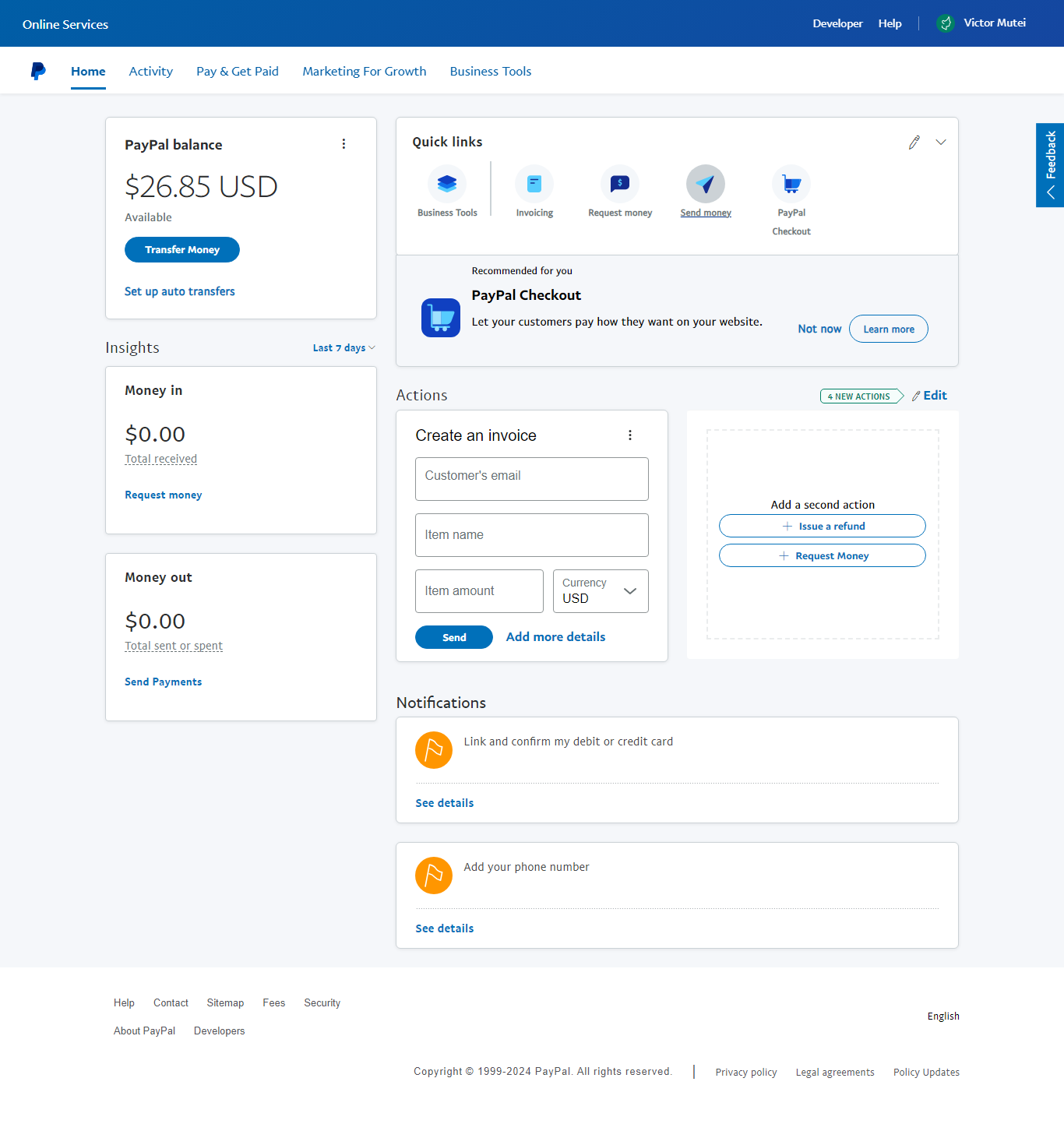
The Strategic Choice: Personal vs. Business Accounts
Before initiating the registration process, it is critical to determine which account structure aligns with your financial goals. PayPal offers two primary account categories, each designed to serve different economic functions. Choosing the wrong one can lead to unnecessary fees or a lack of necessary features.
Personal Accounts for Daily Transactions
A Personal account is the ideal choice for the majority of users. It is designed for individual use, such as sending money to family members, paying for online purchases, or receiving small, occasional payments.
From a personal finance perspective, a Personal account offers simplicity. It allows you to link your debit and credit cards while keeping your primary banking information masked from merchants. This adds a layer of security to your personal capital. Furthermore, Personal accounts typically offer “Friends and Family” payment options, which allow for fee-free transfers within the same country when funded by a bank account or balance.
Business Accounts for Scale and Professionalism
If you intend to use PayPal for a side hustle, freelance work, or an established corporation, a Business account is the superior choice. This account type allows you to operate under a company name, providing a level of professional branding that a Personal account lacks.
Financially, Business accounts unlock a suite of tools designed for growth. This includes the ability to send professional invoices, set up recurring subscription payments, and allow multiple employees to access limited account features. While Business accounts involve transaction fees for receiving money, they provide the detailed financial reporting and tax documentation (such as Form 1099-K in the United States) necessary for modern business compliance.
Navigating the Registration Process: A Financial Onboarding
Once you have identified the appropriate account type, the registration process begins. This stage is more than just a digital sign-up; it is a formal “Know Your Customer” (KYC) procedure required by financial regulations to prevent fraud and money laundering.
Essential Information Requirements
To start, visit the official website or download the application. You will be prompted to provide a valid email address, which will serve as your primary financial identifier. It is highly recommended to use a dedicated, secure email address for financial services to minimize the risk of phishing or unauthorized access.
You will also need to provide:
-
Legal Name: This must match your government-issued identification.
-
Physical Address: Required for billing verification and shipping purposes.
-
Phone Number: Used for two-factor authentication and account recovery.
The Verification Tier System
PayPal operates on a tiered system of trust. An unverified account often has strict limits on how much money can be sent, received, or withdrawn to a bank account. To lift these “financial ceilings,” you must complete the verification process. This typically involves confirming your email address and phone number, followed by the more rigorous step of linking a confirmed funding source.
Verification is a signal to the global financial system that you are a legitimate entity. For high-volume users, PayPal may eventually request a Social Security Number (SSN) or Employer Identification Number (EIN) to comply with international tax laws and anti-money laundering (AML) statutes.

Bridging the Gap: Linking External Banks and Credit Facilities
A PayPal account is most effective when it is seamlessly integrated with your existing financial infrastructure. To move money in and out of the digital ecosystem, you must link external accounts.
Bank Transfers and Liquidity
Linking a bank account is the most cost-effective way to manage your PayPal balance. By connecting a checking or savings account, you can “pull” funds into PayPal to make purchases or “push” your earnings out of PayPal and into your primary bank.
There are two primary methods for bank verification:
-
Instant Verification: You log in to your bank’s portal through a secure encrypted interface.
-
Micro-Deposits: PayPal sends two very small deposits (usually less than $0.50) to your bank account. You then log in to PayPal and enter those specific amounts to prove you have ownership of the account. This method is slower—taking 2 to 3 business days—but is a standard protocol for ensuring financial security.
Credit Cards and Consumer Protection
While bank accounts are excellent for liquidity, linking a credit card offers an additional layer of consumer protection. When you use a credit card through PayPal, you are protected by both PayPal’s Purchase Protection and your card issuer’s dispute resolution policies. This “double-layer” defense is a strategic move for high-value transactions or when dealing with new, unverified merchants.
Global Finance: Managing Multi-Currency Transactions and Fees
One of the most powerful features of a PayPal account is its ability to handle international commerce. However, from a personal finance standpoint, users must be vigilant about the costs associated with cross-border transactions.
Understanding the Fee Structure
It is a common misconception that PayPal is entirely free. While there is no cost to set up an account or buy items online, receiving money for goods or services incurs a standard percentage-based fee plus a fixed transaction fee. These fees vary by region but generally hover around 2.9% to 3.49% for domestic transactions.
For those using PayPal as a side hustle or business tool, these fees must be factored into your pricing strategy. They represent the cost of the platform’s security, dispute resolution, and global reach.
Currency Conversion Strategies
PayPal allows you to hold balances in dozens of different currencies. This is invaluable for individuals working in the “gig economy” who may receive payments in USD, EUR, or GBP. However, be aware that PayPal applies its own exchange rate when converting these funds back to your local currency. This rate usually includes a “spread” or margin above the mid-market rate. To optimize your finances, monitor exchange rates and consider holding funds in their original currency until the market is favorable for a conversion.
Advanced Financial Safeguards: Security and Compliance
As your PayPal account becomes a more central part of your financial life, protecting that asset becomes paramount. Digital security is not just a technical concern; it is a fundamental aspect of capital preservation.
Two-Factor Authentication (2FA)
In an era of sophisticated cyber threats, a password is no longer sufficient. Enabling Two-Factor Authentication—where a code is sent to your mobile device or generated by an authenticator app—is the single most effective way to prevent unauthorized access. Treat your PayPal credentials with the same level of confidentiality as your primary bank login.
Tax Compliance and 1099-K Reporting
For those using PayPal for income, it is essential to understand the tax implications. In many jurisdictions, payment processors are required to report gross earnings to the tax authorities once certain thresholds are met. Maintaining meticulous records of your PayPal transaction history will ensure that when tax season arrives, you can accurately report your income and deduct eligible business expenses, such as the very transaction fees PayPal charges you.

Dispute Resolution and the Resolution Center
Financial disputes are an inevitable part of commerce. PayPal’s Resolution Center is a specialized forum for settling disagreements between buyers and sellers. Whether it is a “Significantly Not As Described” (SNAD) claim or an “Unauthorized Transaction” report, understanding how to navigate the dispute process is vital. Professionalism and clear documentation (such as shipping tracking numbers and communication logs) are your best defenses in protecting your funds during a dispute.
By following these steps—from choosing the right account type to implementing advanced security protocols—you transform a simple digital wallet into a sophisticated tool for modern financial management. PayPal offers the flexibility to navigate the global economy with ease, provided you manage the account with the diligence and insight required of any significant financial asset.
aViewFromTheCave is a participant in the Amazon Services LLC Associates Program, an affiliate advertising program designed to provide a means for sites to earn advertising fees by advertising and linking to Amazon.com. Amazon, the Amazon logo, AmazonSupply, and the AmazonSupply logo are trademarks of Amazon.com, Inc. or its affiliates. As an Amazon Associate we earn affiliate commissions from qualifying purchases.