
The digital transformation of the global financial system has fundamentally changed how individuals interact with their fiscal responsibilities. Gone are the days of digging through physical filing cabinets or waiting weeks for paper transcripts to arrive via snail mail. Today, the ability to check your taxes online is not just a convenience; it is a critical component of modern personal finance management. Whether you are verifying a refund status, looking for past return data to secure a mortgage, or checking for outstanding liabilities to avoid interest and penalties, the digital ecosystem provides a level of transparency that was previously unimaginable.
Understanding how to navigate these digital portals is essential for maintaining a healthy financial profile. By leveraging official government tools and secure third-party platforms, taxpayers can gain real-time insights into their standing with the Internal Revenue Service (IRS) and state tax authorities. This guide explores the multifaceted landscape of online tax management, providing a roadmap for those looking to take control of their financial data.
Accessing Your Federal Records Through the IRS Online Portal
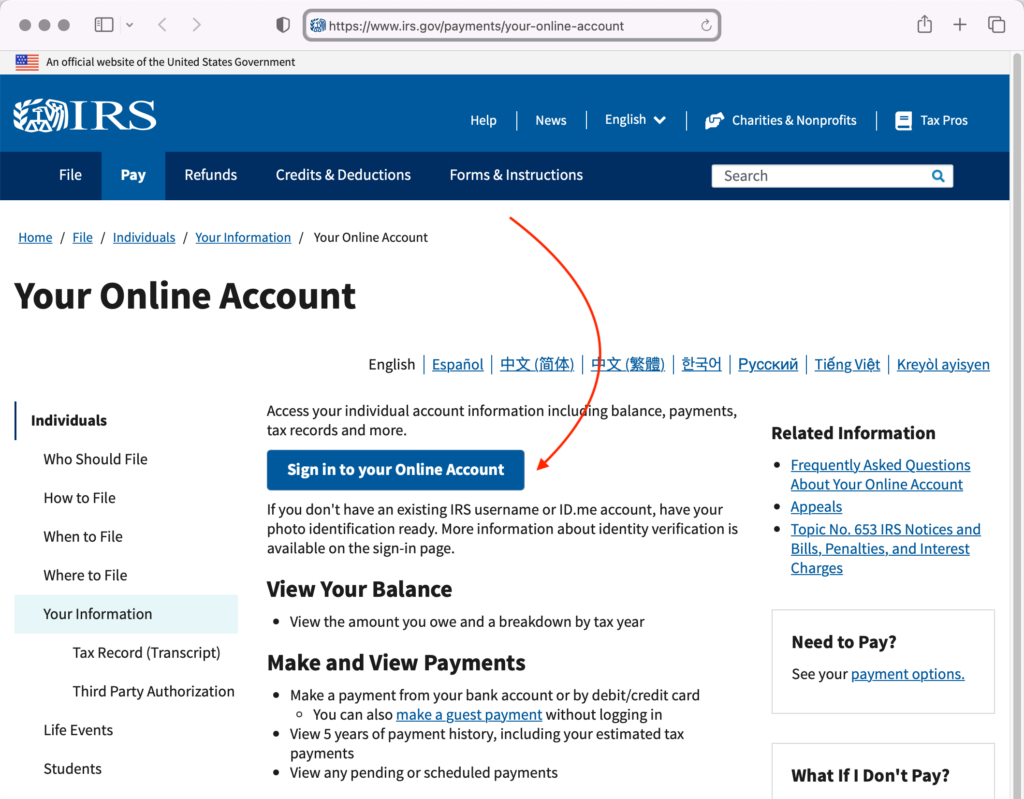
The primary gateway for any taxpayer seeking to review their federal status is the official IRS website. Over the last several years, the IRS has significantly upgraded its digital infrastructure, moving away from fragmented systems toward a centralized “Individual Online Account.” This portal serves as a comprehensive dashboard for your financial relationship with the federal government.
Setting Up Your Individual Online Account
To access your tax information online, the first step is creating and verifying an account through the IRS’s secure identity verification partner, currently ID.me. This process is rigorous for a reason: your tax data contains your most sensitive financial information, including Social Security numbers, income history, and banking details.
When you log in to your Individual Online Account, you can view the total amount you owe, your payment history for the last 24 months, and key information from your most recent tax return. This is particularly useful for individuals who may have missed a payment or who are unsure if a previous year’s return was processed correctly. The dashboard also allows you to view any digital copies of notices sent by the IRS, which can provide early warning signs of audits or adjustments before paper mail arrives.
Understanding Tax Transcripts and Their Importance
One of the most powerful tools available online is the ability to request and download tax transcripts. A transcript is a summarized or complete record of your tax return data and subsequent changes. There are several types of transcripts available, each serving a specific financial purpose:
-
Tax Return Transcript: This shows most line items from your original return. It is often required by mortgage lenders or student financial aid offices (FAFSA) to verify income.
-
Tax Account Transcript: This provides basic data such as marital status, type of return filed, adjusted gross income, and taxable income. It also tracks any changes made after you filed the original return.
-
Record of Account Transcript: This is the most comprehensive document, combining the return and account transcripts into one.
-
Wage and Income Transcript: This displays data from information returns the IRS receives, such as W-2s, 1099s, and 1098s. This is incredibly helpful if you are trying to file a current year return but have misplaced your physical forms.
Having instant access to these documents online allows for proactive financial planning. Instead of reacting to requests from lenders or government agencies, you can maintain a digital archive of your transcripts, ensuring you are always ready for significant financial transactions.
Utilizing Third-Party Software for Real-Time Tax Tracking
While the IRS portal is the definitive source for processed data, many taxpayers interact with their taxes through third-party financial software such as TurboTax, H&R Block, or FreeTaxUSA. These platforms offer an additional layer of digital oversight that can be more user-friendly than government portals.
The Role of E-Filing Platforms in Financial Record Keeping
When you file your taxes through a digital service, that platform typically maintains a “vault” of your past filings. This is often the quickest way to check the status of a current year’s return. Most major software providers offer a mobile app or web interface that provides a step-by-step progress bar, showing when your return was transmitted, when it was accepted by the IRS, and the estimated date for your refund deposit.
For long-term financial management, these platforms act as an organized digital ledger. If you have used the same software for multiple years, you can easily perform year-over-year comparisons. This longitudinal view of your taxes helps in identifying trends in your income, deductions, and tax liability, which is vital for high-net-worth individuals or those with complex investment portfolios.
Integrating Bank Data for Accurate Reporting

Modern financial management often involves the integration of various digital tools. Many high-end tax tools now allow for direct integration with your banking and investment accounts. By checking your tax situation through these integrated platforms, you can see a “live” estimate of your tax liability throughout the year.
For freelancers and small business owners, this real-time visibility is indispensable. Instead of waiting until April to discover a massive tax bill, you can check your estimated taxes online based on your current quarterly earnings. This allows for better cash flow management and ensures that you are setting aside appropriate amounts for self-employment taxes and quarterly estimated payments.
Essential Security Protocols for Protecting Your Financial Identity
The ability to check your taxes online brings significant benefits, but it also necessitates a heightened focus on digital security. Your tax records are a prime target for identity thieves who look to file fraudulent returns in your name or gain access to your bank accounts.
The Necessity of ID.me and Multi-Factor Authentication
As mentioned previously, the IRS uses ID.me to verify identities. This process often requires a government-issued photo ID and a live “selfie” to match your face to the ID. While some find this process cumbersome, it is a critical safeguard.
Once your account is established, you must utilize multi-factor authentication (MFA). MFA requires a second form of verification—usually a code sent to your mobile device or generated by an app—before access is granted. In the context of personal finance, MFA is your strongest defense against unauthorized access. If you are checking your taxes via a third-party app, ensure that it also utilizes biometric login features or hardware security keys.
Identifying and Avoiding Digital Tax Fraud
Checking your taxes online also serves as a defensive measure against fraud. By regularly monitoring your IRS account, you can spot unauthorized activity early. For example, if you log in and see a return filed for a year you haven’t addressed yet, you may be a victim of identity theft.
It is also important to remember that the IRS does not initiate contact with taxpayers via email, text messages, or social media to request personal or financial information. Any “alert” that asks you to click a link to check your taxes or claim a refund is likely a phishing scam. Always navigate directly to the official IRS.gov website or your trusted tax software’s official URL to check your records.
Navigating State-Level Tax Portals and Local Requirements
While federal taxes often take center stage, state-level obligations are equally important. Most states that collect income tax have their own independent online portals. These systems operate similarly to the federal portal but are managed by the state’s Department of Revenue or Franchise Tax Board.
Checking your state taxes online is crucial because state refunds and liabilities are often processed on different timelines than federal ones. Many states offer specific credits—such as renters’ credits or local energy-efficiency incentives—that may not appear on your federal return. By logging into state-specific portals, you can track the status of these local benefits. Furthermore, if you live in one state but work in another, digital portals are the only efficient way to manage the complex “reciprocal” tax agreements and ensure you aren’t being double-taxed on the same income.

Long-Term Financial Planning Using Your Digital Tax History
The ultimate value of checking your taxes online lies in the ability to use that data for future financial growth. Tax returns are not just a record of what you paid; they are a snapshot of your entire financial life at a specific point in time.
By analyzing your digital tax history, you can engage in more sophisticated financial strategies:
-
Tax-Loss Harvesting: By reviewing your capital gains and losses reported in previous years, you can make more informed decisions about when to sell underperforming assets in your brokerage accounts to offset future gains.
-
Retirement Planning: Checking your past income levels helps determine your eligibility for various retirement accounts, such as Roth IRAs or Simplified Employee Pension (SEP) IRAs.
-
Audit Preparation: Maintaining a digital trail of every return and transcript makes the audit process significantly less stressful. If the IRS questions a deduction from three years ago, you can provide the necessary documentation instantly from your online archive.
In conclusion, the ability to check your taxes online is a fundamental skill in the modern financial landscape. By mastering the IRS Individual Online Account, leveraging the power of tax software, and maintaining rigorous security standards, you can transform tax management from an annual headache into a year-round tool for financial empowerment. Digital access provides the clarity needed to make informed decisions, protect your identity, and ensure that you are meeting your obligations while maximizing your potential for financial growth.
aViewFromTheCave is a participant in the Amazon Services LLC Associates Program, an affiliate advertising program designed to provide a means for sites to earn advertising fees by advertising and linking to Amazon.com. Amazon, the Amazon logo, AmazonSupply, and the AmazonSupply logo are trademarks of Amazon.com, Inc. or its affiliates. As an Amazon Associate we earn affiliate commissions from qualifying purchases.