
Managing financial obligations is the cornerstone of adult life, yet it remains one of the most significant sources of stress for millions of individuals. When you ask, “How do I pay my bills?” you are not just asking for a technical walkthrough of a bank portal; you are seeking a framework for financial stability. Whether you are navigating student loans, mortgage payments, utility bills, or quarterly taxes, the methodology you use to fulfill these obligations determines your creditworthiness, your psychological peace of mind, and your long-term wealth-building potential.
In a modern economy defined by subscription models and digital transactions, the complexity of managing outgoing cash flow has increased. To move from a state of reactive payment—where you pay bills as they arrive—to a state of proactive management, you must implement a system that accounts for timing, liquidity, and automation.
The Infrastructure of Payments: Understanding Your Financial Flow
Before clicking “submit payment,” you must understand the landscape of your liabilities. Not all bills are created equal, and treating them as a monolithic block of expenses is a recipe for cash flow bottlenecks.
Categorizing Fixed vs. Variable Expenses
The first step in a professional payment strategy is the segmentation of costs. Fixed expenses are those that remain constant every month, such as rent, mortgage, car insurance, or gym memberships. These are the easiest to plan for because they are predictable. Variable expenses, however, require more oversight. Utility bills (electricity, water, heating), grocery costs, and credit card balances fluctuate based on usage and lifestyle.
To manage variable bills effectively, look at a twelve-month average. By identifying your highest and lowest months (for example, high cooling costs in summer or heating in winter), you can create a “buffer” in your savings to ensure that a spike in usage doesn’t disrupt your ability to pay.
Choosing the Right Payment Vehicles
How you pay is often as important as how much you pay. There are three primary conduits for bill payment:
-
ACH/Direct Debit: This is generally the safest for essential bills like housing and utilities. It pulls money directly from your checking account, ensuring the bill is paid regardless of whether you remember to log in.
-
Credit Cards: For those with high financial discipline, paying recurring bills (like internet or phone service) via credit card can be lucrative. It allows you to earn rewards or cashback while providing a 30-day “float” on your cash. However, this is only advisable if you pay the credit card statement in full every month to avoid interest charges.
-
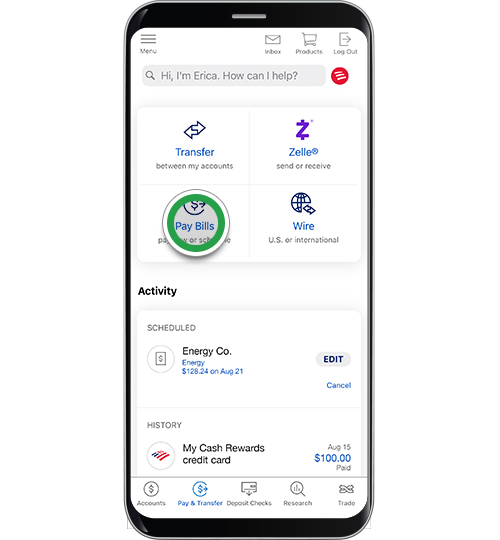
Bill Pay Services: Most major banks offer an internal “Bill Pay” dashboard. This is particularly useful for paying individuals or smaller companies that do not have sophisticated online portals. The bank sends either an electronic transfer or a physical check on your behalf.
Building a Bulletproof Payment System
The goal of any financial system should be to reduce the “cognitive load” of decision-making. If you have to remember 15 different due dates every month, you are statistically likely to miss one eventually.
The Power of Automation
Automation is the gold standard of personal finance. By setting up “Set it and Forget it” systems, you eliminate the risk of late fees and the resulting damage to your credit score. The ideal setup involves aligning your bill due dates with your income schedule. If you get paid on the 1st and 15th, you should aim to have half of your total monthly obligations exit your account shortly after each paycheck. Many creditors, including credit card issuers and utility companies, allow you to change your monthly due date to better align with your cash flow.
Creating a “Bills-Only” Checking Account
One of the most effective strategies for high-level money management is the separation of funds. Many people struggle because their “spending money” and “bill money” live in the same account. By the time the mortgage is due on the 28th, the funds have been eroded by daily coffee runs or grocery trips.
To solve this, open a secondary checking account specifically for recurring bills. Calculate the total cost of all your monthly obligations and add a 5% to 10% safety margin. Set your payroll department to direct-deposit exactly that amount into the “Bills Account” every pay period. All your automated payments should pull from this account. Whatever is left in your primary account is your true discretionary income, providing a clear visual boundary of what you can afford to spend.
Monitoring and Reconciling Your Statements
Automation does not mean abdication. You must still perform a monthly “reconciliation.” Spend 20 minutes once a month reviewing every statement. Errors occur—double charges, price hikes in subscriptions, or fraudulent activity. Reviewing these statements ensures that your automated system remains accurate and that you aren’t paying for “vampire” services you no longer use.
Handling High-Stakes Payments: Taxes and Debt
While utility bills are straightforward, paying larger, more complex obligations requires a different tactical approach. This is where many individuals find themselves in financial distress.
Navigating Quarterly Estimated Taxes
For freelancers, contractors, and business owners, the question “How do I pay my taxes?” is a year-round concern. Unlike W-2 employees, these individuals must pay estimated taxes to the IRS and state authorities every quarter.
The most professional way to handle this is the “Percentage Rule.” Every time you receive a payment from a client, immediately move 25% to 30% into a dedicated tax savings account. When the quarterly deadline arrives (usually April, June, September, and January), the money is already there. Paying these electronically via the IRS direct pay portal is the most efficient method, providing an instant digital receipt for your records.
Strategies for Debt Repayment
When paying down debt, such as student loans or high-interest credit cards, the question shifts from “How do I pay?” to “In what order do I pay?”
-
The Debt Avalanche: This method focuses on paying the minimum on all debts while putting every extra dollar toward the debt with the highest interest rate. Mathematically, this saves the most money over time.
-
The Debt Snowball: This method focuses on paying off the smallest balance first. The psychological “win” of closing an account provides the momentum needed to tackle larger balances later.
Both are valid, but the key is consistency. Ensure that your “minimum” payments are automated so you never incur a late fee, which can often exceed the interest you are trying to save.
Dealing with Unexpected Financial Shortfalls
If you find yourself in a month where you cannot pay all your bills, you must prioritize based on the severity of consequences. This hierarchy typically looks like this:
-
Housing and Utilities: The essentials for survival and employment.
-
Transportation: Necessary for getting to work to earn more money.
-
Secured Debt: Such as a car loan, where the asset can be repossessed.
-
Unsecured Debt: Credit cards and medical bills.
Communication is your best tool. Most creditors prefer to work out a payment plan than to send a debt to collections. Calling a provider before the due date to explain a temporary hardship can often result in a deferred payment or a waived late fee.
Modern Financial Tools and Apps
The digital age has provided a suite of tools designed to streamline the payment process. Utilizing these can turn a chaotic financial life into a streamlined operation.
Bill Pay Services and Aggregators
Apps that aggregate your accounts allow you to see every upcoming bill in a single calendar view. These tools can send you push notifications when a bill is due or when an automated payment has been processed. This high-level visibility prevents “surprise” withdrawals that can lead to overdraft fees.
The Role of Credit Cards in Cash Flow Management
As mentioned earlier, credit cards can be a sophisticated payment tool. If you have a $5,000 monthly spend on business or personal bills, placing that on a 2% cashback card nets you $1,200 a year in “free” money. Furthermore, using a credit card for payments provides an extra layer of security. If a utility company overcharges you, disputing a credit card charge is significantly easier and safer than trying to recover cash that has already been pulled from your checking account.
Long-Term Financial Health and Optimization
Paying your bills is the baseline; optimizing those payments is how you build wealth. Once you have a system that ensures on-time payments, your focus should shift to reducing the “burn rate” of your monthly life.
Negotiating Recurring Costs
Many recurring bills are not set in stone. Internet service providers, cell phone companies, and insurance agencies often have “retention” departments. A simple phone call once a year to ask for a better rate or a loyalty discount can shave hundreds of dollars off your annual expenses. This “found money” should then be redirected toward investments or debt principal.

Scaling Your Income to Match Your Lifestyle
Ultimately, the ease with which you pay your bills is a function of the gap between your income and your expenses. If your system is perfect but you are still struggling, it may be a “top-line” problem rather than an organizational one. Whether through side hustles, career advancement, or passive income streams, increasing your income while keeping your “bill system” lean is the ultimate path to financial freedom.
Mastering the “how” of paying your bills is a journey from anxiety to agency. By categorizing your costs, automating your workflow, using the right financial vehicles, and monitoring your progress, you transform a monthly chore into a silent, efficient engine that powers the rest of your life. Consistent, organized financial management is not just about keeping the lights on—it is about building the foundation of trust with yourself and the financial institutions that will eventually fund your biggest dreams.
aViewFromTheCave is a participant in the Amazon Services LLC Associates Program, an affiliate advertising program designed to provide a means for sites to earn advertising fees by advertising and linking to Amazon.com. Amazon, the Amazon logo, AmazonSupply, and the AmazonSupply logo are trademarks of Amazon.com, Inc. or its affiliates. As an Amazon Associate we earn affiliate commissions from qualifying purchases.