
The financial world often revolves around a few key dates on the calendar, and in the current economic landscape, few dates carry as much weight as NVIDIA’s quarterly earnings release. As the poster child for the artificial intelligence revolution, NVIDIA has transitioned from a niche hardware manufacturer to a systemic pillar of the global stock market. For investors, traders, and financial analysts, knowing exactly when the data drops and how to interpret it is not just a matter of curiosity—it is a requirement for modern portfolio management.
The Clock and the Calendar: Navigating the Earnings Schedule
NVIDIA typically reports its quarterly financial results shortly after the closing bell of the New York Stock Exchange. For those asking “what time is NVIDIA earnings today,” the official press release is generally issued at approximately 4:20 PM Eastern Time (1:20 PM Pacific Time). This timing is strategic, allowing the market to digest the raw data during the post-market trading session before the executive team provides additional context during the subsequent conference call.
The Conference Call and Q&A Session
The written report is only the first half of the story. Approximately one hour after the results are published—usually at 5:00 PM Eastern Time—NVIDIA’s CEO Jensen Huang and CFO Colette Kress host a live conference call. This is where the real market movement often happens. While the initial press release provides the “what” (revenue, earnings per share, and guidance), the conference call provides the “why.”
Investors listen closely to the tone of the executives, their commentary on supply chain constraints, and their insights into the demand for next-generation chips like the Blackwell architecture. For a high-growth company like NVIDIA, the Q&A session with institutional analysts often reveals more about the company’s long-term trajectory than the balance sheet itself.
Why Timing Matters for Retail Investors
For the individual investor, the “after-hours” session can be a period of extreme volatility. Because liquidity is lower after the 4:00 PM close, small trades can cause disproportionately large price swings. Understanding the gap between the 4:20 PM press release and the 5:00 PM call is crucial. Often, a stock will “pop” or “drop” immediately upon the release of the numbers, only to reverse direction once the CEO begins speaking. This phenomenon makes the timing of NVIDIA’s announcement a high-stakes window for anyone with exposure to tech-heavy indices or individual semiconductor stocks.
The Market Bellwether: Why NVIDIA Moves the Entire Economy
It is no exaggeration to say that NVIDIA is currently the most important stock in the world. Its influence extends far beyond the semiconductor industry, acting as a barometer for the health of the entire S&P 500 and the Nasdaq 100. When NVIDIA reports, the entire “Magnificent Seven” group of tech giants often moves in tandem, as the market interprets NVIDIA’s results as a proxy for total AI capital expenditure.
The Concentration Risk and Opportunity
As NVIDIA’s market capitalization has soared into the trillions, it has gained a massive weighting in passive investment vehicles like the SPY and QQQ ETFs. Consequently, even if you do not own NVIDIA shares directly, your retirement account or 401(k) is likely sensitive to today’s earnings report. A significant beat or miss from NVIDIA can shift the direction of the entire market for the remainder of the trading week.
The AI Capex Cycle
The primary reason NVIDIA holds such sway over the financial markets is its role as the “arms dealer” of the AI era. Companies like Microsoft, Alphabet, Meta, and Amazon are spending tens of billions of dollars on NVIDIA’s H100 and H200 GPUs to build out their data centers. Investors view NVIDIA’s revenue as a leading indicator: if NVIDIA’s sales are growing, it suggests that the world’s largest corporations are still aggressively investing in the future of computation. Conversely, any hint of a slowdown in NVIDIA’s orders could signal that the massive wave of AI investment is reaching a plateau, which would have cooling effects across the broader economy.
Key Financial Metrics to Watch
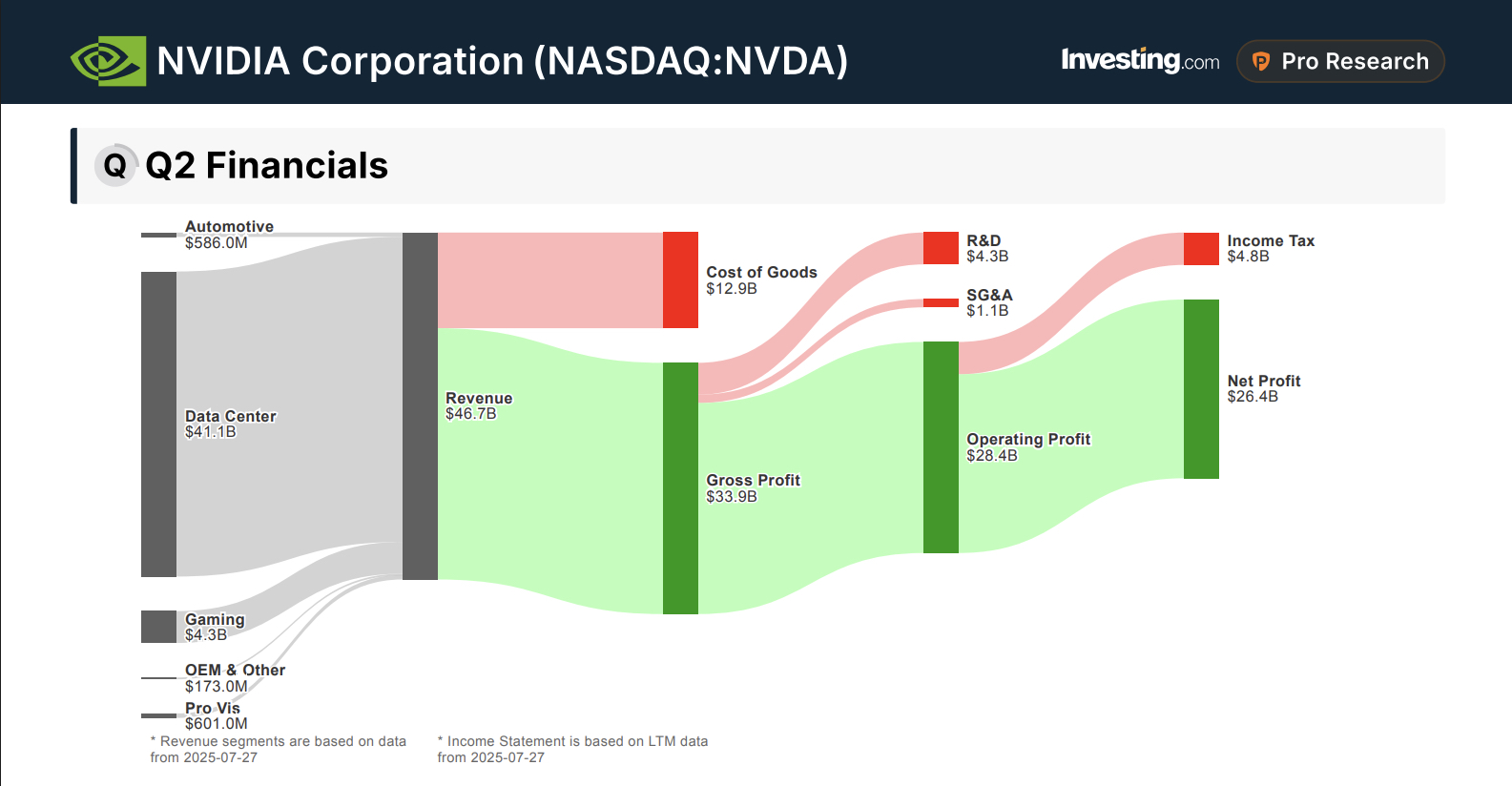
To truly understand the NVIDIA earnings report, investors must look beyond the “headline” numbers of Revenue and Earnings Per Share (EPS). While those are important, the nuances of the business are found in the segmental breakdowns and the efficiency of their operations.
Data Center Revenue: The Engine of Growth
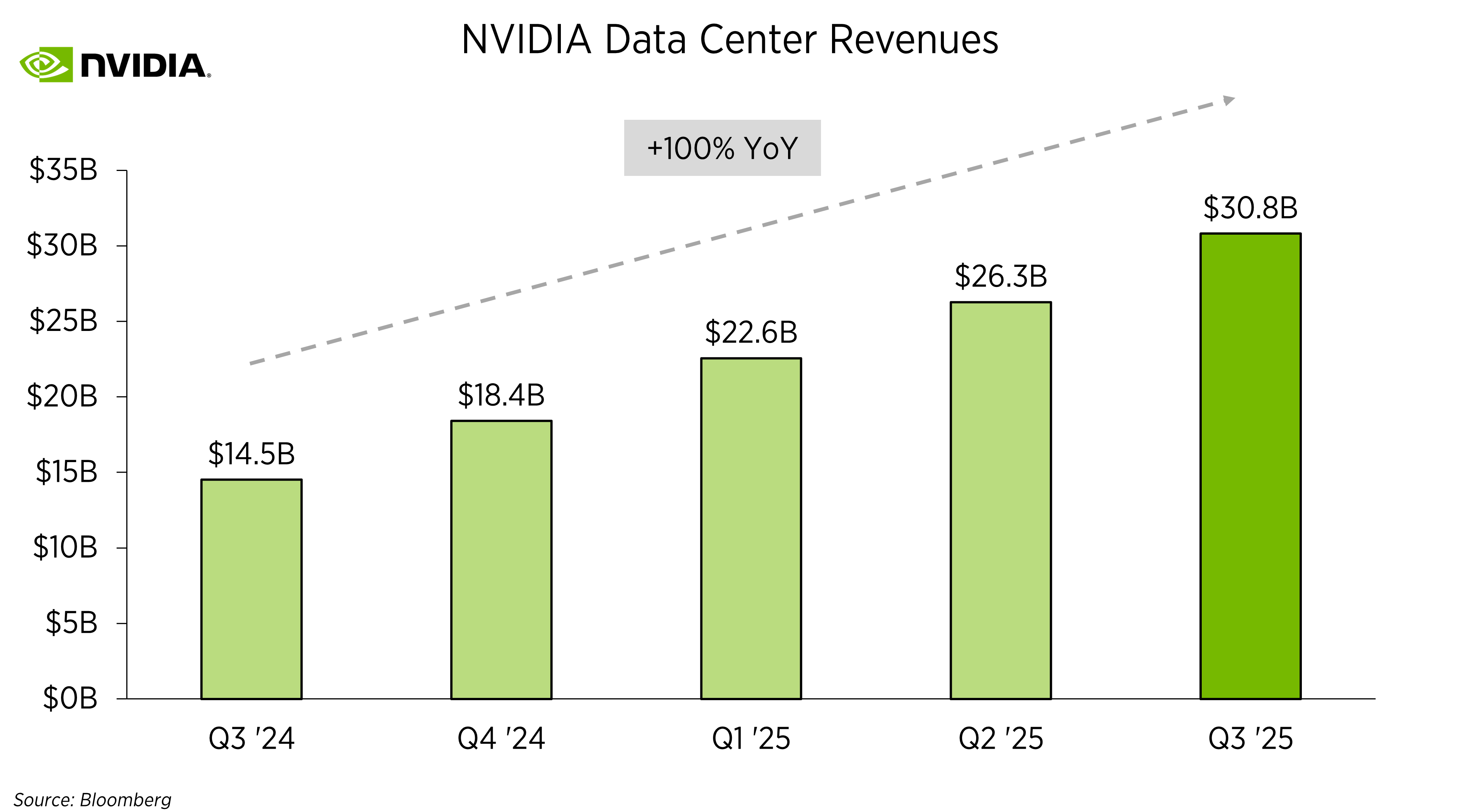
For years, NVIDIA was a “gaming” company. Today, the Gaming segment is a secondary concern. The “Data Center” segment is now the primary driver of value. This is where the sales of AI-focused chips are recorded. In recent quarters, this segment has shown triple-digit year-over-year growth. Analysts will be looking for whether this growth can be sustained or if the “law of large numbers” is finally starting to slow the company’s momentum.
Gross Margins and Pricing Power
One of the most impressive aspects of NVIDIA’s recent financial performance has been its gross margins, which have hovered around 75%. In the world of hardware, these margins are unheard of and signify immense pricing power. Investors will be watching to see if competition from companies like AMD or internal chip development by Google and Amazon is beginning to compress these margins. Any dip below expected margin levels could be interpreted as a sign that NVIDIA’s “moat” is beginning to narrow.
Forward Guidance: The “Whisper Number”
In the stock market, the past is irrelevant; only the future matters. NVIDIA’s “guidance”—its own forecast for the coming quarter—is arguably the most important number in the report. Because the stock trades at a high price-to-earnings (P/E) ratio, it is “priced for perfection.” This means that even if the company beats last quarter’s estimates, the stock can still fall if the future guidance is not significantly higher than what Wall Street analysts have predicted. This is often referred to as the “whisper number”—the unofficial expectation that sophisticated traders hold, which is often higher than the official consensus.
Investment Strategies: Managing Volatility and Risk
Investing in a stock like NVIDIA around earnings day requires a disciplined approach to risk management. The potential for a 10% or 15% move in either direction within a single evening is very real, and such volatility can be devastating for the unprepared.
The “Buy and Hold” vs. The “Earnings Trade”
Long-term investors typically view earnings day as “noise.” If the fundamental thesis—that AI will transform the global economy and NVIDIA will remain the leader—remains intact, a post-earnings dip might even be seen as a buying opportunity. However, for short-term traders, the strategy is much different. Options activity usually spikes before the earnings announcement, as traders use “straddles” or “strangles” to bet on a large move in the stock without necessarily picking a direction.
The Concept of “Priced In”
A common frustration for new investors is seeing a company report record-breaking profits only for the stock price to drop. This happens because the market is a forward-looking mechanism. If the market “priced in” a 100% growth rate and the company “only” delivered 90% growth, the stock will likely fall. Understanding the sentiment and expectation levels is just as important as understanding the financial statements. Before the earnings time today, savvy investors look at the “implied move”—the percentage change the options market expects—to gauge how much volatility is already factored into the current price.
Macroeconomic Headwinds and the Long-Term Outlook
While today’s earnings report focuses on the three-month period that just ended, the broader economic context cannot be ignored. High interest rates, geopolitical tensions (particularly regarding chip manufacturing in Taiwan), and export restrictions to markets like China all play a role in NVIDIA’s valuation.
Supply Chain and Manufacturing Constraints
NVIDIA designs its chips, but it does not manufacture them; that job falls to Taiwan Semiconductor Manufacturing Company (TSMC). Investors often look for clues regarding “supply-side” issues. Even if demand for AI is infinite, NVIDIA’s revenue is capped by how many chips TSMC can actually produce. Any commentary regarding the ramp-up of the new Blackwell chips will be scrutinized to see if NVIDIA can meet the insatiable demand from cloud service providers.
The Evolution of the Business Model: Software and Services
Finally, a key area of interest for sophisticated investors is NVIDIA’s move toward software. Through platforms like CUDA and NVIDIA AI Enterprise, the company is attempting to build a recurring revenue stream that mirrors a software-as-a-service (SaaS) model. Software revenue typically commands higher multiples than hardware revenue because it is more predictable and has even higher margins. If NVIDIA can prove that its software ecosystem is becoming as indispensable as its hardware, the long-term bull case for the stock remains incredibly strong, regardless of the immediate reaction to today’s earnings timing.
In conclusion, “what time is NVIDIA earnings today” is more than just a logistical question. It marks the start of a critical window for financial assessment that ripples through portfolios worldwide. Whether you are looking for a short-term trade or a long-term investment, the data released this afternoon will provide a vital pulse check on the most significant technological and financial trend of our decade. By focusing on the Data Center growth, gross margins, and forward-looking guidance, investors can navigate the volatility and position themselves for the next phase of the market cycle.
aViewFromTheCave is a participant in the Amazon Services LLC Associates Program, an affiliate advertising program designed to provide a means for sites to earn advertising fees by advertising and linking to Amazon.com. Amazon, the Amazon logo, AmazonSupply, and the AmazonSupply logo are trademarks of Amazon.com, Inc. or its affiliates. As an Amazon Associate we earn affiliate commissions from qualifying purchases.