
In the landscape of modern finance, few stories are as compelling or as lucrative as the ascent of Nvidia. Once a niche manufacturer of graphics processing units (GPUs) for enthusiasts and gamers, the company has transformed into the primary engine of the global digital economy. To ask “what is Nvidia worth” is to look beyond its fluctuating daily market capitalization and examine the fundamental financial drivers, the competitive moats, and the speculative fervor that have propelled it into the stratosphere of the world’s most valuable companies.
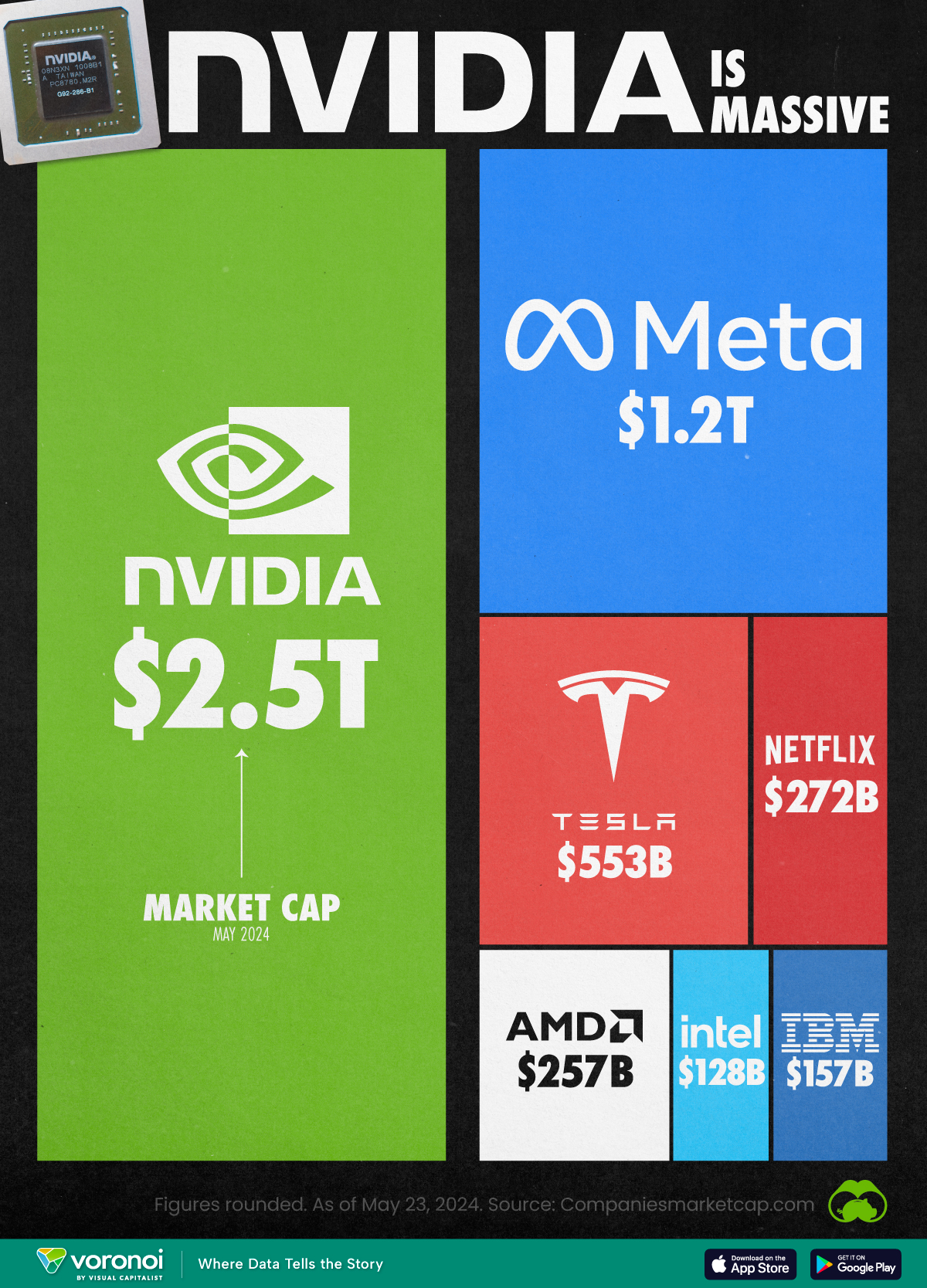
The Anatomy of a Market Cap Surge: From Gaming to Data Centers
Nvidia’s valuation is not merely a reflection of current earnings but a massive bet on the future of computation. For decades, the company’s worth was tied to the cyclical nature of the PC gaming market. However, the pivot toward data centers and high-performance computing (HPC) fundamentally altered its financial trajectory.
From Gaming Roots to AI Dominance
In its early years, Nvidia’s valuation was comparable to other semiconductor firms like AMD. Investors viewed it through the lens of consumer electronics. The real shift began when the financial world realized that the parallel processing capabilities of GPUs—originally designed to render pixels—were uniquely suited for the complex mathematics of neural networks. This realization shifted Nvidia from a hardware vendor to a foundational infrastructure provider. Today, the Data Center segment accounts for the vast majority of Nvidia’s revenue, often dwarfing its legacy gaming business. This shift has allowed the company to command a “scarcity premium,” as it currently holds a near-monopoly on the chips required to train large language models (LLMs).
The Exponential Revenue Growth
To understand Nvidia’s worth, one must look at the sheer velocity of its top-line growth. In recent fiscal years, Nvidia has posted triple-digit revenue increases that are virtually unheard of for a company of its size. When a company moves from $7 billion in quarterly revenue to over $26 billion in a matter of two years, the traditional models of valuation are pushed to their limits. This growth is driven by a massive capital expenditure cycle from “Hyperscalers”—companies like Microsoft, Alphabet, Meta, and Amazon—who are in an arms race to build out AI infrastructure. As long as these tech giants continue to pour billions into data centers, Nvidia’s worth remains anchored by tangible, massive orders.
Analyzing the Financial Fundamentals: Multiples and Margins
When institutional investors determine what Nvidia is worth, they look past the headlines and into the granular data of the balance sheet. Nvidia’s financial profile is currently unique in the semiconductor industry, characterized by software-like margins on hardware products.
Revenue Growth and Margin Analysis
Perhaps the most staggering aspect of Nvidia’s valuation is its gross margin, which has climbed toward the 75% to 80% range. In the hardware world, these numbers are extraordinary. For comparison, most hardware manufacturers operate on margins between 20% and 40%. Nvidia’s ability to maintain these margins suggests immense pricing power. Customers are not just buying a chip; they are buying the only viable solution for their immediate computational needs. This high margin translates directly into massive free cash flow, providing Nvidia with the “dry powder” needed to reinvest in R&D, acquire emerging startups, and buy back shares, all of which support a higher valuation.
P/E Ratios and Forward-Looking Multiples
The debate over whether Nvidia is “expensive” usually centers on its Price-to-Earnings (P/E) ratio. At various peaks, Nvidia has traded at over 100 times trailing earnings, leading some skeptics to suggest a bubble. However, the “Forward P/E”—which calculates the price against estimated future earnings—often tells a different story. Because Nvidia has consistently beaten analyst expectations by billions of dollars, its forward P/E has frequently looked more reasonable than its trailing figures. Investors are paying a premium today because they believe the earnings “E” will continue to grow at a pace that justifies the price “P.”
The Competitive Moat: Why Investors Pay a Premium
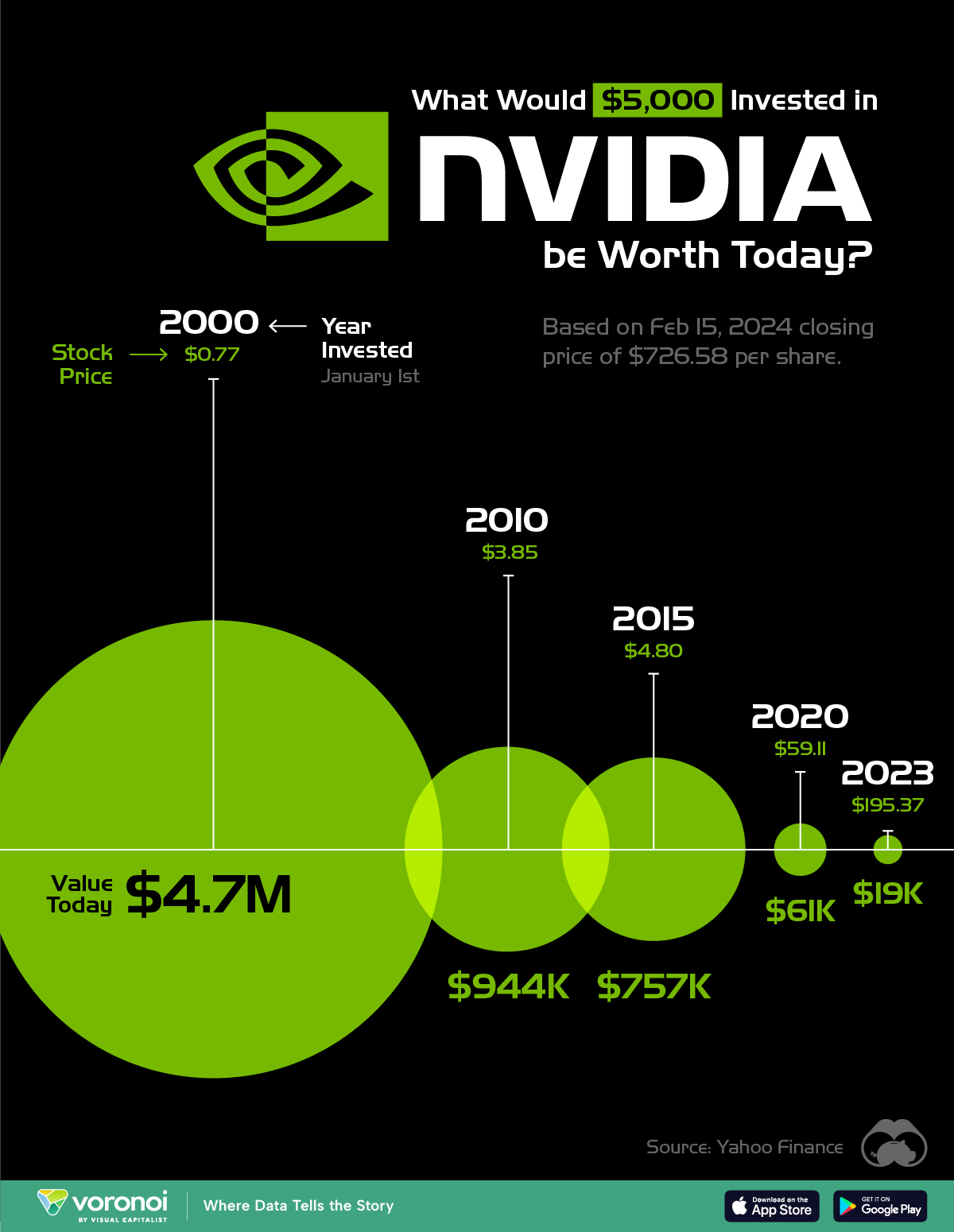
A company’s worth is protected by its “moat,” or its ability to keep competitors at bay. Nvidia’s moat is not just made of silicon; it is built on a decade of software development and ecosystem lock-in.
The CUDA Ecosystem as a Financial Barrier
In 2006, Nvidia released CUDA (Compute Unified Device Architecture), a parallel computing platform and programming model. For nearly two decades, developers have built their AI libraries, research papers, and software tools on CUDA. This creates a powerful network effect. For a competitor like AMD or Intel to take market share, they don’t just need a faster chip; they need to convince the global developer community to port their entire workflow away from the CUDA environment. This software layer adds billions to Nvidia’s perceived worth because it ensures long-term customer retention and makes it difficult for customers to switch to cheaper alternatives.
Supply Chain Mastery and Pricing Power
Nvidia’s valuation is also bolstered by its strategic relationship with TSMC (Taiwan Semiconductor Manufacturing Company). By securing the lion’s share of advanced manufacturing capacity, Nvidia has effectively throttled the ability of competitors to scale. This supply chain dominance allows Nvidia to maintain high prices even as competitors announce new products. In financial terms, this is known as “operating leverage”—the ability to increase operating income at a faster rate than revenue growth.
Risk Assessment: What Could Correct the Valuation?
No valuation is without risk. To accurately assess what Nvidia is worth, one must also account for the headwinds that could trigger a significant correction in its share price.
Geopolitical Sensitivities and Chip Bans
Nvidia is heavily exposed to geopolitical tensions, particularly regarding trade relations between the United States and China. China has historically represented a significant portion of Nvidia’s revenue. Export controls on high-end AI chips have forced Nvidia to create “lite” versions for the Chinese market, which risk losing ground to local competitors like Huawei. Any further escalation in trade restrictions or a conflict in the Taiwan Strait (threatening TSMC’s fabs) would be catastrophic for Nvidia’s valuation, as it would disrupt both its supply and its demand.
The Cyclical Nature of Semiconductor Demand
Historically, the semiconductor industry is deeply cyclical. Periods of undersupply and massive investment are often followed by gluts and “inventory corrections.” The current valuation assumes that the AI boom is a permanent shift rather than a temporary spike. If the “Return on Investment” (ROI) for AI applications doesn’t materialize for the companies buying Nvidia’s chips, those companies will eventually slow their spending. A sudden drop in data center demand would lead to a rapid decompression of Nvidia’s P/E multiple.
Future Projections: Is the Current Price Sustainable?
As we look toward the next decade, the question of Nvidia’s worth hinges on whether it can successfully expand into new verticals beyond the traditional data center.
The Next Frontier: Sovereign AI and Robotics
Nvidia is currently positioning itself to capture the “Sovereign AI” market—nations building their own localized AI infrastructure to ensure data security and cultural relevance. Countries like Saudi Arabia, the UAE, and various European nations are investing billions in domestic compute power. Furthermore, Nvidia’s focus on “Omniverse” and digital twins targets the industrial robotics sector. If Nvidia becomes the foundational platform for autonomous factories and humanoid robots, its current multi-trillion-dollar valuation might eventually be seen as a floor rather than a ceiling.

Valuation Models and Long-term Yield
For the individual investor or the institutional fund manager, determining Nvidia’s worth requires a Discounted Cash Flow (DCF) analysis that accounts for a transition from hyper-growth to steady-state maturity. While the current volatility can be jarring, the underlying business metrics—revenue per employee, cash flow conversion, and market share—remain some of the strongest in corporate history.
In conclusion, Nvidia is worth more than the sum of its hardware. It is a bet on the ubiquity of artificial intelligence and the permanence of the GPU as the primary unit of global computation. Its value is defined by its 80% market share in the most important technology of the 21st century, its impenetrable software moat, and its role as the gatekeeper to the next industrial revolution. Whether the market price is “fair” at any given moment is a matter of debate, but the intrinsic value of Nvidia’s position in the global tech stack has never been higher. For those looking at the numbers, Nvidia represents the rare intersection of massive scale and explosive growth, a combination that historically justifies its place among the most valuable entities on the planet.
aViewFromTheCave is a participant in the Amazon Services LLC Associates Program, an affiliate advertising program designed to provide a means for sites to earn advertising fees by advertising and linking to Amazon.com. Amazon, the Amazon logo, AmazonSupply, and the AmazonSupply logo are trademarks of Amazon.com, Inc. or its affiliates. As an Amazon Associate we earn affiliate commissions from qualifying purchases.