
NVIDIA Corporation (ticker: NVDA) has transitioned from being a niche hardware manufacturer for gaming enthusiasts to the central engine of the global artificial intelligence revolution. As investors and financial analysts scrutinize the current price of NVIDIA, the conversation extends far beyond simple supply and demand. It encompasses a complex tapestry of semiconductor cycles, macroeconomic shifts, and the explosive growth of generative AI. Understanding the price of NVIDIA today requires an analysis of its fundamental strength, its role in modern portfolios, and the speculative fervor that surrounds the tech sector.
Understanding NVIDIA’s Market Valuation and Recent Performance
When assessing the price of NVIDIA, it is essential to look beyond the nominal dollar amount per share. The stock’s valuation is a reflection of its market capitalization, which has famously surged past the $3 trillion mark, placing it in an elite circle alongside giants like Microsoft and Apple. This valuation is built upon a track record of consistent quarterly “beats and raises,” where the company not only exceeds analyst expectations for earnings but also provides forward-looking guidance that suggests even steeper growth.
Historical Growth Trajectory
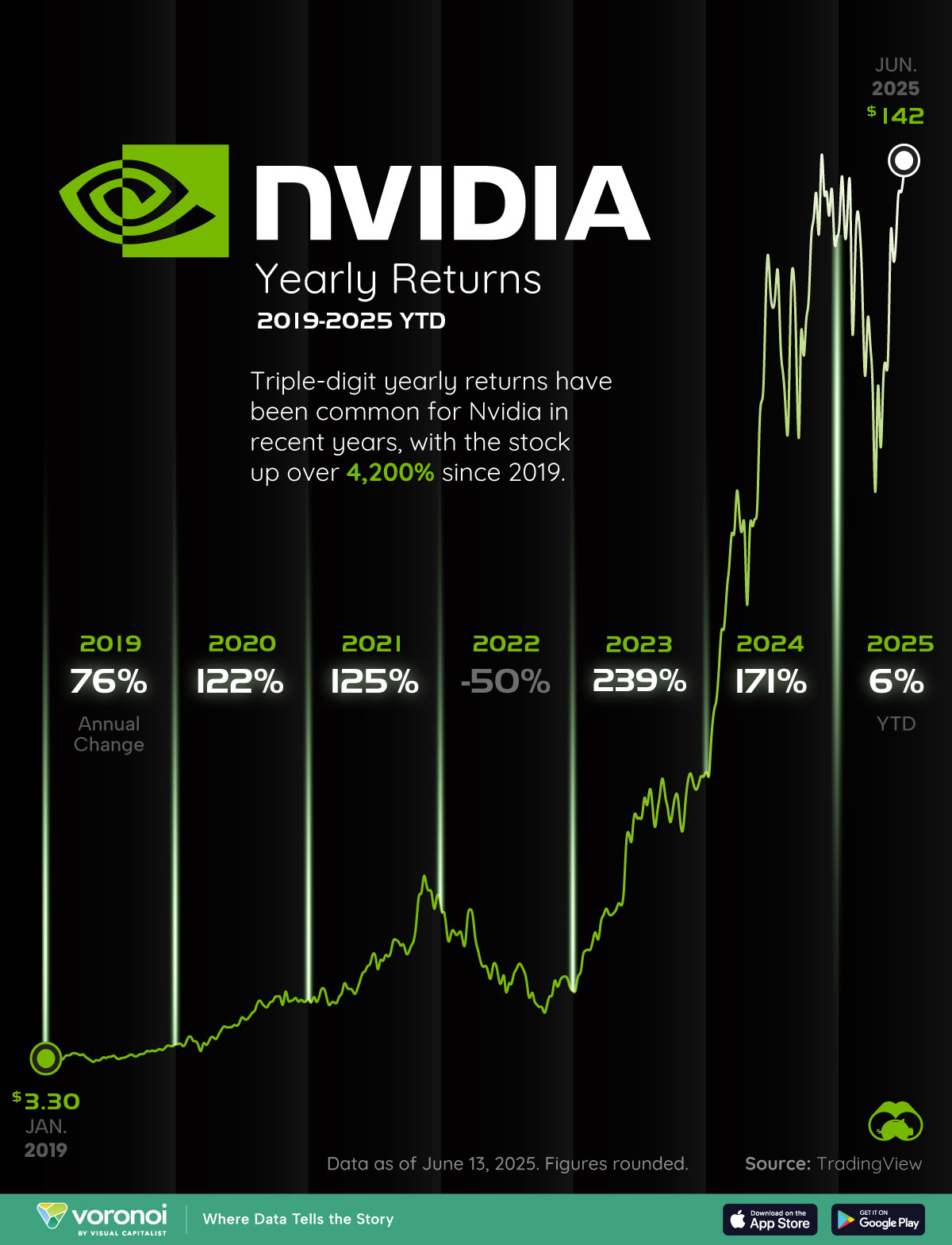
The trajectory of NVDA stock over the last decade is a study in exponential growth. While the company initially made its name in Graphics Processing Units (GPUs) for gaming, the pivot toward data centers and high-performance computing (HPC) catalyzed a massive re-rating of the stock. Investors who viewed NVIDIA as a hardware company ten years ago now see it as a platform company, providing the essential infrastructure (CUDA software and Blackwell chips) for the next industrial revolution. This shift has led to a compound annual growth rate (CAGR) that few other large-cap stocks can match, making its current price a focal point for institutional and retail investors alike.
The Impact of Stock Splits on Accessibility
One reason the nominal price of NVIDIA may appear more accessible today than in previous years is the company’s history of stock splits. By executing a 10-for-1 forward stock split in mid-2024, NVIDIA lowered the barrier to entry for retail investors and facilitated more liquid options trading. While a split does not change the fundamental value of the company or its market cap, it often acts as a psychological catalyst, increasing demand among smaller investors and ensuring the stock remains a staple in diversified personal finance portfolios.
Fundamental Factors Driving the Share Price
The current price of NVIDIA is fundamentally supported by its dominance in the data center market. Unlike many of its competitors, NVIDIA has managed to maintain incredibly high gross margins—frequently exceeding 70%—despite the capital-intensive nature of semiconductor manufacturing. This pricing power is a direct result of the “moat” NVIDIA has built through its proprietary software ecosystem and its head start in AI hardware.
Revenue Concentration and the Data Center Boom
The primary driver of the current share price is the Data Center segment. As hyperscalers like Amazon (AWS), Google (Google Cloud), and Meta invest billions into training Large Language Models (LLMs), NVIDIA has become the primary beneficiary. The demand for the H100, H200, and the newer Blackwell architecture remains higher than the available supply, creating a “scarcity premium” that supports a high valuation. When analysts look at the price of NVIDIA, they are essentially looking at the capital expenditure (CapEx) budgets of the world’s largest tech companies.
Earnings Per Share (EPS) and Forward P/E Ratios
A common critique of NVIDIA is its high Price-to-Earnings (P/E) ratio. However, sophisticated investors often focus on the Forward P/E, which takes into account projected earnings growth. Because NVIDIA’s earnings have grown at a triple-digit pace in recent quarters, its forward valuation often looks more reasonable than its trailing valuation. If the company continues to grow its EPS at a rate that outpaces its share price appreciation, the stock can actually become “cheaper” on a fundamental basis even as the dollar price rises. This dynamic is a key reason why many financial institutions maintain a “Buy” or “Outperform” rating on the stock despite its historic rallies.
Technical Indicators and Market Sentiment
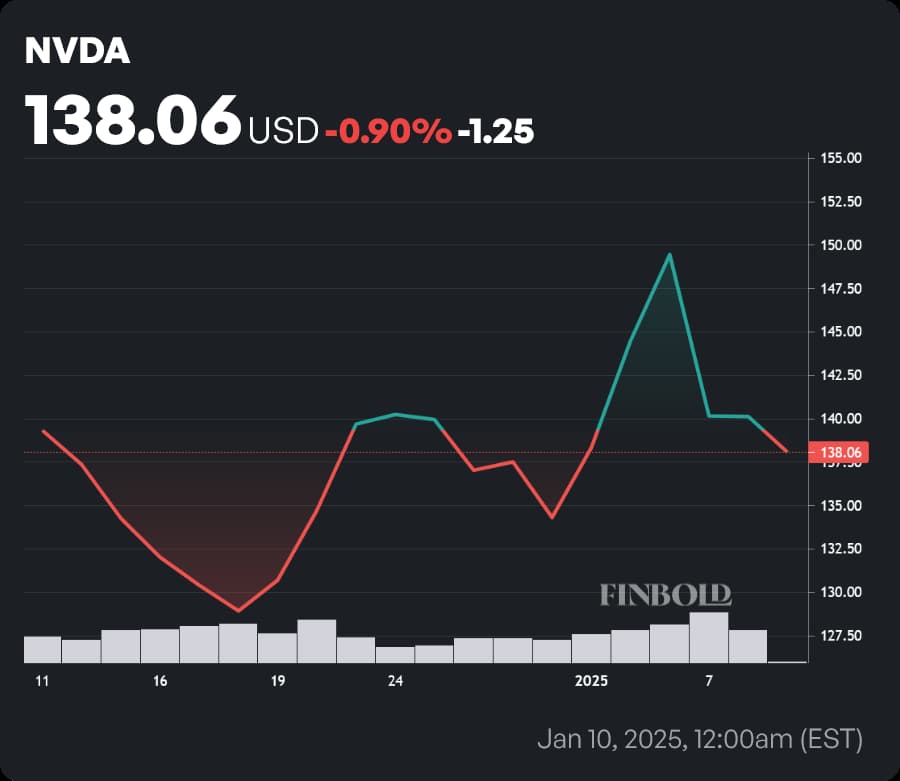
In the short term, the price of NVIDIA is often dictated by technical indicators and the broader sentiment of the Nasdaq-100 and S&P 500. As one of the most heavily weighted stocks in these indices, NVIDIA’s movements can become a self-fulfilling prophecy, dragging the rest of the market up or down.
Moving Averages and Support Levels
Traders monitoring the current price of NVIDIA pay close attention to the 50-day and 200-day moving averages. These levels serve as psychological floors during market corrections. Given the stock’s volatility, it is not uncommon for NVDA to experience 10% to 20% drawdowns, often referred to as “healthy consolidations.” For long-term investors, these dips represent opportunities to dollar-cost average into a core position, while short-term traders use these levels to set stop-loss orders and manage risk.
Institutional Ownership and “FOMO”
Institutional ownership of NVIDIA is exceptionally high, with major mutual funds and ETFs holding significant stakes. However, the Fear Of Missing Out (FOMO) remains a potent force in the retail sector. The current price often reflects a “premium for leadership.” Because NVIDIA is the undisputed leader in AI, it attracts capital from investors who want exposure to the theme but are wary of smaller, more speculative “AI plays.” This concentration of capital provides a level of support for the price, as large institutions are often hesitant to liquidate positions in a generational leader.
Competitive Landscape and Macroeconomic Risks
While NVIDIA currently enjoys a near-monopoly in high-end AI chips, the price is not immune to external risks. The semiconductor industry is notoriously cyclical, and the market is constantly looking for signs of a peak in the current spending cycle.
Competition from AMD and Custom Silicon
The primary threat to NVIDIA’s pricing power comes from two fronts: traditional competitors like AMD and Intel, and “internal” competition from its own customers. Companies like Apple, Google, and Amazon are increasingly designing their own custom AI chips (TPUs and Graviton processors) to reduce their reliance on NVIDIA. While NVIDIA still holds a significant performance advantage, any sign that customers are successfully pivoting to in-house solutions could lead to a contraction in NVIDIA’s valuation multiples.
Geopolitical Factors and Supply Chain Vulnerabilities
Geopolitics play a massive role in the price of semiconductor stocks. NVIDIA’s reliance on TSMC (Taiwan Semiconductor Manufacturing Company) for fabrication means that any instability in the Taiwan Strait could have a catastrophic impact on its ability to deliver products. Furthermore, U.S. export restrictions on high-end chips to China have already impacted NVIDIA’s revenue in one of its largest markets. The current price of the stock accounts for some of this risk, but a sudden escalation in trade tensions could lead to significant price volatility.
Investment Strategies for NVIDIA Stock
For the individual investor, the current price of NVIDIA should be viewed through the lens of their specific financial goals and risk tolerance. Because of its high beta—meaning it moves more significantly than the broader market—it is not a stock for the faint of heart.
Long-Term Value vs. Speculative Trading
Those following a long-term “buy and hold” strategy often prioritize the company’s role as the “picks and shovels” provider of the digital age. They are less concerned with whether the stock is at $120 or $140 today and more concerned with where the AI industry will be in 2030. Conversely, swing traders may find the current price range-bound between earnings reports, using technical analysis to capture 5% to 10% moves based on news flow or macro data.

Portfolio Diversification and Risk Management
Given NVIDIA’s massive market cap, many investors are already “accidently” exposed to the stock through S&P 500 index funds. When considering a direct investment at the current price, it is crucial to evaluate overall sector exposure. Over-weighting in a single stock, even one as successful as NVIDIA, can introduce significant “single-stock risk.” Financial advisors often recommend rebalancing positions after a major run-up in price to lock in gains and ensure the portfolio remains aligned with the investor’s original risk profile.
In conclusion, the current price of NVIDIA is a barometer for the global appetite for innovation and artificial intelligence. While the valuation is high by historical standards, it is backed by unprecedented revenue growth and a dominant market position. Investors must weigh the clear growth potential against the inherent risks of the semiconductor cycle and the high expectations already baked into the share price. Whether viewed as a bubble or a bargain, NVIDIA remains the most important financial story of the current market era.
aViewFromTheCave is a participant in the Amazon Services LLC Associates Program, an affiliate advertising program designed to provide a means for sites to earn advertising fees by advertising and linking to Amazon.com. Amazon, the Amazon logo, AmazonSupply, and the AmazonSupply logo are trademarks of Amazon.com, Inc. or its affiliates. As an Amazon Associate we earn affiliate commissions from qualifying purchases.