
To the casual observer, a cruise is a vacation—a leisure experience defined by destinations, dining, and entertainment. However, from a financial and business perspective, a cruise is a sophisticated, high-stakes capital asset and a masterclass in yield management and operational efficiency. In the realm of personal finance and global investment, understanding what a cruise is requires peeling back the layers of a multi-billion dollar industry that operates on razor-thin logistical margins and massive capital expenditures.
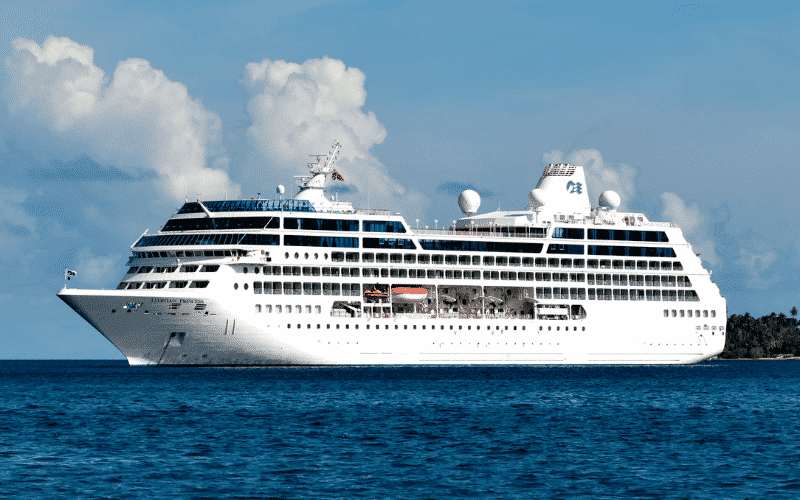
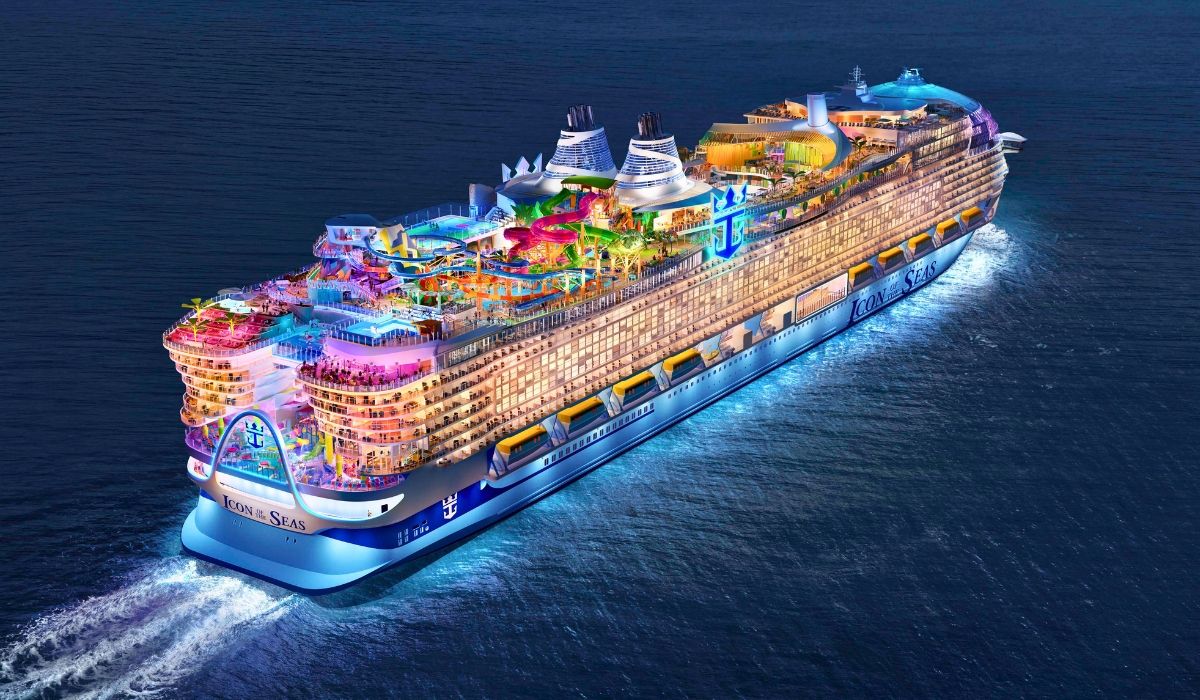
The modern cruise ship is essentially a mobile, floating resort that serves as a self-contained economic ecosystem. For investors and business analysts, it represents one of the most complex intersections of real estate, hospitality, and maritime logistics. To define a cruise in a financial context is to understand a business model designed to maximize “wallet share” while navigating the volatile waters of global fuel prices, geopolitical shifts, and rigorous debt servicing.

The Capital-Intensive Foundation: Assets at Sea
At its core, the cruise industry is built on the back of massive capital expenditure (CapEx). A modern, large-scale cruise ship is not merely a vessel; it is a billion-dollar asset. For the major players in the industry, the decision to commission a new ship is a decade-long financial commitment that involves complex international financing and a deep understanding of long-term return on investment (ROI).
Building the Floating Empire
The cost to construct a state-of-the-art cruise ship typically ranges from $500 million to over $1.5 billion. These assets are built in a handful of specialized shipyards in Europe—such as Meyer Werft in Germany or Fincantieri in Italy. From a business finance perspective, these ships are among the largest non-fixed assets in the world.
The financing of these vessels often involves a combination of internal cash flow, commercial bank loans, and export credit agency (ECA) financing. ECAs provide government-backed guarantees to lenders, which lowers the interest rate for the cruise line, making it possible to finance 80% or more of the ship’s contract price. This high leverage is a hallmark of the industry, requiring companies to maintain strong occupancy rates to service their debt.
The Financing Lifecycle and Depreciation
Once a ship enters service, it is depreciated over a period of 25 to 30 years. However, unlike traditional real estate, these assets are mobile. This mobility provides a unique financial hedge: if a specific market faces economic downturn or geopolitical instability, the asset can be moved to a more profitable region. This “portable inventory” is a significant advantage in the hospitality sector.
Furthermore, the lifecycle of a cruise ship includes mid-life “refurbishments.” These are capital-intensive dry-dock periods where millions are spent to update the interior and technology, ensuring the ship continues to command premium pricing. Eventually, when a ship no longer fits the brand’s primary profile, it is sold to secondary markets or smaller lines, allowing the original owner to recoup residual value.
Revenue Optimization and Yield Management
The financial genius of the cruise industry lies in its revenue model. A cruise is a prime example of a two-tiered revenue stream: ticket sales and onboard spending. For many lines, the ticket price serves as an “entry fee” that covers the high fixed costs of operation, while the net profit is primarily generated through secondary spend.
The “Ticket-as-Leads” Strategy
In the world of business finance, the initial ticket price is often used as a loss leader or a break-even tool to ensure high occupancy. A cruise ship is a “perishable” inventory; an empty cabin on a sailing is revenue lost forever that can never be recovered. Consequently, cruise lines use sophisticated yield management algorithms to adjust prices in real-time, ensuring that ships sail at or above 100% capacity (which occurs when more than two people occupy a cabin).
This pricing strategy focuses on getting the consumer through the door. Once the passenger is on board, the cruise line has a captive audience for three to fourteen days, creating a unique environment for high-margin revenue generation.
High-Margin Onboard Spending
Onboard revenue accounts for approximately 30% of a cruise line’s total revenue but often represents a much higher percentage of its net income. This revenue is derived from sources with significantly higher margins than the base fare:
-
Beverage Packages: Alcohol and specialty coffee programs are major profit drivers.
-
Casino Operations: Onboard casinos operate in international waters with favorable regulatory environments, providing a steady stream of high-margin income.
-
Shore Excursions: By acting as a broker for local tours, the cruise line takes a significant commission—often 20% to 50%—without the overhead of operating the tour itself.
-
Specialty Dining and Retail: Upselling guests to premium experiences further diversifies the income stream.
By diversifying revenue in this way, cruise lines can remain competitive on ticket pricing while maximizing the total lifetime value (LTV) of each guest during their stay.
The Fiscal Architecture: Jurisdictions and Operational Costs
The financial structure of the cruise industry is also defined by its unique relationship with international law and maritime regulations. To understand what a cruise is as a business entity, one must look at the “flags of convenience” and the labor models that drive its profitability.
Flags of Convenience and Tax Efficiency
Most major cruise lines are incorporated in jurisdictions like Liberia, Panama, or the Bahamas. This is not merely a matter of tradition; it is a calculated financial strategy. By registering ships in these nations, companies can operate under maritime laws that are more favorable to international commerce.
From a tax perspective, this allows many cruise corporations to pay very low effective corporate tax rates. Instead of traditional income tax, they often pay a “tonnage tax,” which is based on the size of the vessel rather than the profits earned. This fiscal architecture allows cruise lines to reinvest billions back into their fleets and infrastructure, fueling the rapid growth seen over the last two decades.
Operational Overhead and Labor Arbitrage
The operating expenses (OpEx) of a cruise ship are dominated by three factors: fuel, labor, and food. Fuel is the most volatile of these costs, often hedged years in advance to protect the company’s bottom line from price spikes.
Labor is managed through a global recruitment model. A single ship may employ staff from over 50 different countries. This labor arbitrage allows cruise lines to keep overhead low while providing employment opportunities to workers from developing economies. The efficiency of the “back of house” operations—where thousands of meals are prepared in industrial-scale galleys with minimal waste—is a study in lean manufacturing applied to the hospitality industry.
Strategic Growth and Future Financial Outlook
As we look toward the future of the industry, the definition of a cruise continues to evolve. The sector is moving away from a one-size-fits-all model toward market segmentation and niche positioning, which allows for even higher margins and more resilient financial structures.
The Luxury Pivot and Higher Margins
There is a growing trend toward “expedition” and “luxury” cruising. These smaller vessels require less total capital to build but command significantly higher per-diem rates. While a mass-market ship might charge $150 per person per day, an expedition ship traveling to Antarctica can command $1,500 per day. The financial appeal here is the higher margin and the ability to attract a “high-net-worth” demographic that is less sensitive to economic downturns.
Decarbonization and the Cost of ESG Compliance
The greatest financial challenge facing the cruise industry today is the transition to sustainable energy. Environmental, Social, and Governance (ESG) criteria are becoming central to investment decisions. Cruise lines are currently investing billions in Liquefied Natural Gas (LNG) powered ships, fuel cell technology, and shore-power connectivity to meet international carbon reduction targets.
While these investments represent a significant short-term cost, they are essential for the industry’s long-term viability. Reducing fuel consumption is not just an environmental goal; it is a direct bottom-line benefit in an industry where fuel can account for 10-15% of total operating costs.
Conclusion: The Cruise as a Financial Powerhouse
What is a cruise? Beyond the postcards and the buffets, a cruise is a high-performance financial vehicle. It is an industry that turns massive debt into consistent cash flow through precision engineering, global labor strategies, and masterful yield management. For the personal finance enthusiast or the professional investor, the cruise industry serves as a fascinating case study in how to manage capital-intensive assets in a globalized, volatile market.
By mastering the balance between CapEx, OpEx, and onboard revenue, the cruise industry has solidified its place as a cornerstone of the global travel economy. It remains a testament to the power of scaled operations and the enduring demand for experiential consumption. As the industry continues to innovate with new technology and more efficient business models, its financial footprint will only continue to expand across the world’s oceans.
aViewFromTheCave is a participant in the Amazon Services LLC Associates Program, an affiliate advertising program designed to provide a means for sites to earn advertising fees by advertising and linking to Amazon.com. Amazon, the Amazon logo, AmazonSupply, and the AmazonSupply logo are trademarks of Amazon.com, Inc. or its affiliates. As an Amazon Associate we earn affiliate commissions from qualifying purchases.