
The term “RP accent” often conjures images of upper-class British speakers, a distinct sound associated with prestige and tradition. But what exactly does it entail? Is it a relic of the past, or does it still hold relevance in today’s diverse and interconnected world? This exploration delves into the origins, characteristics, and evolving perception of the RP accent, examining its impact across technology, brand perception, and even the realm of personal finance.
The RP accent, often interchangeably referred to as “Queen’s English” or “BBC English,” isn’t tied to a specific geographical location in the way many regional accents are. Instead, it developed as a social dialect spoken by the educated elite in England, particularly in the southeastern part of the country. Its rise to prominence is deeply rooted in the historical context of British society, where social mobility was limited and accent played a significant role in determining one’s standing.
The Genesis and Evolution of Received Pronunciation
Received Pronunciation’s journey from a regional peculiarity to a widely recognized and often aspirational accent is a fascinating narrative. Understanding its historical trajectory is key to appreciating its current status.
From Southern English Roots to National Standard
The origins of RP can be traced back to the late 18th and early 19th centuries. As the British Empire expanded and London solidified its position as a global hub, there was a growing need for a standardized form of English that could be understood across the nation and its colonies. This need was particularly felt in institutions of power, such as the legal system, government, and increasingly, education.
Public schools (in the British sense, meaning independent, fee-paying institutions) like Eton and Harrow, and later Oxford and Cambridge Universities, became crucibles for this emerging accent. Students from affluent families, often from the south of England, converged in these institutions. Their shared speech patterns, honed and refined within these prestigious environments, began to coalesce into what would become known as Received Pronunciation. The term “Received” itself implies something that was accepted or adopted by the establishment.
Initially, RP was not explicitly taught as a distinct accent. Rather, it emerged organically from the collective speech of influential individuals. However, as its association with social and professional success grew, it began to be consciously cultivated and, in some cases, taught to those seeking to ascend the social ladder. This “prestige accent” status meant that mastering RP could open doors that might otherwise remain closed.
The BBC’s Role in Solidifying RP
The advent of broadcasting in the early 20th century played a pivotal role in further popularizing and standardizing the RP accent. The British Broadcasting Corporation (BBC), upon its inception, sought to establish a clear, authoritative, and universally understandable voice for its broadcasts. Initially, the BBC actively encouraged its announcers to adopt RP, viewing it as the most neutral and prestigious accent.
This decision had a profound impact. Millions of people across Britain, and indeed around the world through radio waves, were exposed to RP on a daily basis. The BBC’s consistent use of RP announcers reinforced its association with credibility, trustworthiness, and authority. This widespread exposure, while not erasing regional accents, certainly elevated the status of RP in the public consciousness, making it a benchmark for elocution and clear communication.
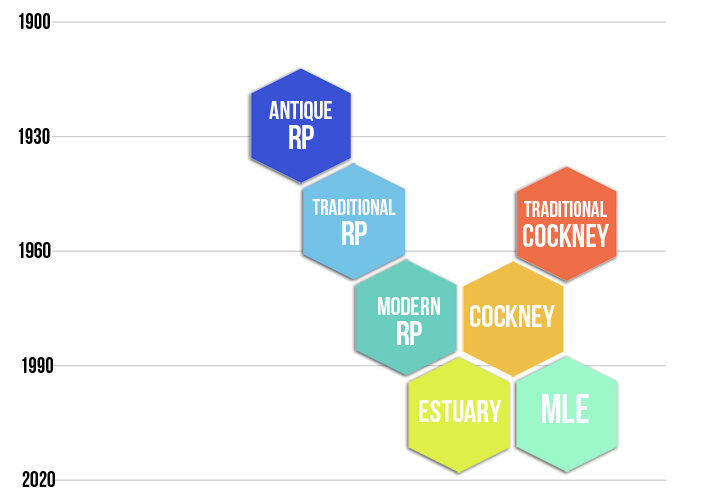
However, it’s crucial to note that even within RP, there were variations. Over time, different “flavors” of RP emerged, often subtly influenced by the speaker’s background or personal preferences. The idea of a single, monolithic RP is largely a myth; it’s more accurate to think of it as a spectrum of prestigious southern English pronunciations.
Characteristics of the RP Accent
Distinguishing RP from other accents involves understanding its specific phonetic features. While variations exist, certain core characteristics define its sound.
Key Phonetic Markers
One of the most recognizable features of RP is its non-rhoticity. This means that the “r” sound is typically not pronounced after a vowel unless it is followed by another vowel. For example, in words like “car” or “park,” the “r” is not articulated in RP, contrasting with rhotic accents like General American where the “r” is pronounced.
Another distinctive feature is the diphthong in words like “go” and “no.” In RP, this sound is often more forward in the mouth, sounding closer to “go-o-o-o” with a distinct glide. Similarly, the vowel in words like “bath” and “grass” is typically pronounced with a long “ah” sound, rather than the shorter “a” found in many other English accents.
The pronunciation of “t” is also noteworthy. In RP, intervocalic “t” (the “t” between two vowels) is often glottalized, meaning it’s replaced by a glottal stop – a brief pause created by closing the vocal cords. So, “butter” might sound more like “bu’er.” However, this characteristic is more prevalent in more modern, informal RP.
The “l” sound in RP also has a “clear l” quality, meaning the back of the tongue is not raised towards the roof of the mouth. This contributes to a lighter, more distinct “l” sound compared to the “dark l” found in some other accents.
The “Mid-Atlantic” Sound and its Nuances
Over the years, as global communication and media influence grew, RP has sometimes been described as possessing a “Mid-Atlantic” sound. This is due to a convergence of certain phonetic features with those found in some educated American accents, particularly in vowel sounds and intonation patterns. This is not to say RP is American English, but rather that some of its modern iterations share certain sonic qualities that contribute to its perceived intelligibility and broad appeal.
It’s also important to acknowledge the evolving nature of RP. While the traditional, more formal RP remains identifiable, contemporary RP spoken by younger generations often exhibits subtle shifts and adaptations. These changes reflect the increasing linguistic diversity and ongoing evolution of the English language.
The Lingering Influence of RP in the Modern Age
Despite the rise of a multitude of diverse accents and the increasing globalization of communication, the RP accent continues to hold a peculiar and often debated position in society. Its influence can be observed in various domains, from how brands are perceived to the very tools we use in our digital lives.
RP and Brand Perception: Authority, Trust, and Luxury
In the realm of Brand strategy, accent plays a subtle yet significant role in shaping perception. Historically, RP has been associated with authority, trustworthiness, and a sense of understated luxury. This is why it has been a popular choice for voiceovers in high-end advertising, corporate training videos, and documentaries where gravitas and credibility are paramount.
For many consumers, an RP voice can evoke feelings of tradition, quality, and sophistication. This association is not necessarily conscious, but it is deeply ingrained through years of cultural exposure. Brands seeking to position themselves as premium, established, or highly reputable may leverage RP in their marketing materials to imbue their message with these qualities.
However, the landscape of brand perception is also shifting. As brands increasingly aim for authenticity and relatability, a singular reliance on RP can sometimes be perceived as elitist or out of touch. Modern branding often embraces a wider range of voices, reflecting a more diverse and inclusive audience. The key for brands lies in understanding their target demographic and aligning their sonic branding accordingly. A startup targeting a younger, digitally savvy audience might opt for a different vocal profile than a heritage luxury goods company.
RP in Technology and AI: The Quest for Neutrality
The Tech industry, particularly in the development of AI voice assistants and speech recognition software, has grappled with the concept of accent for years. The initial drive was often towards a “neutral” accent that could be universally understood. For a long time, RP was considered a strong candidate for this role, due to its widespread intelligibility and its perceived lack of strong regional markers.
Early voice assistants and text-to-speech engines frequently defaulted to an RP-sounding voice. This was partly for historical reasons, and partly because training data was often more readily available for this accent. The goal was to create a voice that wouldn’t alienate users based on their own regional background.
However, this approach has also faced criticism. Forcing a single accent, even one considered “neutral,” can inadvertently marginalize speakers of other accents. Furthermore, the definition of “neutral” is inherently subjective. As AI technology has advanced, so too has the ability to develop diverse and customizable voice options. Modern AI platforms now often offer a range of accents, including various British, American, and other global English pronunciations, allowing users to choose the voice they find most comfortable and natural.
The development of AI tools also touches upon Productivity. For example, advanced dictation software, which relies on accurate speech recognition, benefits from diverse training data. If AI systems are primarily trained on RP, their accuracy might be compromised when processing speech from individuals with different accents. Therefore, the ongoing development of more inclusive AI models that understand and generate a broader spectrum of accents is crucial for ensuring that technology serves everyone effectively.
RP and Personal Finance: The Voice of Authority or Elitism?
In the domain of Money, the association of RP with authority and perceived expertise can subtly influence how financial advice is received. For instance, a financial advisor or presenter speaking with a clear RP accent might, for some listeners, lend an air of greater credibility and gravitas to their pronouncements on investing, personal finance, or business strategy.
Historically, the perception of RP as the accent of those with inherited wealth and established institutions might have implicitly linked it to financial acumen. This can create a subconscious bias where RP speakers are perceived as more knowledgeable or trustworthy when discussing financial matters.
However, this perceived authority can also be a double-edged sword. In a world where financial literacy is increasingly democratized, an overly formal or perceived elitist accent might alienate individuals seeking accessible and down-to-earth financial guidance. The emphasis in modern personal finance education is often on clarity, transparency, and relatability. Therefore, while RP might convey a certain gravitas, it’s the content and the ability of the speaker to connect with their audience that ultimately hold the most weight.
The pursuit of online income, side hustles, or even managing business finances benefits from clear communication. If the accent of the communicator is perceived as a barrier to understanding or trust, it can hinder financial progress. As with branding, the effectiveness of financial communication relies on building rapport, and an accent, while a characteristic, should not overshadow the substance of the advice.
The Enduring Relevance and Future of RP
The RP accent, once a symbol of elite status, has undergone significant transformation. Its role has shifted from a rigid marker of social hierarchy to a more nuanced element within the broader tapestry of global English.
The Democratization of Speech and the Blurring of Lines
The increasing interconnectedness of the world, coupled with advancements in media and technology, has led to a greater exposure to and appreciation for linguistic diversity. This has, in turn, influenced the perception of RP. While it retains a degree of prestige for some, it is no longer the undisputed standard for eloquence or intelligence.
Many individuals who once felt compelled to adopt RP for social or professional advancement now embrace their regional accents with pride. This shift reflects a broader societal movement towards valuing authenticity and celebrating diverse identities. The rise of social media has further amplified this, providing platforms for individuals with a wide array of accents to share their stories and build communities.
Furthermore, as mentioned in the context of tech and AI, the focus is moving towards understanding and accommodating a wider range of vocal patterns. This indicates a future where accent diversity is not just tolerated but actively integrated into technological development and communication strategies.

The Future of RP: Adaptation and Coexistence
The future of the RP accent is likely one of adaptation and coexistence rather than obsolescence. It will continue to evolve, absorbing influences from other accents and reflecting the changing social landscape. It will likely remain a recognizable feature of British English, particularly in certain formal contexts or among specific demographics.
Its influence might be less about exclusivity and more about a choice for specific stylistic effects. For instance, in the arts, acting, or specific branding initiatives, RP might be chosen for its historical associations or its distinct sonic qualities.
Ultimately, understanding the RP accent is not just about phonetics; it’s about recognizing its historical significance, its cultural impact, and its ongoing evolution within the dynamic landscape of global communication. In an era defined by technological innovation, diverse branding, and evolving financial literacy, the RP accent remains a fascinating case study in how language and social perception are intertwined. Its journey from a regional dialect to a globally recognized sound underscores the powerful and often subtle ways in which accent shapes our understanding of the world around us.
aViewFromTheCave is a participant in the Amazon Services LLC Associates Program, an affiliate advertising program designed to provide a means for sites to earn advertising fees by advertising and linking to Amazon.com. Amazon, the Amazon logo, AmazonSupply, and the AmazonSupply logo are trademarks of Amazon.com, Inc. or its affiliates. As an Amazon Associate we earn affiliate commissions from qualifying purchases.