
Budgeting for a cruise is often more complex than a standard land-based vacation. While the initial sticker price may appear all-inclusive, the financial reality of a maritime voyage involves a multi-layered structure of fixed costs, variable expenses, and hidden fees. For those approaching this through the lens of personal finance, understanding the “total cost of ownership” for a seven-day journey is essential for maintaining fiscal discipline while maximizing the return on your leisure investment.
The cost of a cruise typically ranges from $50 per person per day to well over $1,000 per person per day. This wide variance is dictated by the cruise line’s market positioning, the age of the vessel, the time of year, and the specific cabin category. To navigate these waters effectively, one must deconstruct the cruise economy into its primary financial components.
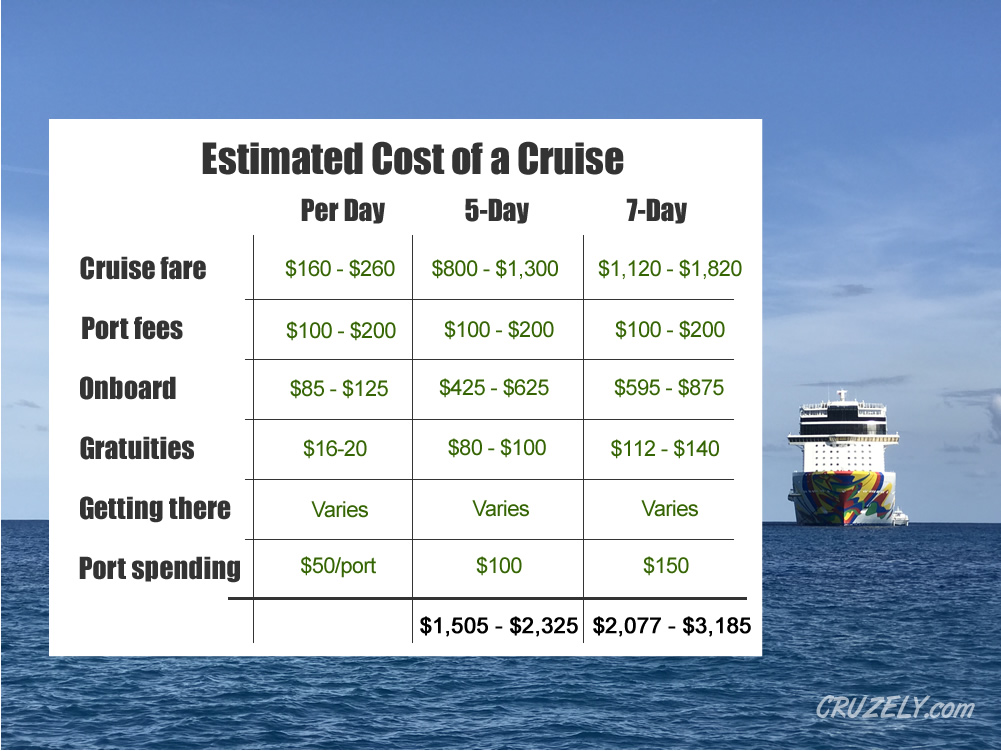
Decoding the Initial Investment: Base Fare Structures
The base fare is the entry point of your financial commitment. It is the amount you pay to secure your cabin and access the ship’s primary amenities. However, this figure rarely reflects the final balance on your credit card statement at the end of the trip.
Segmenting by Ship Category and Brand Position
Cruise lines are generally categorized into three economic tiers: Contemporary, Premium, and Luxury.
-
Contemporary Lines: These brands cater to the mass market. Fares often start low—sometimes as low as $300 for a short itinerary—to attract a high volume of passengers. The business model here relies heavily on onboard spending (casinos, drinks, and specialty dining) to drive profitability.
-
Premium Lines: These sit in the middle of the spectrum. You will pay a higher upfront cost, often starting at $150 to $250 per day, but you benefit from higher crew-to-passenger ratios and more refined inclusions.
-
Luxury Lines: These have the highest initial price point, frequently exceeding $600 per day. From a personal finance perspective, these can sometimes offer better “value” for heavy consumers of premium services, as they are often truly all-inclusive, covering alcoholic beverages, gratuities, and sometimes even shore excursions.
Cabin Tiering and Real Estate Value
The specific “real estate” you choose on the ship is the single largest variable in your base fare.
-
Interior Rooms: The most cost-effective option for budget-conscious travelers. These lack windows but offer the same access to the ship’s public facilities.
-
Oceanview and Balcony: These provide a significant jump in price (often 30–50% more than interior) but offer psychological and aesthetic value.
-
Suites: These represent the highest expenditure, often coming with “ship-within-a-ship” access to exclusive lounges and restaurants, effectively serving as a premium membership within the larger ecosystem.
The “Ghost Expenses”: Navigating Onboard Financial Outlays
The most common mistake in cruise budgeting is failing to account for the secondary costs that occur once you step onto the gangway. These “ghost expenses” can easily double the cost of a “budget” cruise if not monitored closely.
Gratuities and the Service Economy
Almost every cruise line applies a mandatory daily service charge, often referred to as “gratuities.” This is usually between $16 and $25 per person, per day, depending on the cabin category. For a family of four on a seven-night cruise, this adds nearly $500 to the final bill. While some lines allow you to prepay these, they are a fixed cost that must be integrated into your initial budget calculations rather than treated as an incidental.
Beverage Packages and Surcharge Dining
The “free” food on a cruise is generally confined to the main dining room and the buffet. However, modern cruise ships have pivoted toward a “specialty dining” model. These venues carry a cover charge ranging from $30 to $100 per person.
Similarly, beverages are a major profit center for cruise lines. Standard fares usually include basic water, coffee, and tea. Soda, specialty coffee, and alcohol are extra. Beverage packages are often sold as a “peace of mind” flat daily fee, but they require a high volume of consumption to reach a break-even point. From a financial optimization standpoint, a traveler must calculate whether they will realistically consume 6–10 drinks per day to justify the $60–$100 daily cost of a premium beverage package.
Connectivity and Digital Access
In an era of remote work and digital connectivity, the cost of high-speed satellite internet is a significant consideration. Daily rates for Wi-Fi can range from $15 to $35 per device. Multi-device packages offer a slight discount, but for a family needing constant connectivity, this can represent a $200+ line item over a week-long voyage.
Strategic Budgeting for Land and Sea Logistics
A cruise does not exist in a vacuum; getting to the port and exploring the destinations are critical financial components of the overall expenditure.
Pre-and-Post Cruise Capital Outlay
Unless you live within driving distance of a cruise terminal, transportation is a major factor. This includes airfare, which is subject to extreme seasonal volatility. Furthermore, it is a standard financial best practice to arrive at the port city at least one day prior to embarkation to mitigate the risk of flight delays. This necessitates the inclusion of a hotel night and several meals into the “cruise budget,” which can add $300 to $600 before the ship even leaves the dock.
The Economics of Shore Excursions
Shore excursions are where many travelers lose control of their spending. Cruise-sponsored tours are convenient and offer a safety net (the ship will not leave without you if the tour is late), but they carry a high premium. Independent excursions or “DIY” port exploration can reduce costs by 40–60%. However, this requires a trade-off in risk management and logistical planning. When budgeting, allocate a specific “per-port” allowance to avoid overspending on impulsive bookings once onboard.
Financial Tools and Tactics for Cost Mitigation
Maximizing the value of a cruise involves utilizing specific financial tools and timing the market, much like any other major investment.
Leveraging Credit Rewards and Onboard Credit
Many travelers use co-branded cruise credit cards to earn “points” toward future fares. However, from a broader financial perspective, high-value “flexible” travel rewards cards (those offering 2-3% back on travel) often provide a better return on investment than specific cruise line cards.
Additionally, “Onboard Credit” (OBC) is a unique form of maritime currency. This is often gifted as a booking incentive or earned through shareholder benefits (owning a specific number of shares in the cruise line’s parent company, such as Carnival Corp or Royal Caribbean Group). Managing OBC effectively—using it for fixed costs like gratuities or Wi-Fi—is a key strategy for lowering the “cash out-of-pocket” total at the end of the trip.
Timing the Market: Wave Season and Shoulder Months
The price of a cruise fluctuates based on the principles of supply and demand. “Wave Season” (January through March) is typically when the highest volume of deals and value-adds (like free Wi-Fi or beverage packages) are offered. Conversely, sailing during “shoulder seasons”—the period between peak and off-peak times, such as May or September for Caribbean routes—can result in base fare savings of 30% or more.
The Economic Logic of Travel Insurance
In any high-cost financial commitment, risk mitigation is essential. Travel insurance for a cruise is not just about medical emergencies; it is about protecting the non-refundable capital of the trip. Given that most cruise fares become 100% non-refundable within 30 to 90 days of sailing, an insurance policy representing 5–8% of the total trip cost is a prudent hedge against unforeseen financial loss due to illness, travel delays, or mechanical failures.
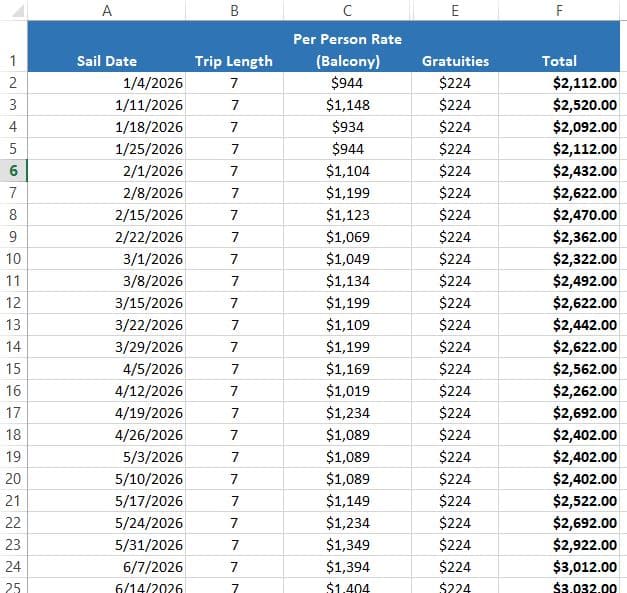
Final Tally: Estimating Your Personal Daily Average
To accurately answer “how much is a cruise,” one must move beyond the advertised price and calculate the All-In Daily Rate.
For a standard contemporary cruise, a realistic financial breakdown for a middle-tier experience (Balcony Cabin) might look like this:
-
Base Fare: $150 per person/day
-
Gratuities: $18 per person/day
-
Average Beverage/Dining Spend: $40 per person/day
-
Port Fees/Taxes: $20 per person/day
-
Excursions/Misc: $30 per person/day
This brings the total to approximately $258 per person, per day, or $3,612 for a couple on a seven-night voyage. This figure does not include airfare or pre-cruise hotels.
By identifying these variables early in the planning process, you can move from a reactive spending mindset to a proactive financial strategy. Whether you choose to minimize “add-ons” to keep costs low or opt for a luxury inclusive experience to lock in a predictable price, understanding the underlying economics of the cruise industry is the only way to ensure your vacation provides a positive return on your financial and personal well-being.
aViewFromTheCave is a participant in the Amazon Services LLC Associates Program, an affiliate advertising program designed to provide a means for sites to earn advertising fees by advertising and linking to Amazon.com. Amazon, the Amazon logo, AmazonSupply, and the AmazonSupply logo are trademarks of Amazon.com, Inc. or its affiliates. As an Amazon Associate we earn affiliate commissions from qualifying purchases.