
Microsoft Corporation (NASDAQ: MSFT) stands as a cornerstone of the global economy, representing a massive portion of the S&P 500 and serving as a bellwether for the broader technology and enterprise software sectors. For investors, analysts, and financial enthusiasts, the release of Microsoft’s quarterly earnings report is more than just a routine update; it is a market-moving event that dictates sentiment for the entire fiscal quarter. Understanding when Microsoft reports and, more importantly, how to interpret those reports is essential for anyone looking to navigate the modern financial landscape.

Understanding Microsoft’s Fiscal Calendar
To pinpoint when Microsoft will report its earnings, one must first understand that the company operates on a fiscal year that does not align with the standard Gregorian calendar. Microsoft’s fiscal year begins on July 1st and ends on June 30th of the following year. This distinction is crucial because what most investors consider the “fourth quarter” of the calendar year is actually Microsoft’s “second quarter” (Q2) of their fiscal year.
The Quarterly Reporting Cycle
Microsoft typically releases its quarterly financial results approximately three to four weeks after the close of each fiscal quarter. While the exact date is usually announced by the company’s investor relations department about two weeks prior to the event, the historical pattern remains remarkably consistent:
-
Fiscal Q1 (July – September): Results are generally released in late October.
-
Fiscal Q2 (October – December): Results are generally released in late January.
-
Fiscal Q3 (January – March): Results are generally released in late April.
-
Fiscal Q4 (April – June): Results are generally released in late July.
These announcements almost always take place on a Tuesday or Wednesday after the market closes (4:00 PM ET). Following the written press release, Microsoft’s executive leadership, including CEO Satya Nadella and CFO Amy Hood, host a live conference call to provide color on the numbers and offer forward-looking guidance.
Why the Date Matters for Market Volatility
The timing of MSFT’s earnings report often sets the tone for the “Big Tech” earnings season. Because Microsoft is often one of the first trillion-dollar companies to report, its results act as a proxy for enterprise spending, cloud adoption, and consumer health. If Microsoft reports a day or two earlier or later than expected, it can lead to speculative trading. Investors watch the calendar closely not just to see the numbers, but to prepare for the implied volatility that follows the announcement.
Key Financial Metrics to Watch in MSFT Earnings
Once the date is set and the report is released, the “headline” numbers—Revenue and Earnings Per Share (EPS)—only tell part of the story. To truly understand Microsoft’s financial health, investors dive deep into three specific reporting segments that the company uses to categorize its diverse business interests.
Productivity and Business Processes
This segment includes the heavy hitters of the software world: Office 365, LinkedIn, and Dynamics. In the current economic climate, investors look at this segment to gauge the resilience of the corporate world. Are businesses continuing to pay for premium subscriptions? Is LinkedIn’s advertising revenue holding up? Growth in “Office Commercial” products is a key indicator of Microsoft’s pricing power and its ability to transition legacy users to higher-tier, AI-integrated “Copilot” subscriptions.
Intelligent Cloud and Azure Growth
For the modern investor, the “Intelligent Cloud” segment is arguably the most important. This includes server products and cloud services, headlined by Azure. When the earnings report drops, the first number most analysts look for is the “Azure growth rate.” Because the cloud is a high-margin business, even a 1% deceleration in growth can lead to billions of dollars in market cap fluctuation. Investors analyze whether Azure is gaining market share against competitors like Amazon Web Services (AWS) and Google Cloud, looking for signs of sustained enterprise migration to the cloud.
More Personal Computing
This segment is a catch-all for Microsoft’s more consumer-facing businesses, including Windows OEM licenses, Xbox gaming, and Surface devices. While historically more volatile than the cloud business, this segment has gained renewed interest following the acquisition of Activision Blizzard. Investors now look at “Xbox Content and Services” revenue as a major growth driver, signaling whether Microsoft can successfully pivot toward a subscription-based gaming model (Game Pass) similar to its success with Office 365.
Market Expectations and Wall Street Projections
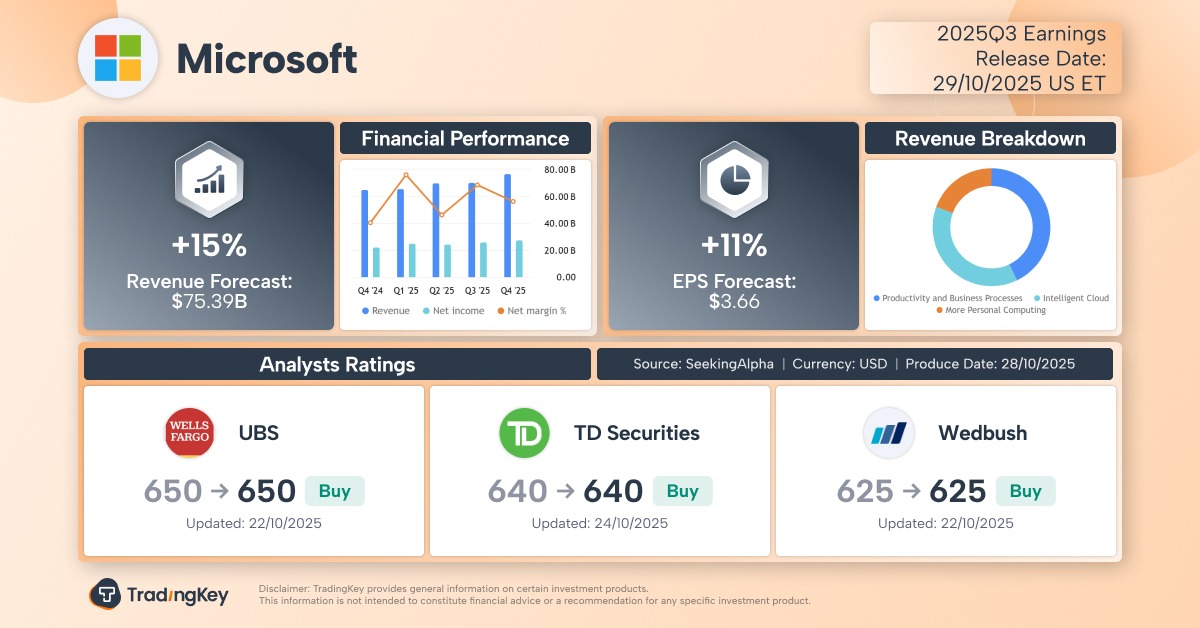
The reaction of Microsoft’s stock price to an earnings report is rarely about the absolute numbers and almost always about the numbers relative to “consensus estimates.” Wall Street analysts spend months modeling Microsoft’s revenue streams to predict what the company will earn.
Beating the “Whisper Number”
In the days leading up to the report, the “consensus estimate” becomes the benchmark. If Microsoft reports EPS of $2.60 against an estimate of $2.55, it is considered a “beat.” However, there is often a “whisper number”—an unofficial expectation held by traders that might be even higher than the analysts’ published targets. If Microsoft beats the official estimate but misses the whisper number, the stock may still trade lower. This is why understanding the sentiment in the weeks leading up to the announcement is just as important as the announcement itself.
The Power of Forward Guidance
Perhaps more influential than the previous quarter’s performance is the “guidance” provided for the next quarter and the full fiscal year. During the conference call, CFO Amy Hood provides specific ranges for expected revenue across all three business segments. If Microsoft reports record-breaking profits but lowers its future guidance due to macroeconomic headwinds or increased capital expenditure, the market often reacts negatively. Investors are buying future cash flows, not past successes, making the guidance section of the earnings call the most critical minutes of the entire quarter.
The Role of AI in Microsoft’s Financial Narrative
In recent years, the conversation around Microsoft’s earnings has been dominated by one theme: Artificial Intelligence. As the primary partner of OpenAI and the creator of the Microsoft 365 Copilot, the company is at the forefront of the generative AI revolution.
Monetizing the AI Stack
Investors are no longer satisfied with Microsoft simply being an “AI leader”; they want to see the “AI contribution” in the financial statements. This is usually reflected in the Azure growth percentages. Microsoft has started disclosing how many percentage points of Azure’s growth are directly attributable to AI services. A rising contribution suggests that the company’s massive investments in GPUs and data centers are successfully converting into recurring revenue.
Capital Expenditure (CapEx) Trends
Building the infrastructure for AI is incredibly expensive. In recent earnings reports, Microsoft’s Capital Expenditure has surged as the company builds out the data centers required to run large language models. The financial community watches these “CapEx” numbers closely. While high spending can squeeze short-term margins, it is also a signal of high demand. If Microsoft is spending billions on hardware, it implies they see a clear path to generating even more billions in revenue from those assets in the coming years.
How Investors Should Prepare for Earnings Day
Navigating a Microsoft earnings announcement requires a blend of discipline and strategy. Because MSFT is a “core” holding for many institutional and retail portfolios, the stakes are high.
Managing Short-Term Volatility
It is common for Microsoft’s stock to swing 3% to 5% in the after-hours trading session immediately following the earnings release. For long-term investors, this volatility is often “noise.” However, for those using options or looking to adjust their positions, it is vital to have a plan in place before the 4:00 PM ET deadline. Many investors use “trailing stop-losses” or “hedged positions” to protect their gains in case of a surprise downward revision in guidance.
The “Wait and See” Approach
A common strategy among seasoned investors is to wait for the conference call to conclude before making any moves. The initial “headline” reaction in the first ten minutes after the press release is often reversed once the CFO provides context during the call. By waiting until the following morning, investors can digest the full 10-Q filing, read the analyst notes, and see how the market “settles” into the new valuation.
Microsoft’s earnings reports are a masterclass in corporate finance. They demonstrate how a legacy tech giant can successfully pivot into new industries—from desktop software to the cloud, and now to AI—while maintaining some of the highest margins in the business world. By keeping a close eye on the fiscal calendar, focusing on Azure’s growth, and listening carefully to the forward guidance, investors can gain a clearer picture of where the tech industry—and the global economy—is headed next.
aViewFromTheCave is a participant in the Amazon Services LLC Associates Program, an affiliate advertising program designed to provide a means for sites to earn advertising fees by advertising and linking to Amazon.com. Amazon, the Amazon logo, AmazonSupply, and the AmazonSupply logo are trademarks of Amazon.com, Inc. or its affiliates. As an Amazon Associate we earn affiliate commissions from qualifying purchases.