
For decades, Microsoft Corporation (MSFT) has stood as a cornerstone of the global financial markets. From its early days dominating the personal computing landscape to its current evolution into a cloud computing and artificial intelligence powerhouse, the company has consistently delivered value to its shareholders. For individual investors looking to build long-term wealth, understanding how to navigate the process of buying Microsoft stock is an essential skill.
Investing in a company of this magnitude requires more than just a passing interest in technology; it requires a strategic approach to personal finance, an understanding of market mechanics, and a clear vision of how a blue-chip asset fits into your broader investment portfolio. This guide provides a detailed roadmap for acquiring Microsoft shares, analyzing its financial health, and managing your investment over time.

Evaluating Microsoft as a Financial Asset
Before executing a trade, a disciplined investor must evaluate whether the asset aligns with their financial goals. Microsoft is often categorized as a “blue-chip” stock—a high-quality, reliable investment in a company that is a leader in its industry and boasts a strong track record of earnings growth and dividend payments.
Revenue Diversification and Financial Health
One of the primary reasons investors flock to Microsoft is its exceptionally diversified revenue stream. Unlike companies that rely on a single product or service, Microsoft operates across several high-margin segments. These include Productivity and Business Processes (Office 365, LinkedIn), Intelligent Cloud (Azure), and More Personal Computing (Windows, Xbox, Surface).
From a balance sheet perspective, Microsoft is one of the few companies in the world to maintain a AAA credit rating from Standard & Poor’s—higher than even the United States federal government at various points in history. This financial stability means the company has the liquidity to weather economic downturns, fund massive research and development projects, and continue rewarding shareholders through dividends and share buybacks.
The Role of Dividends and Buybacks
For those focused on income and total return, Microsoft offers a compelling narrative. While many technology companies eschew dividends in favor of reinvesting all capital into growth, Microsoft has paid a consistent and growing dividend since 2003. When you buy Microsoft stock, you are not just betting on the share price going up; you are also securing a portion of the company’s profits delivered to your brokerage account quarterly. Furthermore, the company’s aggressive share repurchase programs reduce the total number of shares outstanding, which can increase the value of each remaining share over time.
Step-by-Step Guide to Purchasing Microsoft Shares
Once you have decided that Microsoft belongs in your portfolio, the practical process of buying the stock involves several key financial decisions.
1. Select the Right Brokerage Platform
To buy Microsoft stock, you need a brokerage account. In the modern financial landscape, investors have a plethora of options, each catering to different needs:
-
Full-Service Brokers: These are ideal for investors who want personalized financial advice and managed portfolios, though they often come with higher fees.
-
Discount and Online Brokers: Platforms like Charles Schwab, Fidelity, and Vanguard offer robust research tools, low or zero-commission trades, and user-friendly interfaces.
-
Mobile-First Apps: Platforms like Robinhood or Webull are popular for their ease of use and accessibility, particularly for those who prefer trading on a smartphone.
When choosing a broker, consider factors such as account minimums, the availability of fractional shares, and the quality of their customer service.
2. Determine Your Investment Budget
How much should you invest in Microsoft? This depends on your overall financial health. It is a fundamental rule of investing never to commit money that you may need for immediate expenses or your emergency fund.
If a single share of Microsoft is priced higher than what you can afford at the moment, many modern brokerages allow for fractional share investing. This means you can invest a specific dollar amount—say, $50—and receive a corresponding fraction of a share. This lowers the barrier to entry and allows you to begin building your position immediately.

3. Choose the Account Type
Where you hold your Microsoft shares can have significant tax implications.
-
Taxable Brokerage Account: Offers the most flexibility, allowing you to withdraw funds at any time. However, you will owe capital gains taxes on any profits and taxes on any dividends received.
-
Individual Retirement Account (IRA): Whether it’s a Traditional or Roth IRA, these accounts offer tax advantages for long-term retirement savings. Investing in MSFT within a Roth IRA, for example, could allow your investment to grow and be withdrawn tax-free in retirement.
4. Execute the Trade
When you are ready to buy, you will encounter two primary order types:
-
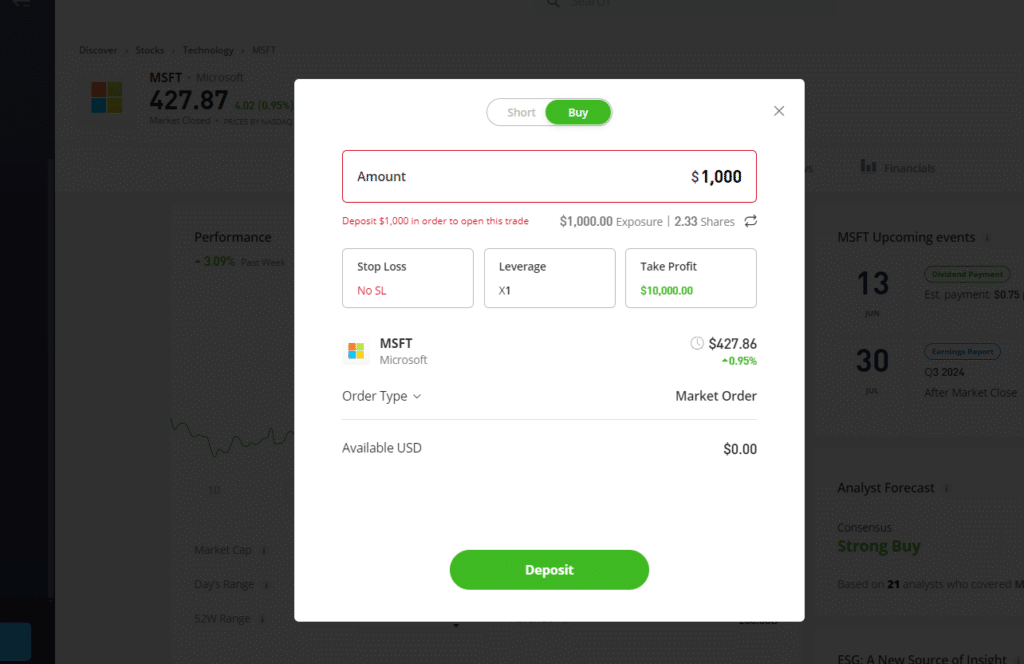
Market Order: This instructs the broker to buy the stock immediately at the best available current price. This is the simplest way to buy but can result in a slightly higher price during periods of high volatility.
-
Limit Order: This allows you to set a maximum price you are willing to pay. If the stock price hits your limit, the trade is executed. This provides price protection but carries the risk that your order may not be filled if the price stays above your limit.
Strategic Considerations for Portfolio Management
Buying the stock is only the beginning. Successful investing requires a long-term management strategy to ensure that your Microsoft holding continues to serve your financial objectives.
Dollar-Cost Averaging (DCA)
Market timing is notoriously difficult, even for professional fund managers. Rather than trying to “buy the dip” or time the market perfectly, many successful investors utilize dollar-cost averaging. This involves investing a fixed amount of money in Microsoft at regular intervals (e.g., $200 every month) regardless of the share price. Over time, this strategy reduces the impact of volatility and lowers the average cost per share.
Dividend Reinvestment Plans (DRIPs)
To maximize the power of compounding, you should consider enrolling your Microsoft shares in a Dividend Reinvestment Plan (DRIP). Instead of receiving your quarterly dividend as cash, the brokerage automatically uses that cash to purchase more shares (or fractions of shares) of Microsoft. Over several years, this can significantly accelerate the growth of your position without requiring additional out-of-pocket capital.
Monitoring Valuation and Metrics
While Microsoft is a high-quality company, the price you pay matters. Investors should keep an eye on key financial metrics to ensure they aren’t overpaying during a period of market euphoria:
-
Price-to-Earnings (P/E) Ratio: Compares the stock price to the company’s earnings per share. Comparing Microsoft’s current P/E to its historical average and its peers (like Apple or Alphabet) can provide insight into its current valuation.
-
Free Cash Flow: This represents the cash a company generates after accounting for cash outlays to support operations and maintain its capital assets. Microsoft’s robust free cash flow is what fuels its ability to innovate and pay dividends.
Risk Management and the Competitive Landscape
No investment is without risk. Even a titan like Microsoft faces challenges that can impact its stock price. A sophisticated investor must remain aware of these factors to maintain a balanced perspective.
Regulatory and Antitrust Scrutiny
Due to its massive size and influence, Microsoft is a frequent target for regulators in the United States and the European Union. Antitrust investigations into cloud dominance, software bundling, or major acquisitions (such as the Activision Blizzard deal) can lead to hefty fines, forced divestitures, or changes in business practices that could impact profitability.
Technological Disruption
The tech industry moves at a blistering pace. While Microsoft is currently a leader in AI through its partnership with OpenAI, it faces fierce competition from Google, Amazon, and Meta. If Microsoft fails to stay at the forefront of the next technological shift—be it in quantum computing, advanced AI, or something yet undiscovered—its market position could erode.
Market Volatility and Interest Rates
As a growth-oriented tech stock, Microsoft’s valuation can be sensitive to interest rate changes. When the Federal Reserve raises rates, the “discount rate” applied to future earnings increases, which can put downward pressure on stock prices. Investors should be prepared for periodic corrections and avoid emotional selling during market downturns.
The Long-Term Outlook
Investing in Microsoft stock is often viewed as a “marathon, not a sprint.” The company has demonstrated a remarkable ability to reinvent itself—transitioning from a hardware-dependent software company to a service-based cloud leader. For the individual investor, MSFT represents a blend of growth potential and defensive stability.
By choosing a reliable brokerage, setting a disciplined budget, utilizing strategies like dollar-cost averaging, and keeping a close watch on financial fundamentals, you can integrate Microsoft into a diversified portfolio designed for long-term capital appreciation. Wealth creation is built on the foundation of owning high-quality assets over long periods, and Microsoft continues to be a primary candidate for those looking to participate in the growth of the global digital economy.
aViewFromTheCave is a participant in the Amazon Services LLC Associates Program, an affiliate advertising program designed to provide a means for sites to earn advertising fees by advertising and linking to Amazon.com. Amazon, the Amazon logo, AmazonSupply, and the AmazonSupply logo are trademarks of Amazon.com, Inc. or its affiliates. As an Amazon Associate we earn affiliate commissions from qualifying purchases.