
Navigating the landscape of higher education finance requires precision, patience, and a proactive approach to administrative milestones. The Free Application for Federal Student Aid (FAFSA) is the cornerstone of this process, serving as the primary gateway to federal grants, work-study programs, and low-interest loans. However, the work does not end once you click the “Submit” button. Monitoring your application’s progress is a critical component of personal financial planning, as it ensures you remain eligible for the maximum amount of aid and allows you to address potential discrepancies before they impact your tuition timeline.

Understanding how to check your FAFSA status—and, more importantly, understanding what that status means for your financial outlook—is essential for any student or parent managing the costs of a degree.
Navigating the Federal Student Aid Dashboard
The digital infrastructure for federal aid has undergone significant modernization, centralizing the monitoring process within a single user-friendly interface. To begin tracking your application, you must return to the official Federal Student Aid (FSA) website.
Accessing the “My Activity” Section
The primary method for checking your status is through the StudentAid.gov dashboard. After logging in with your unique FSA ID—the digital signature used by students and contributors—you will navigate to the “My Activity” section. This area serves as a real-time ledger of all your interactions with the Department of Education.
Once you are in this section, you will see your submitted applications categorized by the academic year. If your application was successfully transmitted, it will appear here with a specific status label. It is important to check this weekly during the peak processing season (typically January through April) to ensure that no new requirements have surfaced that could stall your funding.
The Role of Contributors in Status Monitoring
With recent updates to the FAFSA process, the concept of “Contributors” (parents or spouses who provide financial information) has become central to the application status. If you are a dependent student, your status may remain “Incomplete” until your contributors have signed their respective sections. Checking your status involves not just looking at your own progress, but verifying that all invited parties have completed their digital mandates. If a contributor has not yet taken action, the dashboard will clearly indicate whose information is missing, allowing you to follow up and secure your financial timeline.
Decoding Your FAFSA Status: What Each Label Means
The status of your FAFSA is not merely a binary “received” or “not received.” The Department of Education uses specific terminology to indicate where your application sits in the pipeline. Understanding these nuances is vital for accurate financial forecasting.
Draft and In Progress
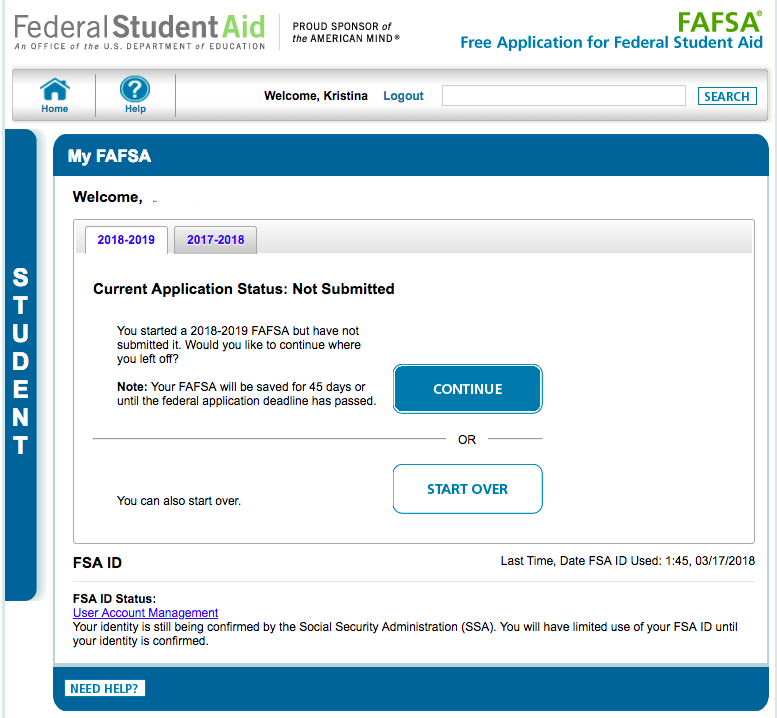
If your status is listed as “Draft,” it means the application has been started but not yet submitted. This is a common pitfall for students who save their work but forget to execute the final signature. An “In Progress” status typically suggests that the student has completed their portion, but the application is awaiting a signature or financial data from a contributor. From a personal finance perspective, an application in these stages provides zero benefit; it must be fully submitted to be considered for aid.
Submitted and In Review
Once you hit submit, your status changes to “Submitted.” Shortly thereafter, it moves to “In Review.” During this phase, the Department of Education is verifying the data provided against federal databases, including the IRS Data Exchange. This period is the “waiting room” of financial aid. While you cannot make changes during this time, you should keep an eye on your email for any notifications regarding “Action Required.”
Processed and Action Required
A “Processed” status is the goal. This indicates that your data has been calculated and your FAFSA Submission Summary (FSS) is ready. However, if your status says “Action Required,” it means a critical error was detected—such as a missing signature, a mismatch in Social Security numbers, or a requirement for further documentation. Ignoring an “Action Required” status is a significant financial risk, as it effectively halts the flow of aid to your chosen institution.

The Financial Impact of Your FAFSA Submission Summary
Once your status reaches the “Processed” stage, the focus shifts from administrative tracking to financial analysis. The result of a processed FAFSA is the FAFSA Submission Summary, a document that outlines your eligibility for federal aid.
Understanding the Student Aid Index (SAI)
The most critical figure on your summary is the Student Aid Index (SAI). Replacing the older Expected Family Contribution (EFC) model, the SAI is a formula-based index number that colleges use to determine how much financial need you have. A lower SAI indicates a higher level of financial need, which typically translates to a more robust financial aid package, including Pell Grants.
By checking your status and reviewing your SAI early, you can begin the process of “gap analysis.” This involves comparing your SAI against the total cost of attendance (COA) at your prospective schools. If the gap between your aid and the COA is wide, you have more time to explore alternative funding sources, such as private scholarships or institutional grants.
Pell Grant Eligibility and Federal Loans
The processed status will also confirm whether you are eligible for the Federal Pell Grant, which is essentially “free money” that does not need to be repaid. Additionally, it will list your eligibility for Direct Subsidized and Unsubsidized Loans. Checking your status allows you to see these figures months before you receive an official award letter from a university, providing a head start on your household budgeting.
Managing Corrections and the Verification Process
In some instances, checking your status will reveal that your application has been selected for a process called “Verification.” While this can feel like a financial audit, it is a routine procedure where the college financial aid office confirms that the data on your FAFSA matches your actual financial records.
How to Handle Status Corrections
If you realize you made a mistake on your initial filing—perhaps by misreporting the value of your assets or missing a source of income—you must wait until your status is “Processed” before you can submit a correction. Checking your status regularly ensures you can jump on these corrections as soon as the system allows. From a strategic standpoint, the faster you correct an error, the faster the university can finalize your aid package, ensuring you don’t miss out on “first-come, first-served” funds.
Communication with the Financial Aid Office
Your FAFSA status at the federal level is only half of the story. Once the federal government processes your application, they send the “Institutional Student Information Record” (ISIR) to the schools you listed. You should also check your status on the internal student portal of your specific college. Often, a FAFSA might be “Processed” federally but “Pending” at the school because they require additional institutional forms. Aligning these two statuses is key to securing your funding.
Beyond the Application: Integrating FAFSA into Your Long-Term Financial Strategy
Checking your FAFSA status is not a one-time chore; it is an annual component of a sophisticated financial plan. High-net-worth individuals and middle-class families alike must view the FAFSA as a tool for liquidity management.
Timing and State Deadlines
Financial aid is often a game of timing. Many states have their own deadlines for state-specific grants that are much earlier than the federal deadline. By monitoring your status, you ensure that you have met the criteria for these state funds, which can sometimes provide thousands of dollars in additional support. If your federal status is stalled, it could jeopardize your state aid eligibility.
Preparing for the Next Academic Year
The habit of checking your status builds the discipline necessary for the renewal process. FAFSA is not a “set it and forget it” application; it must be filed every year you are in school. By understanding the lifecycle of your application status this year, you become better equipped to navigate the nuances of the following year, especially if your financial situation changes due to career shifts, changes in asset holdings, or siblings entering the college system.
In conclusion, checking your FAFSA status is the bridge between submitting an application and receiving a tangible financial reward. It requires a diligent check of the StudentAid.gov dashboard, an understanding of status terminology, and a proactive response to any required actions. By treating the FAFSA status as a vital sign of your educational investment, you can navigate the complexities of college costs with confidence and professional foresight.
aViewFromTheCave is a participant in the Amazon Services LLC Associates Program, an affiliate advertising program designed to provide a means for sites to earn advertising fees by advertising and linking to Amazon.com. Amazon, the Amazon logo, AmazonSupply, and the AmazonSupply logo are trademarks of Amazon.com, Inc. or its affiliates. As an Amazon Associate we earn affiliate commissions from qualifying purchases.