
In an era where physical currency is increasingly replaced by digital ledgers, the reliability of a financial institution’s digital infrastructure is as critical as the security of its physical vaults. Navy Federal Credit Union (NFCU), the world’s largest natural member credit union, serves as the primary financial hub for millions of military members, veterans, and their families. When a user asks, “Why is Navy Federal down?” they are rarely asking out of idle curiosity. They are usually facing a critical roadblock in their personal financial management—be it an inability to pay a mortgage, transfer emergency funds, or verify a paycheck deposit.
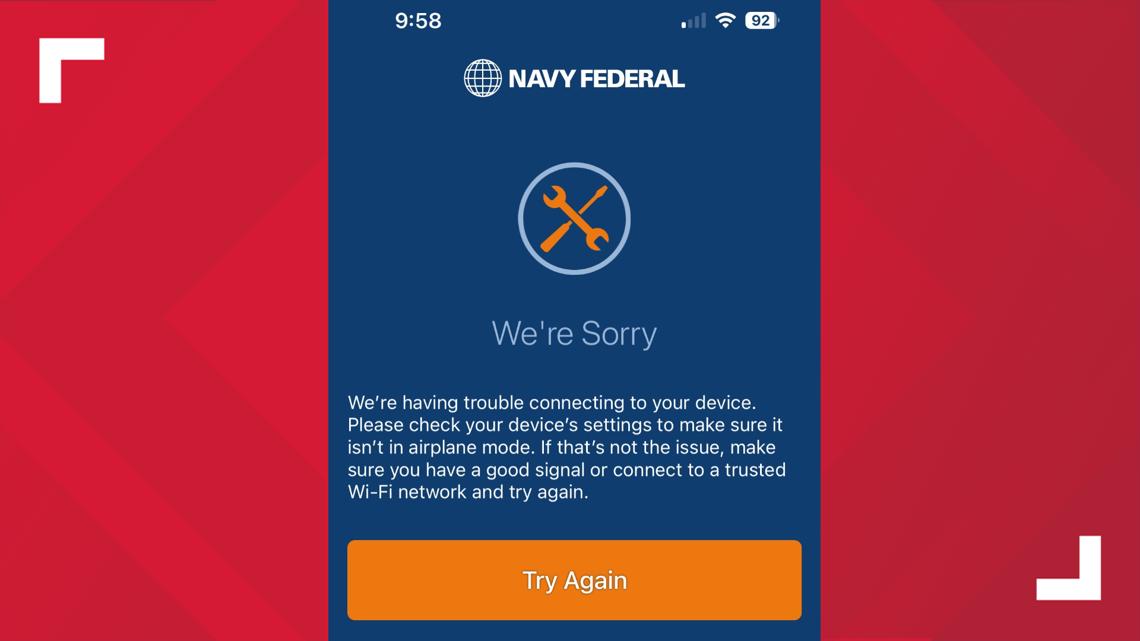
Understanding the mechanics of financial outages requires looking beyond the “Site Under Maintenance” banner. It involves an analysis of how modern money moves, the vulnerabilities of interconnected banking systems, and the strategic steps members must take to maintain financial liquidity when their primary institution experiences a service interruption.
The Financial Impact of Digital Downtime
The transition from traditional banking to digital-first finance has fundamentally altered the consumer’s relationship with money. For Navy Federal members, the mobile app and online portal are not just conveniences; they are the control centers for their financial lives. When these systems go dark, the impact ripples through several key areas of personal finance.
Disruption of Real-Time Liquidity
In the modern economy, “just-in-time” finance has become the norm. Many households operate on a schedule where funds are moved the moment they arrive to cover immediate liabilities. Navy Federal is particularly known for its early posting of military pay. When the platform is inaccessible on a scheduled payday, it creates a liquidity vacuum. Members may find themselves unable to move funds from savings to checking to cover automated clearing house (ACH) withdrawals, leading to potential overdrafts or failed payment fees.
The Psychology of Financial Inaccessibility
Money is inherently tied to a sense of security. When a user cannot log into their account, the immediate concern is often security—”Has my account been compromised?” or “Is the institution stable?” This psychological stress is a significant “cost” of downtime. For the institution, every minute of an outage erodes a portion of the brand equity and trust built over decades. In the world of personal finance, trust is the most valuable currency, and technical reliability is its primary guardian.
Impact on Credit and Obligations
A prolonged outage can interfere with time-sensitive financial obligations. If a member is attempting to pay a credit card bill or a loan installment on the due date and the system is down, the risk of a late payment becomes real. While most reputable institutions like Navy Federal offer leniency during documented system outages, the administrative burden of correcting these issues falls on the consumer, representing a loss of time and productivity.
Common Catalysts for Financial System Outages
To understand why a financial titan like Navy Federal might experience downtime, one must look at the complex architecture that supports millions of concurrent transactions. These outages generally fall into three distinct categories: scheduled upgrades, traffic surges, and security interventions.
Scheduled Maintenance and Legacy Integration
The “Money” sector often grapples with the challenge of integrating cutting-edge user interfaces with legacy core banking systems. Navy Federal periodically performs maintenance to patch security vulnerabilities, update interest rate calculations, or integrate new financial tools like Zelle or advanced budgeting features. While these are usually scheduled for low-traffic hours (such as Sunday mornings), the complexity of syncing global databases can occasionally lead to overruns, pushing the outage into high-traffic business hours.
The “Payday Surge” Phenomenon
Financial institutions operate on server capacities designed to handle average loads with a significant buffer. However, Navy Federal faces a unique challenge: the concentrated influx of traffic during military pay cycles (the 1st and 15th of the month). When millions of members attempt to verify their deposits simultaneously, the sheer volume of “handshakes” between the mobile app and the central server can lead to a bottleneck. This is not necessarily a “crash” in the traditional sense but a protective throttling of traffic to prevent a total system collapse.
Proactive Cybersecurity Protocols
In the current landscape of digital finance, cyber threats are a constant reality. If Navy Federal’s security operations center detects an anomaly—such as a Distributed Denial of Service (DDoS) attack or an unusual pattern of login attempts—they may proactively take certain systems offline. In this scenario, the downtime is a defensive measure designed to protect member assets and data integrity. From a personal finance perspective, a temporary inability to access an account is a preferred alternative to a compromise of one’s entire financial identity.
Strategic Financial Planning for Service Interruptions
While financial institutions strive for “five-nines” reliability (99.999% uptime), the pragmatic investor and household manager should always have a contingency plan. Relying on a single point of failure for all financial transactions is a risk that can be mitigated through strategic diversification of financial tools.
The “Three-Card” Diversification Strategy
A robust personal finance strategy includes maintaining accounts at more than one institution. For Navy Federal members, this might mean keeping a secondary checking account at a different credit union or a national bank. By spreading liquid assets across two different platforms, a member ensures that even if one institution’s digital gateway is down, they still have access to a debit card or transfer system to cover immediate expenses.
Maintaining an Offline “Emergency Buffer”
In a digital world, cash remains the ultimate failsafe. Financial advisors often recommend keeping a small amount of physical currency in a secure location. This buffer is not for long-term savings but for the 4-to-12-hour window where digital systems may be unresponsive. Having enough cash to cover a tank of gas or a grocery bill ensures that a technical glitch at a credit union does not become a personal crisis.
Utilizing Alternative Access Points
When the Navy Federal mobile app is down, it does not always mean the entire institution is paralyzed. Often, the “front-end” (the app) is the only part affected. Members can often still access their money through:
-
ATM Networks: The internal processing for ATM withdrawals often runs on a different protocol than the web-based app.
-
Telephone Banking: Automated voice response systems can often facilitate transfers and balance inquiries when the visual interface is offline.
-
Shared Branching: As part of a credit union network, Navy Federal members can sometimes perform basic transactions at other participating credit unions, depending on the nature of the outage.
The Future of Resilient Digital Banking
The “Money” niche is currently seeing a massive investment in cloud-native banking infrastructure. Institutions like Navy Federal are moving away from centralized servers toward decentralized cloud environments. This shift is designed to eliminate the very concept of “down” by ensuring that if one server node fails, another immediately picks up the load.
AI and Predictive Monitoring
Artificial Intelligence is now being used to predict outages before they happen. By analyzing patterns in network traffic and system latency, financial institutions can identify hardware that is about even to fail or software scripts that are consuming excessive resources. This allows for “invisible maintenance,” where issues are resolved without the end-user ever losing access to their funds.
Enhanced Transparency and Communication
A key evolution in financial management is the move toward radical transparency. Modern members expect real-time updates via social media or dedicated status pages. Navy Federal has historically utilized platforms like X (formerly Twitter) to provide updates. This communication is a vital financial tool in itself, as it allows members to adjust their spending and payment schedules based on the estimated time of recovery.

Building a Fault-Tolerant Personal Financial System
Ultimately, the question of “Why is Navy Federal down?” serves as a reminder of the fragility of the digital financial ecosystem. For the individual, the lesson is one of redundancy and preparedness. Personal finance is not just about growing wealth; it is about ensuring access to that wealth at the moment of need.
By diversifying accounts, maintaining a clear understanding of alternative banking channels, and staying informed through official institutional updates, members can navigate these inevitable digital hiccups with minimal disruption. In the broader context of the “Money” category, technical uptime is the foundation upon which all other financial goals—investing, saving, and wealth building—are constructed. When that foundation experiences a temporary crack, the prepared member is the one who has already built a bridge to their secondary resources.
aViewFromTheCave is a participant in the Amazon Services LLC Associates Program, an affiliate advertising program designed to provide a means for sites to earn advertising fees by advertising and linking to Amazon.com. Amazon, the Amazon logo, AmazonSupply, and the AmazonSupply logo are trademarks of Amazon.com, Inc. or its affiliates. As an Amazon Associate we earn affiliate commissions from qualifying purchases.