
The global financial landscape is currently navigating a period of profound transformation, characterized by shifting monetary policies, the rapid integration of artificial intelligence into the corporate sector, and a resilient consumer base that has defied the gravity of high interest rates. To answer “what is the current stock market at” requires looking beyond the daily price fluctuations of the Dow Jones Industrial Average or the S&P 500. It necessitates an exploration of the underlying economic currents, the valuation levels of major asset classes, and the psychological sentiment driving both institutional and retail investors.
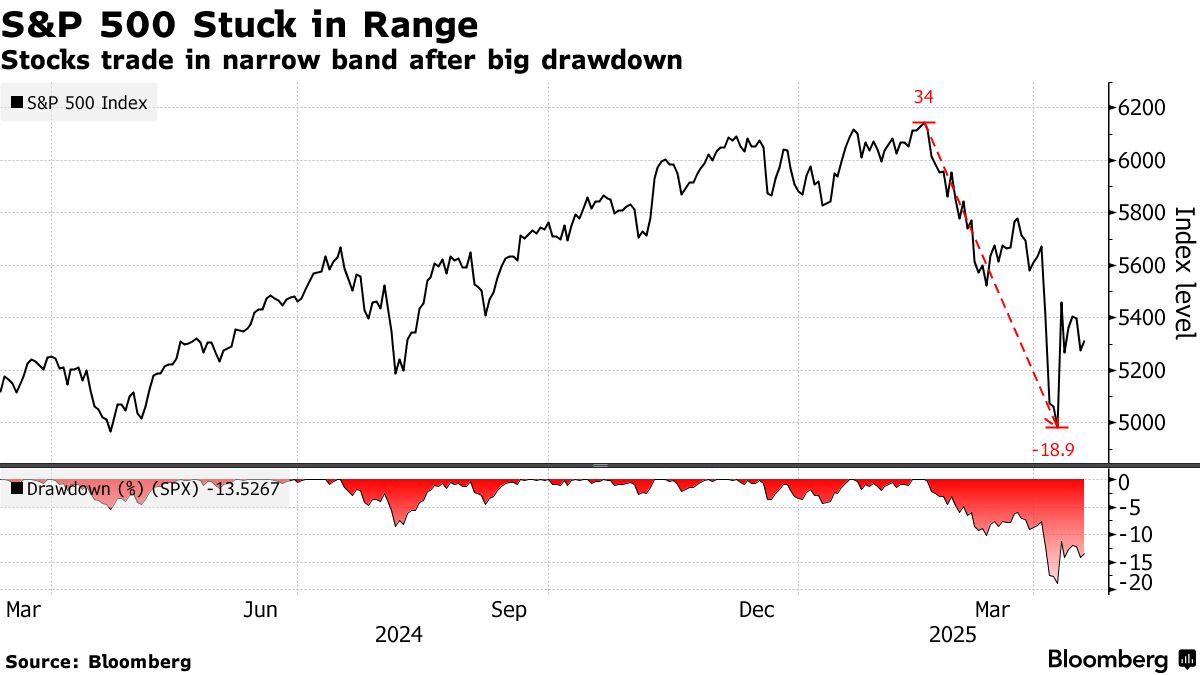
Currently, the stock market exists in a state of “cautious optimism.” While major indices have recently touched or hovered near all-time highs, there is a palpable tension between growth-hungry investors and data-dependent central banks. Understanding the current market position involves dissecting the interplay between inflation data, labor market health, and the corporate earnings power that supports equity valuations.
The Macroeconomic Drivers Shaping Today’s Market
The primary driver of the current stock market trajectory is the Federal Reserve’s monetary policy. After one of the most aggressive interest rate-hiking cycles in history to combat post-pandemic inflation, the market is now fixated on the “pivot”—the transition from holding rates steady to gradually lowering them.
Inflation and the “Last Mile” Challenge
The market’s current level is heavily influenced by the Consumer Price Index (CPI) and Personal Consumption Expenditures (PCE) data. Investors are currently weighing whether inflation will sustainably hit the 2% target or if it will remain “sticky” at higher levels. This uncertainty creates volatility; when inflation data comes in cooler than expected, equities tend to rally as the prospect of cheaper borrowing costs becomes more likely. Conversely, hot inflation prints lead to immediate sell-offs, as they suggest the Federal Reserve may need to keep rates “higher for longer.”
The Resilience of the Labor Market
A surprising pillar of support for the current market has been the strength of the labor market. Despite high interest rates, which typically lead to layoffs and economic cooling, unemployment has remained historically low. This has bolstered consumer spending, which accounts for approximately 70% of the U.S. GDP. As long as the consumer remains employed and active, corporate earnings—the ultimate driver of stock prices—remain protected, preventing a deeper market correction.
The “Soft Landing” Narrative
The consensus among many market participants is the hope for a “soft landing”—a scenario where inflation is brought under control without triggering a severe recession. Currently, the market is pricing in this optimistic outcome. This pricing is visible in the narrow credit spreads and the willingness of investors to buy dips in the market. However, any data suggesting a “hard landing” or a significant economic contraction could rapidly shift the market’s current stance from growth-oriented to defensive.
Index Performance and the Concentration of Gains
When assessing where the stock market is currently, it is essential to distinguish between the performance of the broad market and the performance of a few select giants. The divergence between weighted indices and the average stock has rarely been more pronounced.
The Dominance of the “Magnificent Seven”
A significant portion of the stock market’s recent gains has been driven by a handful of mega-cap technology companies: Apple, Microsoft, Alphabet, Amazon, Nvidia, Meta, and Tesla. These companies, often referred to as the “Magnificent Seven,” have benefited from their massive cash reserves and their leadership in the burgeoning field of Artificial Intelligence (AI).
Because indices like the S&P 500 and the Nasdaq-100 are market-cap weighted, the outsized performance of these seven stocks can mask weakness in the broader market. An investor looking at the S&P 500 might see a market at record highs, but a look at the equal-weighted version of the same index often reveals a much flatter or more volatile picture for the average American corporation.
Small-Cap vs. Large-Cap Disparity
The current market is also defined by a stark contrast between large-cap and small-cap stocks. While the S&P 500 has thrived, the Russell 2000 (representing smaller companies) has often lagged. Small-cap companies are generally more sensitive to interest rates because they often carry more floating-rate debt and require more frequent external financing. The market is currently at a juncture where a true “bull market” expansion would require these smaller companies to participate in the rally, which will likely only happen once interest rates begin a definitive downward trend.
International Markets and Geographic Divergence
While the U.S. market has been the global leader, international markets present a mixed bag. European markets have struggled with stagnant growth and energy costs, though some indices have reached highs on the back of luxury brands and pharmaceutical giants. Meanwhile, emerging markets, particularly China, have faced significant headwinds due to real estate crises and regulatory shifts. This geographic divergence means that the “current market” looks very different depending on whether an investor is focused domestically or internationally.
Valuation Metrics: Is the Market Overvalued?
One of the most debated topics in finance today is whether the current stock market is at a sustainable level based on historical valuations. To determine this, analysts look at several key ratios that compare price to performance.
Price-to-Earnings (P/E) Ratios
The forward P/E ratio for the S&P 500 is currently trading above its 10-year and 20-year averages. This suggests that investors are paying a premium for every dollar of earnings. High P/E ratios are usually justified by expectations of high future growth. In the current market, this growth is expected to come from AI-driven productivity gains. If those gains fail to materialize in the next few fiscal quarters, the market could face a significant “valuation reset” where prices drop to align with actual earnings.
The Shiller P/E (CAPE Ratio)
The Cyclically Adjusted Price-to-Earnings (CAPE) ratio, which looks at earnings over a 10-year period to smooth out economic cycles, is also at historically elevated levels. Historically, such levels have been precursors to lower long-term returns. However, proponents of the current market levels argue that the low-interest-rate environment of the last decade and the unique nature of modern tech monopolies make historical comparisons less relevant.
Earnings Quality and Corporate Margins
Despite the high valuations, corporate earnings have remained remarkably resilient. Profit margins for the largest companies are near record highs. Companies have successfully passed on increased costs to consumers through “price discovery,” maintaining their bottom lines. As long as earnings growth continues to meet or exceed analyst expectations, the market can maintain its current elevated levels.
Sector Rotation and the AI Revolution
The current market is undergoing a structural shift in how capital is allocated across different sectors. This rotation is a key indicator of where the market believes the next phase of economic growth will come from.
The Technology and AI Surge
We are currently in the midst of an “AI arms race.” Technology companies are spending billions on infrastructure—specifically semiconductors and data centers—to build out AI capabilities. This has led to an unprecedented surge in the stock prices of hardware providers like Nvidia. The market is currently at a stage where it has rewarded the “picks and shovels” of AI; the next phase will be the market rewarding the software and service companies that can successfully monetize these tools.
Defensive vs. Cyclical Sectors
There is a tug-of-war between defensive sectors (like Utilities and Healthcare) and cyclical sectors (like Financials and Industrials). When investors fear a recession, they move capital into defensives. When they are optimistic about growth, they move into cyclicals. Currently, the market shows a preference for growth and cyclicals, suggesting that the “recession” trade is currently out of favor. However, the Financial sector remains sensitive to the “yield curve”—the difference between short-term and long-term interest rates—which remains inverted, signaling potential caution ahead.
The Role of Energy and Commodities
The energy sector remains a wildcard in the current market. Geopolitical tensions in the Middle East and Eastern Europe have kept oil prices volatile. While high energy prices can be a drag on the economy, they provide a boost to the Energy sector of the stock market. Investors are currently using energy stocks as a hedge against geopolitical risk and inflation.
Risk Management and the Investor Outlook
Navigating where the stock market is currently at requires a disciplined approach to risk management. The high level of the market, combined with geopolitical and macroeconomic uncertainty, means that volatility is always just around the corner.
Diversification in a Concentrated Market
Because the market is so heavily concentrated in a few tech names, diversification has become more difficult but more important than ever. Many investors are currently looking toward “alternative” assets—such as private equity, real estate, or even high-yield savings accounts and Treasury bills—to balance their equity exposure. With the “risk-free rate” (Treasury yields) sitting at levels not seen in years, stocks face stiff competition for every dollar of investment.
The Importance of the Long-Term Perspective
Despite the day-to-day noise of “what the market is at,” historical data suggests that time in the market is more important than timing the market. Current levels may seem high, but for an investor with a 20-year horizon, today’s “peak” may look like a bargain in the future. The current market environment rewards those who can distinguish between temporary volatility and permanent loss of capital.
Conclusion: A Market in Transition
In summary, the current stock market is at a crossroads. It is buoyed by the promise of technological revolution and a strong labor market, yet it is tethered by the reality of high interest rates and premium valuations. It is a market that requires precision, a deep understanding of macroeconomic signals, and a commitment to a diversified strategy. Whether this period will be remembered as the beginning of a massive AI-driven bull run or the final “melt-up” before a correction depends entirely on the upcoming shifts in inflation and corporate profitability. For the modern investor, staying informed on these variables is the only way to truly understand what the stock market is at.
aViewFromTheCave is a participant in the Amazon Services LLC Associates Program, an affiliate advertising program designed to provide a means for sites to earn advertising fees by advertising and linking to Amazon.com. Amazon, the Amazon logo, AmazonSupply, and the AmazonSupply logo are trademarks of Amazon.com, Inc. or its affiliates. As an Amazon Associate we earn affiliate commissions from qualifying purchases.