
Choosing a mortgage is arguably the most significant financial decision an individual will make in their lifetime. For most, a home is not just a place of residence but the largest single asset in their investment portfolio. However, the path to homeownership is not a one-size-fits-all journey. The mortgage market is a complex ecosystem of financial products, each designed to cater to different credit profiles, income levels, and long-term financial goals. Navigating this landscape requires a deep understanding of the various loan structures, interest rate mechanics, and eligibility requirements that define modern lending.
To make an informed decision that aligns with your broader personal finance strategy, you must look beyond the monthly payment. You must consider the total cost of borrowing, the speed at which you build equity, and the flexibility the loan provides for future financial maneuvers.
Understanding Conventional Mortgages: The Mainstream Path
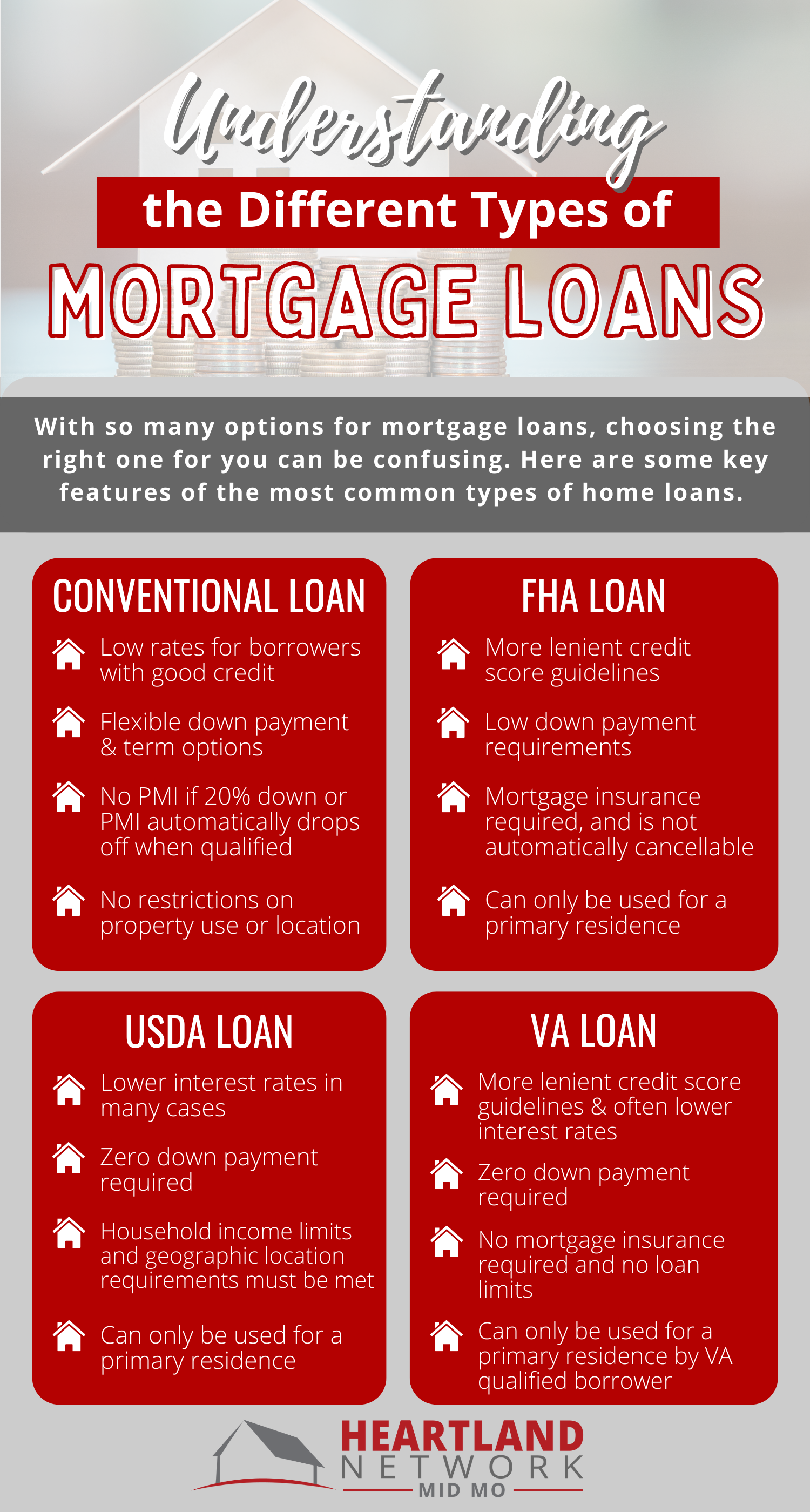
Conventional mortgages are the most common type of home loan. Unlike government-backed options, these loans are originated and serviced by private lenders such as banks, credit unions, and mortgage companies. They generally follow the guidelines set by two government-sponsored enterprises (GSEs): Fannie Mae and Freddie Mac. Because these loans are not insured by the federal government, they often carry stricter credit and down payment requirements, but they offer greater flexibility for those who qualify.
Conforming Loans
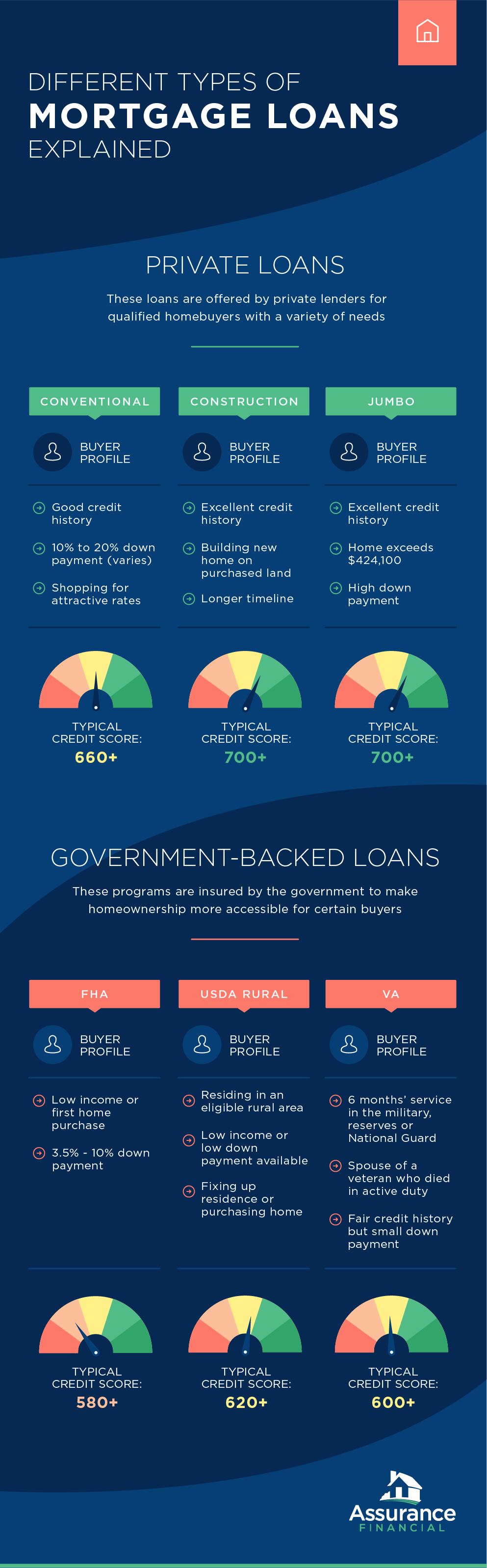
A conforming loan is a conventional mortgage that “conforms” to the funding limits set by the Federal Housing Finance Agency (FHFA). These limits are adjusted annually to reflect changes in the average U.S. home price. For borrowers, conforming loans are often the most attractive because they typically offer lower interest rates. Because these loans can be easily packaged and sold on the secondary market to Fannie Mae or Freddie Mac, lenders view them as lower-risk investments. To qualify, borrowers usually need a credit score of at least 620 and a debt-to-income (DTI) ratio below 43%, though some lenders may allow higher ratios with compensating factors like significant cash reserves.
Non-Conforming or Jumbo Loans
When a property’s price exceeds the local conforming loan limits, borrowers must turn to non-conforming loans, most commonly known as jumbo loans. These are frequent in high-cost real estate markets such as New York City, San Francisco, or Seattle. Because jumbo loans cannot be sold to Fannie Mae or Freddie Mac, the lender takes on more risk. Consequently, the requirements are much more stringent. Borrowers typically need a credit score of 700 or higher, a down payment of at least 10% to 20%, and significant liquid assets to prove they can handle the substantial monthly payments. While interest rates on jumbo loans were historically higher than conforming loans, they have become increasingly competitive in recent years.
Government-Insured Mortgages: Bridging the Gap for Borrowers
For those who may not meet the strict requirements of conventional lending—perhaps due to a lower credit score or limited down payment savings—the federal government provides several insurance programs. These programs do not lend money directly; instead, they insure the lender against loss if the borrower defaults. This safety net allows lenders to offer more favorable terms to “at-risk” borrowers.
FHA Loans: The First-Time Homebuyer’s Gateway
Insured by the Federal Housing Administration, FHA loans are a staple for first-time homebuyers. The primary draw is the low down payment requirement: as little as 3.5% for those with a credit score of 580 or higher. Even those with scores as low as 500 can qualify with a 10% down payment. However, this accessibility comes with a cost: Mortgage Insurance Premiums (MIP). Borrowers must pay an upfront premium at closing and an annual premium for the life of the loan (if the down payment is less than 10%). This is a critical factor for personal finance planning, as it adds a recurring cost that does not contribute to home equity.
VA Loans: Honoring Service Through Financing
The VA loan program, backed by the Department of Veterans Affairs, is arguably the most powerful mortgage product on the market. Available to active-duty service members, veterans, and eligible surviving spouses, it offers 100% financing—meaning zero down payment. Furthermore, VA loans do not require private mortgage insurance (PMI), which can save borrowers hundreds of dollars every month. While there is a “VA Funding Fee” involved, this can often be rolled into the loan amount. For those who qualify, the VA loan is an unparalleled tool for building wealth through real estate.
USDA Loans: The Rural Opportunity
The U.S. Department of Agriculture offers the Rural Development Single Family Housing Guaranteed Loan Program. Targeted at low-to-moderate-income borrowers, these loans are designed to encourage development in rural and some suburban areas. Like VA loans, USDA loans offer 100% financing. To qualify, the property must be located in an eligible rural area, and the household income cannot exceed 115% of the median income for that area. This is a highly specialized tool that provides a path to ownership for those who might otherwise be priced out of the market.
Comparing Fixed-Rate and Adjustable-Rate Structures
Once you have identified the loan category (Conventional, FHA, etc.), you must choose the interest rate structure. This choice dictates how your interest is calculated and how your payments will evolve over decades.
The Stability of Fixed-Rate Mortgages
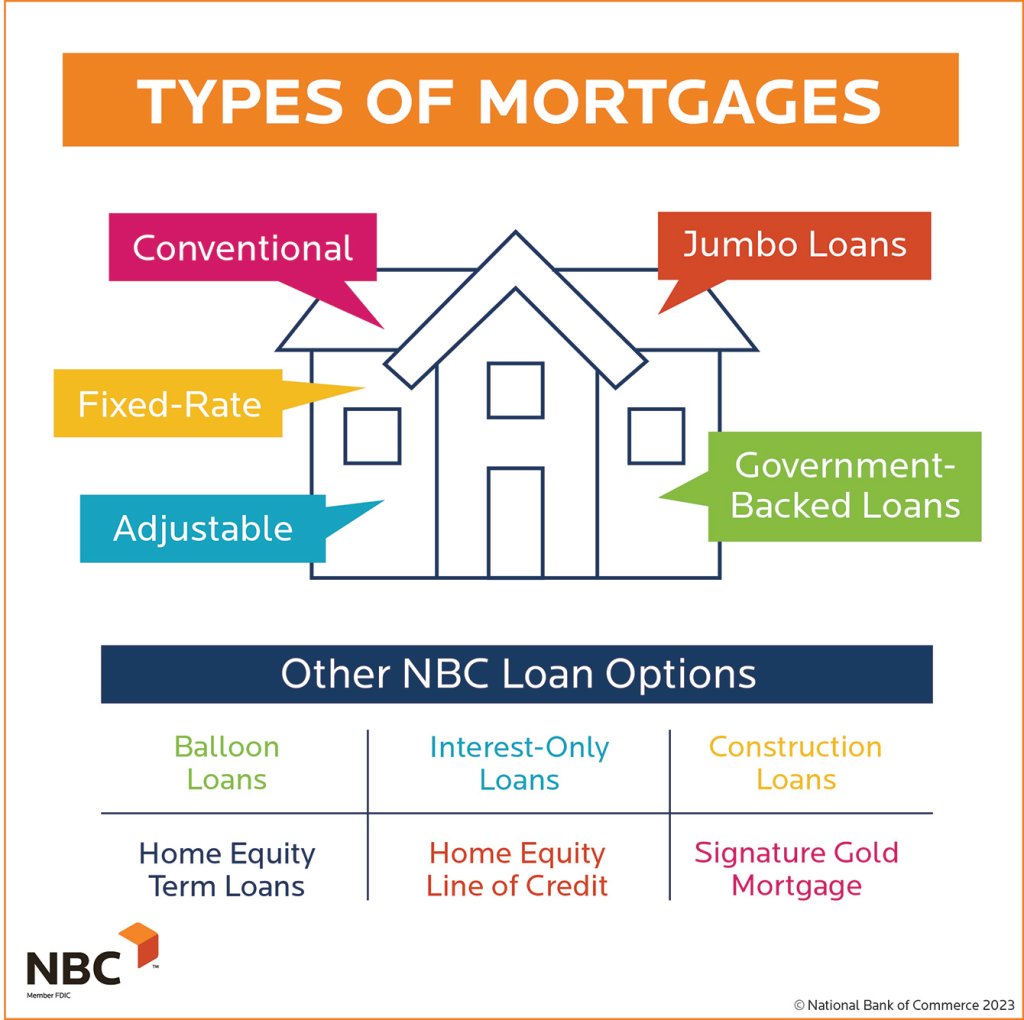
The fixed-rate mortgage is the bedrock of American home finance. Whether the term is 15, 20, or 30 years, the interest rate remains identical from the first payment to the last. This provides a high degree of predictability. In an inflationary environment, a fixed-rate mortgage is a powerful hedge; as the value of the dollar decreases and wages potentially rise, your primary housing cost remains locked in at “old” prices. This stability is ideal for families on a budget or those planning to stay in their home for the long term.
The Dynamics of Adjustable-Rate Mortgages (ARMs)
Adjustable-rate mortgages offer a lower “teaser” interest rate for an initial period—typically 5, 7, or 10 years. After this period, the rate adjusts annually based on a market index (such as the SOFR). ARMs can be a strategic financial tool for borrowers who plan to sell the home or refinance before the initial period ends. The lower initial rate allows for lower monthly payments or the ability to qualify for a larger loan. However, they carry significant risk; if market rates rise sharply, the monthly payment can increase substantially, potentially straining the borrower’s cash flow.
Niche Mortgage Options and Financial Strategy
Beyond the standard products, several niche mortgage types exist for specific financial scenarios or investment strategies.
Interest-Only Loans
In an interest-only mortgage, the borrower is only required to pay the interest on the loan for a set period (usually 5 to 10 years). This results in significantly lower monthly payments during the initial phase. This structure is often utilized by sophisticated investors or individuals with fluctuating high-income structures (such as heavy annual bonuses). The risk is that once the interest-only period ends, the payment “resets” to include both principal and interest, often resulting in a massive payment shock. Furthermore, the borrower builds zero equity through principal pay-down during the initial years.
Construction-to-Permanent Loans
For those looking to build a custom home rather than buy an existing one, a construction-to-permanent loan is the standard vehicle. This starts as a short-term loan that covers the cost of building. As the home is built, the lender pays out the money in stages. Once the home is finished and receives a certificate of occupancy, the loan is converted into a standard permanent mortgage. This saves the borrower from having to go through two separate closings and two sets of closing costs.
Strategic Considerations for the Long-Term Investor
The final step in selecting a mortgage type is analyzing the term and the cost of capital. A mortgage is not just a debt; it is a component of your net worth calculation.
The 15-Year vs. 30-Year Dilemma
The 30-year term is the standard because of its lower monthly payment, which provides more monthly liquidity. However, the 15-year mortgage is the superior wealth-building tool. Not only do 15-year loans come with lower interest rates, but the accelerated principal pay-down results in significantly less interest paid over the life of the loan. For example, on a $400,000 loan, a 15-year term could save a borrower over $200,000 in total interest compared to a 30-year term, while building full equity in half the time. The trade-off is a much higher monthly commitment that requires a robust and stable income.
Points, Fees, and the Effective Interest Rate
When comparing loan types, savvy borrowers look at the Annual Percentage Rate (APR) rather than just the nominal interest rate. The APR includes the interest rate plus points, broker fees, and other credit charges. “Buying down the rate” with discount points—prepaying interest at closing to secure a lower rate for the life of the loan—can be a wise move for those who plan to stay in the home for more than seven to ten years.
In conclusion, the “best” mortgage is entirely dependent on your financial horizon, risk tolerance, and current capital. By understanding the nuances between conventional and government-backed loans, and the trade-offs between fixed and adjustable rates, you can secure a mortgage that serves as a foundation for financial growth rather than a burden on your future.
aViewFromTheCave is a participant in the Amazon Services LLC Associates Program, an affiliate advertising program designed to provide a means for sites to earn advertising fees by advertising and linking to Amazon.com. Amazon, the Amazon logo, AmazonSupply, and the AmazonSupply logo are trademarks of Amazon.com, Inc. or its affiliates. As an Amazon Associate we earn affiliate commissions from qualifying purchases.