
Securing a mortgage is arguably the most significant financial transaction of a person’s life. While the excitement of homeownership often centers on neighborhood tours and floor plans, the underlying financial structure of the deal—the mortgage—is what dictates long-term wealth accumulation or financial strain. Shopping for a mortgage is not a singular event but a strategic process that requires a deep understanding of interest rate mechanics, lender diversity, and personal financial health. By approaching this task with the precision of an institutional investor, you can save tens of thousands of dollars over the life of the loan.

Understanding the Fundamentals of Mortgage Selection
Before engaging with lenders, a borrower must understand the “product” they are buying. A mortgage is essentially a contract for the price of money, and that price varies based on the level of risk the lender perceives and the duration of the debt.
Fixed-Rate vs. Adjustable-Rate Mortgages
The most critical choice is between a fixed-rate mortgage (FRM) and an adjustable-rate mortgage (ARM). A fixed-rate mortgage offers the security of a consistent interest rate for the entire duration of the loan, typically 15 or 30 years. This is the gold standard for stability, protecting homeowners from inflationary spikes in the market.
Conversely, an ARM offers a lower initial “teaser” rate for a set period—usually 5, 7, or 10 years—after which the rate fluctuates based on a benchmark index. While ARMs can be beneficial for those planning to sell or refinance before the adjustment period begins, they introduce significant interest rate risk. In a rising rate environment, the monthly payment on an ARM can increase substantially, potentially leading to “payment shock.”
Conventional vs. Government-Backed Loans
The structure of the loan also depends on the insurance backing it. Conventional loans are not insured by the federal government and typically require higher credit scores and down payments. However, they lack some of the ongoing insurance premiums associated with government-backed options.
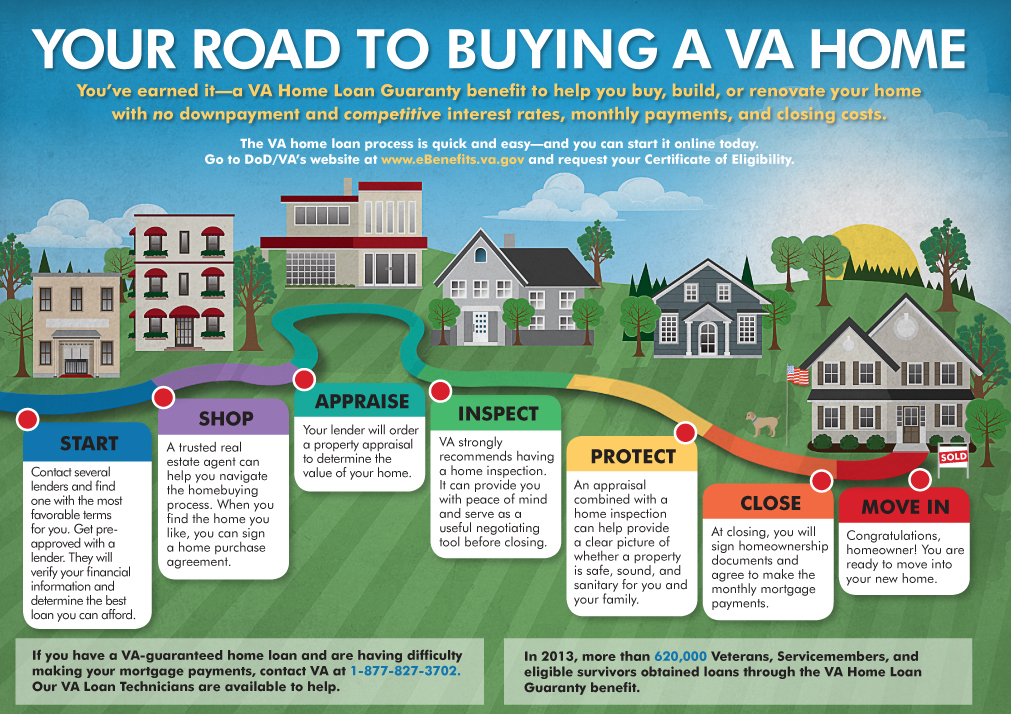
Government-backed loans, such as FHA (Federal Housing Administration), VA (Veterans Affairs), and USDA (Department of Agriculture) loans, are designed to increase accessibility. FHA loans allow for lower credit scores and down payments as low as 3.5%, while VA loans offer zero-down payment options for veterans. While these are excellent tools for entry into the market, they often come with mandatory mortgage insurance premiums (MIP or PMI) that increase the total cost of borrowing.
Preparing Your Financial Profile for the Best Rates
Lenders do not offer the same rates to every applicant. Interest rates are priced based on “risk-based pricing,” meaning your financial history directly dictates your cost of capital. Before shopping, you must optimize your profile to qualify for the “prime” rates.
The Impact of Credit Scores on Interest Rates
In the world of personal finance, your FICO score is your most powerful leverage. A difference of 100 points on a credit score can result in an interest rate difference of 0.5% to 1.0%. On a $400,000 mortgage, a 1% difference in the interest rate can result in over $100,000 in additional interest paid over 30 years.
To prepare, prospective buyers should audit their credit reports for errors, reduce credit card balances to lower their credit utilization ratio, and avoid opening new lines of credit in the six months leading up to a mortgage application. The goal is to present a profile of extreme reliability to the lender’s underwriting department.
Managing Debt-to-Income Ratios
Lenders also scrutinize your Debt-to-Income (DTI) ratio, which measures how much of your gross monthly income goes toward debt payments. Most lenders prefer a “back-end” DTI (including the new mortgage payment) of 43% or lower, though some programs allow for higher.
Lowering your DTI by paying off car loans or personal debt does more than just help you qualify; it increases your “borrowing power.” When you have less monthly overhead, you have more flexibility to absorb the costs of homeownership, such as property taxes, insurance, and maintenance, which are often underestimated during the shopping phase.
The Step-by-Step Process of Comparison Shopping
The biggest mistake borrowers make is accepting the first quote they receive. According to the Consumer Financial Protection Bureau (CFPB), consumers who compare at least three to five lenders save an average of $3,500 in the first few years of the loan.
Requesting and Comparing Loan Estimates
When you apply for a mortgage, lenders are legally required to provide a “Loan Estimate” (LE) within three business days. This standard three-page document is your most valuable tool for comparison. It breaks down the interest rate, monthly payment, and total closing costs.
When comparing LEs, do not just look at the monthly payment. Look at “Section A: Origination Charges.” These are the fees the lender is charging you to process the loan. Some lenders may offer a lower interest rate but bake in high origination fees to compensate. Others might offer “discount points,” where you pay an upfront fee to lower the interest rate. You must calculate the “break-even point”—the amount of time you need to stay in the home for the monthly savings to outweigh the upfront cost of the points.
Understanding APR vs. Interest Rate
It is vital to distinguish between the nominal interest rate and the Annual Percentage Rate (APR). The interest rate is the cost of borrowing the principal balance. The APR, however, is a broader measure of the cost of the loan, including the interest rate plus lender fees, private mortgage insurance, and other charges. If one lender offers a 6.5% rate with a 6.8% APR, and another offers 6.5% with a 7.1% APR, the first lender is offering a much more cost-effective deal because their fees are lower.
Leveraging Different Types of Lenders
The mortgage market is not a monolith; it is comprised of various types of institutions, each with different overhead structures and risk appetites.
Retail Banks vs. Mortgage Brokers
Large retail banks offer the convenience of having your mortgage and checking accounts in one place. They often provide “relationship discounts” to existing high-net-worth clients. However, their lending criteria can be rigid, and their rates may not always be the most competitive in the open market.
Mortgage brokers, on the other hand, act as intermediaries. They do not lend their own money; instead, they have access to a “wholesale” network of dozens of lenders. A broker can shop your profile across multiple institutions simultaneously to find the best fit. While brokers earn a commission, their access to wholesale pricing often results in a lower net cost for the borrower than going directly to a big-box bank.
Credit Unions and Online Lenders
Credit unions are member-owned cooperatives. Because they are non-profits, they often return value to members in the form of lower interest rates and reduced closing costs. They are frequently overlooked but are often the most competitive option for borrowers with strong local ties.
Online lenders have revolutionized the industry by using technology to streamline the application process. Their lower overhead (no physical branches) allows them to offer aggressive rates. However, the lack of a personal relationship can be a disadvantage if the loan hits a snag in underwriting. These lenders are often best for “straightforward” borrowers with W-2 income and high credit scores.
Finalizing the Deal: Negotiation and Locking Your Rate
Once you have identified the most competitive Loan Estimate, the process moves into the final stages of negotiation and rate management.
The Art of the Rate Lock
Interest rates fluctuate daily, sometimes even hourly, based on the bond market and Federal Reserve signals. Once you have chosen a lender, you should “lock” your rate. A rate lock guarantees your interest rate for a specific period (usually 30, 45, or 60 days) while your loan is being processed.
If rates rise during this period, you are protected. If rates fall, you may be stuck with the higher rate unless your lock includes a “float-down” option, which allows you to take advantage of a decrease in market rates. Strategic timing of your rate lock can be the difference between a manageable payment and a stretched budget.
Negotiating Closing Costs
Many borrowers assume that closing costs are non-negotiable. While taxes and government recording fees are fixed, many lender-specific fees are not. You can ask for a reduction in application fees, processing fees, or underwriting fees.
Furthermore, you can shop for “third-party services” listed in Section C of your Loan Estimate. This includes the title insurance company and the surveyor. Lenders have a preferred list, but you are often allowed to choose your own provider, which can result in hundreds of dollars in savings.
Reviewing the Closing Disclosure
At least three business days before you sign the final paperwork, the lender must provide a “Closing Disclosure” (CD). This document should be meticulously compared to the original Loan Estimate. If fees have increased beyond certain “tolerance” limits, the lender may be required to credit you the difference. This final audit ensures that the deal you shopped for is the deal you are actually receiving.
Shopping for a mortgage requires a shift in mindset: you are the customer, and the lender is a vendor competing for your business. By understanding the nuances of loan products, optimizing your financial profile, and aggressively comparing multiple offers, you ensure that your home is not just a place to live, but a sound financial investment that supports your long-term wealth.
aViewFromTheCave is a participant in the Amazon Services LLC Associates Program, an affiliate advertising program designed to provide a means for sites to earn advertising fees by advertising and linking to Amazon.com. Amazon, the Amazon logo, AmazonSupply, and the AmazonSupply logo are trademarks of Amazon.com, Inc. or its affiliates. As an Amazon Associate we earn affiliate commissions from qualifying purchases.