
The housing market has spent the last several years in a state of high-tension equilibrium. After the historic lows of 2020 and 2021, the rapid ascent of inflation forced the Federal Reserve into an aggressive tightening cycle, pushing mortgage rates to heights not seen in two decades. As we move toward 2025, the primary question for prospective homeowners, real estate investors, and the broader financial sector is no longer “when will rates stop rising,” but rather “how low can they actually go?”
Predicting mortgage rates is a complex endeavor that involves balancing labor market data, inflationary trends, and the Federal Reserve’s monetary policy. However, as the economic dust begins to settle, a clearer picture of 2025 is emerging. This article explores the macroeconomic drivers, industry expert projections, and the strategic implications for those looking to navigate the 2025 mortgage landscape.
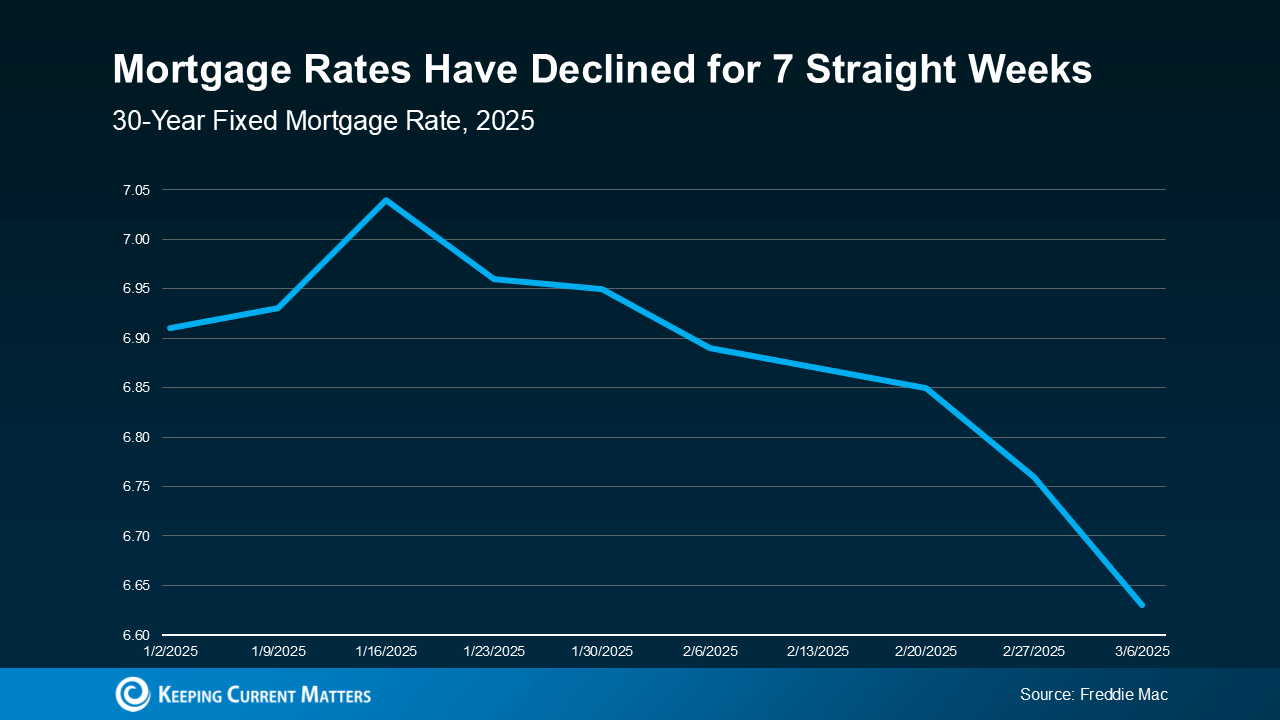
The Macroeconomic Landscape: The Federal Reserve’s Pivot and Its Ripple Effects
To understand where mortgage rates are headed in 2025, one must first look at the Federal Reserve’s dual mandate: maintaining price stability and maximizing sustainable employment. For much of 2023 and 2024, the “higher for longer” mantra dominated the narrative. However, as 2025 approaches, the focus has shifted toward a “normalization” of interest rates.
Inflation Targets and the Consumer Price Index (CPI)
The single greatest influencer of mortgage rates is the trajectory of inflation. Mortgage lenders price their loans based on the expected value of money over a 15-to-30-year period. If inflation is high, lenders demand higher interest rates to protect their purchasing power.
By the start of 2025, if the Consumer Price Index (CPI) continues its trend toward the Federal Reserve’s 2% target, the upward pressure on mortgage rates will dissipate. Economists generally agree that we have moved past the peak of the inflationary cycle. As the “sticky” components of inflation—such as shelter costs and service-sector wages—begin to cool, the floor for mortgage rates naturally lowers.
The Correlation Between the 10-Year Treasury Yield and Mortgage Pricing
While the Federal Reserve sets the federal funds rate (the short-term rate at which banks lend to one another), mortgage rates are more closely tied to the 10-year Treasury yield. Historically, the spread between the 10-year Treasury and a 30-year fixed-rate mortgage is about 170 to 200 basis points.
In recent years, this spread has widened significantly, sometimes exceeding 300 basis points due to market volatility and uncertainty regarding the Fed’s next moves. In 2025, as market volatility subsides and the Fed provides a clearer roadmap for rate cuts, we can expect this spread to compress back toward historical norms. This compression alone could lead to a significant drop in mortgage rates, even if the 10-year Treasury yield remains relatively stable.
Expert Projections: Mapping the Path to the Mid-5s
Financial institutions and housing authorities spend considerable resources modeling future rate environments. While opinions vary on the exact decimal point, a consensus is forming that 2025 will be the year of the “downward slope.”
Industry Consensus: MBA, Fannie Mae, and NAR Forecasts
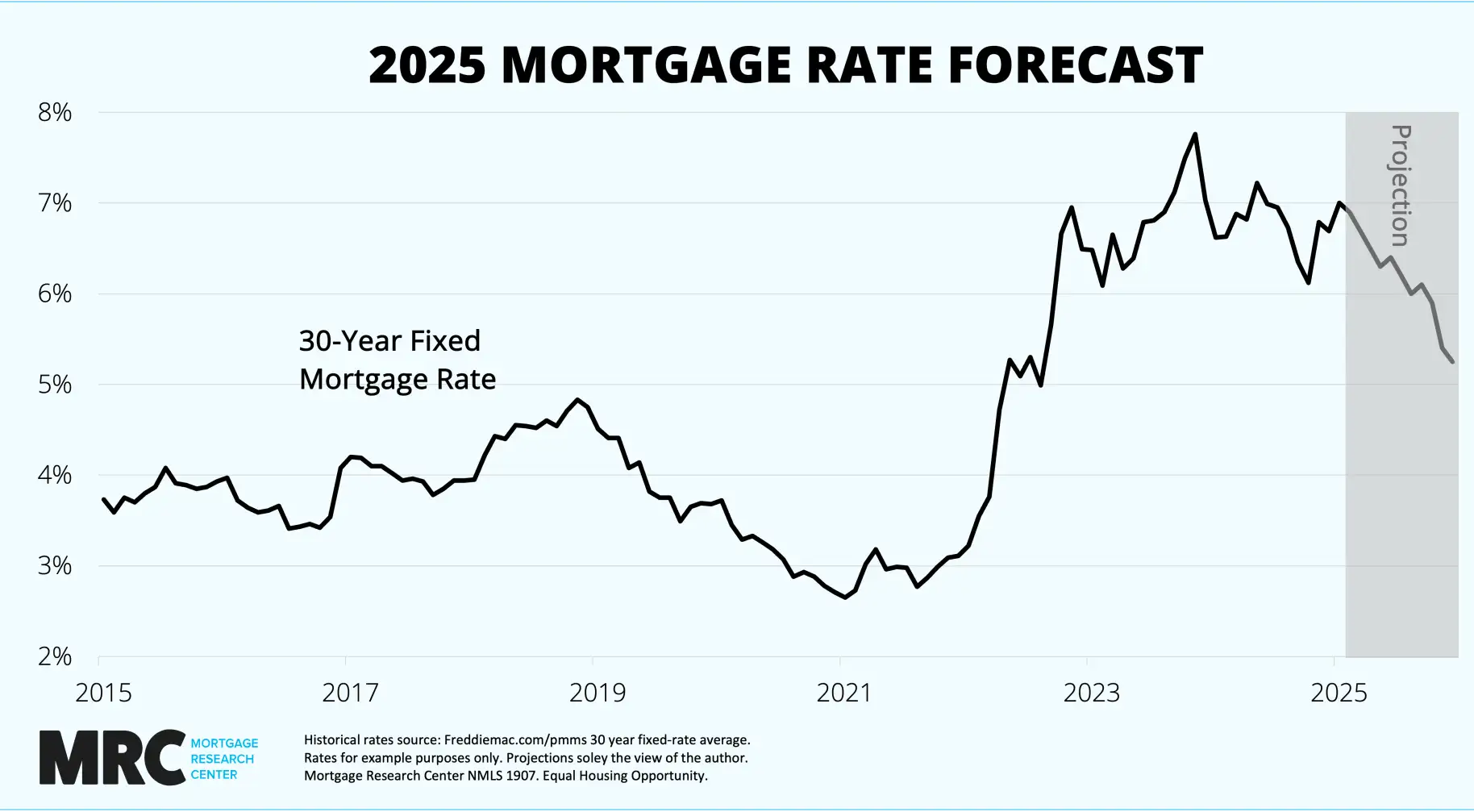
The Mortgage Bankers Association (MBA) and Fannie Mae have both signaled that the worst of the rate environment is behind us. Current projections for 2025 suggest that the 30-year fixed-rate mortgage will likely settle somewhere between 5.5% and 6.2%.
-
Optimistic Scenarios: Some analysts argue that if the economy experiences a “soft landing” or a mild recession, the Fed may be forced to cut rates more aggressively to stimulate growth. In this scenario, we could see mortgage rates dipping into the low 5% range by the third quarter of 2025.
-
Conservative Scenarios: If the labor market remains unexpectedly resilient and consumer spending continues to fuel moderate inflation, rates may hover stubbornly in the 6.0% to 6.5% range for the duration of the year.
Regardless of the specific number, the shift in 2025 will be characterized by a departure from the 7% and 8% highs that paralyzed the market in late 2023.
The “Normal” Rate vs. the Pandemic Anomaly
It is vital for borrowers to reset their expectations. The 2.5% to 3.5% rates seen during the pandemic were a historical anomaly driven by emergency monetary intervention. In the context of the last 50 years, a mortgage rate between 5.5% and 6.0% is remarkably average—and historically quite attractive. As we move into 2025, the market is moving toward this “new normal,” which provides a healthier balance for both buyers and lenders.
Factors That Could Stall the Decline
While the general trend is downward, several “inflationary ghosts” and structural issues could prevent mortgage rates from falling as fast as consumers hope.
The Spread Challenge: Why Mortgages Aren’t Dropping as Fast as the Fed Funds Rate
One of the primary frustrations for homebuyers is that mortgage rates do not move in lockstep with the Federal Reserve’s rate cuts. Banks price mortgages based on risk and the secondary market for Mortgage-Backed Securities (MBS). If the appetite for MBS remains low—perhaps due to fears of early refinancing (prepayment risk) or a lack of institutional buyers—rates will stay elevated.
In 2025, the Federal Reserve will also likely continue its process of “Quantitative Tightening” (QT), reducing its balance sheet by letting mortgage bonds mature without replacing them. This lack of a “buyer of last resort” can keep mortgage rates higher than they would otherwise be based purely on the federal funds rate.
Geopolitical Volatility and Global Market Sentiment
Mortgage rates are sensitive to global “flight-to-safety” events. If geopolitical tensions escalate in 2025, investors often flock to the safety of U.S. Treasuries. While this increased demand for Treasuries can lower yields (and thus mortgage rates) in the short term, the long-term economic instability usually results in tighter credit conditions and higher risk premiums. Furthermore, any spike in energy prices due to international conflict could reignite inflation, forcing the Fed to pause or reverse its rate-cutting path.
The Strategy for 2025: When to Buy and When to Refinance
For individuals managing their personal finances or investment portfolios, the 2025 rate environment presents a unique window of opportunity. However, timing the bottom of the market is notoriously difficult.
Overcoming the “Lock-In Effect”
One of the most significant hurdles in the current housing market is the “lock-in effect,” where homeowners with 3% mortgages refuse to sell because they cannot afford the monthly payment on a new home at 7%.
As rates approach the 5.75% to 6.0% threshold in 2025, many experts believe we will reach a “tipping point.” At this level, the psychological and financial gap between an old rate and a new rate becomes narrow enough to encourage mobility. This increase in inventory could stabilize home prices, making 2025 a more favorable year for buyers who have been sidelined by the lack of supply.
The Risks of Timing the Market
A common mistake in personal finance is waiting for the absolute bottom. If mortgage rates drop from 6.5% to 5.5% in 2025, the surge in demand from sidelined buyers will almost certainly drive home prices higher.
The financial logic for 2025 is often described as: “Marry the house, date the rate.” Prospective buyers might find more success by purchasing a property when competition is lower (even if rates are at 6.2%) and planning for a refinance in late 2025 or 2026 when rates may have hit their cyclical floor.
Refinancing Opportunities for 2023–2024 Buyers
For those who purchased homes during the peak rate periods of late 2023 and early 2024, 2025 will be the year of the refinance. A rule of thumb in mortgage finance is that a refinance is generally worth the closing costs if you can lower your rate by at least 0.75% to 1.0%. Many 2025 forecasts suggest that those with 7.5% mortgages will have a clear opportunity to move into a sub-6% loan, potentially saving hundreds of dollars per month in interest payments.

Conclusion: A Year of Stabilization
As we look toward 2025, the era of extreme mortgage rate volatility appears to be drawing to a close. While we are unlikely to see a return to the 3% range, the trajectory is clearly leaning toward the mid-to-high 5% range.
This shift represents a significant victory for the broader economy. It signals that inflation has been reigned in without causing a total collapse of the housing sector. For the consumer, 2025 will require a balanced approach: monitoring the Federal Reserve’s communications, understanding the relationship between Treasury yields and mortgage spreads, and being prepared to act when rates align with long-term financial goals. In the world of personal finance, 2025 is shaping up to be the year where the “wait and see” approach finally yields to action.
aViewFromTheCave is a participant in the Amazon Services LLC Associates Program, an affiliate advertising program designed to provide a means for sites to earn advertising fees by advertising and linking to Amazon.com. Amazon, the Amazon logo, AmazonSupply, and the AmazonSupply logo are trademarks of Amazon.com, Inc. or its affiliates. As an Amazon Associate we earn affiliate commissions from qualifying purchases.