
The global real estate landscape has been defined by a period of significant volatility and upward pressure on borrowing costs. For prospective homeowners and seasoned investors alike, the question of when home rates will go down has become the central pivot point for financial planning. After a decade of historically low interest rates, the rapid ascent initiated by central banks to combat inflation has transformed the affordability index, leaving many to wonder if a reprieve is on the horizon. To understand when and how rates might decline, one must look at the intricate dance between inflation, central bank policy, and the broader economic indicators that dictate the movement of the mortgage market.
The Economic Forces Shaping Current Mortgage Rates
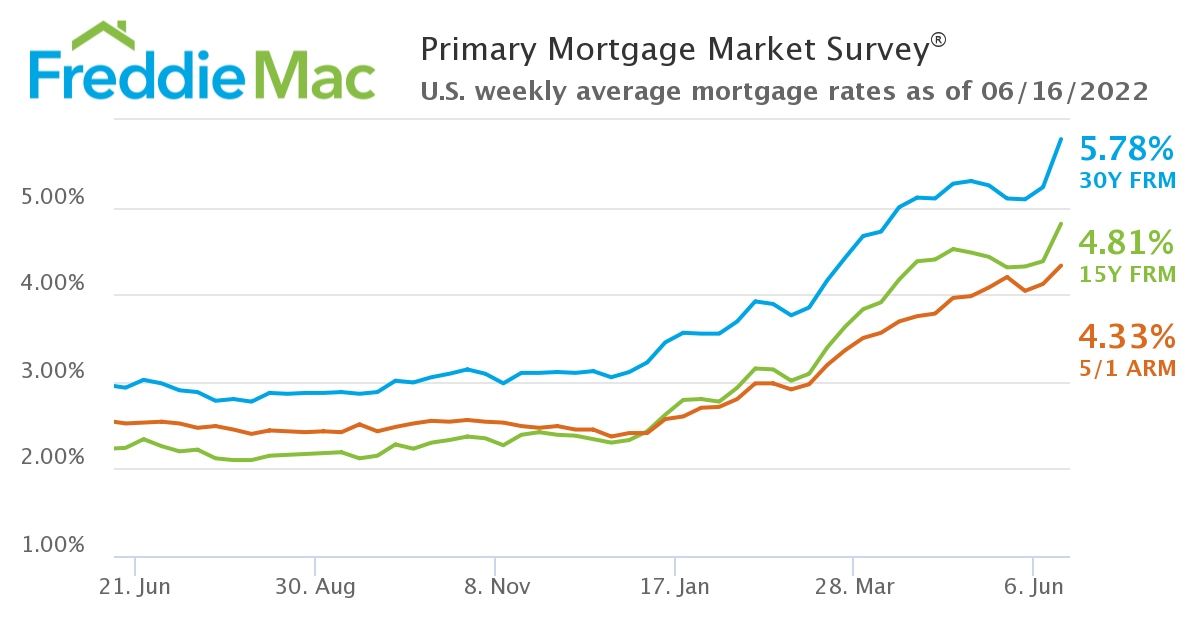
The primary driver of modern mortgage rates is the tug-of-war between inflation and monetary policy. Following the pandemic-era stimulus and subsequent supply chain disruptions, inflation surged to levels not seen in four decades. In response, the Federal Reserve in the United States, along with other global central banks, aggressively raised the federal funds rate. While the Fed does not directly set mortgage rates, its policy decisions influence the yields on 10-year Treasury notes, which serve as the primary benchmark for 30-year fixed-rate mortgages.
The Inflation Target and the Federal Reserve
The Federal Reserve has a dual mandate: maximum employment and stable prices. Their long-term target for inflation is 2%. When the Consumer Price Index (CPI) consistently trends above this mark, the Fed maintains a “hawkish” stance, keeping interest rates high to cool the economy. For home rates to see a meaningful and sustained decline, the Fed needs clear, empirical evidence that inflation is not just slowing, but is on a definitive path back to that 2% goal. Until the labor market shows signs of cooling and wage growth stabilizes, the “higher for longer” narrative remains the dominant force keeping mortgage rates elevated.
The Role of the 10-Year Treasury Yield
Investors often look at the spread between the 10-year Treasury yield and the average 30-year fixed mortgage rate. Historically, this spread sits at about 1.7 to 2 percentage points. Recently, this spread has widened significantly due to market uncertainty and the Fed’s balance sheet reduction (quantitative tightening). For rates to drop, we need to see a stabilization in the bond market. If the 10-year yield falls and the spread compresses back to historical norms, homeowners could see a drop in rates even if the Federal Reserve is slow to cut the benchmark rate.
Expert Projections and the Timeline for Relief
Forecasting interest rates is notoriously difficult, yet major financial institutions and housing agencies provide a roadmap based on current data. Organizations such as the Mortgage Bankers Association (MBA), Fannie Mae, and various Wall Street analysts consistently update their projections. The consensus for the near future suggests a gradual tapering rather than a sudden plunge.
Projections for Late 2024 and 2025
Most analysts anticipate that the peak of the rate cycle has passed. However, the descent is expected to be slow. While many hoped for significant cuts early in 2024, persistent inflation data has pushed those expectations further out. Current models suggest that we may see modest improvements by the final quarter of 2024, with more substantial relief arriving in 2025. This timeline assumes that the economy does not enter a “hard landing” or a severe recession, which would ironically lead to faster rate cuts but likely under much more stressed economic conditions.
The “Higher for Longer” Sentiment
Financial markets have had to adjust to the reality that the ultra-low rates of 2020 and 2021 were an anomaly. Many economists argue that we are returning to a “neutral” rate environment, where 5% to 6% might be the new normal for mortgage rates. When asking when rates will go down, it is crucial to define the baseline. If one is waiting for 3% rates to return, the wait may last a lifetime. However, if the goal is to see rates move from the 7% range down into the high 5% or low 6% range, that transition is viewed as highly probable within the next 12 to 18 months as the economy reaches equilibrium.
The Impact of Market Supply and Demand on Rates
While macroeconomic policy sets the floor for interest rates, the specific dynamics of the housing market also play a role in what a consumer actually pays. The inventory of homes for sale and the level of buyer demand create a secondary layer of pressure on the financial products offered by lenders.
The “Lock-In” Effect and Inventory Constraints
One of the most significant hurdles in the current market is the “lock-in” effect. Millions of homeowners currently hold mortgages with rates below 4%. These individuals are reluctant to sell their homes and trade their low-rate debt for a new mortgage at 7%. This lack of inventory keeps home prices high despite high interest rates. If and when rates begin to tick down—perhaps reaching the low 6% range—it is expected that a surge of inventory will hit the market as the “lock-in” effect loses its grip. This increase in supply could stabilize prices, making the overall cost of homeownership more manageable even if the interest rate itself isn’t at record lows.
Lender Competition and Innovation
As loan volume drops due to high rates, mortgage lenders become increasingly competitive. This competition can lead to “rate wars” where lenders shave their margins to attract the few active buyers in the market. We are already seeing an increase in diverse loan products, such as 2-1 buydowns, where the seller or builder pays to lower the buyer’s interest rate for the first two years. These localized market factors can provide “downward” movement for individual borrowers even when the national average remains high.
Navigating the High-Rate Environment: Strategies for Borrowers
Waiting for rates to drop is a passive strategy that may result in missing out on the right property or facing higher home prices in the future. Sophisticated buyers are shifting their focus from “when will rates go down” to “how can I manage the current rate environment.”
The “Marry the House, Date the Rate” Philosophy
A popular sentiment in the current market is the idea of “marrying the house and dating the rate.” This strategy involves purchasing a property at today’s price—potentially with less competition from other buyers—with the intention of refinancing once rates eventually decline. While this carries the risk that rates may stay high longer than expected, it allows buyers to build equity in a rising-price environment. For this strategy to work, a borrower must ensure they can comfortably afford the monthly payment at the current rate without relying on a speculative future refinance.
Adjustable-Rate Mortgages (ARMs) and Buydowns
For those who believe rates will decline within a specific window, Adjustable-Rate Mortgages (ARMs) have regained popularity. An ARM typically offers a lower initial interest rate for a fixed period (such as 5 or 7 years) before adjusting. If rates go down during that initial period, the borrower can refinance into a fixed-rate loan. Similarly, temporary rate buydowns allow a borrower to enjoy a lower payment in the early years of the mortgage, providing a financial bridge until the broader market shifts.
Long-Term Outlook: Will We Ever See Record Lows Again?
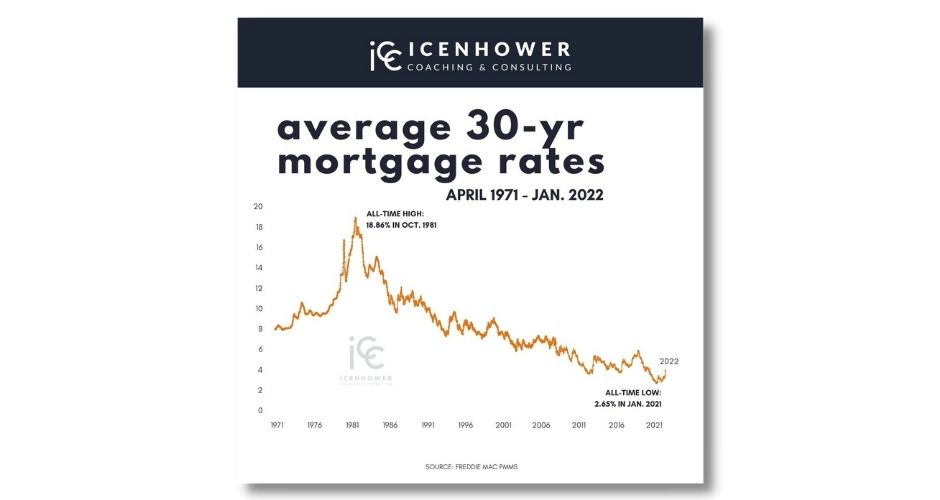
To gain perspective on when home rates will go down, it is helpful to look at historical averages. Since 1971, the average rate for a 30-year fixed mortgage has been approximately 7.74%. Seen through this lens, the current rates are not historically high; rather, the rates of the last decade were historically low.
Structural Changes in the Global Economy
Several structural factors suggest that the era of “free money” is over. De-globalization, the transition to green energy, and shifting demographics are all inflationary pressures that central banks must manage. These factors suggest that while rates will certainly fluctuate and likely decrease from their recent peaks, the floor for interest rates has likely shifted higher. Investors should prepare for a future where a 5.5% to 6.5% mortgage rate is considered a “good deal.”
The Importance of Personal Financial Health
Ultimately, the best time to enter the market is less about the national interest rate and more about personal financial readiness. A high credit score, a low debt-to-income ratio, and a robust down payment can often result in a private rate offer that is significantly better than the national average. While the macro-economy dictates the direction of the wind, personal financial health dictates how well one can navigate the storm.
In summary, home rates are expected to trend downward as inflation approaches the Federal Reserve’s 2% target and the bond market stabilizes. While the path will be non-linear and subject to monthly data releases, the general trajectory for 2025 points toward a more favorable borrowing environment. Prospective buyers should remain vigilant, monitoring the CPI and employment reports, while remaining realistic about the fact that the floor for rates has likely moved higher than the levels seen during the previous decade. Navigating this transition requires patience, a focus on long-term value, and a readiness to act when the market eventually provides the desired opening.
aViewFromTheCave is a participant in the Amazon Services LLC Associates Program, an affiliate advertising program designed to provide a means for sites to earn advertising fees by advertising and linking to Amazon.com. Amazon, the Amazon logo, AmazonSupply, and the AmazonSupply logo are trademarks of Amazon.com, Inc. or its affiliates. As an Amazon Associate we earn affiliate commissions from qualifying purchases.