
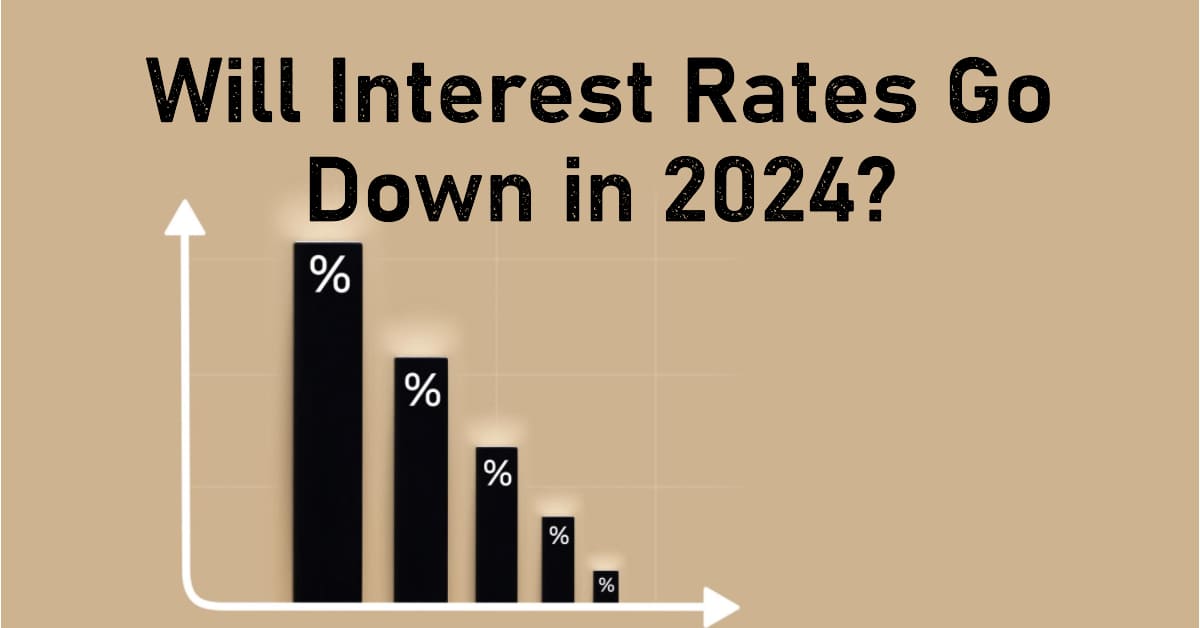
The global financial landscape is currently navigating one of the most complex economic transitions in decades. For years, the mantra for investors and homeowners alike was “lower for longer,” as central banks maintained near-zero interest rates to stimulate growth. However, the post-pandemic surge in inflation forced a radical shift in policy, leading to a rapid series of rate hikes that reset the cost of capital. Today, the singular question dominating boardroom discussions and kitchen-table conversations is: What are interest rates going to do next?
Understanding the trajectory of interest rates requires a deep dive into the priorities of central banks, the resilience of the labor market, and the stubborn nature of price stability. As we peer into the coming quarters, the answer is not a simple “up” or “down,” but rather a nuanced evolution toward a “new normal” that will redefine personal finance and investment strategy for the foreseeable future.
The Federal Reserve and the Mechanics of Monetary Policy
To predict where interest rates are headed, one must first understand the machinery behind them. In the United States, the Federal Reserve (the Fed) holds the steering wheel through the Federal Open Market Committee (FOMC). Their primary tool is the federal funds rate—the interest rate at which commercial banks borrow and lend their excess reserves to each other overnight. While this may seem like a back-end banking technicality, it serves as the benchmark for virtually all other interest rates, from credit cards to corporate bonds.
The Dual Mandate: Balancing Inflation and Employment
The Fed operates under a “dual mandate” assigned by Congress: to promote maximum employment and maintain stable prices. Since 2021, the focus has shifted heavily toward the latter. When inflation spiked to forty-year highs, the Fed had no choice but to raise rates aggressively to “cool” the economy. Higher rates make borrowing more expensive, which reduces consumer spending and business investment, eventually slowing down the pace of price increases.
The current challenge for policymakers is determining when the mission is truly accomplished. If they cut rates too early, they risk a second wave of inflation. If they wait too long, they risk pushing the economy into a deep recession. This “tightrope walk” is why the Fed’s messaging has remained cautious, often emphasizing that they are “data-dependent.”
The Federal Funds Rate and the Neutral Rate
Economists often speak of the “neutral rate”—the interest rate level that neither stimulates nor restricts economic growth. For much of the 2010s, this rate was thought to be very low. However, structural changes in the economy, including shifting demographics and increased government spending, suggest the neutral rate may now be higher than previously thought. This means that even when the Fed begins to lower rates, they are unlikely to return to the zero-bound levels seen during the previous decade.
Factors Influencing Future Rate Decisions
Predicting interest rate movements is an exercise in analyzing several competing economic indicators. The Federal Reserve does not move in a vacuum; it responds to a mosaic of data points that signal the health and momentum of the economy.
Inflation Trends: The Path to 2 percent
The most significant driver of interest rates is the Consumer Price Index (CPI) and the Personal Consumption Expenditures (PCE) price index. The Fed has a target inflation rate of 2 percent. While inflation has cooled significantly from its 9 percent peak, the “last mile” of disinflation—getting from 3 percent down to 2 percent—is proving to be difficult. Stickiness in service-sector inflation and housing costs has kept policymakers on edge. Until there is “clear and convincing” evidence that inflation is sustainably headed toward that 2 percent goal, interest rates are likely to remain restrictive.
Labor Market Health and GDP Growth
The strength of the job market provides the Fed with the “room” to keep rates high. As long as unemployment remains low and wage growth remains steady, the economy is deemed strong enough to handle higher borrowing costs. However, if we begin to see a significant uptick in layoffs or a sharp contraction in Gross Domestic Product (GDP), the Fed will feel immense pressure to cut rates to prevent a hard landing. Monitoring monthly payroll reports and JOLTS (Job Openings and Labor Turnover Survey) data is essential for anyone trying to gauge the timing of the next rate move.
Geopolitical Stability and Global Supply Chains
External shocks can easily derail interest rate projections. Conflicts in the Middle East or Eastern Europe can cause spikes in energy and commodity prices, which are inherently inflationary. Similarly, shifts in global trade policy or supply chain disruptions can force prices higher, requiring central banks to keep rates elevated to combat “imported” inflation. In an interconnected global economy, the Fed’s path is often dictated by events happening thousands of miles away.

Expert Forecasts and Market Expectations
Financial markets and central bankers often see the world differently. This gap between “Fed speak” and “market pricing” creates the volatility we see in the stock and bond markets.
The “Higher for Longer” Narrative
The prevailing consensus among policymakers has shifted toward a “higher for longer” stance. This doesn’t necessarily mean rates will continue to climb, but rather that they will stay at a plateau for an extended period. The goal is to let the restrictive rates “soak” into the economy to ensure inflation is fully extinguished. Investors who are waiting for a rapid return to 3 percent mortgage rates may be disappointed; the baseline expectation is a slow, methodical easing cycle rather than a sudden drop.
Reading the Dot Plot
Once a quarter, the Fed releases the “Summary of Economic Projections,” which includes the famous “dot plot.” This chart shows where each FOMC member expects interest rates to be over the next few years. While not a formal commitment, the dot plot provides a roadmap. Current projections suggest that while the peak of the hiking cycle has likely been reached, the descent will be gradual. Analysts look for “clusters” of dots to determine if the committee is leaning toward a more “hawkish” (favoring high rates) or “dovish” (favoring low rates) posture.
How Changing Rates Impact Your Personal Finances
Regardless of the exact timing of the next Fed move, the shift in interest rate regimes has profound implications for how individuals should manage their money.
Mortgages and the Housing Market
The housing market is perhaps the most sensitive sector to interest rate changes. When the 30-year fixed mortgage rate jumped from 3 percent to over 7 percent, it created a “lock-in effect,” where homeowners with low rates refused to sell, leading to a shortage of inventory. Looking forward, even a slight dip in interest rates could trigger a surge in demand. However, for those looking to buy, the days of “free money” are over. Buyers must now focus on larger down payments and improved credit scores to secure the best possible terms in a higher-rate environment.
High-Yield Savings and Fixed-Income Investing
One of the few silver linings of higher interest rates is the return of yield for savers. For over a decade, savings accounts paid virtually nothing. Today, High-Yield Savings Accounts (HYSAs) and Certificates of Deposit (CDs) offer meaningful returns. For those looking at where interest rates are going, now may be the time to “lock in” yields on long-term CDs or Treasury bonds before the Fed eventually begins its cutting cycle. When rates fall, the yield on new fixed-income instruments will drop, making current rates look highly attractive in retrospect.
Credit Card Debt and Variable Loans
On the flip side, the cost of carrying debt has skyrocketed. Most credit cards have variable interest rates tied to the prime rate, which moves in lockstep with the Fed. For consumers with high-interest debt, the priority should be aggressive repayment. Waiting for rates to “do something” is a losing strategy when interest is compounding at 20 percent or higher. Consolidating variable debt into fixed-rate personal loans may be a wise move while those options are still available.
Strategic Moves for Investors in a Shifting Rate Environment
For the strategic investor, the direction of interest rates dictates asset allocation. The “easy money” era favored growth at any cost, but the current era favors fundamental value and cash flow.
Equities and Growth Stocks
High interest rates are generally a headwind for stocks, particularly growth and tech companies that rely on future earnings. When rates are high, the “discount rate” applied to those future earnings increases, making the stocks less valuable today. If rates begin to stabilize or decline, we may see a resurgence in small-cap and growth stocks that have been beaten down. However, in a “higher for longer” world, investors should prioritize companies with strong balance sheets and the ability to self-fund their growth without relying on expensive debt.

Rebalancing Your Portfolio
The classic 60/40 portfolio (60 percent stocks, 40 percent bonds) faced its worst year in decades when rates began to rise, as both stocks and bonds fell simultaneously. As we look ahead, bonds are once again providing a diversification benefit. If the economy slows and the Fed cuts rates, bond prices—which move inversely to yields—will rise, providing a cushion for your portfolio. Investors should evaluate their duration risk (sensitivity to rate changes) and ensure they are not overly exposed to a single direction of the interest rate curve.
Ultimately, interest rates are the “gravity” of the financial world. While they are currently in a period of relative stability following a historic ascent, the next phase will be characterized by a cautious transition toward lower levels. By staying informed on inflation data and Fed policy, you can position your finances to thrive, whether rates remain at their current plateau or begin their long-awaited descent. Strategies that worked in 2019 are no longer applicable; the future belongs to those who adapt to the new reality of the cost of money.
aViewFromTheCave is a participant in the Amazon Services LLC Associates Program, an affiliate advertising program designed to provide a means for sites to earn advertising fees by advertising and linking to Amazon.com. Amazon, the Amazon logo, AmazonSupply, and the AmazonSupply logo are trademarks of Amazon.com, Inc. or its affiliates. As an Amazon Associate we earn affiliate commissions from qualifying purchases.