
Navigating the Texas real estate market requires more than just finding the perfect property in the Hill Country or a high-rise in Uptown Dallas; it requires a deep understanding of the fluctuating landscape of mortgage rates. In recent years, the Lone Star State has seen a dramatic shift in borrowing costs, mirrored by national economic trends but influenced by unique local factors. Understanding what current mortgage rates look like in Texas involves looking past the raw percentages and analyzing the economic drivers, loan types, and regional variations that define the cost of homeownership in the second-largest state in the U.S.
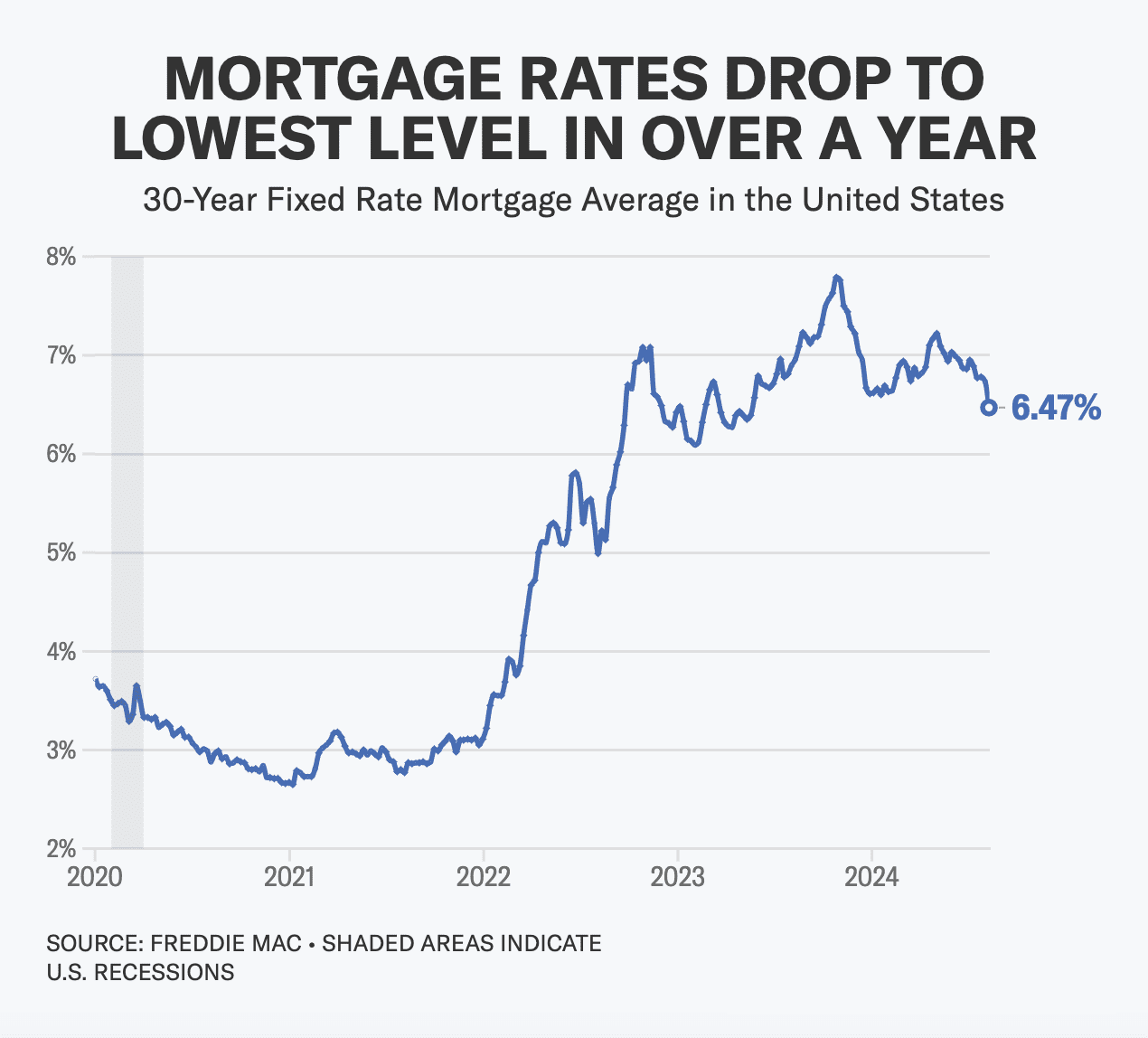
As of the current market cycle, mortgage rates in Texas generally align with national averages, though they are subject to the specific competitive landscape of Texas-based lenders and credit unions. While the era of sub-3% interest rates has concluded, the market is stabilizing into a “new normal.” For potential buyers and those looking to refinance, the current rates represent a critical pivot point in financial planning, impacting monthly payments, total interest paid over the life of a loan, and overall purchasing power.
Factors Influencing Texas Mortgage Rates
Mortgage rates do not exist in a vacuum. They are the result of a complex interplay between federal policy, global investor sentiment, and individual financial profiles. In Texas, these factors are further nuanced by a robust state economy that often outpaces the national average in terms of job growth and corporate relocation.
The Role of the Federal Reserve and Inflation
While the Federal Reserve does not directly set mortgage rates, its influence is profound. The Fed’s management of the federal funds rate serves as a benchmark for the cost of borrowing across the entire economy. When inflation is high, the Fed typically raises rates to cool the economy, which in turn pushes mortgage lenders to increase their rates to maintain profitability. Conversely, when inflation signals a cooling trend, mortgage rates often find a ceiling or begin to retreat. Investors in the secondary mortgage market—where home loans are bundled into Mortgage-Backed Securities (MBS)—closely watch the Consumer Price Index (CPI) and other inflationary markers. If they demand higher yields to offset the eroding power of inflation, mortgage rates in Texas will climb regardless of local demand.
Secondary Market and the 10-Year Treasury Yield
A common misconception is that mortgage rates follow the Fed’s every move. In reality, they are most closely correlated with the yield on the 10-year Treasury note. Because mortgages are often viewed as long-term investments, lenders benchmark their pricing against government bonds of similar duration. When the 10-year Treasury yield rises due to economic optimism or inflationary fears, mortgage rates in Texas almost always follow suit. This relationship explains why rates can fluctuate daily, even when the Federal Reserve is not meeting.
Regional Economic Strength and Housing Inventory
Texas presents a unique case study in supply and demand. The state’s population has surged, driven by a business-friendly environment and a lower cost of living compared to coastal hubs. In high-demand metros like Austin, Houston, and the Dallas-Fort Worth metroplex, the sheer volume of loan applications can lead to competitive pricing among lenders. However, if housing inventory is low, the resulting increase in home prices can lead to larger loan amounts, which may carry different risk premiums. Lenders in Texas also weigh the stability of the local job market; a diverse economy spanning energy, tech, and healthcare provides a safety net that can occasionally result in slightly more favorable localized rate adjustments compared to states with more volatile industries.
Common Mortgage Types Available to Texans
The “rate” a borrower receives is heavily dependent on the specific loan product they choose. Each structure offers different benefits depending on the borrower’s long-term financial goals and risk tolerance.
Fixed-Rate Mortgages: The 15-Year and 30-Year Options
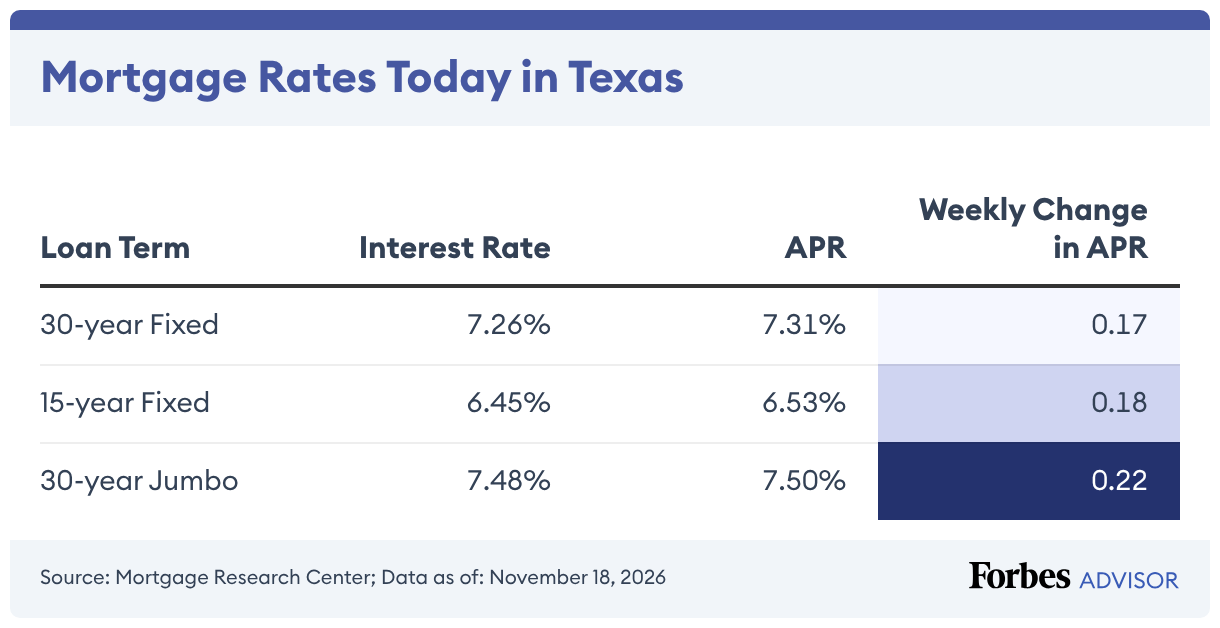
The 30-year fixed-rate mortgage remains the gold standard for Texas homebuyers. It offers the stability of a consistent monthly payment for three decades, making it the preferred choice for those planning to stay in their homes long-term. Currently, 30-year rates are the most visible benchmark in the industry.
For those looking to save significantly on interest, the 15-year fixed-rate mortgage is a powerful alternative. While the monthly payments are higher due to the shorter amortization period, the interest rates are typically 0.5% to 1% lower than their 30-year counterparts. In a high-rate environment, the 15-year loan allows Texas borrowers to build equity at a much faster pace, though it requires a higher debt-to-income (DTI) threshold to qualify for the larger monthly commitment.
Adjustable-Rate Mortgages (ARMs)
Adjustable-rate mortgages have regained popularity in Texas as buyers look for ways to lower their initial costs. An ARM usually offers a lower “teaser” rate for an initial period—typically 5, 7, or 10 years—after which the rate adjusts annually based on market indices. For a professional who anticipates a significant income increase or a family that plans to sell the home within five years, a 5/1 ARM can provide substantial monthly savings compared to a fixed-rate loan. However, the risk of rate hikes after the initial period makes this a more speculative choice in a volatile economy.
Government-Backed Loans: FHA, VA, and USDA
Texas has a significant population of first-time homebuyers and military veterans, making government-backed loans highly relevant.
-
FHA Loans: These are popular in growing suburban areas of San Antonio and El Paso. They allow for lower credit scores and down payments as low as 3.5%. While the interest rates are competitive, borrowers must factor in Mortgage Insurance Premiums (MIP).
-
VA Loans: With numerous military bases across the state, VA loans are a critical fixture of the Texas market. They often offer the lowest interest rates available and require $0 down payment for eligible veterans and active-duty members.
-
USDA Loans: For those looking at more rural parts of the state or the outskirts of major metros, USDA loans offer 100% financing with competitive fixed rates, provided the property and borrower meet specific income and location requirements.
The Impact of Property Taxes and Insurance in Texas
When discussing mortgage rates in Texas, it is impossible to ignore the “total cost of borrowing.” Texas is famous for having no state income tax, but the trade-off is higher-than-average property taxes. This has a direct impact on the effective interest rate a homeowner feels in their pocketbook.
Navigating High Property Taxes
In many Texas counties, property tax rates can range from 2% to 3% of the home’s assessed value. When a lender calculates a borrower’s “PITI” (Principal, Interest, Taxes, and Insurance) to determine loan eligibility, the tax portion often rivals the interest portion. Even if a borrower secures a competitive 6.5% interest rate, a high property tax appraisal can push the effective monthly cost to the equivalent of an 8% or 9% rate in a state with lower taxes. Borrowers must be diligent about utilizing the Texas Homestead Exemption to cap annual increases in assessed value, which helps stabilize the “T” in their PITI payment over time.
Homeowners Insurance and the Texas Climate
The Texas geography presents unique risks, from hurricanes on the Gulf Coast to hailstorms in North Texas and wildfires in the West. These environmental factors lead to higher homeowners insurance premiums. Lenders require comprehensive coverage to protect their collateral, and these premiums are typically escrowed along with the mortgage payment. For borrowers, this means that while the mortgage rate is a fixed percentage, the total monthly outflow can increase if insurance carriers hike premiums due to state-wide weather events.
How to Secure the Best Rates in the Lone Star State
Securing a favorable mortgage rate in the current Texas market is less about timing the market and more about personal financial optimization. Because lenders view interest rates as a reflection of risk, the more “risk-free” a borrower appears, the lower the rate they will be offered.
Optimizing Credit and Debt-to-Income Ratios
The difference between a 680 and a 740 credit score can equate to thousands of dollars in annual interest. In Texas, where home prices in major hubs have appreciated significantly, a high credit score is the most effective tool for driving down a quoted rate. Lenders also look closely at the DTI ratio. In a higher-rate environment, the amount of existing debt (car loans, student loans, credit cards) can limit the mortgage amount a borrower qualifies for, as the higher interest rate already consumes a larger portion of their monthly income.
Comparison Shopping and Local Lenders
The Texas mortgage market is highly competitive. Beyond national banks, the state is home to numerous credit unions and independent mortgage brokers who may have more flexibility in their pricing. It is recommended that borrowers obtain at least three Loan Estimates. Because mortgage rates can vary by 0.25% to 0.5% between lenders for the same borrower, shopping around is the most direct way to find the lowest “current” rate.
The Strategy of Points and Rate Locks
In a fluctuating market, two financial tools are essential: discount points and rate locks.
-
Discount Points: Borrowers can choose to pay an upfront fee (one point equals 1% of the loan amount) to “buy down” the interest rate. In Texas, where residents often stay in their homes for long periods, paying for points can result in significant long-term savings.
-
Rate Locks: Once a borrower finds a rate they are comfortable with, they should secure a rate lock. Most lenders offer 30- to 60-day locks. This protects the borrower from rate spikes while the loan is in underwriting, a crucial safeguard in a volatile economic climate.

Future Outlook for the Texas Housing Market
As we look toward the future of mortgage rates in Texas, the consensus among economists suggests a period of stabilization rather than a return to historic lows. The Texas economy continues to attract high-wage earners, which sustains demand and keeps upward pressure on home prices.
While the national narrative often focuses on a potential slowdown, Texas remains resilient due to its industrial diversity. If inflation continues its downward trajectory, we may see a gradual softening of rates, potentially dipping into the mid-to-high 5% range in the coming years. However, for the immediate future, current mortgage rates reflect a market that has priced in economic uncertainty. For the Texas homebuyer, the priority remains clear: focus on the total cost of ownership, maximize credit health, and view the mortgage rate as one component of a broader, long-term financial strategy in one of the nation’s most dynamic real estate environments.
aViewFromTheCave is a participant in the Amazon Services LLC Associates Program, an affiliate advertising program designed to provide a means for sites to earn advertising fees by advertising and linking to Amazon.com. Amazon, the Amazon logo, AmazonSupply, and the AmazonSupply logo are trademarks of Amazon.com, Inc. or its affiliates. As an Amazon Associate we earn affiliate commissions from qualifying purchases.