
For the better part of a decade, the global financial landscape was defined by “cheap money.” Interest rates sat at historic lows, fueling a massive boom in the housing market, a surge in speculative technology investments, and a general climate where borrowing was easy and saving offered little reward. However, the economic tides have shifted dramatically. In response to persistent inflation and shifting global dynamics, central banks—led by the Federal Reserve in the United States—have aggressive adjusted the cost of capital. Understanding what the new interest rates are, how they are determined, and what they mean for your wallet is no longer just a task for economists; it is a fundamental requirement for personal financial survival and success.
The Mechanics of the New Interest Rate Environment
The current interest rate environment is primarily dictated by the Federal Open Market Committee (FOMC) and its management of the federal funds rate. This rate is the interest rate at which commercial banks borrow and lend their excess reserves to each other overnight. While it may seem like a backend banking metric, it is the heartbeat of the entire economy, influencing everything from the yield on a three-month Treasury bill to the interest on your local bank’s savings account.
The Fed’s Dual Mandate and Inflation Targeting
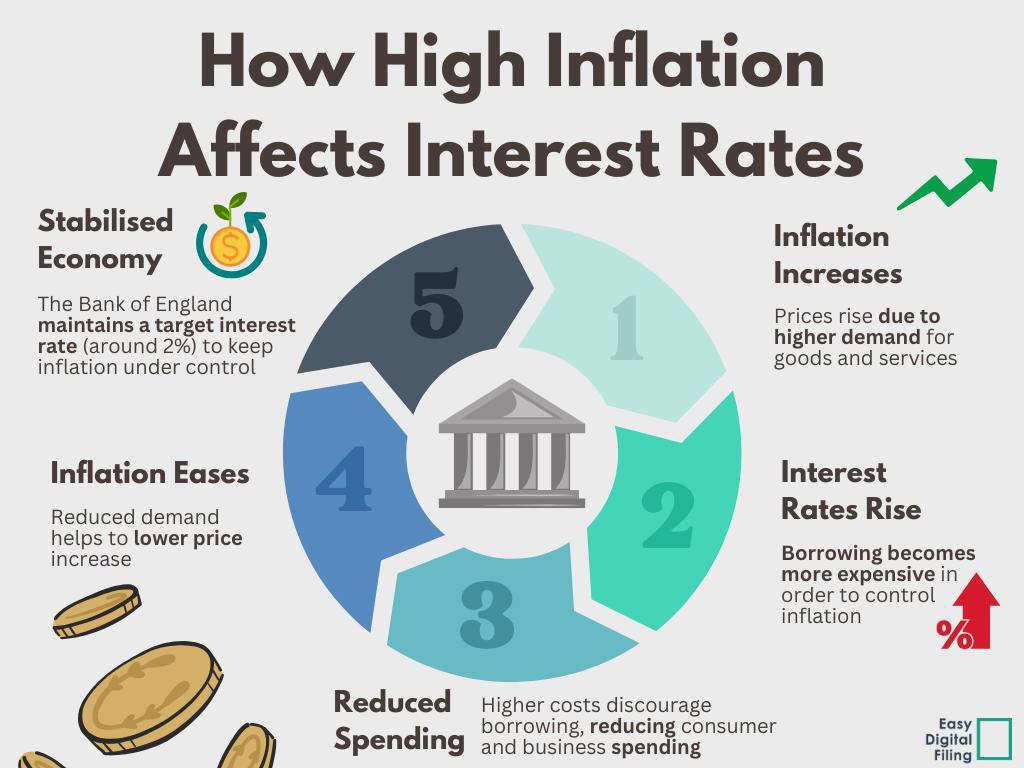
The Federal Reserve operates under a “dual mandate”: to promote maximum employment and stable prices. When inflation began to soar well beyond the 2% target, the “new” interest rates were ushered in as a cooling mechanism. By raising the cost of borrowing, the Fed aims to reduce consumer spending and business investment, thereby slowing down the economy enough to bring prices under control without triggering a deep recession. This delicate balancing act is what determines whether rates will stay “higher for longer” or if a pivot is on the horizon.
The Shift from Zero Bound to Restrictive Territory
For years, the “zero-bound” era meant that interest rates were effectively at 0%. Today’s rates have moved into “restrictive territory,” meaning they are high enough to actively discourage spending. For consumers, this means the days of 3% mortgages and 0% auto financing are, for the foreseeable future, a relic of the past. The new baseline requires a total recalibration of how we calculate the “cost” of our lifestyle and our investments.
Impact on Consumer Borrowing: The High Cost of Debt
The most immediate impact of the new interest rates is felt in the consumer credit market. Every percentage point increase in the federal funds rate trickles down to the products used by everyday Americans, often with a magnifying effect.
The Mortgage Market Transformation
Perhaps no sector has been hit harder by the new interest rates than real estate. The transition from 3% to 7% or 8% on a 30-year fixed-rate mortgage has a staggering impact on affordability. For a $400,000 loan, the difference between a 3% and 7% interest rate can mean an additional $1,000 per month in interest payments alone. This has created a “lock-in” effect, where homeowners with low rates are unwilling to sell, and buyers are finding themselves priced out of the market. The new reality for prospective homeowners involves larger down payments and a focus on “buying down” rates through points.
Credit Cards and Variable APRs
Credit cards are almost always tied to the prime rate, which moves in lockstep with the Federal Reserve’s decisions. As rates have risen, the average credit card APR has climbed to record highs, often exceeding 20% or even 25%. For those carrying a balance, the “new” rates represent a significant financial drain. Under these conditions, the priority for any personal finance strategy must be the aggressive repayment of high-interest revolving debt, as the compounding interest at these levels can quickly become unmanageable.
Auto Loans and Personal Credit
The era of “everyone qualifies” for 0% APR on a new truck or sedan is over. Auto loan rates have climbed significantly, making the total cost of vehicle ownership much higher than the sticker price suggests. Lenders have also tightened their credit standards. In this high-rate environment, your credit score is more valuable than ever; a “Good” versus “Excellent” score can now result in a difference of thousands of dollars over the life of a five-year loan.
Strategies for Savers and Investors in a High-Rate Environment

While high interest rates are a burden for borrowers, they provide a long-awaited “silver lining” for savers and conservative investors. For the first time in nearly two decades, cash is no longer “trash.”
The Return of the High-Yield Savings Account (HYSA)
One of the most positive developments of the new rate environment is the resurgence of the High-Yield Savings Account. While traditional “big box” banks have been slow to raise rates on basic savings, online banks and fintech platforms are now offering yields between 4% and 5.5%. For an emergency fund, this means your money is finally keeping pace with—or even beating—inflation. Moving stagnant cash from a 0.01% account to a high-yield option is one of the easiest and most impactful financial moves one can make today.
Certificates of Deposit (CDs) and Bond Ladders
With rates at their highest levels in years, many investors are locking in yields through Certificates of Deposit (CDs) and Treasury bonds. A “CD ladder” strategy—where you purchase multiple CDs with different maturity dates—allows you to benefit from high current rates while maintaining some liquidity. Similarly, the bond market has become attractive again. After years of negligible returns, fixed-income assets now provide a genuine alternative to the volatility of the stock market, allowing for a more traditional 60/40 (stocks/bonds) portfolio split that actually generates meaningful income.
Equity Markets: Growth vs. Value
Higher interest rates change the way stocks are valued. When the “risk-free rate” (the return on government bonds) is high, investors demand higher returns from the stock market to justify the risk. This particularly hurts “Growth” stocks—companies that are not currently profitable but promise high future earnings. When interest rates rise, those future earnings are worth less in today’s dollars (a concept known as discounting). Conversely, “Value” stocks—established companies with strong cash flows and dividends—often perform better or remain more stable in a high-rate environment.
Business Finance and the Cost of Capital
It isn’t just individuals who are feeling the pinch; the business world is undergoing a massive restructuring of its financial expectations. The cost of capital—the interest rate a company must pay to borrow money for expansion—has doubled or tripled for many firms.
The End of the “Growth at All Costs” Era
In the low-rate era, venture capital poured into startups that focused on user growth rather than profitability. With the new interest rates, the “burn rate” (how fast a company spends its cash) has become a critical metric. Investors now demand a clear path to profitability. This shift has led to a wave of corporate belt-tightening, layoffs in the tech sector, and a focus on operational efficiency. Businesses can no longer rely on cheap debt to paper over structural inefficiencies.
Debt Refinancing and the “Maturity Wall”
Many corporations took out large amounts of debt when rates were near zero. As that debt “matures” and needs to be refinanced, these companies are forced to issue new debt at the much higher current rates. This “maturity wall” represents a significant risk for the economy over the next few years. Companies with weak balance sheets may struggle to survive the higher interest payments, while those with deep cash reserves are finding themselves in a position of strength, able to acquire competitors or buy back stock.
Future Outlook: Predicting the Pivot and Long-Term Planning
The most common question regarding the new interest rates is: “When will they go back down?” The answer is complex and depends entirely on economic data—specifically inflation and employment figures.
Understanding the “Pivot”
The financial markets are constantly looking for a “pivot”—the moment the Federal Reserve stops raising rates and begins to cut them. However, the Fed has signaled that they are in no rush to return to the near-zero rates of the past. The “new normal” may settle into a middle ground, where rates are neither as high as they are now nor as low as they were in 2020. This suggests that financial planning should be based on the assumption that capital will remain relatively expensive for the foreseeable future.

Building a Resilient Financial Portfolio
In this environment, the key to financial success is resilience. This involves:
-
Prioritizing Liquidity: Keep cash in high-yield vehicles to take advantage of current rates while staying ready for opportunities.
-
Minimizing Variable Debt: Convert variable-rate loans to fixed-rate options where possible, and prioritize paying off high-interest balances.
-
Diversifying Income: Look for investments that provide yield (dividends, interest) rather than just capital appreciation.
-
Stress-Testing Your Budget: Ensure your monthly cash flow can handle the increased costs of insurance, utilities, and debt servicing that often accompany a high-rate, inflationary environment.
The new interest rates represent a fundamental shift in the global economy. While the transition away from “easy money” is painful for many, it also marks a return to a more disciplined financial world—one where saving is rewarded, debt is treated with caution, and investment capital is allocated to the most efficient and profitable uses. By understanding these mechanics, you can move from a position of reacting to the news to one of strategically benefiting from the new economic reality.
aViewFromTheCave is a participant in the Amazon Services LLC Associates Program, an affiliate advertising program designed to provide a means for sites to earn advertising fees by advertising and linking to Amazon.com. Amazon, the Amazon logo, AmazonSupply, and the AmazonSupply logo are trademarks of Amazon.com, Inc. or its affiliates. As an Amazon Associate we earn affiliate commissions from qualifying purchases.