
Securing a mortgage is arguably the most significant financial commitment an individual will make in their lifetime. When prospective homeowners or those looking to refinance scan the financial headlines, the primary question they ask is: “What is the lowest fixed-rate mortgage available?” However, answering this question requires more than looking at a single percentage point on a digital billboard. The lowest fixed-rate mortgage is a moving target, influenced by global economic forces, personal financial health, and the specific architecture of the loan product itself.
A fixed-rate mortgage is a home loan where the interest rate remains the same for the entire term of the loan. This stability is the bedrock of personal financial planning for millions, as it ensures that the principal and interest portion of the monthly housing payment will never change. Understanding how to find the absolute floor of these rates requires a deep dive into the mechanics of the lending industry and the strategies used by savvy borrowers to minimize their cost of capital.

The Mechanics of Fixed-Rate Mortgages and Current Benchmarks
To identify the lowest possible rate, one must first understand that mortgage rates are not set in a vacuum. They are largely influenced by the secondary market, specifically the yield on 10-year Treasury notes. Because investors view mortgages as slightly riskier than government debt, mortgage rates typically hover 1.5 to 3 percentage points above the 10-year Treasury yield. This “spread” accounts for the risk of default and the administrative costs of servicing the loan.
Historical Context and Current Realities
Historically, the “lowest” rate is a relative term. In the early 1980s, a “low” rate was considered 10% or 11%. Conversely, during the unique economic environment of 2020 and 2021, rates plummeted to historic lows, with some 30-year fixed rates dipping below 3% and 15-year rates reaching near 2%. In the current economic cycle, “low” might be defined as anything significantly below the national average, which fluctuates based on inflation data and Federal Reserve policy.
The 15-Year vs. 30-Year Distinction
The most immediate way to secure a lower fixed rate is to shorten the loan term. Lenders offer lower interest rates on 15-year fixed mortgages compared to 30-year fixed mortgages because the shorter duration represents less risk for the institution. While the monthly payment is higher because the principal is being repaid twice as fast, the interest rate itself is typically 0.50% to 1.00% lower than its 30-year counterpart. For a borrower prioritizing the lowest possible interest rate, the 15-year fixed-rate mortgage is almost always the superior choice.
Factors That Determine Your Personal “Lowest” Rate
While market benchmarks provide a baseline, the rate a lender offers an individual is highly personalized. Lenders use a process called “risk-based pricing” to determine how much to charge for a loan. If you want the lowest rate advertised, you must present the lowest possible risk to the lender.
Credit Score: The Ultimate Lever
The single most influential factor in your personal mortgage rate is your FICO credit score. Lenders reserve their “headline” low rates for borrowers with “prime” or “super-prime” credit, typically defined as a score of 740 or higher. A borrower with a 760 score may receive a rate that is a full percentage point lower than someone with a 640 score. Over the life of a $400,000 loan, this difference can amount to over $100,000 in saved interest.
Debt-to-Income (DTI) and Loan-to-Value (LTV) Ratios
Lenders also look at your Debt-to-Income ratio (the percentage of your gross monthly income that goes toward debt payments) and your Loan-to-Value ratio (the amount of the loan compared to the value of the home). To get the lowest fixed rate, a borrower generally needs a DTI below 36% and an LTV of 80% or less (meaning a 20% down payment). High equity in the home gives the lender a cushion of safety, which they reward with a lower interest rate.
Property Type and Occupancy
The “lowest” rate is usually reserved for primary residences—single-family homes where the owner intends to live. Investment properties or second homes carry higher risk for lenders, as borrowers are statistically more likely to default on a rental property than on the roof over their own heads during financial hardship. Consequently, rates for investment properties are often 0.50% to 0.75% higher than for primary residences.
Strategies to Secure the Absolute Floor
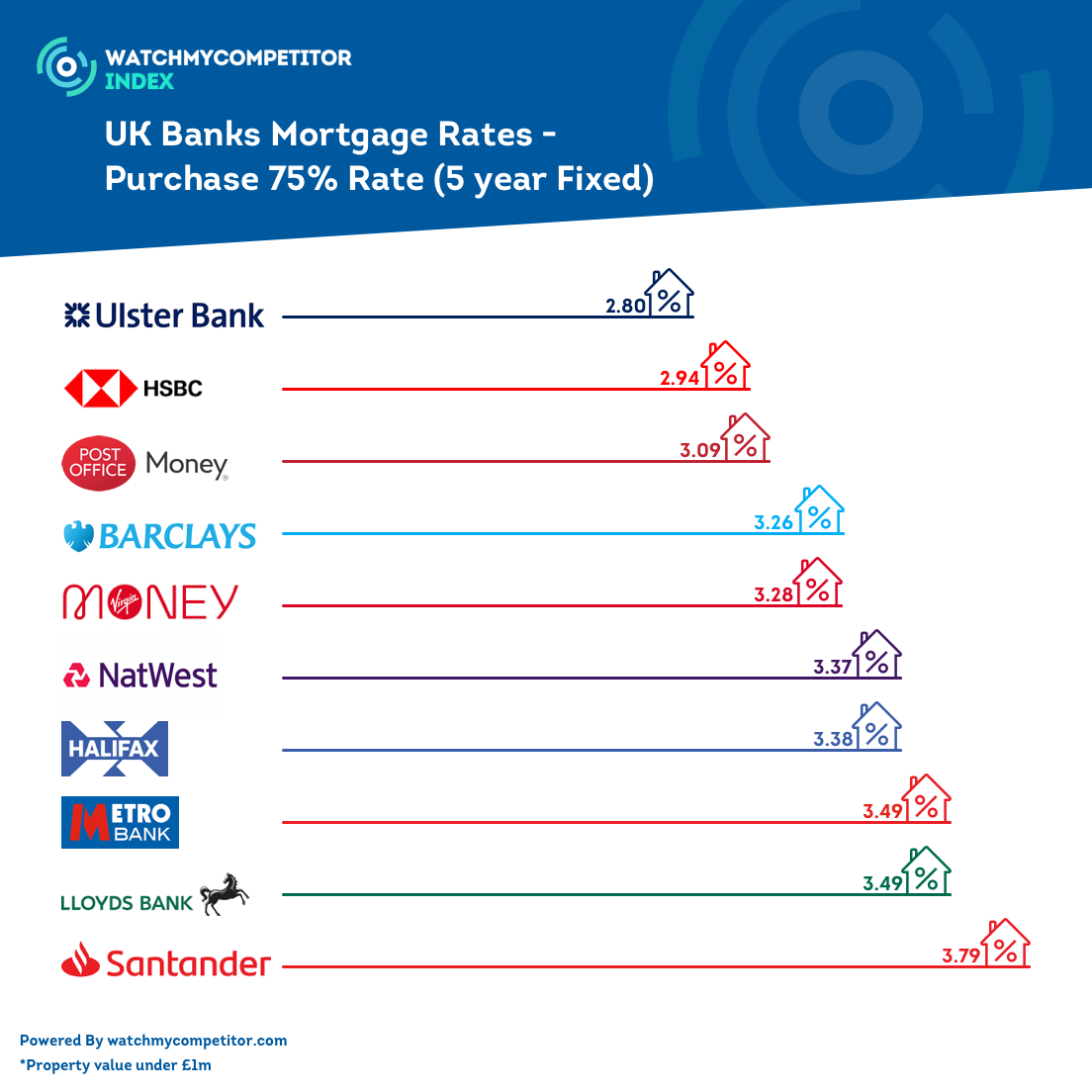
For a borrower who is ready to move, there are several strategic maneuvers to drive the fixed rate even lower than the standard market offering. These involve both upfront financial commitments and rigorous comparison shopping.
Buying Down the Rate with Discount Points
One of the most effective ways to secure the lowest fixed rate is through “discount points.” One point equals 1% of the loan amount and is paid upfront at closing in exchange for a permanent reduction in the interest rate—usually about 0.25% per point. This is essentially “prepaying” interest to lower the monthly commitment.
Whether this is the “lowest” rate in a practical sense depends on the “break-even point.” If paying $4,000 for a point saves you $100 a month, it will take 40 months to break even. If you plan to stay in the home for 10 or 20 years, buying points is a mathematically sound way to secure a rate that is lower than the market average.
The Power of Local Credit Unions and Portfolio Lenders
While national “big box” banks have high visibility, the lowest fixed rates are often found at local credit unions or small community banks. These institutions are often “portfolio lenders,” meaning they keep the loans on their own books rather than selling them to investors like Fannie Mae or Freddie Mac. Because they set their own risk parameters, they can sometimes offer more competitive rates to local members with strong financial profiles.
Timing the Market and the Rate Lock
Mortgage rates can change multiple times in a single day based on economic reports, such as the Consumer Price Index (CPI) or jobs data. To secure the lowest rate, borrowers must be prepared to “lock” their rate at the right moment. A rate lock is a guarantee from the lender that they will honor a specific interest rate for a set period (usually 30 to 60 days) while the loan is processed. Savvy borrowers monitor the 10-year Treasury yield; when the yield dips, they move quickly to lock in their mortgage rate.
The Financial Impact of a Low Fixed Rate
The quest for the lowest fixed rate is not merely a matter of pride; it is a fundamental wealth-building strategy. In the world of personal finance, the interest paid on a mortgage is often the largest single expense a household will ever face.
Amortization and Interest Savings
To illustrate the power of a low rate, consider two 30-year fixed-rate mortgages for $500,000.
-
At a 7% interest rate, the total interest paid over 30 years is approximately $697,000.
-
At a 5% interest rate, the total interest paid is approximately $466,000.
By securing a rate just 2% lower, the borrower saves $231,000. This is capital that can be redirected toward retirement accounts, education funds, or diversified investment portfolios. The compounding effect of these savings over three decades can represent the difference between a modest retirement and significant generational wealth.
Fixed Rates as an Inflation Hedge
A low fixed-rate mortgage also acts as a powerful hedge against inflation. While the costs of goods, services, and rents rise over time, the principal and interest payment on a fixed-rate mortgage remains static. As inflation devalues the currency, the borrower is essentially paying back the loan with “cheaper” dollars in the future. In high-inflation environments, having the lowest possible fixed rate becomes an even greater asset, as it locks in housing costs while the market value of the property and the borrower’s income potentially rise.

Conclusion: Defining Your Lowest Rate
Ultimately, the “lowest” fixed-rate mortgage is a combination of market timing, personal financial optimization, and product selection. It is rarely found by clicking the first advertisement seen online. Instead, it is earned by maintaining a pristine credit score, providing a significant down payment, shopping across diverse lending institutions, and potentially paying discount points to buy down the rate.
While the specific number will change from week to week based on the whims of the bond market and Federal Reserve sentiment, the strategies for obtaining the best available rate remain constant. By focusing on the variables within their control, borrowers can secure a financial foundation that provides both stability and the long-term benefit of minimized borrowing costs. In the landscape of personal finance, a low fixed-rate mortgage is more than just a loan; it is a strategic tool for long-term economic success.
aViewFromTheCave is a participant in the Amazon Services LLC Associates Program, an affiliate advertising program designed to provide a means for sites to earn advertising fees by advertising and linking to Amazon.com. Amazon, the Amazon logo, AmazonSupply, and the AmazonSupply logo are trademarks of Amazon.com, Inc. or its affiliates. As an Amazon Associate we earn affiliate commissions from qualifying purchases.