
In our increasingly interconnected world, the internet is as vital as electricity. We use it for work, communication, entertainment, and managing our finances. At the heart of this digital web lies the IP address, a unique identifier for every device connected to a network. However, the sheer volume of devices vying for these addresses has led to a crucial technological solution: Network Address Translation, or NAT. This article will delve into what a NATted IP address is, why it’s essential, and its implications across technology, brand perception, and even your personal finances.

The Foundation: Understanding IP Addresses
Before we can grasp what a NATted IP address is, we must first understand the fundamental concept of an IP address. IP, or Internet Protocol, is a set of rules that govern how data is transmitted across networks, including the internet. Think of an IP address as a postal address for your device on the internet. Every device that sends or receives data online needs an IP address to be identified.
There are two primary versions of IP addresses:
- IPv4 (Internet Protocol version 4): This is the older and still most widely used version. IPv4 addresses are typically represented as four sets of numbers separated by dots, like
192.168.1.1. Each number can range from 0 to 255. The limited number of available IPv4 addresses (approximately 4.3 billion) has been a major driving force behind the development and adoption of NAT. - IPv6 (Internet Protocol version 6): This is the newer generation of IP addresses, designed to overcome the limitations of IPv4. IPv6 addresses are much longer and use hexadecimal numbers separated by colons, like
2001:0db8:85a3:0000:0000:8a2e:0370:7334. IPv6 offers an exponentially larger pool of addresses, but its widespread adoption is still a work in progress.
Every device directly connected to the internet, such as a web server, a cloud computing instance, or even your home router (when it’s assigned one by your ISP), has a public IP address. This public IP address is globally unique and routable across the internet.
The Problem: IP Address Scarcity
The rapid growth of internet-connected devices, from smartphones and laptops to smart TVs and home appliances, has put immense pressure on the limited supply of IPv4 addresses. Imagine every single device needing its own unique global address – it simply wouldn’t be sustainable with the current IPv4 structure. This scarcity, coupled with the desire for enhanced security, paved the way for Network Address Translation (NAT).
The Solution: Network Address Translation (NAT)
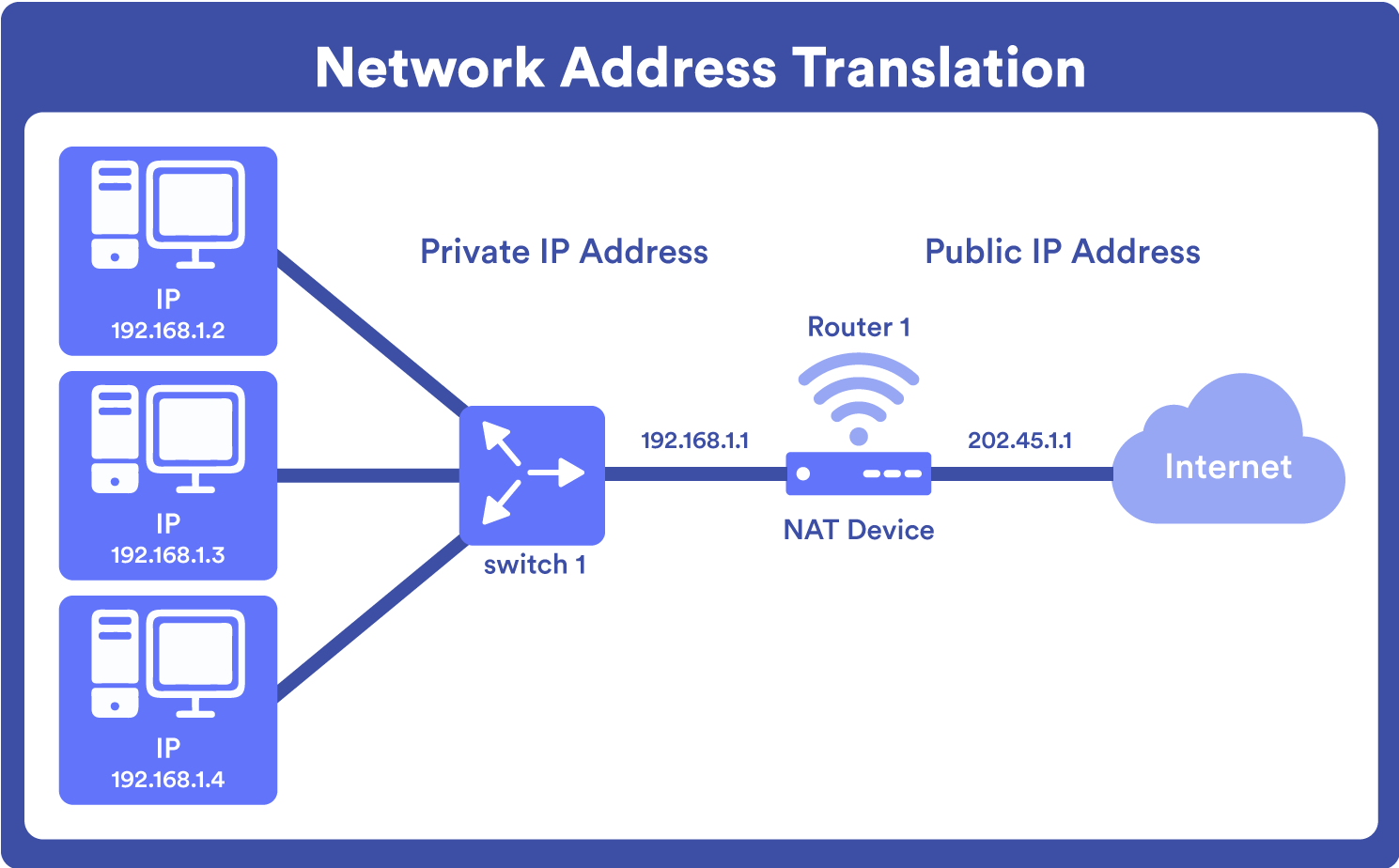
NAT is a technique used by routers and firewalls to remap one IP address space into another. In essence, it allows multiple devices on a private network to share a single public IP address when accessing the internet. This is akin to a large office building where all the individual office numbers share a single main street address for mail delivery.
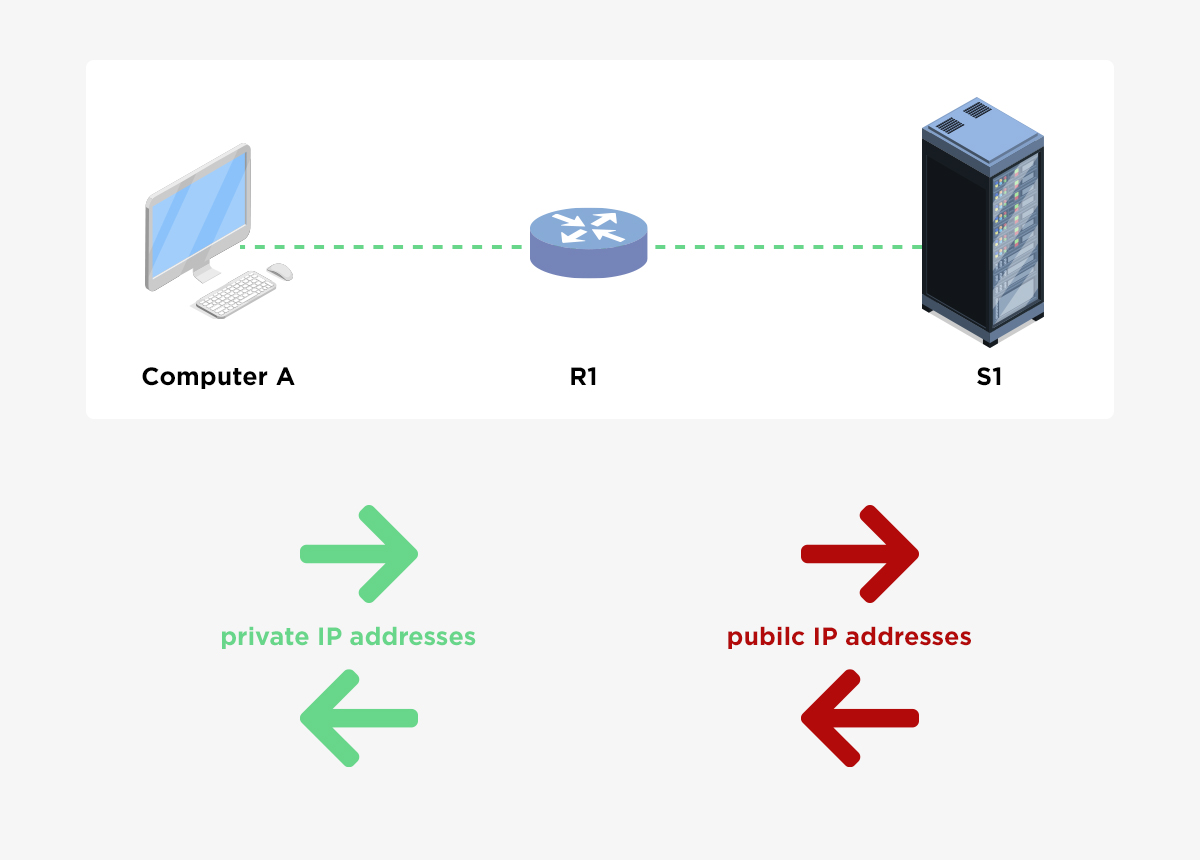
When a device on your private network (like your laptop, smartphone, or smart TV) wants to connect to the internet, it sends a request to your router. Instead of the device’s private IP address being sent directly to the internet, the router performs NAT. It replaces the device’s private IP address with its own public IP address and also modifies the port number to keep track of which device made the request. This modified packet is then sent to the internet.
When the response from the internet comes back to the router, the router uses its translation table (which records the original private IP address and port number) to direct the traffic to the correct device on the private network.
Types of NAT
There are several types of NAT, each with slightly different mechanisms and implications:
Static NAT
In Static NAT, a private IP address is permanently mapped to a public IP address. This is often used for servers that need to be accessible from the internet, such as web servers or VPN servers. While it provides a direct mapping, it consumes a public IP address for each device, which is not practical for managing large numbers of devices.
Dynamic NAT
Dynamic NAT uses a pool of public IP addresses. When a device on the private network needs to access the internet, it’s assigned an available public IP address from the pool. Once the connection is terminated, the public IP address is returned to the pool for other devices to use. This is more efficient than Static NAT in terms of IP address usage but still requires a dedicated pool of public IPs.
Port Address Translation (PAT), also known as NAT Overload or Overloading NAT
This is the most common type of NAT used in home and small business networks. PAT allows multiple devices on a private network to share a single public IP address. It achieves this by using different port numbers to distinguish between the various internal devices. When a device sends a request, the router not only replaces the private IP address with its public IP address but also assigns a unique source port number. The router maintains a translation table that maps the combination of the private IP address and the original port number to the public IP address and the new, unique port number. When the response comes back, the router uses this table to direct the traffic to the correct internal device based on the destination port number. This is incredibly efficient for conserving public IPv4 addresses.
The Benefits of NAT
The adoption of NAT has brought about several significant advantages:
1. IP Address Conservation
As mentioned, the primary driver for NAT was to alleviate the scarcity of IPv4 addresses. By allowing many private devices to share a single public IP, NAT has significantly extended the lifespan of IPv4 and enabled the continued growth of the internet without immediate exhaustion of addresses.
2. Enhanced Security
NAT acts as a basic firewall, providing a layer of security for devices on a private network. Because devices behind NAT do not have directly accessible public IP addresses, they are not directly exposed to the internet. Incoming connection requests from the internet are typically blocked unless explicitly allowed by the router’s configuration (e.g., through port forwarding). This makes it more difficult for malicious actors to scan and target individual devices within a private network.
3. Network Flexibility and Management
NAT simplifies network management. Internal networks can be designed using private IP address ranges (like 192.168.x.x, 10.x.x.x, or 172.16.x.x to 172.31.x.x), which are not routable on the public internet. This allows for greater flexibility in designing and expanding internal networks without worrying about IP address conflicts with other organizations or the public internet. IT administrators can easily reconfigure internal IP schemes or add new devices without needing to obtain new public IP addresses for each.
Understanding Your NATted IP Address
When you connect to the internet through your home router, your devices are assigned private IP addresses from a range designated for internal use. Your router, in turn, is assigned a public IP address by your Internet Service Provider (ISP). This public IP address is what identifies your entire home network to the rest of the internet.
So, when a website or online service sees your connection, it’s seeing the IP address of your router, not the individual IP address of your laptop or smartphone. This is your NATted IP address – the public IP address that your router is using to represent your private network.
You can easily find your public IP address by searching “what is my IP address” on Google. This will display the IP address that your router is currently using to communicate with the internet.
Implications for Technology and Software
The existence of NAT has shaped the development of many internet technologies and software applications.
- Peer-to-Peer (P2P) Applications: Applications like torrent clients and some online gaming platforms often rely on direct peer-to-peer connections. NAT can create challenges for these applications because it can be difficult for an external device to initiate a connection to a device behind NAT. Techniques like UPnP (Universal Plug and Play) and STUN (Session Traversal Utilities for NAT) have been developed to help P2P applications overcome NAT limitations.
- Online Gaming and VoIP: Similar to P2P, online gaming and Voice over IP (VoIP) services require stable, low-latency connections. NAT can sometimes introduce latency or block necessary connections. Developers often employ NAT traversal techniques to ensure smooth user experiences.
- Remote Access: Accessing devices or services on your home network from outside can be complicated by NAT. Solutions like VPNs (Virtual Private Networks) or port forwarding on your router are often necessary to enable remote access.
Implications for Brand and Reputation
While NAT primarily deals with network infrastructure, it can indirectly influence brand perception and reputation, especially for businesses.
- Website Accessibility: If a business’s website or online services are hosted behind a poorly configured NAT setup, it could lead to accessibility issues for some users, impacting customer experience and potentially damaging brand perception. Slow loading times or intermittent outages can frustrate users and lead them to seek alternatives.
- Online Security Perception: While NAT offers some security benefits, overly aggressive NAT configurations or known vulnerabilities in router firmware can create security concerns. Businesses need to ensure their network security is robust, and this includes how NAT is implemented. A perceived lack of security can erode trust and damage a brand’s reputation.
- IoT and Connected Devices: As more devices become internet-connected, the way they are managed on a network, including through NAT, becomes critical. A seamless and secure user experience with connected products is paramount for brand loyalty. Technical glitches stemming from network configurations can lead to negative reviews and a tarnished brand image.
Implications for Money and Finance
NAT also has ripple effects in the realm of personal finance and online income.
- Online Transactions: When you make online purchases or financial transactions, your connection is routed through your NATted IP address. While generally secure, understanding how your network is configured can provide peace of mind. For businesses, robust network security, including proper NAT implementation, is crucial to protect sensitive financial data and maintain customer trust. A data breach originating from a poorly secured network can have devastating financial consequences.
- Remote Work and Online Income: Many individuals now earn income through remote work or online ventures. Accessing company resources, cloud services, or managing online businesses often involves connecting from home networks. Ensuring a stable and secure internet connection, which relies on proper network configuration including NAT, is essential for productivity and income generation. Issues with connectivity due to NAT misconfiguration can lead to lost work hours and reduced income.
- Investment and Trading Platforms: Accessing online brokerage accounts and trading platforms requires reliable internet access. If your NAT setup is causing connectivity problems, it could prevent you from executing trades or monitoring your investments, potentially leading to financial losses.
The Future: IPv6 and the Evolution of NAT
The ongoing transition to IPv6 is a critical development that will gradually reduce the reliance on NAT for IP address conservation. With its vast address space, IPv6 aims to provide every device with a unique, globally routable public IP address. This will simplify network configurations, improve the performance of certain applications, and enhance end-to-end connectivity.
However, NAT is unlikely to disappear entirely. Even with IPv6, NAT can still be used for security purposes, network segmentation, and simplifying management in complex enterprise environments. The evolution of NAT and its integration with IPv6 will continue to shape the future of internet connectivity.
Conclusion
A NATted IP address is a fundamental concept in modern networking that allows multiple devices to share a single public IP address, primarily to conserve IPv4 addresses and enhance security. From the intricate workings of technology and software to the perception of brands and the security of our financial transactions, NAT plays a pervasive and often invisible role. As we navigate the ever-expanding digital landscape, understanding the principles behind NAT provides valuable insight into how our connected world functions, ensuring smoother operations, stronger security, and ultimately, a more reliable online experience.
aViewFromTheCave is a participant in the Amazon Services LLC Associates Program, an affiliate advertising program designed to provide a means for sites to earn advertising fees by advertising and linking to Amazon.com. Amazon, the Amazon logo, AmazonSupply, and the AmazonSupply logo are trademarks of Amazon.com, Inc. or its affiliates. As an Amazon Associate we earn affiliate commissions from qualifying purchases.