
Navigating the landscape of home financing is one of the most significant financial undertakings an individual will face. At the heart of this journey lies the interest rate—a percentage that dictates the cost of borrowing money to purchase real estate. Understanding what these rates are, how they are determined, and how they impact your long-term wealth is essential for any prospective homeowner or investor. Interest rates are not static; they are dynamic reflections of the global economy, domestic monetary policy, and an individual’s unique financial profile. To master the art of home financing, one must look beyond the surface level “daily rate” and examine the mechanics of the mortgage market.

Understanding the Fundamentals of Home Loan Interest Rates
The interest rate on a home loan is essentially the price of admission for accessing capital. However, not all interest is calculated or applied in the same way. The structure of your loan fundamentally changes how you pay for your home over time.
Fixed-Rate vs. Variable-Rate Mortgages
The most common distinction in the mortgage world is between fixed-rate and variable-rate (often called Adjustable-Rate Mortgages or ARMs) loans. A fixed-rate mortgage offers stability; the interest rate remains constant throughout the entire life of the loan, whether that is 15, 20, or 30 years. This protects the borrower from rising interest rates in the future and allows for precise long-term budgeting.
In contrast, an Adjustable-Rate Mortgage (ARM) typically offers a lower “teaser” rate for an initial period—usually three, five, seven, or ten years. After this period, the rate adjusts periodically based on a specific financial index, such as the Secured Overnight Financing Rate (SOFR). While ARMs can be beneficial for those planning to sell or refinance before the adjustment period begins, they carry the inherent risk of payment shock if market rates climb significantly.
How the Federal Reserve and the Bond Market Influence Your Rate
A common misconception is that the Federal Reserve directly sets mortgage rates. In reality, mortgage rates are more closely tied to the yields on 10-year Treasury bonds. When investors are confident in the economy, they may move money into stocks, causing bond yields—and consequently mortgage rates—to rise. When the economy is uncertain, investors flock to the safety of bonds, driving yields and mortgage rates down.
The Federal Reserve does, however, influence the environment. By adjusting the Federal Funds Rate, the Fed controls the cost for banks to borrow money from each other. This creates a trickle-down effect. If the Fed raises rates to combat inflation, mortgage lenders usually follow suit to maintain their profit margins and account for the increased cost of capital.
Key Factors That Determine Your Specific Rate
While national averages provide a benchmark, the actual interest rate you are offered is highly personalized. Lenders use a process called “risk-based pricing” to determine how likely you are to default on your loan. The lower the perceived risk, the lower the interest rate.
The Critical Role of Credit Scores
Your credit score is perhaps the single most influential factor in determining your home loan interest rate. Lenders view a high credit score (typically 740 or above) as a sign of financial responsibility. Borrowers in this tier are rewarded with the lowest available rates. Conversely, a borrower with a score in the low 600s might find themselves paying 1% to 2% more in interest than a high-score peer. Over a 30-year mortgage, this seemingly small difference can result in tens of thousands of dollars in additional interest payments.
Loan-to-Value (LTV) Ratio and Down Payments
The Loan-to-Value (LTV) ratio is the amount of the loan compared to the appraised value of the property. If you put down 20% of the home’s purchase price, your LTV is 80%. Generally, a lower LTV signifies less risk for the lender. If you have a high LTV (a small down payment), the lender may charge a higher interest rate or require Private Mortgage Insurance (PMI), which increases your overall monthly cost. A substantial down payment not only lowers your monthly obligation but also signals to the lender that you have significant “skin in the game,” often resulting in a more competitive rate.
Debt-to-Income (DTI) Ratio
Lenders also examine your Debt-to-Income (DTI) ratio, which is the percentage of your gross monthly income that goes toward paying debts. While DTI is primarily used to determine how much you can borrow, it also impacts the lender’s overall assessment of your financial stability. A lower DTI suggests that you have a cushion to handle unexpected expenses, making you a more attractive candidate for favorable interest terms.
The Current Economic Landscape and Mortgage Trends
Interest rates do not exist in a vacuum; they are a byproduct of the broader economic climate. Understanding the macro-trends can help borrowers decide whether to lock in a rate now or wait for potential shifts.
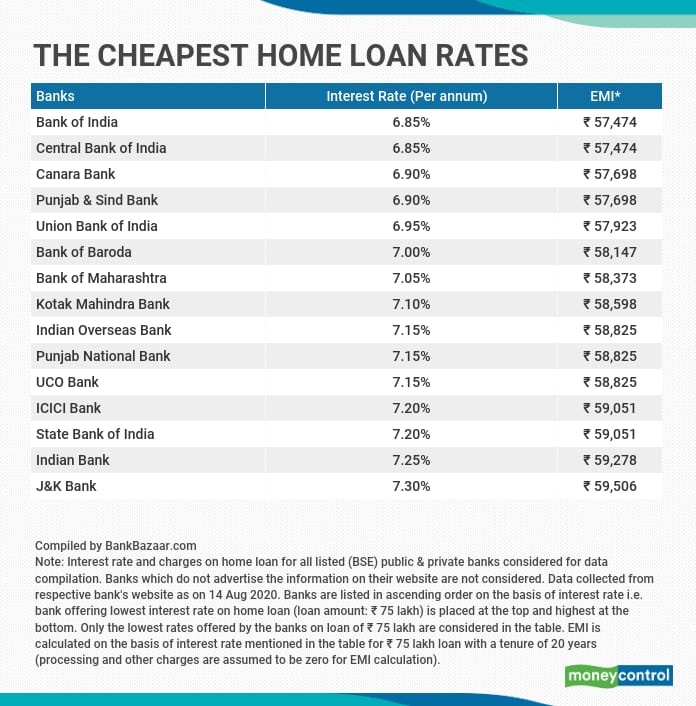
Inflation and Its Correlation with Rates
Inflation is the primary enemy of fixed-income investments like mortgages. If inflation is high, the purchasing power of the future dollars a lender receives is diminished. To compensate for this loss of value, lenders demand higher interest rates. This is why, during periods of rapid inflation, mortgage rates tend to spike. Monitoring the Consumer Price Index (CPI) can provide clues about the future direction of interest rates; as inflation cools, there is often downward pressure on mortgage yields.
Market Volatility and Long-term Projections
The mortgage market is sensitive to geopolitical events, employment data, and GDP growth. In times of global instability, “flight to quality” often occurs, where investors buy U.S. Treasuries, leading to lower mortgage rates. Conversely, a booming labor market can lead to fears of an overheating economy, prompting the Fed to tighten monetary policy and driving rates upward. Professional financial planning involves looking at these cycles to determine if we are in a “rising rate environment” or a “declining rate environment,” which dictates the urgency of a home purchase or a refinance.
Strategies to Secure the Best Possible Rate
A home loan is a product, and like any product, it pays to shop around. Achieving the best rate requires a combination of preparation, timing, and negotiation.
Shopping Around and Comparing Lenders
Too many borrowers accept the first rate quote they receive from their primary bank. However, interest rates can vary significantly between retail banks, credit unions, and online mortgage lenders. Obtaining at least three to five Loan Estimates allows you to compare the Annual Percentage Rate (APR), which includes not just the interest but also the fees associated with the loan. This transparency ensures you are looking at the true cost of the debt.
Buying Down the Rate with Discount Points
Borrowers often have the option to “buy down” their interest rate by paying discount points at closing. One point typically costs 1% of the total loan amount and reduces the interest rate by a predetermined increment (often 0.25%). This is an upfront investment that pays off over time. To determine if this is a wise financial move, you must calculate the “break-even point”—the moment when the monthly savings from the lower interest rate exceed the initial cost of the points. If you plan to stay in the home for a long duration, buying points can be a highly effective wealth-building strategy.
The Importance of Timing and Rate Locks
Interest rates can change multiple times in a single day. Once you find a rate that fits your budget, you have the option to “lock” it. A rate lock guarantees that your interest rate won’t change between the time you receive the offer and the time you close the loan, provided you close within a specific timeframe (usually 30 to 60 days). Without a lock, you are “floating” your rate, which exposes you to the risk of market increases. Strategic borrowers monitor market trends and lock in when they perceive a temporary dip in the daily averages.
Navigating Different Loan Types and Their Rate Structures
The type of loan program you choose will have a direct impact on the interest rate you are offered. Different programs are designed for different risk profiles and financial goals.
Conventional vs. Government-Backed Loans
Conventional loans are not insured by the federal government and typically follow the guidelines set by Fannie Mae and Freddie Mac. These loans often offer the most competitive rates for borrowers with high credit scores and large down payments.
Government-backed loans, such as FHA, VA, and USDA loans, are designed to make homeownership more accessible. FHA loans often have lower interest rates than conventional loans for borrowers with moderate credit scores, though they require mortgage insurance premiums. VA loans, available to veterans and active-duty service members, often provide some of the lowest rates in the market with no down payment requirement, making them an incredible financial tool for those who qualify.

Jumbo Loans and Luxury Financing
When a loan amount exceeds the “conforming loan limits” set by the Federal Housing Finance Agency, it is classified as a jumbo loan. Because these loans cannot be purchased by Fannie Mae or Freddie Mac, they carry a different risk profile for lenders. Historically, jumbo loan rates were higher than conventional rates, but in recent years, they have occasionally been lower or equal, depending on the liquidity of the large-scale banking institutions that hold them. Borrowers seeking jumbo financing must meet more stringent requirements regarding cash reserves and credit history to secure the best rates.
In conclusion, while “what are the interest rates for home loans” is a simple question, the answer is a complex intersection of personal financial health and global economic forces. By improving your credit profile, understanding the different loan products available, and keeping a close eye on the bond market, you can position yourself to secure a rate that minimizes your costs and maximizes your long-term equity. In the world of personal finance, even a fraction of a percentage point in your mortgage rate can change the trajectory of your financial future.
aViewFromTheCave is a participant in the Amazon Services LLC Associates Program, an affiliate advertising program designed to provide a means for sites to earn advertising fees by advertising and linking to Amazon.com. Amazon, the Amazon logo, AmazonSupply, and the AmazonSupply logo are trademarks of Amazon.com, Inc. or its affiliates. As an Amazon Associate we earn affiliate commissions from qualifying purchases.