
In the evolving landscape of digital media, the question of “what Sirius station” to tune into has transitioned from a simple turn of a physical dial to a complex interaction with sophisticated software, satellite arrays, and cloud-based streaming protocols. SiriusXM represents a unique intersection of legacy aerospace technology and modern mobile application development. Navigating this ecosystem requires an understanding of how the platform categorizes its massive library of content and the technical hardware required to access it across various environments.
As we move further into the decade, the distinction between traditional satellite broadcasting and internet-based streaming has blurred. For the tech-savvy consumer, identifying the right station is no longer just about a channel number; it is about understanding the digital architecture that delivers high-fidelity audio to vehicles, smart homes, and mobile devices simultaneously.
The Engineering Behind the Signal: Understanding Satellite vs. Internet Protocol
To truly understand how to find and access a specific Sirius station, one must first understand the dual-delivery system the platform employs. SiriusXM utilizes a hybrid network that combines geostationary satellites with a robust terrestrial repeater network and a global IP-based streaming infrastructure.
The Satellite Constellation
Traditional satellite radio relies on a fleet of satellites in high Earth orbit. These satellites broadcast signals in the S-band spectrum (2.3 GHz). When a user asks “what Sirius station” is playing a specific genre in their car, the hardware tuner in the vehicle is decoding a signal that has traveled thousands of miles. The technical advantage of this system is its ubiquity; unlike cellular data, which can drop in remote areas or mountainous terrain, satellite coverage remains consistent across the continental United States and Canada. The “station” in this context is a specific frequency slice dedicated to a digital audio stream, compressed using proprietary codecs to maximize bandwidth.
IP-Based Streaming and the 360L Experience
In recent years, the platform has introduced the “360L” platform, which represents a significant technological leap. This system combines satellite delivery with cellular connectivity. When a user looks for a station on a 360L-equipped head unit, the software can pull from over 10,000 hours of On-Demand content and “Xtra” channels that are not available via satellite alone. This hybrid approach allows for higher-bitrate audio and lower latency for interactive features, such as skipping tracks or restarting a live broadcast.
Discovering Content: How the SiriusXM Interface Organizes Thousands of Streams
Finding a specific station requires navigating a digital interface that has been optimized for both safety (in the car) and discovery (on mobile). The software architecture organizes stations into logical blocks, which facilitates easier database management and user navigation.
Logic-Based Channel Categorization
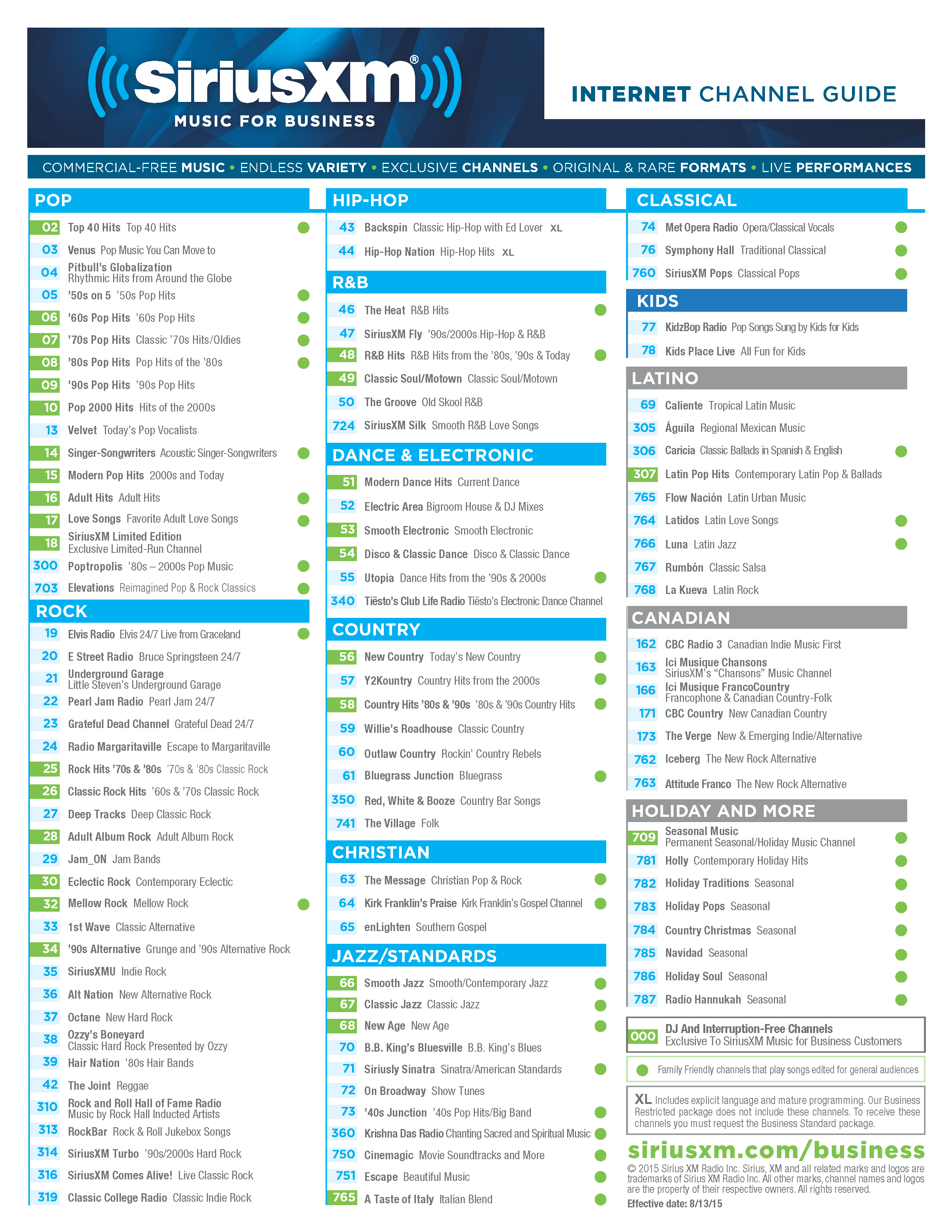
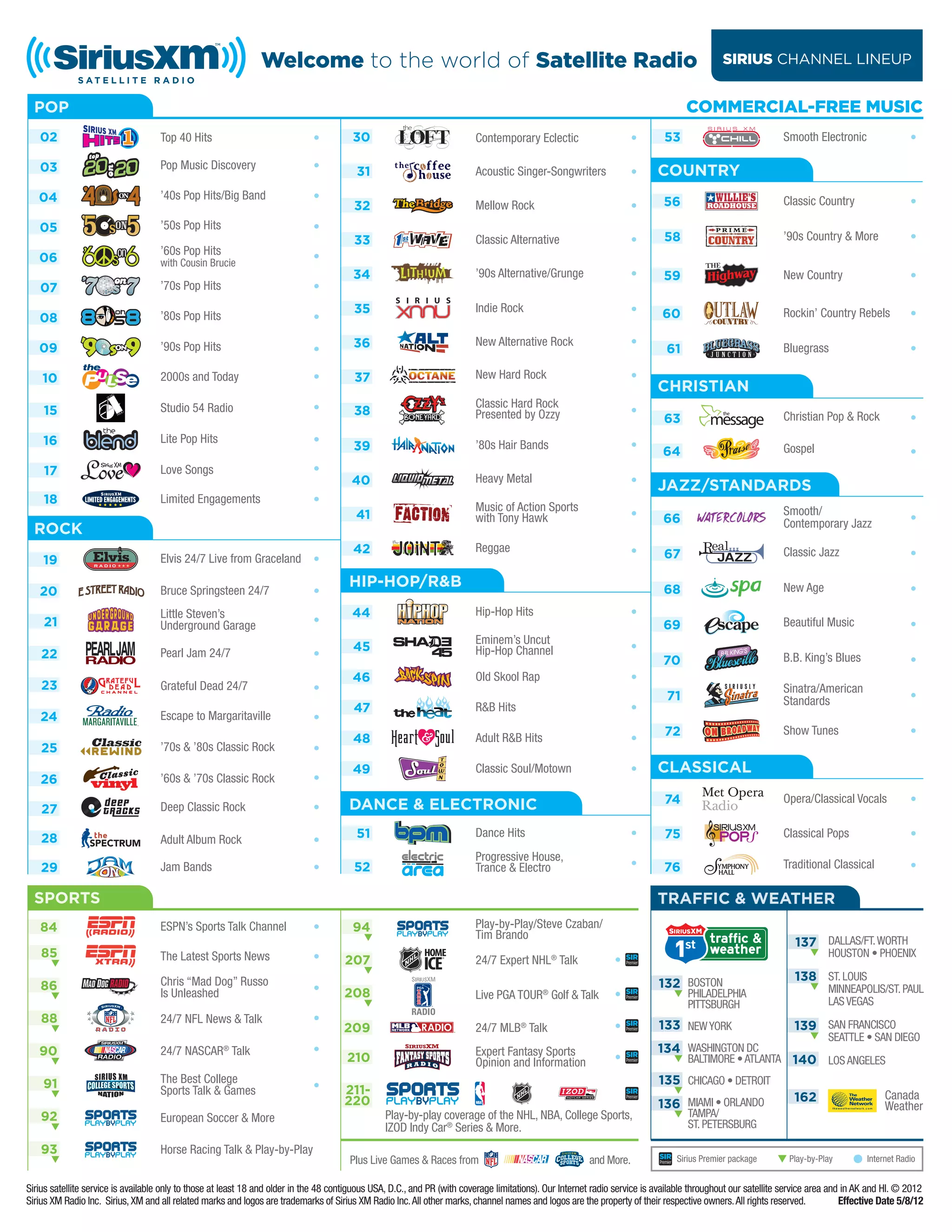
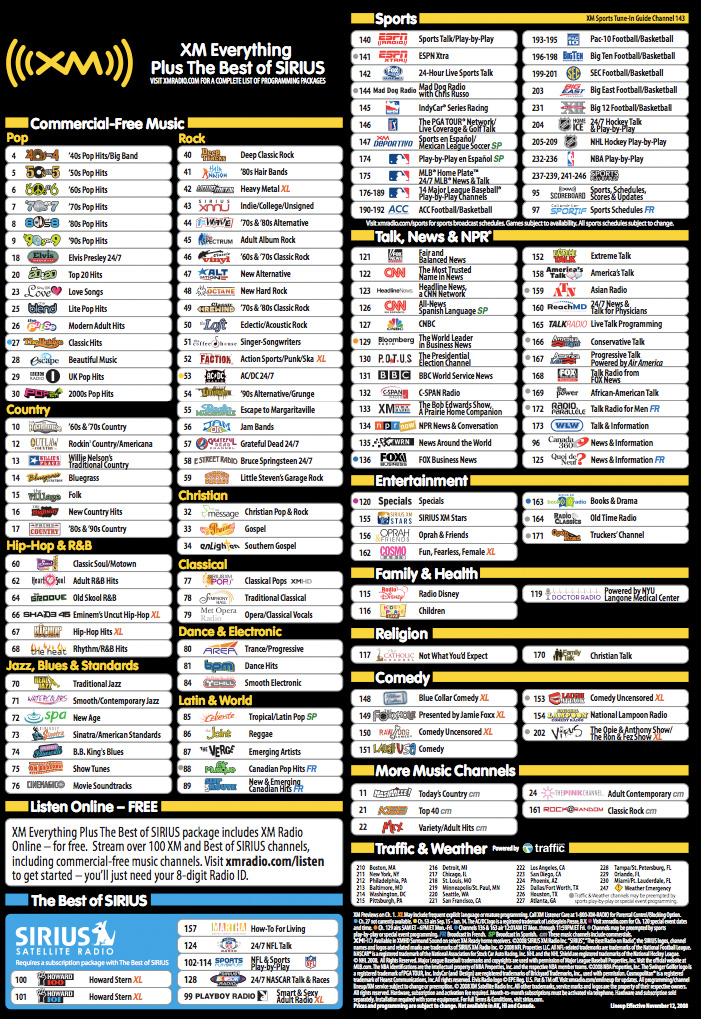
The station numbering system is not arbitrary; it is a structured database designed for intuitive browsing. Generally, the stations are categorized as follows:
-
Decades and Pop (Channels 2–30): This block uses a legacy numbering system that is consistent across almost all hardware versions.
-
Rock and Alternative (Channels 31–41): These stations utilize specific metadata tags to feed song information, such as artist, title, and album art, to the user’s screen.
-
News, Talk, and Entertainment (Channels 100–150): These channels often require different processing, as voice-only content can be compressed more aggressively than high-fidelity music without a loss in perceived quality.
-
Sports (Channels 190–235): This section is highly dynamic, often utilizing “overflow” channels that only activate during live events, managed by a central scheduling server.
The Role of Metadata in the Listening Experience
Modern Sirius stations are more than just audio streams; they are data packets. When you tune to a station, your device is also downloading metadata. This includes real-time sports scores, traffic updates, and “Pandora-powered” recommendations. The software uses these data points to suggest “what Sirius station” you might enjoy next based on your listening history. This algorithmic approach mirrors the functionality of AI-driven tools found in Spotify or Apple Music, bringing a tech-forward “discovery” engine to the satellite radio space.
Integration and the Connected Car Ecosystem
The primary “hardware” for satellite radio remains the automobile. However, the integration of Sirius stations into the car’s head unit has undergone a radical transformation through the adoption of Apple CarPlay, Android Auto, and proprietary manufacturer OS environments.
Hardware Integration in Modern Vehicles
In older vehicles, the SiriusXM tuner was a discrete hardware module connected to the radio via a proprietary bus. In modern vehicles, the tuner is often a software-defined radio (SDR) integrated into the vehicle’s central computer. This allows for over-the-air (OTA) updates, ensuring that when the company adds new stations or changes channel numbers, the vehicle’s channel map updates automatically via the satellite signal’s “control channel.”
App-Based Solutions and Smart Home Integration
For users outside the car, the SiriusXM app acts as the primary gateway. From a technical standpoint, the app uses an Adaptive Bitrate Streaming (ABR) protocol. This means that if you are on a weak 4G connection, the app will automatically lower the bitrate of the station to prevent buffering. As you move into a Wi-Fi zone, it scales up to “Maximum” quality, which offers a broader frequency response and better dynamic range.
Furthermore, the integration with smart speakers like Amazon Alexa and Google Assistant has changed how users query the system. Instead of remembering a number, natural language processing (NLP) allows a user to ask, “What Sirius station is playing 80s music?” The AI then maps that request to the specific channel ID (in this case, Channel 8) and initiates the stream.
The Role of AI and Machine Learning in Personalized Audio
As the platform moves away from a “one-to-many” broadcast model toward a “one-to-one” personalized experience, AI plays a critical role. The question of “what Sirius station” is increasingly answered by an algorithm rather than a static list of numbers.
Algorithm-Driven “Xtra” Channels
SiriusXM has introduced hundreds of “Xtra” channels available only via the app or 360L-equipped cars. these are not traditional broadcast stations but are instead dynamic playlists generated by machine learning models. These models analyze millions of data points—including skip rates, “thumbs up” interactions, and session length—to curate a stream that mimics a live radio station but is tailored to the individual user’s preferences.
Predicting User Preferences with Big Data
By leveraging big data, the platform can predict trends. For instance, during the holidays or major sporting events like the Super Bowl, the system can dynamically reallocate bandwidth or promote specific stations to the “Featured” section of the user interface. This responsiveness is a hallmark of modern software-as-a-service (SaaS) platforms, elevating satellite radio from a passive medium to an active, tech-driven service.
Technical Security and Subscription Management
In any digital service, security and access control are paramount. SiriusXM uses a complex Digital Rights Management (DRM) system to ensure that only active subscribers can access specific stations.
Digital Rights Management (DRM) and Audio Streams
Every Sirius-ready device has a unique Radio ID or ESN (Electronic Serial Number). When a subscription is purchased, an encrypted “hit” is sent over the satellite signal that targets that specific ESN, unlocking the internal decryption keys for the audio streams. This is a sophisticated form of conditional access technology that must work flawlessly across millions of devices, even those that are not connected to the internet.
On the streaming side, the app uses OAuth 2.0 protocols for secure authentication. This ensures that user data, including listening habits and billing information, is protected against unauthorized access. Digital security is an often-overlooked aspect of the “what Sirius station” experience, but it is the foundation that allows the service to function across diverse hardware platforms.
Protecting Your Digital Profile
Users are encouraged to utilize strong, unique passwords for their streaming accounts, as the account now holds more value than just radio access. It often contains personalized settings, favorite stations, and integrated payment methods. As SiriusXM continues to integrate with broader tech ecosystems—such as being bundled with mobile carrier plans or vehicle telematics—the security of the user’s digital identity becomes even more central to the overall tech experience.
The Future of Satellite Audio: 5G and Beyond
The trajectory of satellite radio is aimed toward deeper integration with the “Internet of Things” (IoT). As 5G networks become more ubiquitous, the reliance on high-orbit satellites may shift, but the core “Sirius station” concept will remain. We are seeing the rise of high-definition (HD) radio and the potential for satellite-to-cellular handoffs that ensure zero-latency audio regardless of location.
For the technophile, SiriusXM is no longer just a collection of radio stations; it is a sophisticated content delivery network (CDN). Whether you are accessing it via a dedicated hardware tuner in a truck or through a high-bandwidth fiber connection on a desktop, the underlying technology is a testament to how far digital audio has come. The next time you search for a station, remember that you are interacting with a global network of satellites, servers, and software, all working in concert to deliver a seamless auditory experience.
aViewFromTheCave is a participant in the Amazon Services LLC Associates Program, an affiliate advertising program designed to provide a means for sites to earn advertising fees by advertising and linking to Amazon.com. Amazon, the Amazon logo, AmazonSupply, and the AmazonSupply logo are trademarks of Amazon.com, Inc. or its affiliates. As an Amazon Associate we earn affiliate commissions from qualifying purchases.