
Determining which airline holds the title of “biggest” in the United States is not a matter of a single metric. Depending on whether an investor looks at total revenue, market capitalization, fleet size, or passenger volume, the answer shifts. In the highly competitive landscape of US aviation, four major players—American Airlines, Delta Air Lines, United Airlines, and Southwest Airlines—dominate the market. Collectively known as the “Big Four,” these entities control roughly 80% of the domestic market share. For those analyzing the sector through the lens of business finance and investment, understanding how these giants are measured is essential to evaluating their long-term value and operational stability.
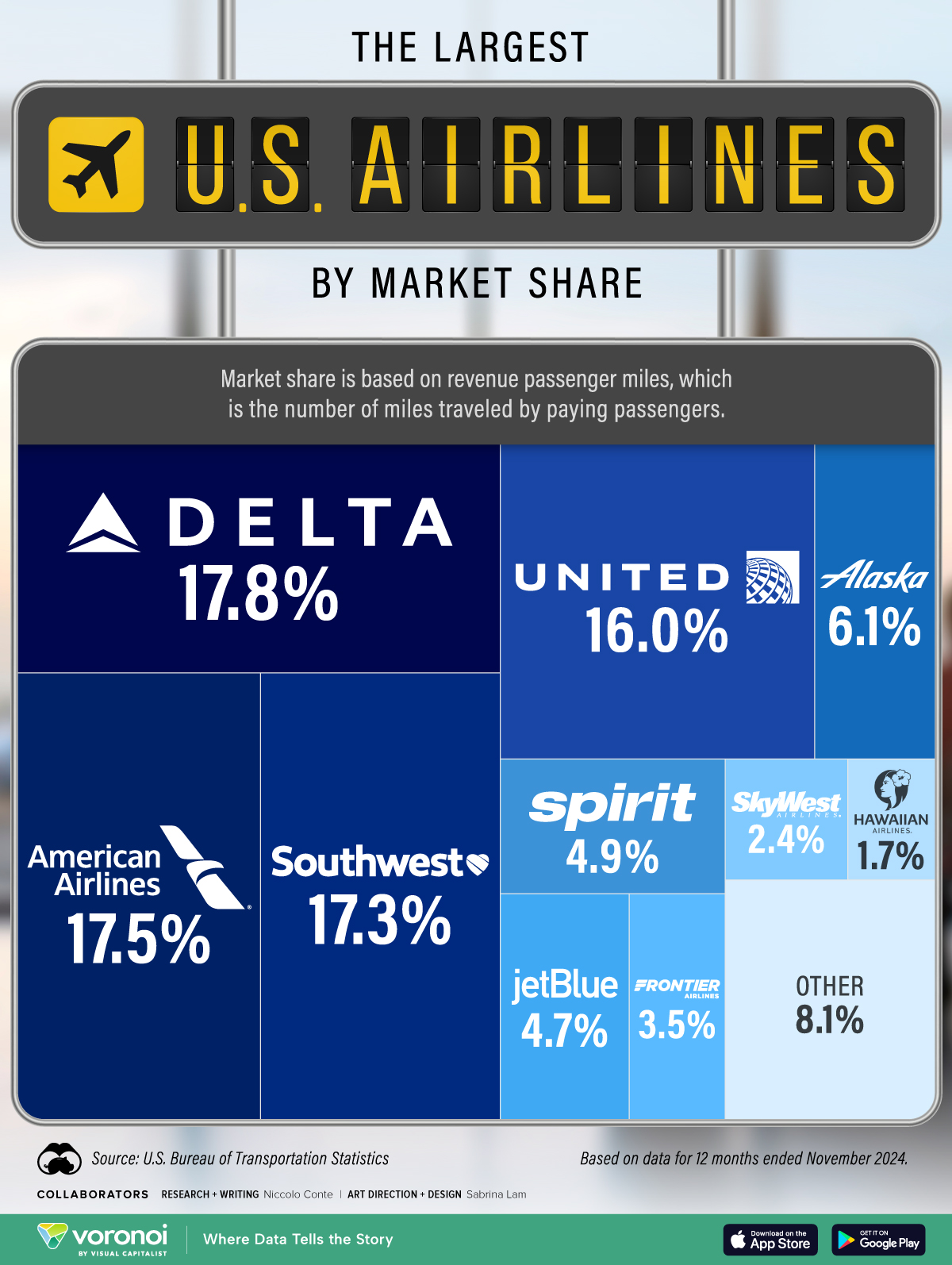
Defining “Big”: Revenue vs. Market Capitalization vs. Assets
In the world of business finance, size is a multifaceted concept. When an industry analyst asks which airline is the biggest, they are usually looking at one of four primary financial and operational indicators. Each of these metrics tells a different story about the company’s health, its dominance in the market, and its potential for shareholder returns.
Total Operating Revenue
Revenue is perhaps the most common way to rank the size of a corporation. It represents the total amount of money brought in by flight operations, cargo services, and ancillary streams like loyalty programs. Historically, American Airlines and Delta Air Lines have traded the top spot in this category. For a business with high fixed costs, such as an airline, revenue scale is critical for covering the massive overhead of fuel, labor, and aircraft maintenance.
Market Capitalization
For investors, market capitalization—the total value of a company’s outstanding shares—is the ultimate measure of “size” in terms of market worth. While an airline might have the most planes, if the market perceives its business model as inefficient or burdened by too much debt, its market cap will suffer. Delta Air Lines frequently leads the industry in this metric, often valued significantly higher than American Airlines despite American having a larger fleet. This discrepancy highlights the market’s preference for profitability and balance sheet strength over raw physical scale.
Fleet Size and Network Reach
From an asset management perspective, the size of an airline is defined by its physical capital. American Airlines currently maintains the largest fleet of aircraft in the world. However, owning or leasing a massive fleet requires sophisticated financial engineering. The “biggest” airline in terms of assets must balance the depreciation of these multi-million dollar machines against the revenue they generate across thousands of daily departures.
American Airlines: The Powerhouse of Scale and Revenue
When looking strictly at revenue and fleet size, American Airlines (AAL) often emerges as the largest carrier. Following its 2013 merger with US Airways, American built a massive global network centered around major hubs like Dallas/Fort Worth, Charlotte, and Miami. From a business finance perspective, American represents a case study in high-leverage growth and the challenges of integrating massive corporate infrastructures.
The Financial Burden of Debt
One of the most significant aspects of American’s financial identity is its debt load. To modernize its fleet and compete on the global stage, American took on substantial leverage. While this allowed them to operate one of the youngest fleets among the legacy carriers, it also created a high-interest environment that can suppress net income. For investors, American is often viewed as a high-beta play; it has significant upside during economic booms but faces more pressure when interest rates rise or travel demand softens.
Revenue Streams and Loyalty Programs
Like its competitors, American has realized that its biggest financial asset might not be its planes, but its frequent flyer program, AAdvantage. In modern airline finance, loyalty programs are frequently used as collateral for loans. These programs generate billions in high-margin revenue through partnerships with credit card issuers like Barclays and Citi. By selling miles to banks, American creates a diversified income stream that is far more stable than ticket sales, which are subject to seasonal volatility and fuel price spikes.
Delta Air Lines: The Leader in Profitability and Market Cap
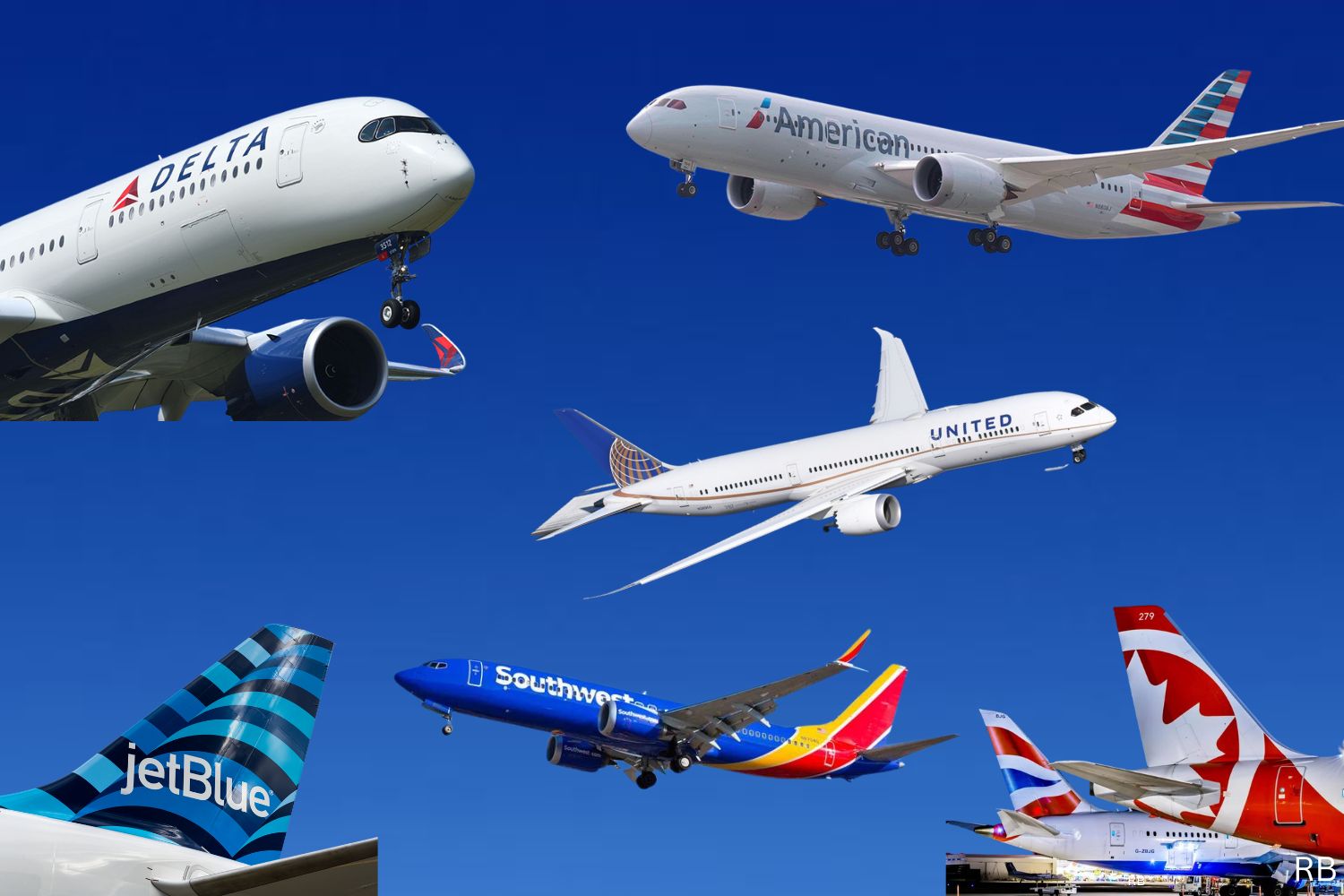
If American Airlines is defined by scale, Delta Air Lines (DAL) is defined by financial efficiency. From a strategic branding and financial management standpoint, Delta has positioned itself as the “premium” legacy carrier. This positioning allows them to command higher fares, which translates into superior margins and a leading market capitalization.
Operational Reliability as a Financial Moat
Delta’s strategy revolves around operational excellence. By consistently ranking high in on-time performance and minimizing cancellations, Delta reduces the “irregular operations” costs that plague other carriers. In business finance, this is known as operational efficiency. Fewer delays mean less spent on passenger re-accommodation and overtime labor. This reliability reinforces their brand power, allowing them to capture a larger share of the lucrative corporate travel market.
Vertical Integration and Asset Management
A unique component of Delta’s financial strategy is its ownership of a jet fuel refinery in Trainer, Pennsylvania. While most airlines use financial derivatives (hedging) to manage fuel price volatility, Delta took the unconventional step of owning the supply chain. This vertical integration provides a unique hedge against the industry’s most volatile expense. Additionally, Delta has a history of taking equity stakes in international partners, such as LATAM and Virgin Atlantic, creating a global financial ecosystem that extends beyond US borders.
United Airlines and Southwest: Differing Financial Models
While Delta and American fight for the top spot in revenue and value, United Airlines and Southwest Airlines represent two very different approaches to dominating the US market. United focuses on international connectivity and high-yield long-haul routes, while Southwest has perfected the domestic, low-cost carrier (LCC) model.
United Airlines and the Global Network
United Airlines (UAL) is often the “biggest” when measuring international capacity. Financially, United’s performance is heavily tied to global trade and international business travel. Their strategy involves aggressive investment in “United Polaris” (their premium international product) and expanding their presence in high-growth markets like the Asia-Pacific region. From a portfolio perspective, United offers investors exposure to global economic trends rather than just the domestic US economy.
Southwest Airlines: The Cash Flow King
Southwest Airlines (LUV) is frequently the largest US airline by domestic passenger volume. For decades, Southwest was the gold standard of airline finance, maintaining an investment-grade balance sheet and a legendary streak of profitability. Their “Point-to-Point” model and use of a single aircraft type (the Boeing 737) significantly lower maintenance and training costs.
Southwest’s financial strength comes from its simplicity. By avoiding the expensive “Hub-and-Spoke” systems used by the big three, Southwest maintains lower CASM (Cost per Available Seat Mile). However, recent operational challenges have forced the company to re-evaluate its legacy systems, proving that even the most successful financial models must evolve to survive in the digital age.
The Future of Aviation Finance: Consolidation and Economics
The question of who is the biggest is also shaped by the regulatory environment and the trend toward consolidation. The US airline industry has undergone massive transformations, moving from a fragmented market to one dominated by a few massive entities. This consolidation was driven by the financial necessity of achieving economies of scale.
Mergers and Antitrust Hurdles
In recent years, the push to become “bigger” has met resistance from federal regulators. The blocked merger between JetBlue and Spirit Airlines is a prime example. From a business finance perspective, mergers are intended to eliminate redundant costs and increase pricing power. However, when an industry becomes too consolidated, it risks stifling competition. For the “Big Four,” future growth may have to come from internal expansion and technology investments rather than further acquisitions.

The Impact of Decarbonization on the Bottom Line
As we look toward the next decade, the biggest airlines will be those that can successfully manage the financial transition to sustainable aviation fuel (SAF). Environmental, Social, and Governance (ESG) metrics are becoming increasingly important to institutional investors. Airlines are now forced to allocate billions in capital expenditures toward more fuel-efficient fleets and carbon offset programs. The financial burden of “going green” will be a significant factor in determining which airline maintains its dominance. Those with the strongest balance sheets and the lowest debt-to-equity ratios will be best positioned to lead this transition.
In conclusion, “biggest” is a relative term in the US airline industry. If you value revenue and assets, American Airlines holds the crown. If you prioritize market value and profitability, Delta Air Lines is the clear leader. If you look at domestic reach and passenger volume, Southwest often takes the lead. For the astute observer of business and finance, the real “winner” is the airline that can best balance the immense costs of operation with the strategic agility to navigate a volatile global economy. The battle for the top spot is no longer just about who has the most planes—it’s about who has the most resilient financial engine.
aViewFromTheCave is a participant in the Amazon Services LLC Associates Program, an affiliate advertising program designed to provide a means for sites to earn advertising fees by advertising and linking to Amazon.com. Amazon, the Amazon logo, AmazonSupply, and the AmazonSupply logo are trademarks of Amazon.com, Inc. or its affiliates. As an Amazon Associate we earn affiliate commissions from qualifying purchases.