
The word “kip” might conjure images of sleeping habits or even a catchy tune. However, in the electrifying world of gymnastics, a kip is a foundational and incredibly dynamic movement. Far from a simple swing or jump, a kip is a carefully orchestrated application of physics and biomechanics, designed to generate upward momentum from a static position. It’s a fundamental skill that underpins many more advanced maneuvers, making it a cornerstone of a gymnast’s progression, especially on apparatus like the uneven bars, parallel bars, and even the rings and pommel horse.
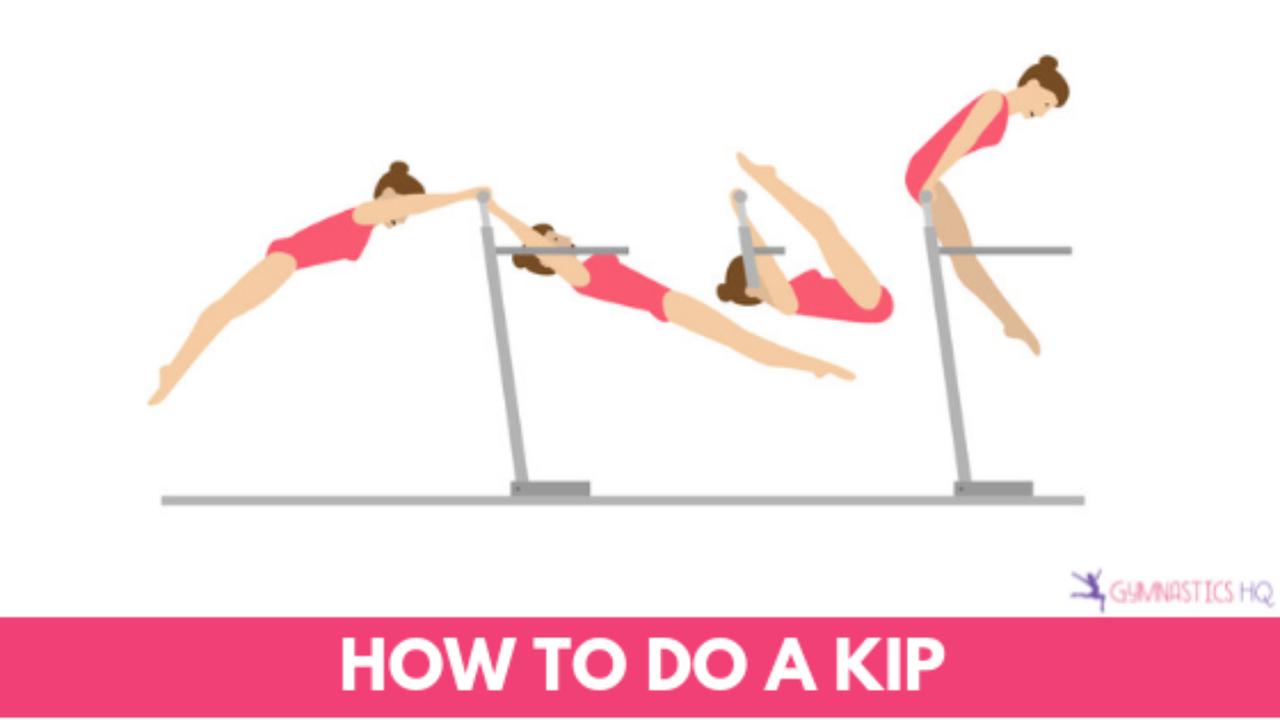
For anyone new to gymnastics, understanding what a kip truly entails can unlock a deeper appreciation for the sport. It’s not just about brute strength; it’s about harnessing energy, precise timing, and a deep understanding of how the body can work with gravity to achieve seemingly impossible feats of ascent. In essence, a kip is the elegant transfer of horizontal energy into vertical power.
The Physics of the Kip: Momentum, Gravity, and Body Control
At its core, a kip is a demonstration of Newton’s laws of motion in action. The primary principle at play is the conservation of momentum. A gymnast doesn’t simply lift themselves; they generate momentum and then strategically redirect it to propel themselves upwards.
The Swing and the Cast: Building the Foundation of a Kip
Before a gymnast can even attempt a kip, they must master the prerequisite skills that build the necessary momentum. These are primarily the swing and the cast.
The Dynamic Swing: Harnessing the Pendulum
The swing is the genesis of the kip. On apparatus like the uneven bars, the gymnast hangs from the bar and begins to swing their body. This isn’t a passive sway; it’s an active, controlled movement. The gymnast manipulates their body shape and position to create a pendulum effect.
Initially, they might start with a simple forward and backward swing. As they gain proficiency, they learn to hollow their body (a tight, streamlined shape with the hips forward and the back arched) as they swing forward. This hollow position increases the speed of the swing. As they swing backward, they open their body (extending the hips and arching the back further). This rhythm of hollowing and opening is crucial for building speed and amplitude in the swing. The goal is to achieve a powerful backward swing that sets up the subsequent upward drive.
The hollow body shape is essential for two reasons. Firstly, it minimizes air resistance, allowing the gymnast to swing faster. Secondly, and more importantly, it positions the body’s center of mass in a way that allows for the most efficient transfer of energy. When the gymnast is in the hollow position, their mass is concentrated closer to the bar, which contributes to a faster swing.
The Powerful Cast: The Transition to Vertical
Following the powerful backward swing, the gymnast executes a cast. This is where the momentum built during the swing is leveraged to transition from a swinging motion to a more vertical body position. The cast is a forceful extension of the body, primarily driven by the shoulders and core.
As the gymnast reaches the peak of their backward swing, they initiate a powerful upward drive. This involves pushing forcefully with their arms and shoulders while simultaneously snapping their hips forward. The objective is to extend their body into a straight line, or a slightly piked position, with their feet as high as possible. This upward extension is the “cast” phase. The height of the cast is a direct indicator of the momentum generated and the effectiveness of the technique. A good cast will have the gymnast’s body extended almost parallel to the ground, with their feet reaching a significant height.
This phase requires immense core strength and shoulder stability. The gymnast must maintain a tight body shape throughout the cast to prevent any loss of energy. The transition from the hollow swing to the extended cast is a seamless, explosive movement.
The Kip Action: Redirecting Momentum for Ascent
This is where the magic of the kip truly unfolds. Having built significant momentum through the swing and initiated the upward drive with the cast, the gymnast now needs to redirect this energy to pull themselves up to a support position.
The Hip Snap and Pull: The Core of the Kip
As the gymnast reaches the apex of their cast, they perform a rapid and forceful “hip snap.” This involves powerfully flexing their hips and bringing their legs and feet forward and up towards the bar. Simultaneously, they execute a strong pull with their arms, drawing their chest towards the bar.
The hip snap is crucial. It’s the dynamic movement that changes the direction of the body’s momentum. Instead of continuing on a parabolic arc, the forward and upward motion of the legs, combined with the arm pull, forces the body to rotate over the bar. Think of it like a powerful flick of the legs, powered by the core and hips, that propels the body upwards and over the bar.
The arm pull provides the necessary leverage to complete the rotation. As the legs are snapping forward, the gymnast is simultaneously pulling their upper body towards the bar, creating a “drawing in” motion. This coordinated action is what allows the gymnast to transition from a hanging or extended position to a support position on the bar.
The Body Shape and Timing: The Subtle Art of the Kip
The success of a kip hinges on incredibly precise timing and an understanding of body shape. The hollow body shape, which was dominant during the swing, is revisited at the start of the kip action itself. As the gymnast initiates the hip snap, they briefly return to a more hollow position before snapping their legs forward. This slight re-hollowing helps to pull the bar closer to their center of mass, enhancing the pulling action.
The timing of the hip snap and the arm pull must be perfectly synchronized. If the hip snap is too early, the gymnast might not have enough backward momentum. If it’s too late, they might lose the upward drive. Similarly, the arm pull needs to be timed to complement the hip snap, not precede or follow it by too much.
Mastering the kip involves countless repetitions, refining this delicate interplay of forces. It’s a testament to the gymnast’s ability to control their body through space and time, making the most of every ounce of energy they generate.
The Importance of the Kip in Gymnastics Progression
The kip is not just a single skill; it’s a gateway to a vast array of more complex and spectacular gymnastics maneuvers. Its mastery is a critical milestone for any aspiring gymnast.
Building Strength and Confidence: The Foundation for Advanced Skills
The physical demands of executing a kip are significant. It requires substantial upper body strength (arms, shoulders, back), incredible core power, and flexibility in the hips and shoulders. Through consistent practice, gymnasts develop these physical attributes, which are directly transferable to more advanced skills.

Beyond the physical, successfully landing a kip provides a tremendous boost in confidence. It’s often one of the first truly “difficult” skills a young gymnast learns that requires more than just raw strength. It demonstrates an understanding of technique and the ability to overcome gravity. This newfound confidence empowers them to tackle even more challenging elements.
Unlocking Apparatus Mastery: The Kip as a Building Block
On the uneven bars, the kip is the fundamental movement that allows gymnasts to get “up” to a support position. From this position, they can perform a multitude of skills, including giants (full circles around the bar), pirouettes, release moves (where the gymnast lets go of the bar and re-grasps it), and dismounts. Without a solid kip, progress on the uneven bars would be severely limited.
Similarly, on the parallel bars, the kip allows gymnasts to transition from a hanging position to a support position, enabling them to perform swings, holds, and complex aerial maneuvers. On the rings, a kip is essential for initiating powerful swing elements and muscle-ups. Even on the pommel horse, variations of the kip are used to generate momentum for intricate circling and balancing movements.
The kip is the common thread that binds together many of the spectacular routines seen in artistic gymnastics. It’s the foundation upon which impressive displays of athleticism are built.
Variations and Evolution of the Kip
While the basic kip is a fundamental skill, gymnasts and coaches have developed numerous variations to increase difficulty, improve efficiency, and adapt to different apparatus.
The “New” Kip and Beyond: Increasing the Challenge
The “new” kip, often referred to as a “kip cast to handstand,” is a progression where the gymnast not only kips up to a support position but continues to press and extend their body to achieve a handstand on the bar. This requires even greater strength, control, and precision, as the gymnast must fight against gravity to achieve a vertical line.
Further progressions include kips that transition into other skills directly, such as a kip into a single or double pirouette, or a kip that leads into a release move. These advanced variations showcase the incredible adaptability and skill developed from the basic kip.
The Kip on Different Apparatus: Adapting the Technique
The core principle of the kip – generating upward momentum from a swing – remains consistent across different apparatus, but the execution is adapted.
- Uneven Bars: This is where the kip is most commonly recognized. The gymnast swings and then kips to a support.
- Parallel Bars: Similar to the uneven bars, the kip is used to get to a support position. The body shape and swing might differ slightly due to the wider bar spacing.
- Rings: The kip on the rings often involves a significant swing and then a powerful “muscle-up” type of kip, where the gymnast pulls their entire body over the rings to a support.
- Pommel Horse: While not a direct kip in the same sense as the bars, gymnasts use similar principles of body manipulation and momentum transfer to perform circular movements and transitions on the pommel horse.
The ubiquitous nature of the kip across these apparatus highlights its fundamental importance in gymnastics. It’s a testament to the ingenuity of the sport’s development, finding ways to harness human physicality and the laws of physics to create breathtaking performances.
Beyond the Bars: The Kip in Digital and Brand Strategies
While the title “What is a Kip Gymnastics” directly refers to the physical skill, the concept of a “kip” – a surge of energy, a strategic pivot, a moment of powerful transition – can be extrapolated to other domains, particularly in the context of the website’s broader topics like Tech and Brand.
Tech: The “Kip” of Innovation and User Experience
In the tech world, a “kip” can represent a breakthrough innovation that drastically changes how we interact with technology. Think of the introduction of the smartphone: it wasn’t just an incremental improvement; it was a “kip” in mobile computing, fundamentally altering communication, entertainment, and access to information.
Similarly, AI tools are enabling “kips” in productivity. Features like AI-powered writing assistants or code generators allow users to achieve tasks at a speed and scale previously unimaginable. These are not just minor enhancements; they are strategic shifts in how work is done, driven by a powerful surge of intelligent automation.
In software development, a “kip” might be a new architectural pattern or a paradigm shift in programming that leads to more efficient, scalable, or secure applications. It’s about leveraging new principles and techniques to overcome limitations and achieve a significantly higher level of performance or functionality. A successful software update that dramatically improves user experience or introduces groundbreaking features can be seen as a “kip” in the product’s lifecycle.
Brand: The “Kip” of Strategic Repositioning and Market Disruption
For brands, a “kip” can be a bold strategic move that redefines their market position or disrupts the status quo. Consider a company that pivots from traditional manufacturing to a service-based model, or a tech company that unexpectedly launches a successful new product line that overshadows its previous offerings. These are strategic “kips” designed to capture new momentum and achieve a higher level of market dominance.
Personal branding can also involve a “kip.” An individual might undergo a significant career transition, acquire new expertise, or launch a new public initiative that fundamentally alters their professional trajectory and public perception. This requires a deliberate and powerful shift in how they present themselves and their capabilities, much like a gymnast’s controlled exertion.
Marketing campaigns that create a significant buzz and shift consumer perception can be viewed as brand “kips.” These campaigns are designed to generate momentum, capture attention, and propel the brand to a new level of recognition or desirability. A successful rebranding effort, if executed with precision and strategic foresight, can also be considered a powerful “kip” for a company’s identity.

Money: The “Kip” of Financial Growth and Strategic Investment
In the realm of money and finance, a “kip” represents a significant upswing or a strategic maneuver that leads to substantial financial growth. This could be a savvy investment that yields exceptional returns, the successful launch of a profitable online income stream, or a business making a pivotal decision that leads to exponential revenue growth.
For individuals, a “kip” might be achieving a significant milestone in personal finance, such as paying off substantial debt in a short period, making a life-changing investment, or successfully launching a side hustle that becomes a primary income source. These are moments where strategic planning and decisive action lead to a powerful upward movement in financial well-being.
Business finance can also see “kips” through strategic fundraising rounds, mergers and acquisitions that create new market opportunities, or the implementation of financial tools and strategies that dramatically improve profitability and efficiency. These are instances where financial momentum is intentionally generated and redirected for significant gain.
In conclusion, while the term “kip” in gymnastics is a specific physical maneuver, its underlying principles of momentum, technique, and strategic energy transfer resonate far beyond the gymnasium. It’s a concept that speaks to the power of focused effort, precise execution, and the ability to leverage foundational skills to achieve remarkable outcomes, whether on the bars, in the digital realm, in brand strategy, or in the pursuit of financial success.
aViewFromTheCave is a participant in the Amazon Services LLC Associates Program, an affiliate advertising program designed to provide a means for sites to earn advertising fees by advertising and linking to Amazon.com. Amazon, the Amazon logo, AmazonSupply, and the AmazonSupply logo are trademarks of Amazon.com, Inc. or its affiliates. As an Amazon Associate we earn affiliate commissions from qualifying purchases.