
Relocating a pet is more than just a logistical challenge; it is a significant financial undertaking that requires meticulous budgeting and an understanding of specialized market rates. Whether you are moving across state lines or transitioning to a new country, the costs associated with shipping a cat can range from a few hundred dollars to several thousand. From airline surcharges to the professional fees of specialized pet relocation agents, the “pet economy” has evolved into a sophisticated service industry.
Understanding the cost structure of feline transport is essential for personal financial planning. This guide breaks down the primary expenses, hidden costs, and strategic considerations involved in safely transporting a cat, providing a clear roadmap for managing this unique business and personal finance expenditure.

The Core Financial Components of Pet Relocation
When calculating the total cost of shipping a cat, the first step is to distinguish between the various modes of transport. Each method carries a different price tag, risk profile, and level of service. In the realm of pet logistics, you generally pay for speed, safety, and specialized climate control.
Airline Fees and Cabin vs. Cargo Considerations
For domestic travel, the most common way to ship a cat is via a commercial airline. This is typically split into two financial categories: in-cabin transport and manifest cargo.
-
In-Cabin Transport: This is usually the most budget-friendly option. Most major airlines charge a flat fee for a pet to travel in a carrier under the seat in front of you. As of current market rates, these fees typically range from $95 to $150 per one-way flight. However, this is only viable if you are traveling with the cat. If the cat is traveling unaccompanied, this option is off the table.
-
Manifest Cargo: If a cat must travel alone or if the airline’s cabin quota is full, they must be shipped as manifest cargo. This is significantly more expensive because the animal is processed through the airline’s cargo terminal. Costs for cargo shipping are often based on the volume of the crate and the total weight. Domestic cargo shipping for a cat can range from $300 to $800, depending on the distance and the airline’s specific pet-handling infrastructure.
Ground Transportation and Private Courier Rates
Ground transport is an increasingly popular alternative, particularly for owners who want to avoid the stresses of air travel for their pets. The financial model for ground transport varies between “shared” and “private” rides.
-
Shared Pet Transport: In this model, a professional courier transports multiple pets along a planned route. This is a cost-effective way to move a cat over long distances, with prices typically ranging from $400 to $1,000 depending on the mileage.
-
Private VIP Transport: For those with a higher budget, private ground transport ensures that the cat is the only animal in the vehicle. This offers door-to-door service and personalized attention. Because this requires the courier to dedicate their entire time and fuel to a single client, prices often start at $2,000 and can exceed $5,000 for cross-country trips.
The Hidden Line Items: Documentation, Health, and Compliance Costs
The ticket or transport fee is only one part of the financial equation. A significant portion of the budget must be allocated to “soft costs”—the administrative and medical requirements necessary to legally and safely move an animal.
Veterinary Certification and Vaccinations
Before any cat can be shipped, they must meet specific health standards mandated by the destination state or country.
-
Health Certificates (CVI): A Certificate of Veterinary Inspection is required for almost all forms of commercial transport. A standard domestic health certificate can cost between $75 and $250, depending on your veterinarian’s rates.
-
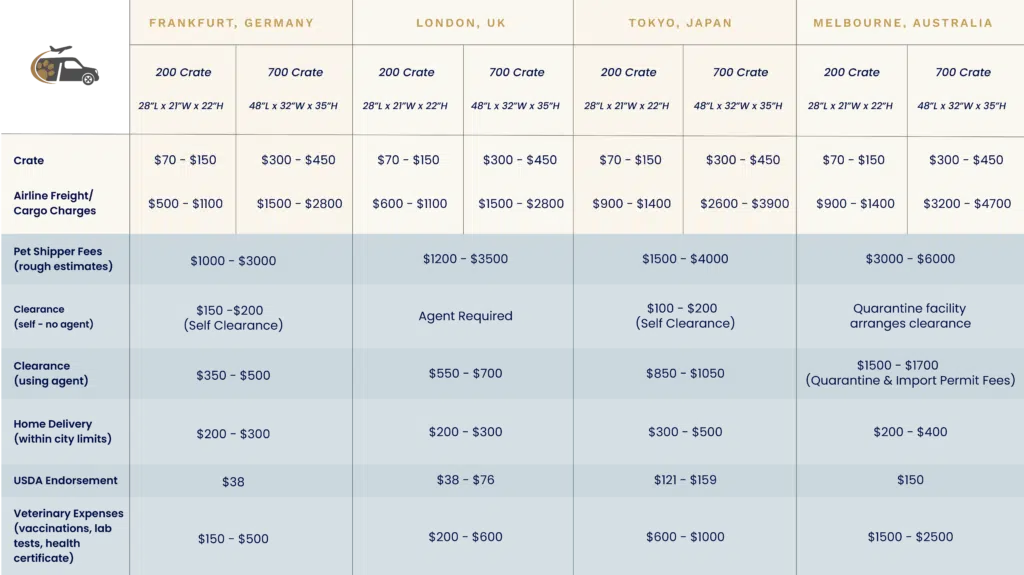
International Health Certificates: If you are moving internationally, the financial stakes rise. An international health certificate often requires a USDA-accredited veterinarian and must be endorsed by the USDA Animal and Plant Health Inspection Service (APHIS). The endorsement fee alone ranges from $38 to over $150 per cat, excluding the veterinarian’s exam and preparation fees.
-
Vaccinations and Titers: Proof of rabies vaccination is standard. For international travel to “rabies-free” jurisdictions (like Hawaii, Japan, or the UK), you may need a Rabies Blood Titer Test (FAVN). This lab work is expensive, often costing between $300 and $500, and requires months of lead time.
Equipment and Asset Acquisition: The IATA-Compliant Crate
In pet shipping, your “shipping container” is a critical asset that must meet strict regulatory standards. The International Air Transport Association (IATA) has specific requirements for crate size, ventilation, and construction.
-
Standard Crates: A high-quality, IATA-compliant plastic crate for a cat usually costs between $60 and $150.
-
Custom Modifications: For long-haul cargo flights, crates may need metal nuts and bolts, secondary locking mechanisms, and specialized water bowls. These modifications can add an extra $50 to $100 to the equipment budget.
-
Sizing Mistakes: Financial risk is high here; if a crate is deemed too small at the airport, the airline will refuse shipment, leading to lost ticket costs and the immediate need to purchase a premium-priced crate from an airport vendor.
Professional Relocation Services: A Cost-Benefit Analysis
Many cat owners choose to hire professional pet relocation agencies to manage the process. While this adds a significant service premium to the total bill, it acts as a hedge against the financial risks of delays, paperwork errors, and logistics failures.
Service Tiers and Management Fees
Pet relocation firms typically offer tiered service packages.
-
Consultation Only: Some firms offer “paperwork review” services for $300 to $500, ensuring your DIY approach is compliant.
-
Full-Service Management: A full-service move includes booking flights, arranging ground transport, handling USDA endorsements, and providing the crate. For a domestic move, management fees typically range from $1,000 to $2,500. For international moves, these fees can jump to $3,000–$6,000, excluding the actual airline freight costs.
The Cost of Regulatory Compliance and Customs Brokerage
When shipping a cat across international borders, you are essentially importing “live cargo.” This involves customs clearance and, in some cases, mandatory quarantine.
-
Customs Brokers: Some countries require a licensed customs broker to clear the pet. Brokerage fees can range from $200 to $500.
-
Import Permits: Many nations charge for the issuance of an import permit, usually ranging from $50 to $250.
-
Quarantine Fees: If your destination requires quarantine (such as Australia or New Zealand), you must budget for the daily “boarding” rate at a government facility. This can cost between $1,500 and $2,500 for a standard 10-day stay.
Strategic Budgeting and Financial Risk Mitigation
To manage the costs of shipping a cat effectively, owners should treat the move like any other major financial investment. This involves assessing risks and identifying areas where economies of scale or strategic timing can reduce the total outlay.
Pet Travel Insurance and Liability
Standard pet health insurance rarely covers the costs of travel-related mishaps or “loss of use.” Specialized pet travel insurance is available but is often integrated into the service fees of high-end relocation companies.
-
Flight Insurance: Most airlines offer limited liability (often capped at very low amounts like $50 or $100) for cargo.
-
Risk Mitigation: From a financial perspective, the “cost” of a failed shipment—such as a cat being stuck in a layover city—can include emergency boarding fees, last-minute hotel stays for the owner, and additional veterinary exams. Maintaining an emergency fund of at least $1,000 specifically for “travel contingencies” is a sound financial strategy.
Seasonal Fluctuations and Economic Factors Affecting Price
The pet transport market is not immune to broader economic trends.
-
Fuel Surcharges: Much like standard freight, pet cargo rates are heavily influenced by global fuel prices. During periods of high oil prices, airline “live animal” rates can increase by 15-20%.
-
Summer and Winter Prohibitions: Many airlines refuse to ship pets in cargo during extreme temperatures (usually above 85°F or below 45°F). If your move falls during these windows, you may be forced to switch to more expensive ground transport or utilize “climate-controlled” specialized carriers that charge a premium for their environmental systems.
-
Peak Moving Season: May through September is the peak season for relocations. Demand for professional pet shippers and airline space increases during this time, often leading to “surge” pricing in service fees.

Summary of Estimated Total Outlay
To provide a clear financial snapshot, consider these two common scenarios:
-
The Domestic DIY Move (In-Cabin):
-
Airline Fee: $125
-
Vet Visit/Health Certificate: $150
-
IATA Carrier: $80
-
Total: ~$355
-
-
The International Full-Service Relocation:
-
Management Fee: $2,500
-
Air Freight (Cargo): $1,200
-
Vet/Blood Tests/USDA: $800
-
Import Permits/Customs: $400
-
Total: ~$4,900
-
In conclusion, shipping a cat is a variable expense that scales with the complexity of the route and the level of professional intervention required. By understanding the line-item costs—from mandatory USDA endorsements to the specific dimensions of a shipping crate—owners can build a robust financial plan that ensures their feline companions arrive safely without incurring unexpected and budget-breaking debt. Investing in professional guidance often yields a high “peace of mind” ROI, but for the budget-conscious traveler, a well-researched DIY approach remains a viable path for domestic transit.
aViewFromTheCave is a participant in the Amazon Services LLC Associates Program, an affiliate advertising program designed to provide a means for sites to earn advertising fees by advertising and linking to Amazon.com. Amazon, the Amazon logo, AmazonSupply, and the AmazonSupply logo are trademarks of Amazon.com, Inc. or its affiliates. As an Amazon Associate we earn affiliate commissions from qualifying purchases.