
In the rapidly evolving landscape of digital commerce, staying competitive means more than just having an online store; it means delivering exceptional, fluid, and personalized experiences across every customer touchpoint. For years, traditional e-commerce platforms served this purpose adequately. However, as customer expectations have soared and technology has advanced, a new architectural paradigm has emerged to address the limitations of monolithic systems: headless commerce.
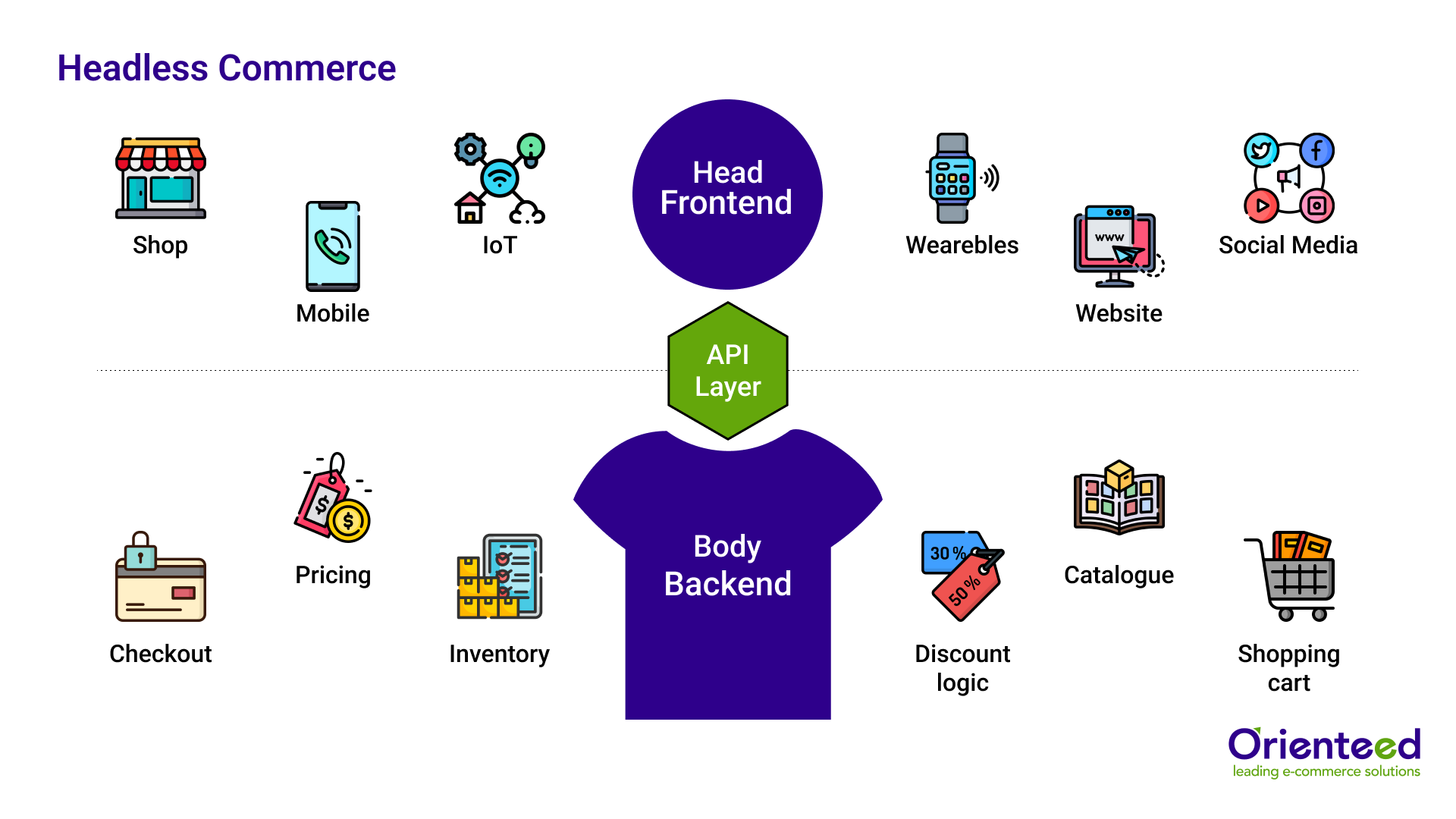
At its core, a headless commerce platform is an e-commerce solution where the front-end (the “head” or presentation layer that customers interact with) is decoupled from the back-end (the “body” or commerce engine that handles functionalities like product management, inventory, pricing, and transactions). This separation allows businesses unparalleled flexibility, scalability, and control over their digital storefronts and beyond, paving the way for truly innovative customer experiences. To fully grasp its significance, it’s essential to understand the architectural shift it represents and the profound implications it carries for modern businesses.

Understanding the Core Concept: Traditional vs. Headless
The journey to understanding headless commerce begins with a clear comparison to its predecessor, the traditional or monolithic commerce platform. This contrast illuminates the fundamental architectural differences and the unique advantages headless offers.
Monolithic Commerce Architecture
Traditional e-commerce platforms, often referred to as monolithic systems, are characterized by a tightly coupled architecture. In this setup, the front-end (what customers see and interact with – the website, mobile app UI) and the back-end (the server-side logic, database, order processing, payment gateways, etc.) are bundled together within a single, unified application. Think of platforms like early versions of Magento, Shopify Plus (without extensive API use), or Salesforce Commerce Cloud’s out-of-the-box solution.
While these systems offer an all-in-one solution that is often quicker to set up for basic needs, their integrated nature presents significant challenges as businesses grow and diversify. Customizing the front-end often requires intricate modifications to the back-end, making updates complex, time-consuming, and expensive. Adding new channels or integrating cutting-edge technologies becomes a laborious process, often requiring a complete overhaul or significant workarounds. This rigidity can stifle innovation and limit a brand’s ability to adapt swiftly to market trends or user demands.
Decoupling Front-end and Back-end
Headless commerce fundamentally breaks this monolithic structure by “decoupling” the presentation layer from the commerce engine. The “head” (front-end) is stripped away, leaving only the “body” (back-end) – a robust commerce engine that exposes its functionalities through Application Programming Interfaces (APIs). These APIs act as the communication bridge, allowing any “head” or presentation layer to interact with the back-end commerce services.
This means the commerce back-end – managing products, inventory, customer data, and transactions – operates independently. Businesses can then build their front-ends using any modern web framework (React, Angular, Vue.js, Gatsby, Next.js), Content Management System (CMS), or even custom applications. These custom front-ends then “call” the commerce back-end via APIs to fetch product data, process orders, manage carts, and more. This architectural freedom is the cornerstone of headless commerce, enabling a level of flexibility and innovation previously unattainable.
Key Benefits of Headless Commerce
The architectural shift introduced by headless commerce translates into a multitude of strategic advantages for businesses aiming to thrive in the digital age.
Unrivaled Flexibility and Customization
With the front-end detached from the back-end, businesses gain complete creative control over their customer-facing experiences. Developers are no longer constrained by the templates or design limitations of a monolithic platform. They can build highly customized UIs, craft unique brand experiences, and integrate any third-party tools or services without affecting the core commerce functionalities. This flexibility extends to the underlying technology stack, allowing teams to use best-in-class tools for each component (e.g., a powerful CMS for content, a specific PIM for product information, and a dedicated platform for customer data).
Enhanced Performance and User Experience (UX)
Headless architecture often leads to significant performance improvements. By building custom front-ends using modern frameworks optimized for speed, businesses can deliver lightning-fast page load times, smoother navigation, and a more responsive overall user experience. This is crucial for reducing bounce rates, improving SEO rankings, and ultimately boosting conversion rates. Furthermore, the ability to tailor every aspect of the UI means businesses can craft intuitive, engaging, and highly personalized customer journeys that resonate deeply with their target audience.
Future-Proofing and Omnichannel Capabilities
The modular nature of headless commerce makes it inherently future-proof. As new technologies emerge or customer interaction points evolve (e.g., smart mirrors, voice assistants, IoT devices), businesses can simply build a new “head” that communicates with their existing commerce back-end via APIs. This eliminates the need for costly and disruptive platform migrations, allowing rapid adaptation to new channels and emerging trends. It also empowers true omnichannel strategies, ensuring a consistent and seamless experience whether a customer is browsing on a website, a mobile app, an in-store kiosk, or even interacting with a voice assistant.
Developer Agility and Innovation
For development teams, headless commerce offers unprecedented agility. Developers can work independently on the front-end and back-end, allowing for parallel development sprints and faster iteration cycles. They are free to choose their preferred programming languages and frameworks, fostering a more productive and innovative environment. This autonomy empowers teams to experiment with new features, test hypotheses quickly, and deploy updates more frequently, accelerating time-to- market for new products and experiences.
When to Consider a Headless Approach
While the benefits are compelling, headless commerce isn’t a one-size-fits-all solution. Identifying when to adopt this architecture requires a clear understanding of a business’s specific needs, scale, and strategic objectives.
Businesses with Complex Requirements

Companies that require highly bespoke user experiences, intricate integrations with multiple third-party systems (CRM, ERP, PIM, marketing automation), or support for highly specialized business logic will find headless commerce invaluable. If your existing platform struggles to accommodate unique workflows or demands extensive custom coding that breaks the core system, headless provides the necessary architectural freedom.
Companies Prioritizing Omnichannel Experiences
For brands committed to delivering a unified and consistent customer experience across a diverse array of channels – including web, mobile apps, in-store digital signage, social commerce, and emerging IoT devices – headless commerce is the ideal foundation. It allows a single commerce engine to power multiple distinct front-ends, ensuring data consistency and a seamless customer journey irrespective of the touchpoint.
Brands Seeking Hyper-Personalization
The ability to craft custom front-ends enables businesses to implement advanced personalization strategies at scale. If your marketing and sales efforts rely heavily on dynamic content, tailored product recommendations, and individualized customer journeys, a headless architecture provides the flexibility to integrate advanced AI/ML-driven personalization engines and present highly relevant experiences to each user.
Organizations Investing in Modern Tech Stacks
Businesses that already have strong in-house development teams proficient in modern web technologies (JavaScript frameworks, APIs) and are committed to adopting a “best-of-breed” approach to their technology stack are well-positioned for headless adoption. It aligns with a microservices philosophy, allowing for specialized tools to handle specific business functions optimally.
Potential Challenges and Considerations
Despite its numerous advantages, migrating to or implementing a headless commerce platform comes with its own set of challenges and considerations that businesses must be prepared for.
Increased Development Complexity
Decoupling the front-end and back-end means that businesses are effectively managing two distinct systems that need to communicate seamlessly. This often requires a more sophisticated development team with expertise in API integration, front-end development frameworks, and potentially multiple services. The “all-in-one” simplicity of monolithic platforms is traded for granular control, which demands higher technical proficiency and coordination.
Higher Initial Investment
While long-term cost savings can be realized through flexibility and reduced vendor lock-in, the initial setup cost for a headless commerce solution can be higher. This is due to the need for custom front-end development, potential integration with multiple third-party services, and the complexity of orchestrating various components. Businesses must factor in the cost of skilled developers, system architects, and ongoing maintenance for multiple interconnected systems.
Dependence on Multiple Systems
A headless architecture often means relying on a “best-of-breed” approach, where different vendors or services handle specific functions (e.g., one vendor for commerce, another for CMS, another for search). While this offers optimal functionality for each component, it also introduces a dependency on the stability and interoperability of these multiple systems. Managing these integrations, updates, and potential points of failure requires robust monitoring and a comprehensive architectural strategy.
The Future of E-commerce with Headless
Headless commerce is not merely a trend; it represents a fundamental shift in how digital experiences are built and delivered. Its principles are deeply intertwined with the future trajectory of e-commerce.
Microservices and API-First Approach
The headless movement aligns perfectly with the broader industry shift towards microservices architecture, where applications are built as collections of small, independent, and loosely coupled services. This API-first approach means that all functionalities are exposed via APIs, making them accessible to any client application. This promotes modularity, resilience, and rapid innovation, creating a highly adaptable digital ecosystem.
AI and Personalization at Scale
As AI and machine learning become increasingly sophisticated, the ability to leverage these technologies for hyper-personalization will be paramount. Headless commerce provides the architectural freedom to integrate advanced AI engines that can analyze customer behavior, predict preferences, and dynamically adjust the front-end experience in real-time. This level of personalization, from product recommendations to dynamic pricing, will be a key differentiator for brands.
Conclusion
A headless commerce platform represents a powerful evolution in e-commerce architecture, breaking free from the constraints of monolithic systems to offer unparalleled flexibility, performance, and control. By decoupling the customer-facing experience from the back-end commerce engine, businesses gain the agility to build highly customized, lightning-fast, and omnichannel experiences that meet the ever-increasing demands of modern consumers.
While it demands a greater initial investment in development expertise and coordination, the strategic advantages of future-proofing, enhanced UX, and accelerated innovation make it an indispensable choice for businesses committed to staying at the forefront of digital commerce. As the digital landscape continues to fragment into diverse touchpoints and customer expectations for seamless, personalized interactions grow, headless commerce stands as the robust technological backbone that will power the next generation of online retail.
aViewFromTheCave is a participant in the Amazon Services LLC Associates Program, an affiliate advertising program designed to provide a means for sites to earn advertising fees by advertising and linking to Amazon.com. Amazon, the Amazon logo, AmazonSupply, and the AmazonSupply logo are trademarks of Amazon.com, Inc. or its affiliates. As an Amazon Associate we earn affiliate commissions from qualifying purchases.