
In the modern economic landscape, operational efficiency and fiscal discipline are the twin pillars of any successful enterprise. For small business owners, freelancers, and large corporations alike, the procurement of supplies and equipment represents a significant portion of annual overhead. Amazon Business has emerged not merely as a marketplace, but as a comprehensive financial tool designed to streamline business spending, provide tax advantages, and improve cash flow management. Understanding how to properly set up and utilize a business account is a critical step in professionalizing your financial operations.
Understanding the Financial Advantages of Amazon Business
Before diving into the technical setup, it is essential to recognize the fiscal motivations for migrating from a personal account to a business-specific platform. Amazon Business is structured to serve the needs of a commercial entity, offering features that directly impact the bottom line.
Tax-Exempt Purchasing and Savings
One of the most immediate financial benefits is the Amazon Tax Exemption Program (ATEP). For organizations such as non-profits, educational institutions, or businesses purchasing items for resale, the ability to apply tax exemptions automatically at checkout is a game-changer. Instead of filing for tax refunds after the fact—a process that ties up capital and consumes administrative hours—the business account allows for the seamless application of your tax-exempt status across millions of eligible items.
Business-Only Pricing and Quantity Discounts
Liquidity is preserved when unit costs are minimized. Amazon Business provides access to “Business-Only” pricing on over five million products. These are rates not visible to the general public. Furthermore, the platform offers quantity discounts, allowing procurement officers to see tiered pricing structures. For a business scaling its operations, the ability to lock in lower rates on high-volume orders of office tech, industrial supplies, or breakroom essentials directly enhances profit margins.
Streamlining Procurement for Scalability
Centralized purchasing is a hallmark of a mature financial strategy. By moving away from a fragmented system where employees use personal cards and submit expense reports, a business account allows for a single, audited flow of capital. This centralization reduces “maverick spending”—unauthorized or off-contract purchases—which can account for significant leaks in a company’s budget.
Step-by-Step Guide to Registering Your Business Account
The process of opening an Amazon Business account is distinct from creating a standard consumer profile. It requires specific documentation to verify the legitimacy of the enterprise, ensuring that the financial benefits are reserved for bona fide commercial entities.
Preparing Necessary Financial Documentation
To ensure a smooth registration process, you should have your business information ready. Amazon requires more than just an email address; they need to verify your professional identity. You will need:
-
Business Identifier: This is typically an Employer Identification Number (EIN), though sole proprietors may use a Social Security Number (SSN) in certain jurisdictions.
-
Business Credit or Debit Card: While you can add multiple payment methods later, having a primary corporate card is essential for the initial setup.
-
Proof of Business Address: This should match your official tax filings.
-
Tax Exemption Certificates: If you intend to claim tax-exempt status, have digital copies of your state-issued certificates ready for upload.
The Registration Workflow
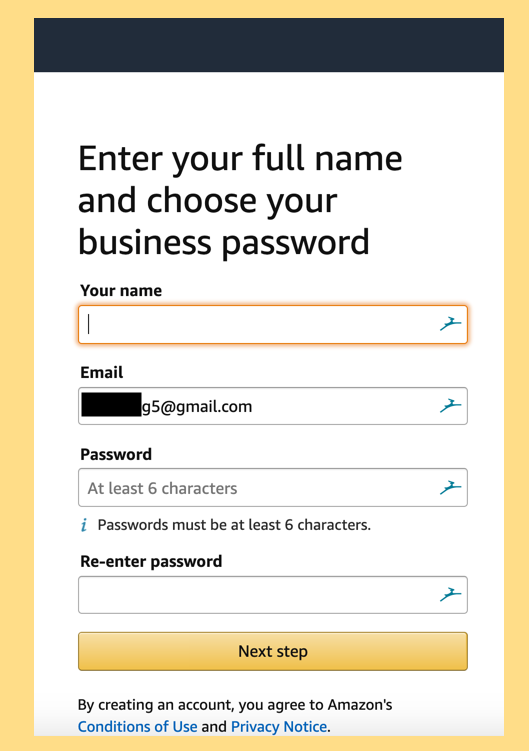
To begin, navigate to the Amazon Business portal. It is highly recommended to use a professional work email address rather than a personal one (e.g., name@yourcompany.com). If you already have a personal Amazon account associated with your work email, you will be given the option to migrate your purchase history or create a completely separate business profile. For the sake of clean financial auditing, creating a separate profile is almost always the superior choice.
Once you enter your business details, Amazon’s verification team will review the application. Unlike personal accounts, which are active immediately, business accounts may undergo a verification period ranging from 24 hours to three business days. During this time, Amazon may cross-reference your EIN with public records to ensure compliance with their terms of service.
Verification Timelines and Expectations
During the verification window, your account might have limited functionality. This is a critical period where Amazon ensures that the platform remains a secure B2B environment. Once verified, you will receive a confirmation email, at which point you can begin configuring the advanced financial settings, such as multi-user workflows and payment terms.
Managing Business Expenses and Cash Flow Tools
The true power of an Amazon Business account lies in its suite of financial management tools. These features allow a business to manage its “Working Capital”—the money available for daily operations—more effectively.
Integrating Pay by Invoice and Lines of Credit
One of the most significant advantages for established businesses is the “Pay by Invoice” feature. Subject to credit approval, this allows businesses to make purchases and receive an invoice with net-30 terms (or longer for certain Business Prime members). From a cash flow perspective, this is invaluable. It allows a company to acquire necessary inventory or equipment today while preserving cash on hand for another 30 days. This “float” can be redirected toward marketing, payroll, or other immediate revenue-generating activities.
Additionally, the Amazon Business American Express Card provides another layer of financial flexibility, offering either extended payment terms or high-percentage cash back on purchases made within the Amazon ecosystem. For a business spending thousands of dollars a month on supplies, these rewards can translate into thousands of dollars in annual savings.
Multi-User Access and Spending Limits
As a business grows, the owner cannot be the only person authorized to make purchases. However, giving every employee a corporate card is a financial risk. Amazon Business solves this through “Guided Buying” and approval workflows. You can add multiple users to the account and assign them specific roles.
For instance, an office manager might have the authority to purchase up to $500 without oversight, while any order over that amount triggers a notification to the CFO for digital approval. This ensures that the budget is respected and that every dollar spent is accounted for before it leaves the bank account.
Advanced Reporting and Reconciliation
Month-end accounting is often a bottleneck for financial departments. Amazon Business offers robust analytics tools that can be integrated into ERP (Enterprise Resource Planning) software or accounting platforms like QuickBooks and Xero. You can generate custom reports filtered by department, project, or user. This level of granularity makes it easy to track “Cost of Goods Sold” (COGS) and manage departmental budgets with precision.
Strategic Growth: Leveraging the Account for Online Income
While many use Amazon Business for procurement, it is also a foundational tool for those engaged in side hustles or full-time reselling businesses. The financial structure of the account is perfectly suited for those looking to generate online income.
Inventory Sourcing for Resellers
For entrepreneurs involved in “Online Arbitrage” or wholesale reselling, the business account provides the necessary documentation to prove a professional chain of custody for products. The quantity discounts and business-only pricing allow resellers to source products at a lower cost basis, thereby increasing the potential “Return on Investment” (ROI) when the items are sold on other platforms or back on Amazon through a Seller Central account.
Reducing Overhead Costs for Startups
For a startup, every dollar saved is a dollar that can be reinvested into growth. By using a business account to source hardware, software licenses, and even furniture, a startup can significantly lower its initial “Burn Rate.” The ability to track these expenses clearly from day one ensures that the business is “Audit-Ready,” which is a vital requirement if the company ever seeks outside investment or a small business loan.

The ROI of Professional Procurement
Opening a business account with Amazon is more than a simple registration; it is a strategic move to professionalize a company’s financial infrastructure. By taking advantage of tax exemptions, business-only pricing, and extended payment terms, an organization can significantly improve its liquidity and operational efficiency.
In a competitive market, the difference between a thriving business and one that struggles often comes down to the management of “invisible costs”—the hours spent on manual reconciliation, the missed discounts on bulk orders, and the inefficiencies of unmonitored spending. Amazon Business provides a centralized, automated solution to these problems.
Whether you are a solo entrepreneur looking to maximize your side hustle’s profit or a finance director tasked with tightening corporate spending, the transition to a dedicated business account offers a clear path to better fiscal health. By following the registration steps and fully utilizing the available cash flow tools, you position your business to operate with the agility and professional oversight required for long-term financial success.
aViewFromTheCave is a participant in the Amazon Services LLC Associates Program, an affiliate advertising program designed to provide a means for sites to earn advertising fees by advertising and linking to Amazon.com. Amazon, the Amazon logo, AmazonSupply, and the AmazonSupply logo are trademarks of Amazon.com, Inc. or its affiliates. As an Amazon Associate we earn affiliate commissions from qualifying purchases.