
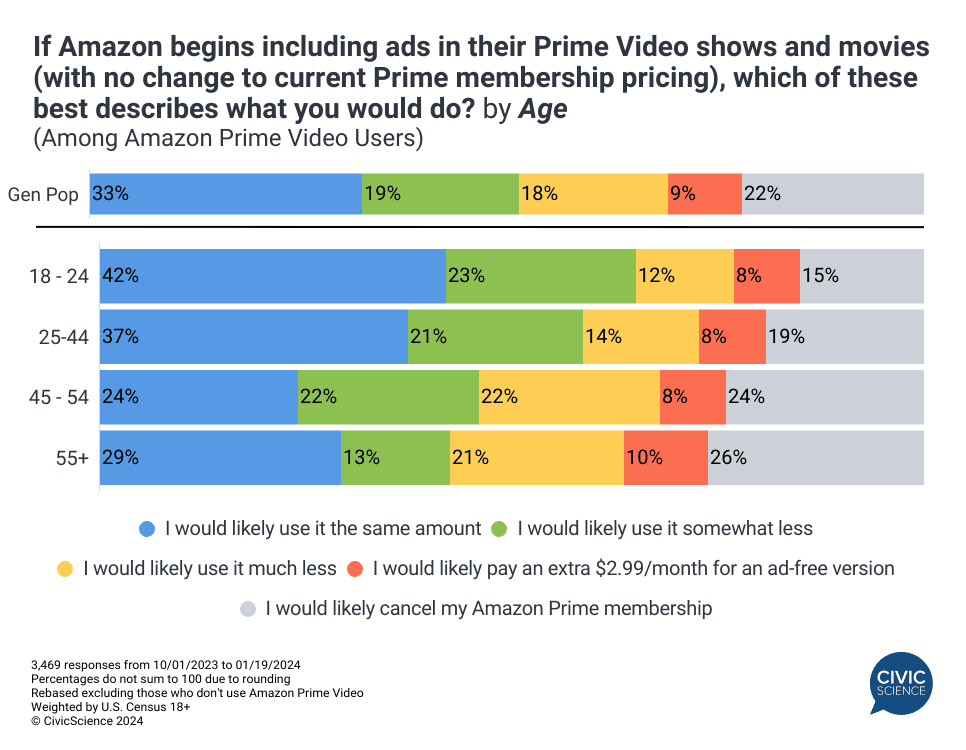
For over a decade, Amazon Prime was marketed as a comprehensive utility—a single annual fee that covered expedited shipping, a massive library of digital content, and various peripheral perks like cloud storage and music streaming. However, the financial landscape of digital subscriptions shifted significantly in early 2024 when Amazon transitioned its standard Prime Video service to an ad-supported model. This move forced millions of households to re-evaluate their personal budgets and ask a singular, pressing question: How much does it actually cost to maintain an ad-free experience on Amazon Prime, and is the investment financially justifiable?

Understanding the true cost of Prime Ad-Free requires more than just looking at a single line item on a bank statement. It involves a deep dive into tiered pricing structures, the cumulative impact of “subscription creep” on monthly cash flow, and a rigorous cost-benefit analysis of time versus money.
The New Math of Amazon Prime: Breaking Down the $2.99 Surcharge
The current pricing structure for Amazon Prime is no longer a simple binary choice. To achieve a completely ad-free viewing experience, subscribers must navigate a layered cost system. As of 2024, the base price of an Amazon Prime membership stands at $14.99 per month or $139 per year. For those who only want the video component without the shipping benefits, a standalone Prime Video membership costs $8.99 per month.
However, these base prices now include “limited advertisements.” To remove these interruptions, Amazon has introduced a supplemental monthly fee of $2.99. When integrated into the broader membership, the financial breakdown looks like this:
-
Monthly Prime Members: $14.99 (Base) + $2.99 (Ad-Free) = $17.98 per month. This results in an annual outlay of $215.76.
-
Annual Prime Members: $139 (Base) + $35.88 (Ad-Free at $2.99/mo) = $174.88 per year. This averages out to approximately $14.57 per month.
-
Standalone Video Members: $8.99 (Base) + $2.99 (Ad-Free) = $11.98 per month. This results in an annual outlay of $143.76.
For students or those qualified for government assistance (Prime Access), the base rates are discounted (typically around $7.49 per month), but the $2.99 ad-free surcharge remains a flat, non-discounted add-on. From a personal finance perspective, this represents a 20% to 33% increase in the cost of the video service, depending on which base tier you occupy. This “drip pricing” strategy—where a service is advertised at one price but requires additional fees to maintain the original standard of quality—is a critical factor for consumers to monitor when managing their discretionary spending.
The Cost-Benefit Analysis: Calculating Your Time vs. Your Money
In the world of personal finance, time is often considered the ultimate currency. When evaluating whether the $2.99 monthly surcharge for ad-free Prime is “worth it,” one must calculate the literal value of the time saved.
Industry reports suggest that Amazon Prime Video serves approximately two to three and a half minutes of advertisements per hour of content. For a moderate viewer who consumes 10 hours of content per week, that equates to roughly 20 to 35 minutes of advertisements weekly, or approximately 17 to 30 hours of advertisements per year.
By paying the $35.88 annual surcharge (based on the $2.99 monthly fee), you are essentially “buying back” those 30 hours. This places a valuation on your time of approximately $1.20 per hour. If your personal hourly earnings or the value you place on your leisure time exceeds this amount, the ad-free upgrade is technically a high-ROI (Return on Investment) purchase.
However, there is a secondary financial consideration: the “Impulse Buy Factor.” Advertisements on Amazon Prime are not merely interruptions; they are highly targeted marketing tools designed to drive further spending within the Amazon ecosystem. For many consumers, the true cost of “ad-supported” streaming isn’t just the time lost—it is the increased likelihood of making unplanned purchases. If an ad-free subscription prevents even one $40 impulse purchase per year, the subscription has effectively paid for itself.
Strategic Budgeting in the Age of “Subscription Creep”

The shift toward an ad-free surcharge is part of a larger trend in the digital economy known as “subscription creep.” This phenomenon occurs when small, seemingly insignificant monthly fees accumulate, eventually exerting significant pressure on a household’s monthly net income. When Prime Ad-Free is added to a portfolio that might already include Netflix, Disney+, Spotify, and various software-as-a-service (SaaS) products, the “hidden” cost of digital living can easily exceed $150 to $200 per month.
To maintain financial health, consumers should treat the Prime Ad-Free surcharge as a variable expense rather than a fixed one. One effective strategy for optimizing this cost is the “Rotation Method.” Because the $2.99 ad-free add-on is billed monthly, users are not necessarily tethered to it year-round. A financially savvy household might choose to pay for the ad-free experience only during months when a specific high-value series is being released (such as “The Rings of Power” or “The Boys”) and revert to the ad-supported tier during months of lower consumption.
Furthermore, it is essential to audit the “shipping vs. streaming” value. If a household primarily uses Prime for the two-day shipping and rarely utilizes the video library, the $2.99 surcharge is an unnecessary drain on resources. Conversely, if the video library is the primary draw, switching from a full Prime membership to a standalone $8.99 Video membership plus the $2.99 surcharge could save nearly $72 per year compared to the full monthly Prime rate.
Navigating the Competitive Landscape: Prime Video vs. The Market
When deciding whether to allocate capital toward an ad-free Prime experience, it is vital to compare its market position against other financial commitments. The streaming wars have created a standardized pricing floor that makes Amazon’s $17.98 (Prime + Ad-Free) or $11.98 (Video-only + Ad-Free) appear competitive, yet distinct.
For comparison:
-
Netflix: The Standard ad-free plan is $15.49 per month, while the Premium 4K plan is $22.99.
-
Hulu: The ad-free tier is $17.99 per month.
-
Disney+: The ad-free tier is $13.99 per month.
-
Max (formerly HBO Max): The ad-free tier is $16.99 per month.
From a comparative finance perspective, Amazon Prime’s ad-free offering remains one of the more complex value propositions because it is bundled with logistics (shipping) and retail benefits. For a heavy Amazon shopper, the $17.98 total monthly cost for Prime Ad-Free provides a “multipurpose utility” that Netflix cannot match. However, for a pure entertainment seeker, the $17.98 price point is on the higher end of the spectrum, placing it on par with Hulu’s premium tier.
Investors and financial planners often look at “cost per use” to determine the viability of an expense. If a household watches 50 hours of Prime Video a month, the $2.99 surcharge adds only $0.06 to the cost of each hour of entertainment. If they watch only 5 hours, that cost jumps to $0.60 per hour. Tracking consumption habits for thirty days is a recommended financial exercise before committing to the annual or monthly ad-free add-on.
How to Optimize Your Digital Spending and Maximize Prime Value
To mitigate the impact of the ad-free surcharge on your personal finances, consider these three optimization strategies:
1. Credit Card Rewards and Statement Credits
Many premium credit cards offer “streaming service” categories that provide 3% to 6% cashback on digital subscriptions. Furthermore, certain cards, like the American Express Blue Cash Preferred or specific Chase cards, frequently offer targeted “Amex Offers” or “Chase Offers” that provide a statement credit for Amazon Prime renewals. By leveraging a 6% cashback card on a $17.98 monthly bill, you effectively reduce the ad-free surcharge from $2.99 to roughly $1.91.
2. The Annual Commitment Hedge
If you are certain that you will use Prime for the foreseeable future, paying for the base membership annually ($139) while paying for the ad-free add-on monthly ($2.99) is the most flexible financial middle ground. While Amazon does not currently offer a discounted annual rate for the ad-free surcharge specifically, paying the base fee annually protects you from potential mid-year price hikes on the membership itself.
3. Sharing the Burden (Safely)
Amazon allows for “Amazon Households,” which enables two adults to share the benefits of a single Prime membership. From a business finance perspective, this effectively cuts the cost of the ad-free experience in half per person. If two individuals in a household are currently paying for separate memberships, consolidating into one Household with the $2.99 ad-free add-on results in an immediate and significant boost to the household’s net monthly savings.
In conclusion, the question of “how much is Prime ad-free” is answered not just by the $2.99 figure, but by how that figure fits into your broader financial ecosystem. At roughly $36 per year, it is a manageable expense for many, but in an era of high inflation and rising living costs, it represents another brick in the wall of recurring digital expenses. By quantifying the value of your time, comparing the cost against competitors, and utilizing strategic payment methods, you can ensure that your entertainment spending remains an investment in your quality of life rather than a drain on your financial future.
aViewFromTheCave is a participant in the Amazon Services LLC Associates Program, an affiliate advertising program designed to provide a means for sites to earn advertising fees by advertising and linking to Amazon.com. Amazon, the Amazon logo, AmazonSupply, and the AmazonSupply logo are trademarks of Amazon.com, Inc. or its affiliates. As an Amazon Associate we earn affiliate commissions from qualifying purchases.